
Charles R. Goulding and Preeti Sulibhavi spotlight ORNL’s push to bring 3D printed nuclear hardware from the laboratory to the factory floor while strengthening America’s domestic manufacturing base.
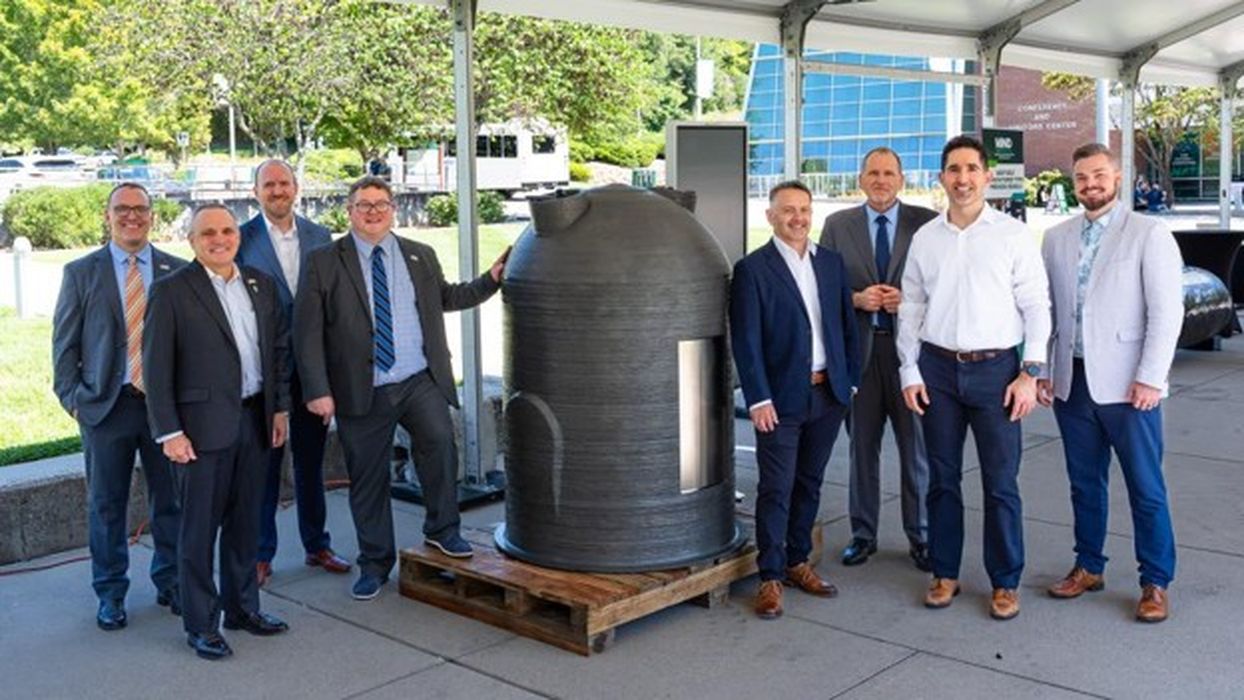
Inside an advanced Tennessee facility, a three-armed robotic system called MedUSA guided molten steel into place, layer by layer, until a three-by-five-foot nuclear pressure vessel stood complete. Nearby sat a 12-foot glass-fiber polymer model of an impact limiter – a critical component that protects spent nuclear fuel shipping containers during transport – printed in collaboration with the University of Maine. These were not lab curiosities. They were battle tests for the future of American manufacturing.
Both structures were centerpieces at Oak Ridge National Laboratory’s Materials and Manufacturing Innovation Days (M2IND), where over 350 leaders from industry, government, and research gathered to confront a straightforward but urgent question: how do you turn laboratory breakthroughs into factory-floor reality before domestic supply chains fall further behind? “We want to make sure we have input from industry to help guide our research and ensure that the work at Oak Ridge and the Manufacturing Demonstration Facility is valuable to U.S. manufacturers and takes into account the supply chains needed to commercialize new technologies,” said MDF Director Ryan Dehoff.
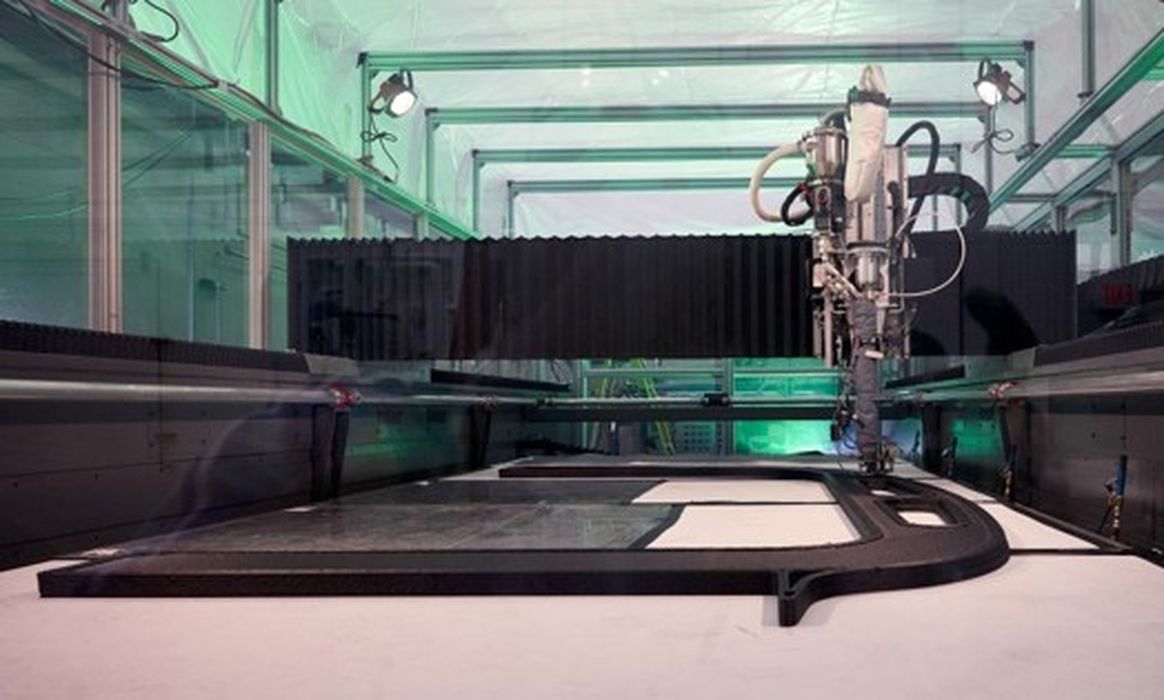
The steel pressure vessel printed by MedUSA represents a direct challenge to conventional reactor vessel manufacturing. Standard reactor pressure vessels rely on large-scale forging and welding – processes that face severe domestic capacity limits. Wait times for major custom components in infrastructure sectors like hydropower can now stretch beyond ten years. The M2IND vessel served as a test case to evaluate whether multirobot wire-arc additive manufacturing can offer a viable alternative for producing large metal parts with complex domed geometry.
The impact limiter model demonstrated a different but complementary capability. Traditionally built from wood, the glass-fiber polymer version printed with the University of Maine shows how additive manufacturing can replace legacy materials and fabrication methods for large structural components used in nuclear fuel transport. Together, these two structures illustrate the range of what additive manufacturing can now produce at scale – from high-strength steel reactor hardware to large-format polymer structures – and why ORNL’s Manufacturing Demonstration Facility has become the nation’s primary proving ground for these technologies.
America’s industrial sector is facing severe operational hurdles driven by irregular supply chains and a critical shortage of skilled workers. These pressures are especially acute in the nuclear energy sector, where the convergence of AI data center buildouts, industrial electrification, and decarbonization goals is driving electricity demand upward at a pace the existing grid was never designed to handle.
Nuclear power is increasingly viewed as one of the few scalable sources capable of delivering the constant, around-the-clock electricity that AI infrastructure and industrial electrification demand. But designing advanced reactors is only part of the challenge – building them fast enough may be even harder. Critical reactor components, cooling systems, and specialized industrial parts face manufacturing delays measured in years, not months. The US Department of Energy is now considering billions of dollars in support for nuclear supply chains, long-lead component manufacturing, and advanced production capabilities.
Additive manufacturing addresses these bottlenecks directly. ORNL and partners like Westinghouse Electric Company have demonstrated that 3D printing can bypass traditional tooling requirements, consolidate multipart assemblies into single structural components, and compress manufacturing timelines. ORNL’s large-format additive work has already produced tangible benchmarks: a 30-foot submersible hull demonstrator fabricated using Big-Area Additive Manufacturing (BAAM) in a matter of weeks with roughly 90% reduced production cost compared to conventional hull fabrication.
While not a reactor component, it demonstrates the production speed and cost advantages that nuclear manufacturers are working to replicate for qualified hardware. The M2IND event underscored this urgency. Participants highlighted the need to resilient supply chains, alternative materials, and faster part qualification, and pushed to combine manufacturing capabilities with AI, robotics, and digital engineering. Representatives from four Department of Energy offices and defense officials joined leaders from energy, manufacturing, and technology sectors, and together identified key obstacles including limited domestic capacity for large metal parts and long component lead times.
Printing a nuclear-grade component is only half the battle. Getting it certified for real-world use is where momentum often dies. As M2IND participants repeatedly emphasized, additive nuclear parts must clear a high bar – qualification for nuclear service requires rigorous validation of material properties, defect tolerance, inspection methods, and performance under operating conditions. Each component must satisfy demanding codes, documentation requirements, and traceability standards before it can enter service.
To bridge that gap, ORNL announced a joint research effort with Idaho National Laboratory to standardize digital qualification methods across different facilities. The collaboration aims to give regulators the data needed to certify 3D printed nuclear and energy components in months rather than years, using real-time sensors, machine learning, and defect-tracking algorithms during the build process.
This approach aligns with broader industry momentum. NuScale Power’s patented additively manufactured steam generator conduit supports, which integrate fiber-optic strain sensors during fabrication, demonstrate how embedded sensing can support continuous condition monitoring and earlier detection of abnormal loading or vibration – capabilities that strengthen the case for regulatory acceptance.
Similarly, Fluor Corporation’s work through the Naval Nuclear Laboratory on qualifying low-carbon, high manganese steel alloys for thick-section naval nuclear hardware illustrates the kind of repeatable process control and materials validation that certification demands. ORNL’s Transformational Challenge Reactor Program has also been working to apply additive manufacturing and AI to advanced reactor manufacturing and qualification workflows, linking design, manufacturing, and testing data to support certification of component performance. Together, these efforts point toward a future where digital qualification — rather than years of traditional testing — becomes the standard pathway for certified nuclear hardware.
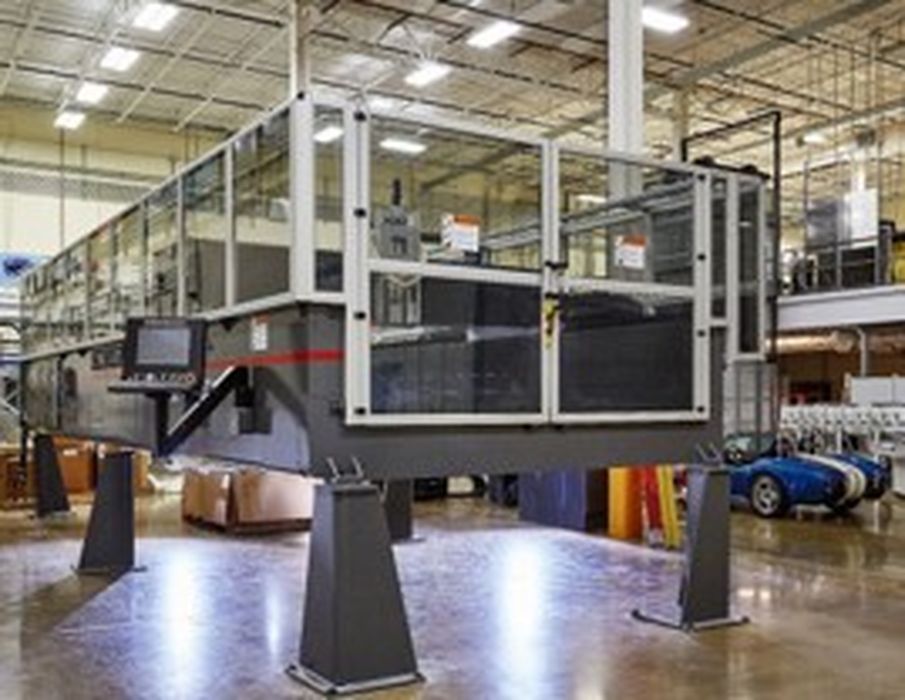
The M2IND demonstrations build on years of additive manufacturing development at ORNL’s Manufacturing Demonstration Facility – the nation’s only large-scale, open-access facility for rapid demonstration of early-stage R&D manufacturing technologies. The MDF has hosted installations like the Xerox ElemX liquid-metal 3D printer, which uses aluminum wire feedstock and requires no special facility modifications, and has supported the development of repeatable laser and electron-beam processes for reactor-grade alloys along with the data required for ASME code cases.
ORNL’s partnership with the Tennessee Valley Authority has been particularly significant – TVA and ORNL validated and installed some of the first 3D printed reactor components in commercial reactors after full post-processing, nondestructive evaluation, and irradiation testing. Current research at ORNL targets large wire-arc parts, repair of obsolete hardware, embedded sensing, and near-net-shape geometries for both advanced and small modular reactors.
Beyond reactor hardware, ORNL and partners including Kairos Power and Barnard have demonstrated reusable 3D printed polymer composite molds for constructing radiation shielding structures – designing, printing, and deploying molds in 14 days and reducing wood usage by up to 75% compared to traditional framework.
Ultra Safe Nuclear Corporation has also licensed an ORNL-developed method combining binder jet printing with chemical vapor infiltration to manufacture high-temperature-resistant ceramic components for advanced reactor fuel. With new partnerships signed at M2IND with energy companies like SLB and Kairos Power, the push is clear. Urgency has replaced routine. America is racing to rebuild its domestic manufacturing core, and ORNL’s additive manufacturing programs are at the center of that effort.
The Research and Development (R&D) Tax Credit
The developments described suggest strong IRC §41 R&D credit opportunities where taxpayers are developing or improving additive-manufacturing processes, reactor components, qualification methods, and embedded monitoring technologies. ORNL’s work includes 3D printed steel nuclear pressure vessels, large-format polymer impact limiter models, multirobot wire-arc additive manufacturing, BAAM fabrication, embedded fiber-optic strain sensors, real-time defect tracking, and digital qualification methods for nuclear components. These activities may align with IRC §41(d) because qualified research must seek technological information useful in developing or improving a business component and must involve a process of experimentation.
Potential qualifying activities include evaluating alternative materials, build parameters, inspection techniques, post-processing methods, defect-detection algorithms, and sensor-integration designs to improve function, performance, reliability, or quality. The article’s references to nondestructive evaluation, irradiation testing, machine-learning defect analysis, ASME code-case data, and certification support indicate technical uncertainty and iterative validation. Under IRC §41, taxpayers should document uncertainties, alternatives considered, testing performed, and wages, supplies, and contract research tied to those efforts.
R&D Tax Savers has been helping companies navigate the complexities of the R&D tax credit since it was introduced into law in 1981.
Conclusion
The M2IND event marks a turning point for additive manufacturing in the nuclear sector. The steel pressure vessel and impact limiter displayed at Oak Ridge were not proofs of concept – they were demonstrations that 3D printing can produce production-scale nuclear hardware today. Combined with the ORNL-INL digital qualification initiative, new industry partnerships, and year of foundational work at the Manufacturing Demonstration Facility, the path from printed part to certified component is becoming shorter and more defined. As energy demand accelerates and supply chain pressure intensify, additive manufacturing is positioned not as a future possibility but as a present-day industrial tool for rebuilding America’s nuclear manufacturing capacity.