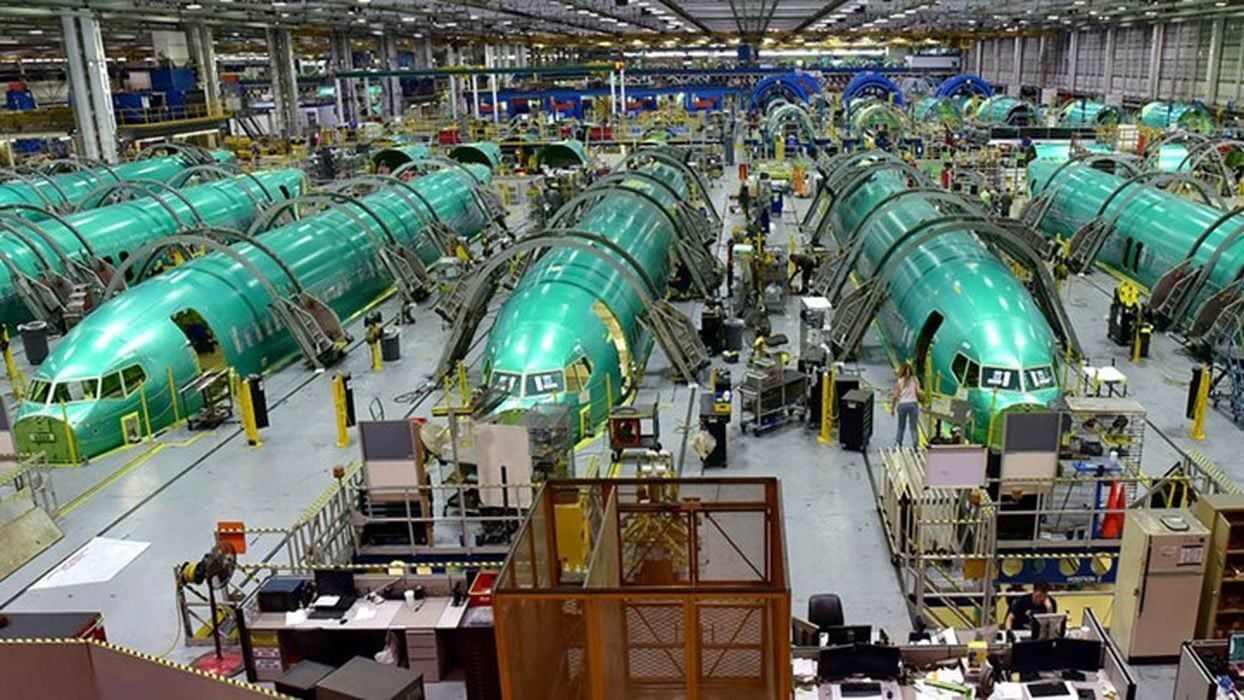
Charles R. Goulding and Jacob Nolan examine how a shifting Airbus–Boeing rivalry, combined with 3D printing and tighter supply chain control, is redefining execution and advantage in modern aerospace.
Airbus and Boeing: A Shifting Duopoly
For decades, Airbus and Boeing have operated as a near-duopoly in global commercial aircraft manufacturing, benefiting from high barriers to entry and long-term growth in air travel demand. Until recently, Airbus had been viewed as the stronger business performer, while Boeing struggled with major operational disruptions, legal liabilities, and management challenges stemming from safety crises and production failures.
That balance has begun to shift. Boeing has made progress stabilizing its operations, improving oversight, and repairing relationships with regulators and customers. Airbus, meanwhile, has faced its own challenges, particularly related to software integration and hardware supply constraints. Issues with Pratt & Whitney GTF engines have grounded portions of the A320neo fleet, while production delays and quality concerns have affected output targets. In addition, software integration challenges across avionics and flight systems have slowed certification timelines and added cost pressure.
As a result, Airbus has experienced delivery delays and margin pressure at a time when demand remains strong. The contrast highlights how execution risk, not just demand, can significantly impact performance in a capital-intensive industry like aerospace.
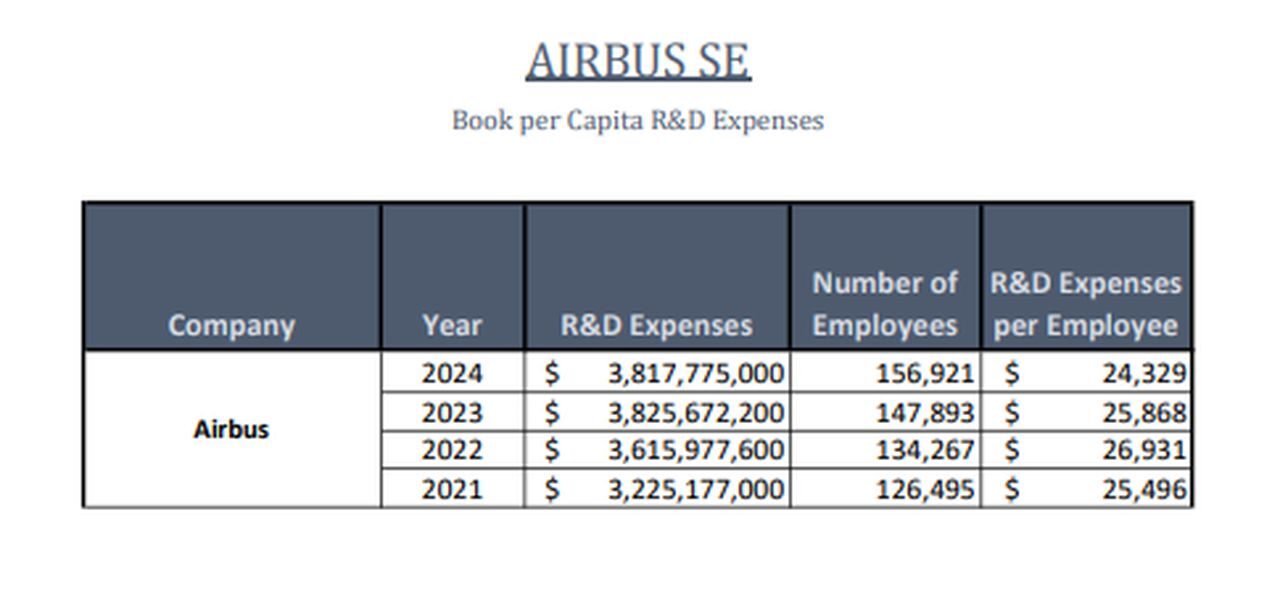
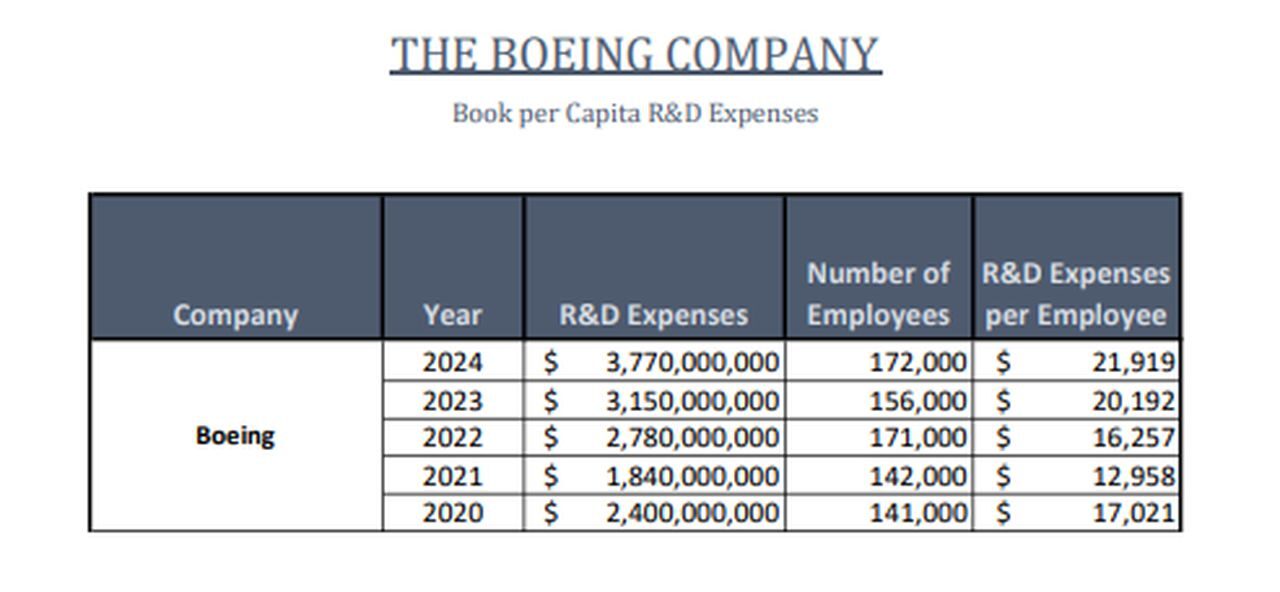
Airbus and Boeing R&D Spending Comparison
Airbus and Boeing both invest heavily in research and development, but their spending patterns reflect different strategic priorities. Airbus has consistently devoted a higher share of its revenue to R&D in recent years, focusing on production efficiency, digital manufacturing, sustainable aviation technologies, and incremental aircraft upgrades rather than launching entirely new platforms. Boeing’s R&D spending declined during its crisis period as resources were diverted toward safety fixes, regulatory compliance, and balance sheet repair, though investment has begun to recover as operations stabilize. While Boeing historically outspent Airbus during periods of major aircraft development, Airbus’s steadier and more focused R&D approach has helped it execute more reliably, particularly in manufacturing systems and supply chain innovation such as additive manufacturing.
Boeing: Additive Manufacturing from Production to Sustainment
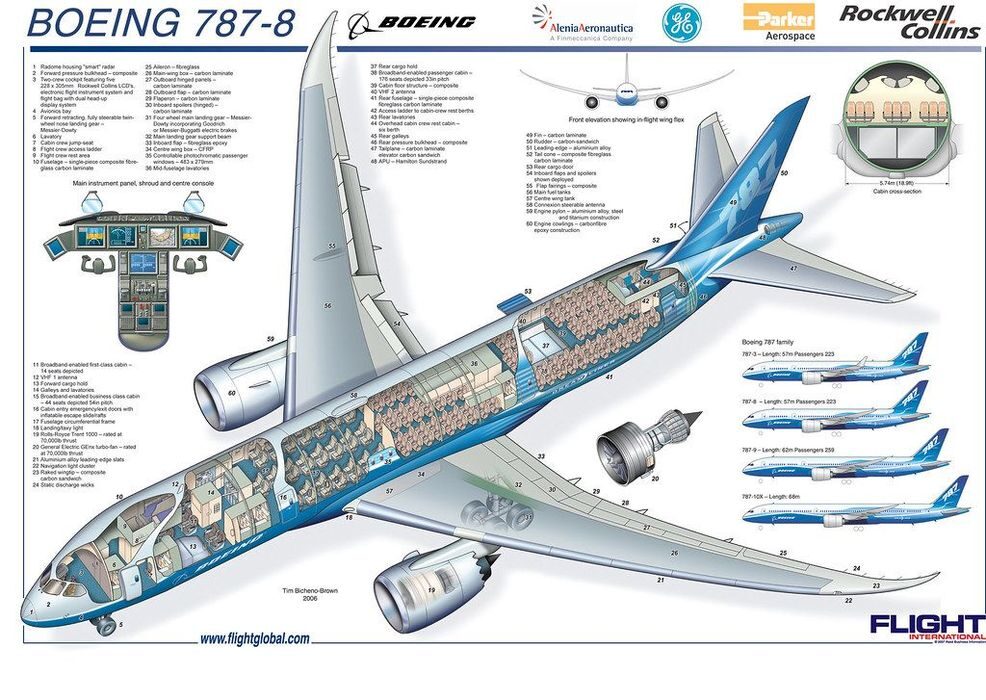
Boeing was one of the earliest aerospace companies to integrate 3D printing into certified aircraft programs. Today, Boeing aircraft such as the 787 Dreamliner and military platforms like the F/A-18 and CH-47 Chinook fly with hundreds of 3D-printed parts onboard.
Boeing’s approach emphasizes both production efficiency and long-term sustainment. Additive manufacturing allows Boeing to replace obsolete or low-volume parts without re-tooling entire production lines. This is especially valuable for military and legacy aircraft that require replacement components years or decades after original production ends.
Another major benefit is design freedom. Engineers can create internal lattice structures and complex geometries that reduce weight while improving durability. Boeing also uses additive manufacturing to reduce part counts, which improves reliability and simplifies maintenance for airlines and defense operators.
3D Printing Across the Aircraft Supply Chain
The aircraft industry has emerged as one of the leading adopters of 3D printing, not only among original equipment manufacturers but across the entire supplier ecosystem. Airbus and Boeing function primarily as final assemblers, relying on extensive networks of tier-one and tier-two suppliers for engines, avionics, structural components, and cabin systems. Many of these suppliers have aggressively expanded their use of additive manufacturing.
Both Airbus and Boeing use 3D printing for flight-certified parts, tooling, jigs, fixtures, and maintenance components. Additive manufacturing enables rapid prototyping, weight reduction through optimized geometries, and part consolidation that lowers assembly complexity. Components such as brackets, ducts, housings, and structural supports are increasingly produced using metal and polymer additive processes.
At the supplier level, engine manufacturers, avionics firms, and cabin equipment providers use 3D printing to shorten lead times, reduce material waste, and improve performance. This distributed adoption allows Airbus and Boeing to benefit from additive manufacturing even when parts are produced externally. As certification standards mature, 3D printing is becoming a foundational production technology rather than a niche solution.
Digital Inventory and Supply Chain Resilience
Additive manufacturing is changing how aerospace companies think about inventory. Instead of warehousing thousands of spare parts, manufacturers can store certified digital files and print components on demand. This digital inventory model reduces storage costs and allows companies to respond faster when replacement parts are needed.
For Boeing and its airline and defense customers, this approach improves aircraft availability and lowers maintenance downtime. Spirit AeroSystems also benefits by reducing dependence on long supplier lead times, while Airbus gains flexibility in supporting aircraft fleets across the world. In an industry where delays can cost millions, supply chain resilience has become one of the strongest business cases for 3D printing.
Airbus: Scaling Additive Manufacturing Across Commercial Aircraft
Airbus has emerged as one of the most aggressive adopters of 3D printing in commercial aviation. Rather than limiting additive manufacturing to prototypes, Airbus uses it to produce certified, flight-ready parts for aircraft such as the A320, A350, and A400M. These parts include brackets, cabin components, air ducts, and structural elements.
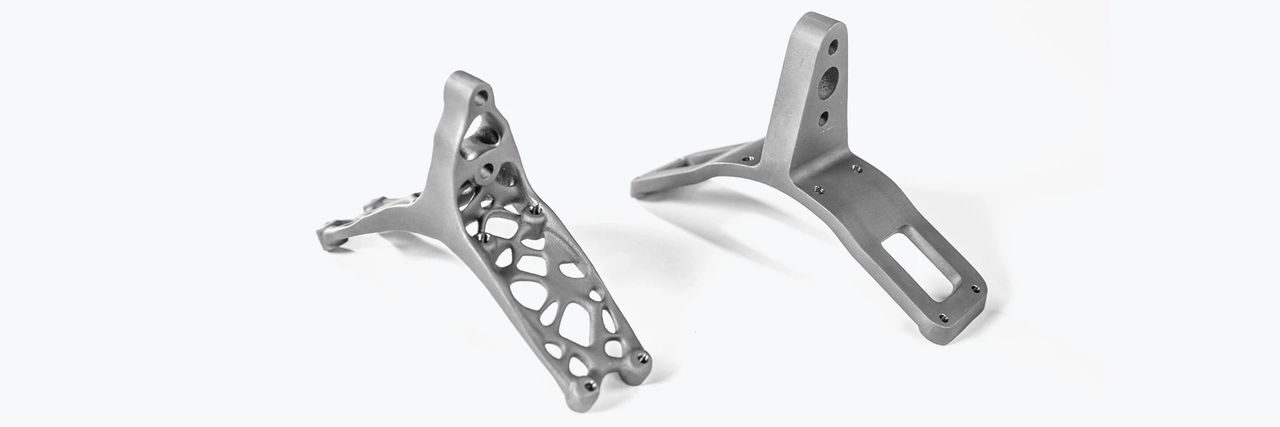
One of the biggest advantages Airbus gains from additive manufacturing is weight reduction. By redesigning parts specifically for 3D printing, engineers can remove unnecessary material while maintaining strength. Even small weight savings matter in aviation, as lighter aircraft consume less fuel and produce fewer emissions. Airbus has reported weight reductions of up to 55% on certain printed components, directly improving aircraft efficiency.
Additive manufacturing also allows Airbus to consolidate multiple parts into a single printed component. This reduces assembly time, simplifies supply chains, and lowers the risk of production delays caused by missing subcomponents.
Design Freedom and Part Consolidation
One of the most important advantages of 3D printing in aerospace is the freedom it provides. Traditional manufacturing often forces engineers to simplify designs to accommodate machining limits. Additive manufacturing removes many of those constraints, allowing for complex geometries, internal channels, and optimized shapes that would be impossible to produce otherwise.
Airbus, Spirit AeroSystems, and Boeing all use this design flexibility to consolidate multiple components into single printed parts. Part consolidation reduces fasteners, lowers assembly time, and improves reliability by eliminating potential failure points. Fewer parts also mean simpler supply chains and reduced production risk, which is especially valuable in a highly regulated industry like aerospace.
Spirit AeroSystems: Printing Structural Innovation into the Supply Chain
Spirit AeroSystems, a major supplier to both Airbus and Boeing, plays a critical role in advancing additive manufacturing behind the scenes. Spirit specializes in fuselage sections, nacelles, pylons, and other complex aerostructures, making it an ideal candidate for advanced manufacturing technologies.
Spirit uses metal additive manufacturing to produce tooling, brackets, and structural supports that would be expensive or time-consuming to machine traditionally. By printing tools and fixtures in-house, Spirit reduces lead times dramatically and can iterate designs much faster during development programs.
Beyond tooling, Spirit is increasingly exploring additive manufacturing for end-use structural parts. The company focuses on ensuring printed components meet strict aerospace certification standards, including strength, fatigue resistance, and thermal stability. This work positions Spirit as a key enabler of 3D printing adoption across the broader aerospace ecosystem.
Boeing’s Acquisition of Spirit AeroSystems
Boeing’s decision to acquire Spirit AeroSystems represents a strategic effort to regain control over its manufacturing and supply chain. Spirit, once spun off from Boeing, became a critical supplier responsible for major fuselage sections and structural components across Boeing’s aircraft programs. Over time, quality lapses and coordination failures at the supplier level exposed vulnerabilities in Boeing’s outsourced production model.
By bringing Spirit back in-house, Boeing aims to improve quality assurance, streamline production oversight, and better integrate advanced manufacturing technologies such as additive manufacturing. Vertical integration allows Boeing to align design, production, and inspection standards more closely, reducing the risk of defects and production delays. The acquisition also strengthens Boeing’s ability to deploy 3D printing consistently across structural parts, tooling, and replacement components.
This move signals a broader shift away from extreme outsourcing and toward tighter control of core manufacturing capabilities.
Spirit AeroSystems Purchase and Airbus Divestiture
In mid-2025, Boeing completed its acquisition of Spirit AeroSystems in a transaction valued at approximately 4.7 billion US dollars in equity, or about 8.3 billion US dollars when including Spirit’s debt. The acquisition brought a critical aerostructures supplier back under Boeing’s direct control, reversing the earlier decision to spin Spirit off and addressing long-standing concerns about quality oversight and supply-chain coordination.
As part of the transaction, Spirit divested facilities that primarily supported Airbus programs to address regulatory and competitive concerns. These divested operations included sites producing A350 fuselage sections in Kinston, North Carolina and Saint-Nazaire, France, aerostructure components in Casablanca, Morocco, wing and structural work in Prestwick, Scotland, and A220 pylons and wings in Belfast, Northern Ireland. Airbus assumed responsibility for these operations and received financial support to ensure a smooth transition and continued production stability.
This restructuring allows Boeing to strengthen quality control and manufacturing integration while enabling Airbus to retain secure access to critical production capacity for its aircraft programs.
Why 3D Printing Matters for the Future of Aerospace
The adoption of additive manufacturing by Airbus, Spirit AeroSystems, and Boeing signals a long-term shift in how aircraft are built. 3D printing shortens supply chains, lowers inventory costs, and allows manufacturers to respond more quickly to design changes or disruptions.
As materials, printers, and certification standards continue to improve, additive manufacturing is expected to move deeper into primary structures and high-stress components. What began as a prototyping tool has become a competitive advantage, enabling lighter aircraft, faster production cycles, and more resilient manufacturing systems.
For aerospace manufacturers facing rising costs and increasing demand, 3D printing is no longer optional, but it is becoming essential.
The Research & Development Tax Credit
The now permanent Research & Development Tax Credit (R&D) Tax Credit is available for companies developing new or improved products, processes and/or software.
3D printing can help boost a company’s R&D Tax Credits. Wages for technical employees creating, testing and revising 3D printed prototypes can be included as a percentage of eligible time spent on the R&D Tax Credit. Similarly, when used as a method of improving a process, time spent integrating 3D printing hardware and software counts as an eligible activity. Lastly, when used for modeling and preproduction, the costs of filaments consumed during the development process may also be recovered.
Whether it is used for creating and testing prototypes or for final production, 3D printing is a great indicator that R&D Credit eligible activities are taking place. Companies implementing this technology at any point should consider taking advantage of R&D Tax Credits.
Conclusion
Despite recent turbulence in both production and supply chain execution, demand for commercial aircraft remains extremely strong, driven by global travel growth and airline fleet renewal. With Airbus and Boeing, each now more tightly integrated with key suppliers and investing in advanced manufacturing technologies like 3D printing, there is room for both companies to thrive in a market that requires vast capacity and ongoing innovation. Rather than crowding each other out, this competitive duopoly continues to push efficiency and capability forward, shaping the future of modern aerospace for decades to come.