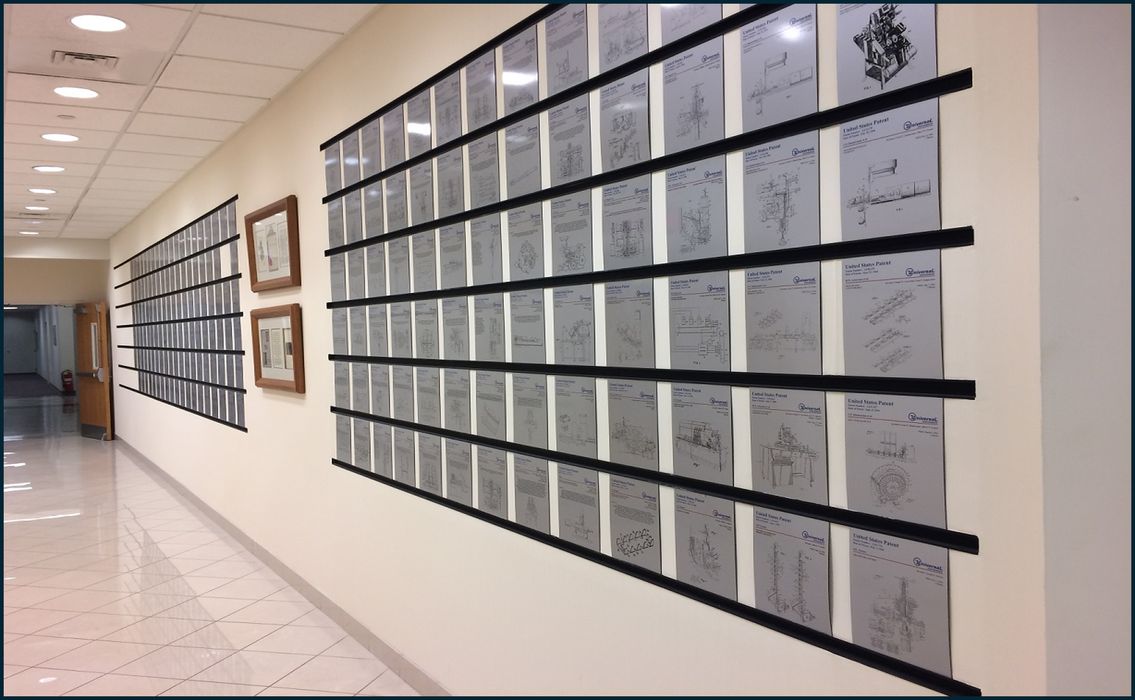
Charles Goulding and Lia Palumbo explore the Universal Instruments patent wall as a reflection of engineering innovation, highlighting the role patents play in advancing technology. They also examine the Southern Tier’s legacy of innovation, the importance of workforce development, and the impact of emerging technologies on the future of manufacturing.
Introduction
A patent wall displays issued patents that document an organization’s intellectual property and engineering achievements. It recognizes the work of inventors while highlighting technological advancements that have shaped a company’s products, capabilities, and long-term growth.
The Universal Instruments patent wall features 100 patents from a portfolio that now includes at least 500 global patents, serving as a visual record of its engineering legacy and highlighting decades of innovation in automation, electronics manufacturing, semiconductor packaging, and smart manufacturing technologies.
Patents connect engineering innovation to real-world applications by publishing technical information that other inventors can learn from and build upon, subject to existing patent rights. To receive patent protection, applicants must disclose the invention in sufficient detail to enable a person skilled in the field to make and use it, with drawings when necessary. This process can support innovation and economic activity while enabling patent owners to monetize their work through licensing or commercialization.
Universal Instruments and Electronics Manufacturing Universal Instruments is a global leader in precision automation and electronics manufacturing equipment. The company develops automated machines and software used in printed circuit board assembly, semiconductor packaging, and advanced electronics manufacturing. Its technologies support a wide range of industries, including automotive, medical devices, renewable energy, and industrial manufacturing
Core Technologies
In 1979, Charles Goulding, then working in Dover Corporation’s tax department, helped structure Dover’s acquisition of Universal Instruments. At its peak under Dover, Universal generated more than US$500 million in annual sales and is now part of Delta Electronics.
Universal Instruments’ primary offerings include:
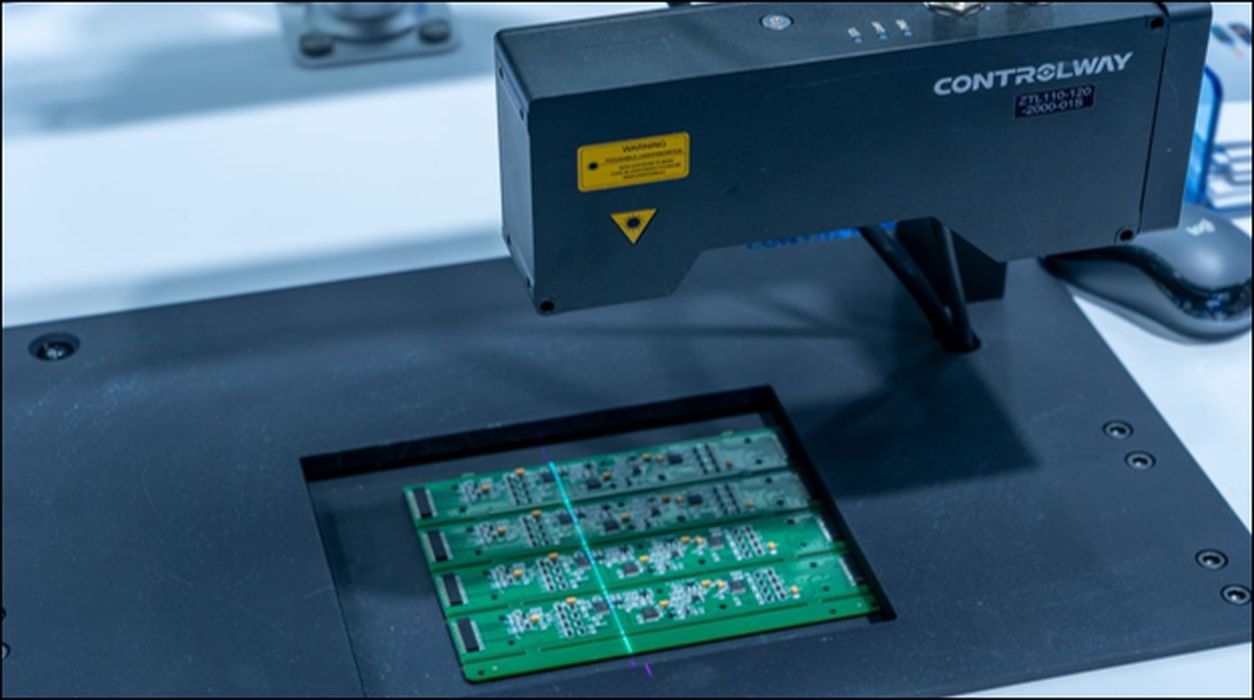
- Surface-Mount Technology (SMT): Pick-and-place machines that mount microscopic electronic components directly onto circuit boards.
- Advanced Semiconductor Packaging: High-accuracy equipment designed to handle delicate semiconductor dies and chips, bridging the gap between traditional SMT and semiconductor assembly.
- Through-Hole Technology: Insertion-mount machines used for larger and more durable electronic components.
- Smart Manufacturing Software: Systems that provide real-time production data, process control, and operational analytics.
The Southern Tier’s Technology Legacy
Broome County in New York State has a long history of engineering and manufacturing innovation that has helped establish the Southern Tier as an important center for technology development and industrial advancement. One of the region’s most influential contributors was IBM, which operated major facilities in the Binghamton area for decades and played a significant role in the development of computing technologies.
The area’s innovation history extends beyond computing. Binghamton inventor Edwin A. Link developed the Link Trainer, an early practical flight simulator, transforming aviation training by allowing pilots to safely practice complex flight conditions on the ground. The Link Trainer was widely adopted during World War II and is regarded as a foundational advancement in modern simulation technology.
Singer Link also played a key role in advancing simulation and training systems in the Broome County region, reinforcing the area’s long-standing expertise in aerospace-related engineering and complex systems development.
Together, IBM, Singer Link, and Universal Instruments reflect a broader industrial cluster in Broome County that combined computing, simulation, and electronics manufacturing innovation, helping establish the region as a long-term contributor to advanced engineering and industrial technologies.
Reindustrialization of Broome County
Today, Broome County is working to build upon its industrial history by attracting new advanced manufacturing investments that can create stable, well-paying careers. Expanding opportunities in engineering, technology, and manufacturing has the potential to strengthen the regional economy while reducing poverty and improving long-term economic success for residents.
Companies such as IBM, Singer’s Link division, and Universal Instruments created thousands of highly skilled technical jobs while attracting engineers, researchers, and manufacturers to the Southern Tier throughout the twentieth century. However, beginning in the late 1980s and continuing through the 1990s, the region experienced significant economic disruption as IBM reduced many of its local operations. IBM no longer has a comparably large manufacturing presence in New York’s Southern Tier, while the former IBM Federal Systems facility in nearby Owego is now owned by Lockheed Martin and remains a defense and systems-integration site. The loss of manufacturing and engineering positions coincided with population decline, reduced investment, and persistent poverty. Today, Broome County’s 15.9% poverty rate remains a significant challenge, emphasizing the importance of attracting high-paying manufacturing and technology jobs.
The Southern Tier is currently positioning itself for a new era of advanced manufacturing through growth in the semiconductor industry. A major influence is Micron Technology’s US$100 billion semiconductor complex in nearby Central New York, where the company broke ground in January 2026. With up to four fabs, the project is expected to generate 50,000 jobs in New York and become the largest semiconductor facility in the United States. These opportunities have the potential to strengthen supplier networks throughout the Southern Tier while creating additional employment opportunities for engineers, technicians, software developers, and skilled trades.
Defense and aerospace manufacturers also continue to reinforce Broome County’s advanced manufacturing base. BAE Systems, for example, announced a $65 million expansion in 2025 and committed to creating up to 134 jobs at its Endicott facility. This investment builds upon the area’s long-standing expertise in avionics and defense electronics, demonstrating that the Southern Tier remains an important location for high-value manufacturing.
Together, semiconductor manufacturing, defense technologies, automation, and electronics production represent the foundation of Broome County’s ongoing reindustrialization. The manufacturing innovation displayed on Universal Instruments’ patent wall serve as a reminder that the region’s future is being built upon decades of technological leadership. As new investments generate demand for advanced manufacturing equipment and skilled workers, the Southern Tier is once again emerging as an important center for American industrial innovation.
Workforce Development and Engineering Talent
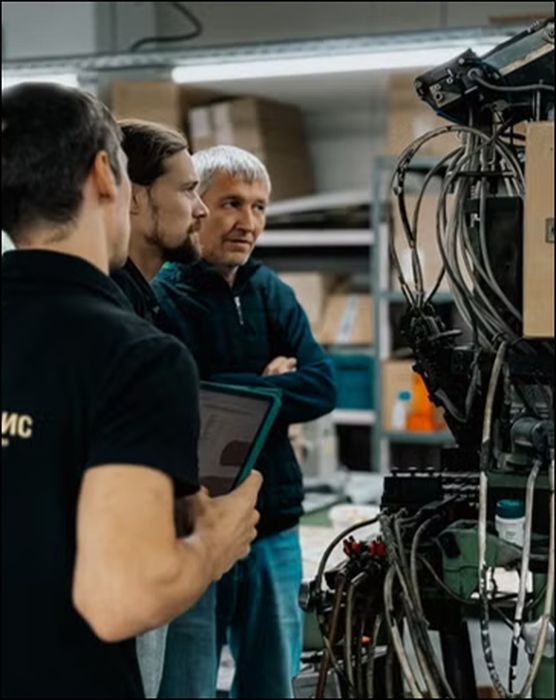
The innovation represented on Universal Instruments’ patent wall reflects a broader culture of technical excellence that has characterized the Southern Tier for generations.
Binghamton University and Syracuse University continue to prepare graduates for careers in technology, business, analytics, and engineering. These institutions develop strong analytical, research, and problem-solving skills that are valuable across many industries.
In recent years, our firm, R&D Tax Savers, has hired more than ten graduates from Binghamton University and Syracuse University, applying their skills in data analysis, technical research, financial modeling, and regulatory expertise to help businesses identify tax incentives, improve operational efficiency, and pursue energy-saving initiatives.
The connection between the patent wall and workforce development is rooted in innovation and problem-solving. Patents demonstrate how technical knowledge can be applied to solve complex challenges, while universities continue to prepare the next generation of professionals who support regional growth and economic development.
Technologies Shaping Modern Manufacturing
The innovations represented on the Universal Instruments patent wall provide insight into the technological foundations of modern manufacturing. Many of the concepts protected through patents decades ago continue to influence emerging technologies that are reshaping industrial production today.

Semiconductors
Semiconductors are materials engineered to behave somewhere between conductors and insulators. Their ability to control electrical flow makes them essential to virtually all modern electronics, from smartphones and medical devices to automotive systems and industrial equipment. As electronic devices become smaller and more powerful, advances in semiconductor manufacturing and packaging continue to play a critical role in technological progress.
The recent resurgence of semiconductor manufacturing, driven in part by the CHIPS and Science Act and major investments from companies such as Intel, Micron in Central New York, and Taiwan Semiconductor Manufacturing Company in Arizona, signals a positive outlook for companies supporting electronics production, including Universal Instruments. As semiconductor production expands in the United States, demand for precision equipment, automation technologies, and manufacturing expertise is expected to grow.
TSMC’s expanded U.S. investment commitment of up to US$265 billion is expected to increase domestic semiconductor manufacturing capacity. In addition, the U.S. government’s approximately US$8.9 billion investment for a 9.9% equity stake in Intel shows continued efforts to strengthen semiconductor production, enhance supply chain resilience, and maintain U.S. leadership in advanced manufacturing.
Additive Manufacturing
Additive manufacturing enables manufacturers to create complex parts layer by layer from digital designs. Applications include aerospace, healthcare, and product prototyping. As demand for engineers with advanced manufacturing skills grows, universities across Central New York have expanded programs focused on additive manufacturing and related engineering disciplines.
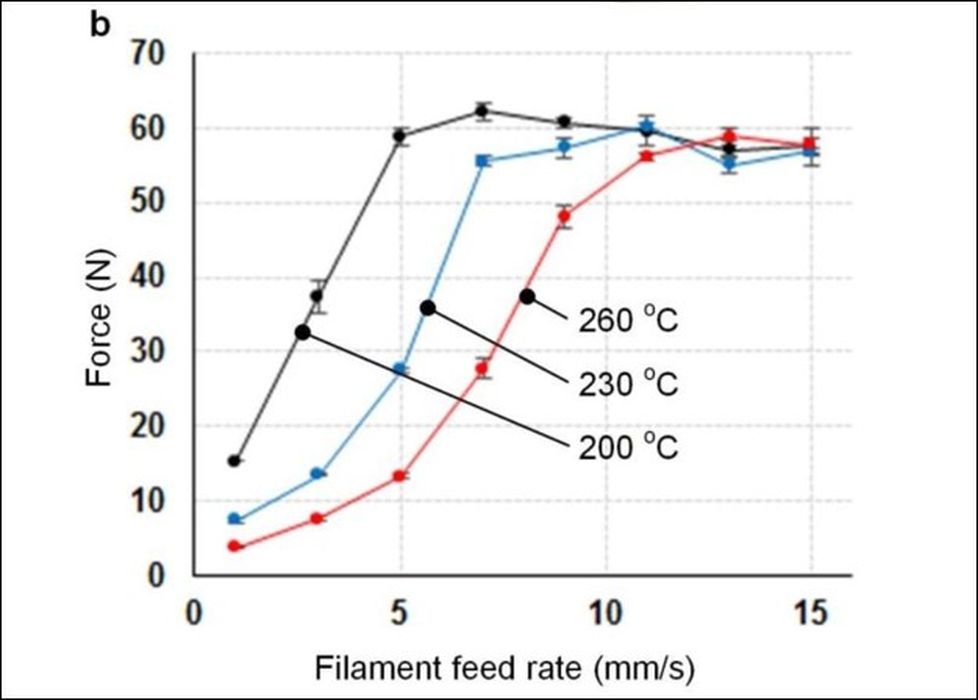
At Binghamton University, the Additive Manufacturing Laboratory provides students and researchers with access to multiple polymer and metal 3D printers, allowing them to prototype parts directly from CAD designs. The university also supports research on additive manufacturing. A 2017 study by researchers from Binghamton University and MIT analyzed rate limits in fused-filament fabrication. The researchers found that increasing print speed requires balancing the filament-feeding, heating, and motion systems. Higher nozzle temperatures (260°C) reduced the force needed to extrude filament; at 200°C, the required force rose as the feed rate increased. The study also showed that a printer can operate only as fast as its slowest subsystem. Although a gantry model predicted a maximum speed of about 394 mm/s, practical motor, thermal, and extrusion constraints limited achievable system speeds. The research identified design changes that could make future printers faster and more efficient.
Similarly, Syracuse University is advancing additive manufacturing through research in sustainable manufacturing, smart materials, and next-generation 3D printing systems. Researchers are developing technologies with applications in robotics and healthcare, while preparing students with the skills needed to drive innovation in advanced manufacturing.
The Research & Development Tax Credit
Universal Instruments’ patent wall tells a larger story about how engineering progress is built. Each protected invention records a solved technical problem, preserves know-how for future innovators, and points toward the next generation of advanced manufacturing. In that same spirit, the IRC Section 41 Research & Development Tax Credit can help companies engaged in comparable innovation convert a portion of their technical investment into a meaningful tax benefit.
For manufacturers, automation firms, electronics developers, semiconductor-related businesses, and other technology companies, qualifying research may include efforts to develop or improve a product, process, software, technique, formula, or invention when the work is technological in nature and involves experimentation aimed at improving function, performance, reliability, or quality. The credit can offset qualifying research expenses, including wages for engineers and technical personnel, supplies used in experimentation, certain computer-use costs, and eligible contract research expenses.
Practically, many of the same activities that often lead to patents, such as designing prototypes, testing new manufacturing methods, improving automation systems, solving production bottlenecks, and advancing smart manufacturing software, may also support a federal tax credit when properly documented. By reducing the after-tax cost of innovation, Section 41 can free capital for reinvestment in engineering talent, laboratory and shop-floor testing, next-generation equipment, and collaborations with universities or research partners.
For companies seeking to follow the path reflected on Universal’s patent wall, the credit is more than a tax incentive. It is a policy tool that rewards sustained experimentation and helps keep innovation moving from legacy achievements into future technologies.
Conclusion
The Universal Instruments patent wall reflects decades of engineering achievement in automation, electronics manufacturing, semiconductor packaging, and advanced manufacturing systems. Each patent documents an invention within that broader record of industrial innovation.
The Southern Tier’s long-standing engineering legacy, anchored by organizations such as IBM and early simulation advancements from Edwin Link, continues to influence the region’s technological direction. That legacy is reinforced by institutions such as Binghamton University and Syracuse University, which continue to develop the technical talent that supports regional industry.
As manufacturing technologies evolve, including semiconductor manufacturing and additive manufacturing, the importance of foundational engineering and workforce development remains consistent. IBM’s continued work in AI further illustrates how a legacy technology company can help shape emerging industries.
As Broome County continues its efforts to reindustrialize through investments in advanced manufacturing, semiconductor technologies, and engineering talent, the innovations represented on Universal Instruments’ patent wall demonstrate how past achievements can serve as the foundation for future economic growth. Ultimately, the patent wall serves as a reminder that industrial progress is cumulative, built through sustained innovation, education, and practical engineering expertise.