Charles R. Goulding and Nimra Shakoor showcase how Vietnam has overtaken China as the world’s sneaker hub, driven by resilient industrial clusters and the rise of 3D printing innovation.
To the surprise of many in the industry, Vietnam has recently overtaken China as the world’s leading sneaker manufacturing hub, with four major brands—Nike, Adidas, Saucony, and Brooks—shifting production there. The move reflects not only the rise of Vietnam’s resilient industrial clusters but also the growing role of advanced technologies like 3D printing, which are reshaping how sneakers are designed, prototyped, and produced.
China’s footwear clusters, once dominant, unraveled under rising costs and tariffs because they were built primarily on low-cost labor and scale. In contrast, Vietnam’s emerging clusters—supported by a younger workforce, government policy, and trade integration—illustrate that deep, resilient clusters are what truly attract and sustain investment, even in a turbulent global trade environment.
Sneakers and the Global Shuffle
For decades, sneaker production has been defined by cost-driven global shifts. Companies like Nike and Adidas pioneered outsourcing to East Asia in the late 20th century, relying on massive Chinese factories and a web of component suppliers. China became the center of global footwear, but its clusters were often built on size and speed rather than long-term innovation or resilience. Many relied on transport links, low wages, and geographic convenience to deliver cost advantages, which one analysis described as a “scale expansion strategy” rather than a model built for innovation (China Daily, 2021).
Meanwhile, sneaker brands began experimenting with advanced technologies like 3D printing to produce midsoles and components, signaling that efficiency and speed-to-market were increasingly vital. These innovations also underscored the importance of having tightly integrated supply chains capable of adapting quickly—an area where Vietnam would soon excel.
Nike has used 3D printing for years, including its Vaporfly uppers, its Air Max 1000 midsoles, and its 2025 FlyWeb line, which integrates TPU-based uppers and performance materials (Nike, 2025). Adidas expanded its portfolio with the Climacool 3D printed line in 2024 and continues to scale its “4D” midsole cushioning (Adidas, 2024). Saucony partnered with Metagirl Studio to develop a sneaker featuring a 3D printed heel shell (Metagirl Studio), while Brooks worked with HP to launch its Exhilarate-BL with “3DNA” midsole technology based on runner-specific data (HP, 2023).
The extensive use of 3D printing in the sneaker industry points to the importance of new technologies and a workforce that is about adaptation as much as it is about speed.
Vietnam’s Ecosystem Advantage
Vietnam offered a very different proposition than China. Its government policies encouraged foreign direct investment (FDI), with industrial parks and export-processing zones serving as magnets for multinational companies (U.S. State Department, 2024). Vietnam also benefited from a younger, more affordable workforce that lived closer to factories, reducing reliance on migrant labor and the need for companies to provide housing and food (Leather Panel, 2001).
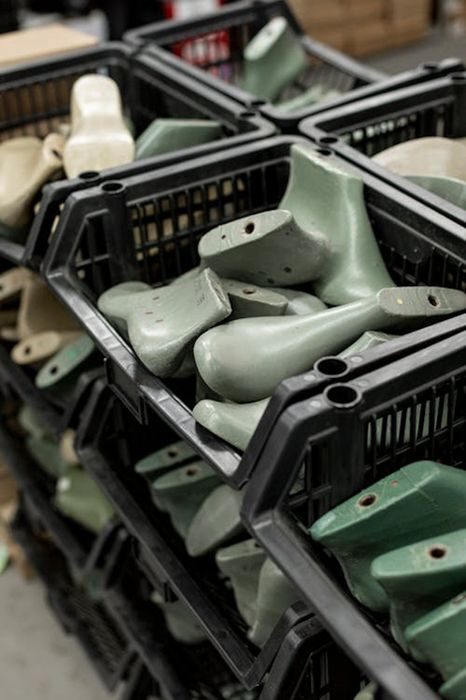
Industrial clusters in Vietnam created a self-sustaining ecosystem: suppliers of rubber, insoles, lasts, and other components established operations near major shoemaking centers, much like the famed Italian footwear regions in the past. According to one study, clusters in Vietnam have been a “driving force” in economic modernization, fostering technology transfer, export competitiveness, and job creation (Università Ca’ Foscari Venezia, 2019).
Tariffs, COVID, and the Great Shift
The decline of China as the sneaker world’s unquestioned hub happened quickly. In the 2010s, Chinese workers demanded higher wages, and domestic companies became known for copycat production, pushing foreign brands to diversify. When President Trump escalated trade tensions in 2018, sneaker companies were among the first to expand into Vietnam (New York Times, 2025).
The watershed moment arrived in 2020. As China shut its borders during COVID-19, factories ground to a halt, leaving companies dangerously exposed to their reliance on China. Sneaker makers pivoted quickly, shifting resources to Vietnam, where local supply chains and long-term investments were already in place (MoneyControl, 2025).
Industry insiders explained that sneakers, unlike many other products, depend on an unusually localized supply chain because of the constant pressure for speed-to-market. Vietnam’s long-term partners had already invested to deliver that agility (New York Times, 2025).
Beyond Cheap Labor: Vietnam’s Competitive Edge
Vietnam’s competitive advantages go beyond costs. Trade agreements, political stability, and investment in education and technical training allow the country to “move up the value chain” from basic assembly into design and innovation (Inflow, 2023).
The influx of foreign investment has transformed the economy, raising wages, improving working conditions, and creating opportunities for upward mobility. Workers like Pham Kieu Diem recall how rice fields gave way to industrial zones, with factory jobs funding homes, education, and generational change (MoneyControl, 2025).
Vietnam has also leaned into sustainability, investing in green factories and renewable energy, making it a more appealing partner for eco-conscious brands (Inflow, 2023). It’s 2022, Just Energy Transition Partnership (JET-P) further signaled long-term commitment to balancing growth with climate goals (U.S. State Department, 2024).
China’s Clusters: Strong but Brittle
It is important to note that China still has clusters. Regions like Putian and Jinjiang in Fujian Province remain highly productive, with thousands of firms producing billions of pairs of shoes annually (People’s Daily, 2024). These clusters remain dense and efficient, but they are primarily optimized for scale and OEM contracts.
By contrast, Vietnam’s clusters are newer and deliberately designed with integration, demographics, and trade partnerships in mind. Smaller brands still find it easier to rely on Chinese clusters because of their density—suppliers of materials like foam, laces, and embroidery remain tightly concentrated near factories (Marketplace, 2025).
This underscores the difference: China’s clusters are vast but brittle; Vietnam’s clusters are fewer but strategically resilient.
The Blueprint for Resilient Clusters
The shift from China to Vietnam demonstrates that clusters are more than a cost advantage—they are resilient ecosystems. A successful cluster combines:
- Universities and technical training institutions to fuel innovation.
- Supplier networks that minimize logistics risks.
- A workforce embedded in local communities, reducing turnover and migration costs.
- Government policies that encourage FDI and sustainability.
As Michael Porter argued decades ago, clusters allow industries to be more competitive by fostering productivity, innovation, and new business formation (Harvard Business Review, 1998). Vietnam’s case reinforces that lesson: where clusters are strong, investment follows—even in the face of tariffs, pandemics, and geopolitical uncertainty.
At the same time, clusters don’t thrive on geography alone. They need deliberate reinforcement through policy tools that encourage innovation—such as research and development (R&D) tax credits, which can strengthen local ecosystems by incentivizing companies to experiment, invest, and build new capabilities within the cluster.
The Research & Development Tax Credit
The now-permanent Research and Development (R&D) Tax Credit is available for companies developing new or improved products, processes, and/or software. 3D printing can help boost a company’s R&D Tax Credits. Wages for technical employees creating, evaluating, and revising 3D printed prototypes are typically eligible expenses toward the R&D Tax Credit. Similarly, when used as a method of improving a process, time spent integrating 3D printing hardware and software can also be an eligible R&D expense. Lastly, when used for modeling and preproduction, the costs of filaments consumed during the development process may also be recovered.
Whether it is used for creating and testing prototypes or for final production, 3D printing is a great indicator that R&D Credit-eligible activities are taking place. Companies implementing this technology at any point should consider taking advantage of R&D Tax Credits.
“Running” the Future of the Sneaker Industry
China’s dominance in sneaker manufacturing was built on scale and cost, but it proved fragile under pressure. Vietnam’s rise is a shining example of how clusters anchored in policy, demographics, and ecosystems of innovation are better long-term determinants of competitiveness. For investors, policymakers, and companies alike, the message is clear: the race to build clusters has begun, and resilience will follow.