
What’s up with 3D-printed drone applications?
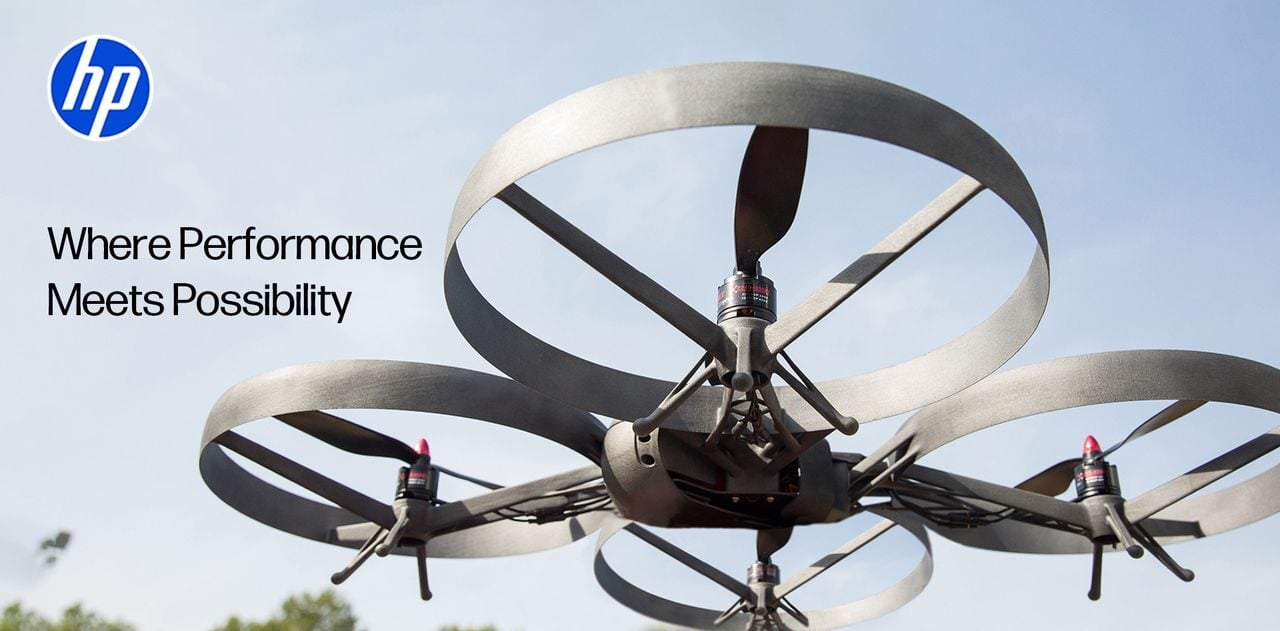
I received a promotional email from HP highlighting their ability to 3D print drone parts, as seen in their image at the top. They said that their MJF technology provides:
- Lightweight, complex parts for improved aerodynamics
- High-volume production without tooling delays
- Durable, end-use materials for real-world performance
That’s all true, but I wondered about this, having seen a couple of 3D printer manufacturers talk about their ability to 3D print drone parts. What is it about drones that is causing so much attention?
I then realized that it may be that drones are becoming one of those very few applications that are tightly aligned with 3D printing technology.
We’ve had 3D print technology for literally decades, yet it hasn’t taken over manufacturing. Why is that?
It’s because the technology has a number of limitations:
- More expensive than traditional manufacturing at scale
- Unavailability of required materials
- Lack of knowledge of how to use it effectively
- Generally smaller build volume making efficient production of very large parts more challenging
However, the technology also has significant advantages:
- Less expensive than traditional methods when producing smaller quantities of a part
- Able to produce almost any geometry, and is mostly free of the manufacturing constraints present in traditional methods
- Able to customize each and every part, unlike current mass manufacturing methods
- Relatively small footprint for manufacturing
If you add up these advantages and limitations, you can develop a kind of “formula” for parts that are good with 3D printing. It goes something like this:
- Smaller numbers of parts are required, especially customized single parts
- Smaller part sizes are used
- Faster turnaround for new designs is valuable
- Very complex designs are valuable (e.g. lightweight lattices for aerospace)
- Parts already cost a lot in this application, or there are fewer cost constraints
If a part hits several or all of those points, it’s likely a good candidate for 3D printing. There are multiple current applications that do so, including:
- Custom footwear: fast turnaround, customized single parts, lightweight designs, retail costs
- Aerospace parts: radical designs to achieve lightweight parts, already expensive parts, faster design lifecycles
- Dental aligners: customized single parts, already expensive parts
- Gaming figurines: complex designs, retail pricing, distributed manufacturing with small footprint
There are a few more, but this is how 3D printing works today for industry. There are large operations using 3D printing to print these types of parts.
It seems that drone applications also fit into this formula:
- Small parts that fit into typical build volumes
- Radical designs to achieve lightweight parts
- Expensive parts due to current geopolitical scenarios
- Distributed manufacturing desirable (small footprint)
- Durable materials now available
- Rapid development of new part designs
It now seems that drone production will join dental aligners and others as a key application for 3D print technology.
There will be more applications.
