
Wool filament? Not exactly.
We received an unusual press release announcing a 3D printer filament made from wool. At first glance, I thought, “Could they be using wool fibres as a reinforcement mechanism, like carbon fibre?” But no, that’s not it at all.
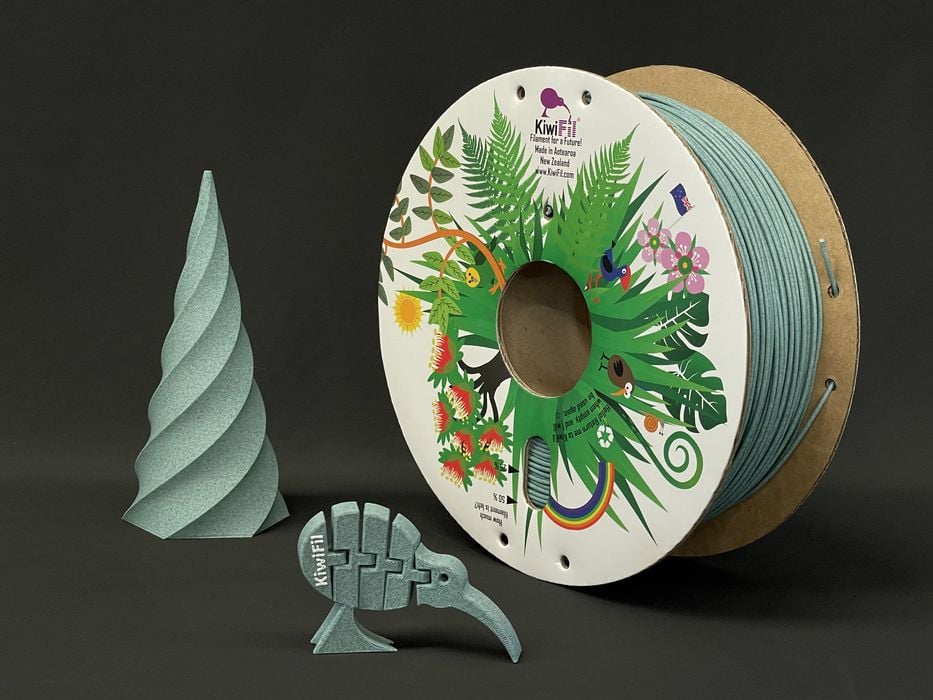
New Zealand-based Wool Source is using wool-derived pigments to colour 3D printer filament. No wool fibres appear in the filament, which they have named “WoolyFil”.
Why do this when there are plenty of pigment options available? It turns out that the wool-based pigments are a fully renewable resource that requires no fossil fuels or chemicals. It’s a sustainable resource that is perfectly natural.
Wool Source CEO Tom Hooper explains:
“Wool Source’s patented technology takes strong wool fibre and transforms it into fine, coloured particles that can be mixed into other materials for applications like 3D printing, bioplastics, and screen-printing inks. Unlike other biobased options for textural effect or colour, our four-colour base system gives filament producers maximum colour mixing flexibility.”
The pigments are mixed with normal recycled PLA to produce coloured filament. This means that using these filaments is no different from normal PLA; it’s just that they were coloured using a sustainable process. Print parameters remain the same.
There are two WoolyFil products now available, Green Marble and Riverstone.
From my rudimentary knowledge of sheep, they usually come in only one or two colours. And I don’t recall one of those colours being green. So how does Wool Source do this?
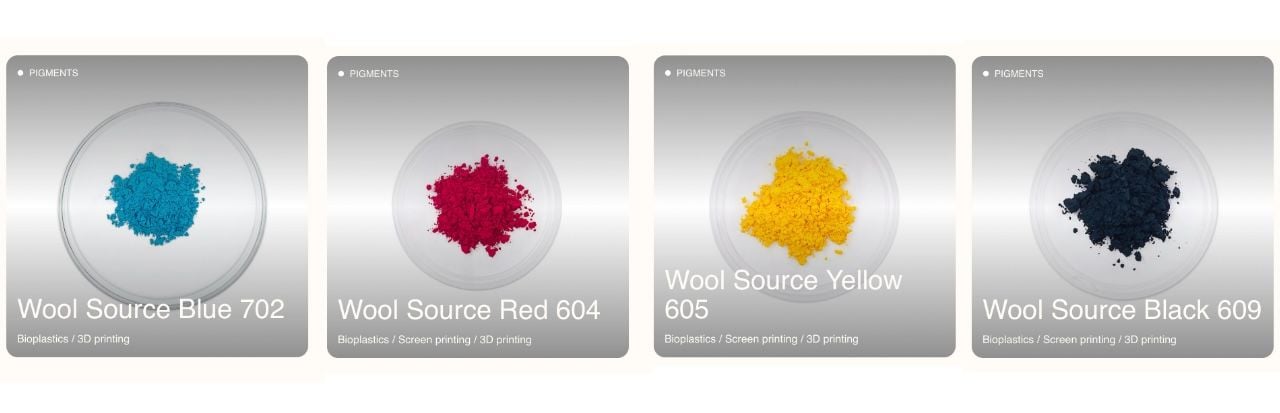
I’m not entirely sure, but I do see that they offer four pigment products: Yellow, Black, Blue, and Red. Those colours are suspiciously close to CMYK, the basic colour standard from which all print colours can be generated. So it’s likely they just mix different combos to produce, for example, green.
They say their process has been tested with other polymers, including PCL, PBS, and PHA. PHA is a known 3D printer filament, and an organic colourant would be a very complementary addition to a material that is fully biodegradable.
However, only rPLA is being offered at this time.
Wool Source has partnered with a New Zealand-based filament production company, KiwiFil, which is marketing WoolyFil. A quick look at their site shows a pretty good price for this material, only about US$19 per spool.
But hold on, those spools are not 1kg, they are only 250 g! For the full 1kg spools, they are charging about US$36, which is quite high compared to many other filament options.
Sustainability is still expensive, it seems.
Via Wool Source and KiwiFil
