
SPONSORED CONTENT
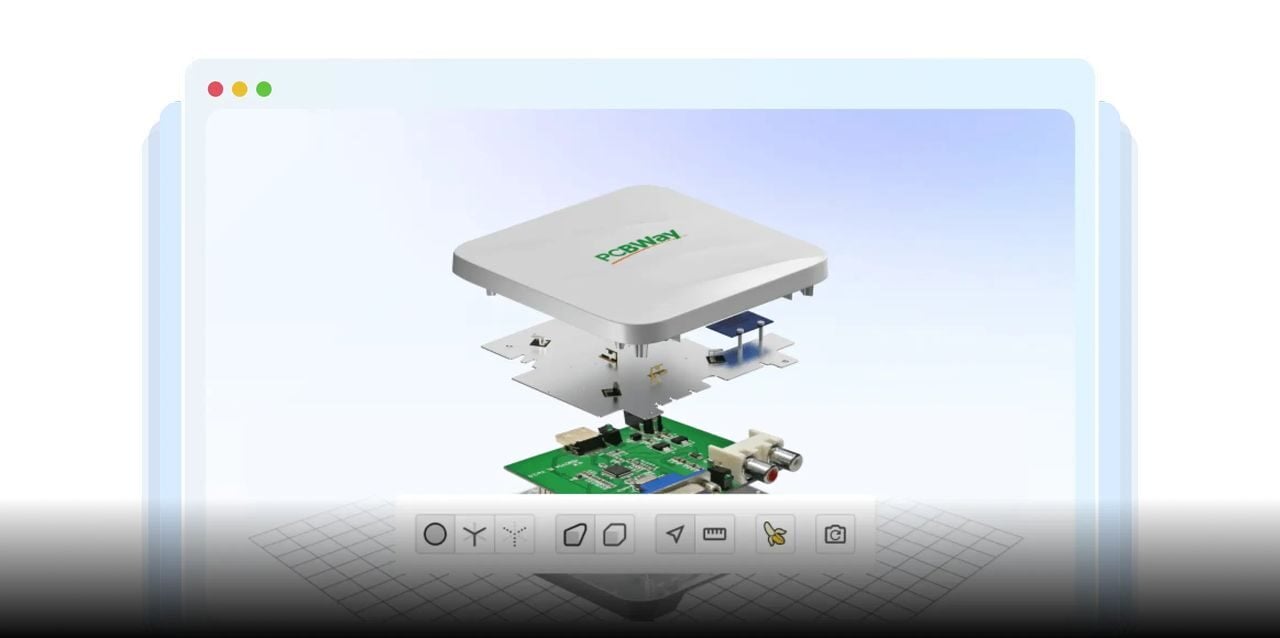
Making a production part is vastly different than making one for one-off use.
3D printing is an excellent choice for making a small number of parts, but it isn’t necessarily the optimal tech for larger quantities. Injection molding, for example, can produce huge numbers of parts in a short time. On the other hand, it requires quite a bit of time to produce the mold for use with the injection process.
Because 3D printing can easily produce almost any arbitrary shape, designs can be printed that don’t necessarily work with other manufacturing processes. This is why it is very important to carefully consider a design before committing to production. How will it be produced en masse? How many units are required? Which process and materials will be used?
Regardless of the final manufacturing process, designs almost always undergo a number of change iterations before production begins. These iterations might be to ensure the design is fully compatible with the target manufacturing process, reducing the per-unit cost of the parts, or reducing the setup costs of manufacturing.
For companies requiring parts that are not as familiar with this complex process, it can be quite challenging. Very often you will see the design stage separate from the manufacturing stage: “here’s the design, make 10,000 of them.”
This scenario happens frequently, particularly if the design stage is outsourced. The designer may or may not account for the required manufacturing process — or may not even be aware of which process should be used for that part.
That almost always doesn’t work, or at least is not the optimal outcome. The proper approach is to integrate design and manufacturing so that the peculiarities of manufacturing can be accounted for in the design. That typically ensures that production will be successful.
That is extremely important if you are committing to a large number of parts. Imagine discovering that the 150,000 parts you just received are actually not correct, or cost twice as much as they should have.
One way to avoid these complications is to work with a manufacturing service that provides an integration between design and manufacturing stages. PCBWay is one service that does so.
It turns out that PCBWay offers competent design services that have knowledge of a variety of manufacturing services. This means that as they work with a customer to design a part, they account for the constraints of the specific manufacturing process required.
This results in a design that can be properly manufactured. Even better, PCBWay actually offers a range of different manufacturing services, including 3D printing, injection molding, sheet metal fabrication, CNC milling and more. In other words, the part can transfer immediately to production as soon as the design is finalized.
The integration of design and manufacturing is almost always required for the production of large quantities of parts, and PCBWay is one service that offers this integration.
If you’re looking to design and print quantities of electronics enclosures, PCBWay could be an excellent service to make that happen.
Via PCBWay
