Charles R. Goulding and Preeti Sulibhavi reveal how a pinch of 3D printing might be the secret ingredient Italy’s pasta makers need to beat America’s 107% tariff bite.
On October 7, 2025, the Financial Times reported that the U.S. Commerce Department plans to impose “anti-dumping” duties of up to 107 percent on Italian pasta imports — a combination of existing 15 percent tariffs and new penalties as high as 92 percent. The U.S. accuses major producers of selling them pasta below cost when compared to Italy’s domestic prices. Italy calls the claim “unfounded protectionism.” (Financial Times)
Whatever the politics, the economics are simple: shipping Italian pasta to the U.S. just got dramatically harder. But 3D printing may offer a creative workaround — one that shifts part of production to the U.S. while preserving the Italian innovation and unique design consumers expect.
We’ve written before on 3D printed pasta and Ooni’s digital pizza revolution on Fabbaloo. This moment feels like the next chapter in that story.
Barilla has a head start
Barilla is better positioned than most. The company already operates U.S. factories in Ames, Iowa and Avon, New York, which supply a significant share of its American sales. Those products are insulated from the new duties since they’re made in the USA.
In 2019, Barilla’s massive Parma plant showcased its automation muscle — over 120 laser-guided vehicles, 35 robots, and roughly 438,000 tons of annual production. (ProFood World) That same technological sophistication makes the idea of pilot-scale 3D printing lines less far-fetched.
Barilla’s collaboration with GEA Group on new modular pilot systems in the U.S. suggests the infrastructure is already there for testing.
Smaller Italian brands are more exposed. Companies like La Molisana, De Cecco, and regional boutique pasta makers lack U.S. manufacturing capacity. Their shipments from Italy face the full tariff hit. After hopes circulated that La Molisana might open a U.S. plant, the company publicly denied it — yet the story highlights how fragile the export model has become.
The case for printing pasta
3D food printing isn’t new — but using it as a tariff-dodging production method certainly is. Here’s what makes it plausible.
Not a replacement, but a supplement
- Extrusion remains king for commodity products like spaghetti, rigatoni, and penne. High-throughput extrusion lines deliver multi-ton output per day at minimal cost.
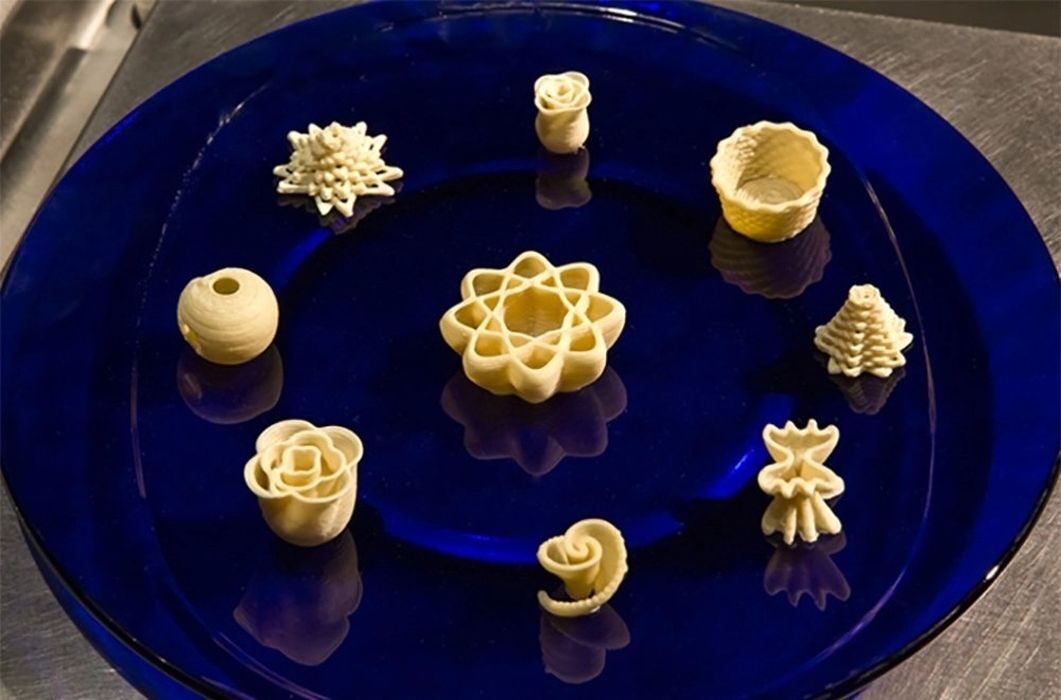
- 3D printing excels where design and differentiation matter — intricate shapes, personalized batches, chef collaborations, or experimental recipes.
In short, printing isn’t going to replace extruders. It’s going to complement them — especially when economic or political constraints (like tariffs) make it worthwhile to produce specialty SKUs locally.
Real-world examples
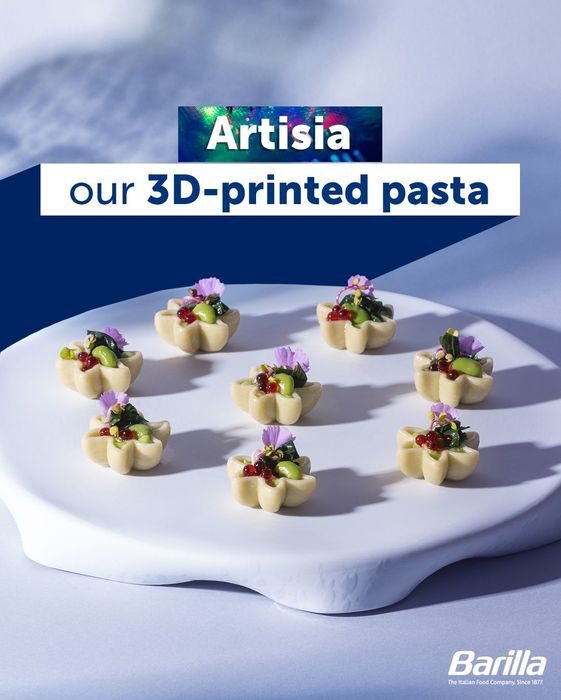
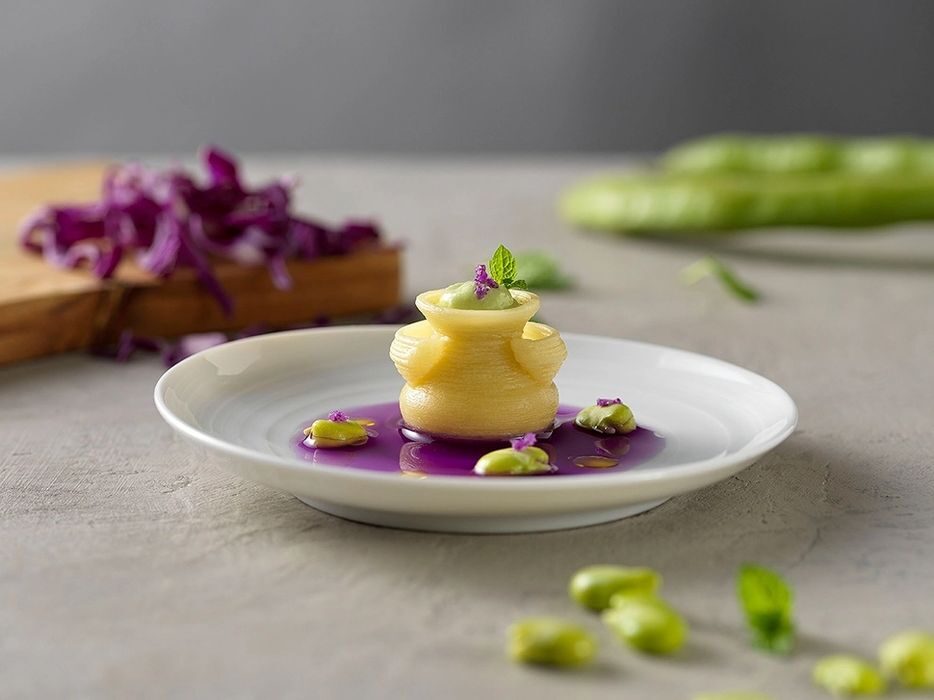
- Barilla’s BluRhapsody project has already proven that printed pasta can be both marketable and high-quality. The line produces complex, sculptural pasta shapes on-demand for restaurants and luxury events. Barilla has since launched its related product, Blue1877, a tribute to the company’s colors and founding year. As recently as May 2025, Barilla launched their Artisia product line. This reinvented, 3D printed pasta, blends innovation with Italian tradition.
Why printing works as a tariff hedge
Because 3D printing relies on digital recipes and extrudable dough rather than mechanical molds, design data can cross borders even when the product cannot.
An Italian brand could design new pasta geometries in Parma, send the digital file and formulation to a U.S. facility, and produce it locally — sidestepping the import duty while keeping the brand “Made in Italy” in design if not geography.
How Barilla could do it
A pragmatic three-phase rollout that could fit practical additive deployment.
Phase 1: Pilot printing inside U.S. plants (6–12 months)
- Use existing Ames or Avon R&D spaces to host one or two industrial food printers.
- Focus on premium SKUs — designer pasta shapes, event collaborations, or personalized limited runs.
- Perfect the dough rheology for printable semolina blends that cook like traditional pasta.
- Market the results as “Printed in the USA — Designed in Italy.”
Phase 2: Scale premium lines (12–24 months)
- Expand to small clusters of multi-nozzle printers reaching hundreds of kilograms per hour combined throughput.
- Integrate drying and packaging for short-run but continuous output.
- Launch BluRhapsody-style “American Collection” SKUs directly from U.S. plants.
Phase 3: Hybrid production (24 months +)
- Maintain traditional extrusion for volume products.
- Keep printed lines for high-margin items, seasonal specials, and rapid-response innovation.
- Use printers as a resilience tool against future trade shocks or supply chain disruptions.
What smaller Italian producers can do
For mid-sized brands that can’t afford a U.S. factory:
- Partner with U.S. co-packers or contract manufacturers that already have food-safe 3D printers.
- License pasta “shape libraries.” A brand can create its signature geometries in Italy and share printable design files with a U.S. producer. We have previously covered how pasta shapes can affect the absorption of pasta sauces in various dishes and ultimately the taste of the pasta dish.
- Target the high end. Limited-edition pasta in custom shapes can sell at a premium, offsetting the printing cost.
- Leverage existing food-tech incubators. Facilities that host printers for plant-based foods can often adapt them to semolina-based doughs with minor tweaks.
Economic snapshot
| Technology | Throughput (kg/h) | Relative Cost vs. Extrusion | Ideal Use Case |
| Traditional extrusion | 500 – 1,000 + | Baseline | Commodity pasta |
| Industrial 3D printer cluster | 50 – 200 | 2–5× higher | Premium / limited editions |
| Pilot-scale printer | 5 – 50 | 5–10× higher | R&D / boutique lines |
The takeaway: printing only makes sense for the top 5–10 percent of a product portfolio — but that’s often where the profit margin and brand names live.
Challenges to watch
- Consumer perception: will “3D printed pasta” feel authentic or gimmicky? Marketing and texture testing are key.
- Food-safety compliance: FDA approval, cleanability, and HACCP integration must be rock-solid.
- CAPEX risk: if tariffs are reversed within a year, early adopters could be left with underused printers.
- Integration: printers need to slot seamlessly into packaging and logistics lines to avoid bottlenecks.
Why this matters beyond tariffs
Even if the pasta dispute is resolved, additive manufacturing offers strategic value. It shortens the distance between culinary design and market production. It also localizes production without losing design control — a theme that applies not only to pasta but to many globalized food categories. We saw similar thinking in our Fabbaloo article on Ooni pizza ovens: smart hardware enabling hyper-local customization. Pasta printing could follow the same pattern, but on an industrial scale.
The Research and Development Tax Credit
The now permanent Research and Development (R&D) Tax Credit is available for companies developing new or improved products, processes, and/or software. 3D printing can help boost a company’s R&D Tax Credits. Wages for technical employees creating, testing, and revising 3D-printed prototypes can be included as a percentage of the eligible time spent on the R&D Tax Credit. Similarly, when used as a method of improving a process, time spent integrating 3D printing hardware and software counts as an eligible activity. Lastly, when used for modeling and preproduction, the costs of filaments consumed during the development process may also be recovered.
Whether it is used for creating and testing prototypes or for final production, 3D printing is a great indicator that R&D Credit-eligible activities are taking place. Companies implementing this technology at any point should consider taking advantage of R&D Tax Credits.
Conclusion
The U.S.–Italy pasta tariff dispute could ultimately boil down to a test for digital food manufacturing. Barilla has the scale, plants, and experience to turn 3D printing into a real pilot program inside its U.S. facilities. Smaller brands can use contract printers or licensed designs to stay present in the U.S. market without building factories. And for the entire industry, the crisis could accelerate an overdue shift toward localized, digital, and additive food production.
If 3D printing can help keep Italy’s most beloved export flowing to American plates — tariffs or not — that’s a future worth cooking up.