
Charles R. Goulding and Preeti Sulibhavi examine how UNC Chapel Hill’s pragmatic research strategy, shaped by federal funding cuts and pharma reshoring, is positioning 3D printing and life-science innovation as a critical pillar of the Research Triangle’s next growth phase.
As one of the three anchor universities of North Carolina’s famed Research Triangle, the University of North Carolina at Chapel Hill occupies a strategic position in U.S. academic research, especially at a time when pharmaceutical and biotechnology sectors are re-shoring manufacturing and investing in advanced technologies. Universities within the Triangle — including UNC, North Carolina State University, and Duke — have long driven innovation in life sciences, digital health, and engineering. UNC Chapel Hill’s research ecosystem is large, interdisciplinary, and integrated with regional economic priorities, making it well-positioned to capitalize on trends in pharma reshoring, biotech growth, and advanced manufacturing such as 3D printing.
However, UNC’s research enterprise faces a challenging federal funding environment. Like many research institutions in 2025, UNC has seen significant cuts in federal research dollars. According to local reports, the university has already experienced roughly US$126 million in federal grant reductions, affecting around 109 projects compared to the previous fiscal year. This reduction underscores the volatility of federal support and the need for scenario planning by university administrators.
In response to that uncertainty, UNC leadership has adopted a more practical approach — actively engaging in scenario planning for alternative funding levels and exploring new sources, including state funding streams and partnerships with industry and private organizations. This strategy recognizes that university research budgets can no longer be entirely dependent on federal dollars and that academic institutions must align with sectors that are growing, such as pharma, biotech, and advanced manufacturing.
This strategic reevaluation has led to some difficult decisions. In an unprecedented move, UNC recently terminated or paused a number of geographically defined research programs and delayed construction of major infrastructure, including a planned US$228 million Translational Research Building originally intended to expand lab capacity. These kinds of cutbacks — while regrettable — reflect a broader shift in how research universities prioritize areas with the most impact and funding viability in today’s competitive landscape.
At the same time, UNC is doubling down on areas where it can lead, including additive manufacturing and its applications in life sciences — a domain where 3D printing is increasingly transformative. For UNC students and researchers, gaining hands-on experience with relevant skills like additive manufacturing and biofabrication is essential in a challenging job market that increasingly values interdisciplinary technical expertise.
UNC’s Accomplishments in the Fast-Growing 3D Printing Pharmaceutical Area
UNC Chapel Hill may not headline every list of 3D printing powerhouses in pharma, but it has contributed meaningful research that intersects additive manufacturing with drug delivery, vaccine technologies, and biomedical devices. The following examples show how UNC researchers are making tangible advances.
1. 3D Printed Vaccine Microneedle Patches
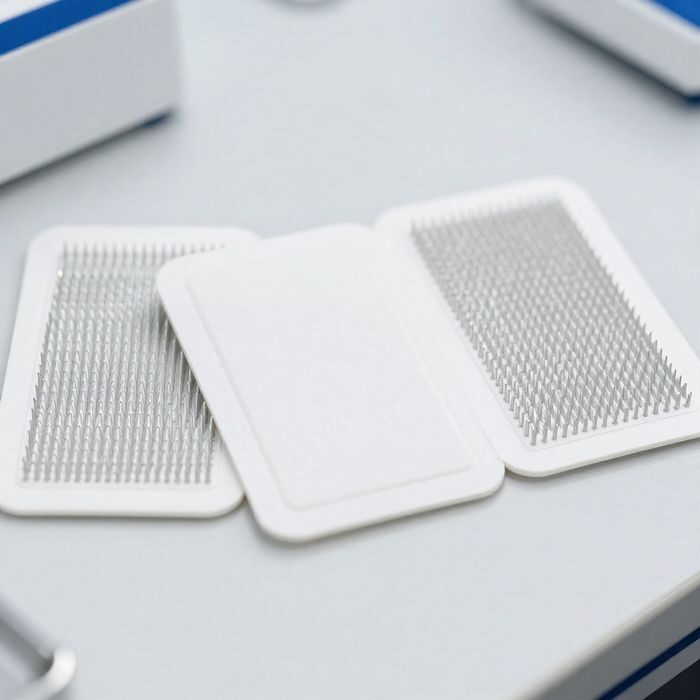
One of the most widely cited examples of UNC’s work in 3D printing is the development of 3D printed microneedle vaccine patches created in collaboration with Stanford researchers. These patches — tiny arrays of microneedles printed with precision polymer fabrication — are designed to deliver vaccines through the skin rather than via conventional needle injections. Animal studies have shown that these patches can produce immune responses up to 10 times greater than intramuscular injections.
The technology uses advanced additive techniques that allow fine control over needle geometry and vaccine formulation, something that traditional molding methods struggle to achieve. By potentially eliminating the need for cold-chain storage and allowing self-application, these patches could transform vaccine distribution — particularly in underserved regions.
2. Perry Lab’s 3D Printing for Drug Delivery Devices
Dr. Jillian Perry at UNC’s Eshelman School of Pharmacy leads research that specifically integrates 3D printing into drug delivery device development. Her lab uses high-resolution additive manufacturing systems (like Carbon’s USS1 and M1 printers) to fabricate microneedle arrays and other polymer-based drug delivery devices aimed at treating cancer and infectious diseases.
This work bridges polymer chemistry and biomedical engineering, producing devices tailored for controlled release and targeted delivery — a critical frontier in personalized medicine and next-generation pharmaceutical manufacturing.
3. 3D Printed Interstitial Fluid Biosensing Platforms
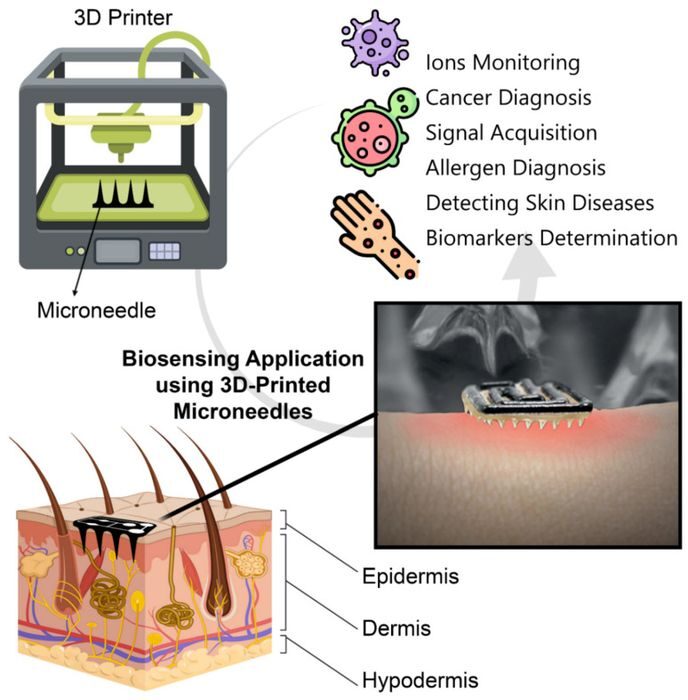
Recent work described in additive manufacturing circles shows UNC scientists developing 3D printed microneedle arrays integrated with biosensing technology that can detect biomarkers such as lidocaine in interstitial fluid. These microneedle sensing platforms demonstrate how 3D printing can produce multifunctional biomedical devices that combine delivery with real-time health monitoring.
Such technologies hint at future interfaces between pharma, diagnostics, and continuous health monitoring — an area ripe for commercial and clinical translation.
4. Pharmacoengineering and Customized Release Systems
Graduate students and researchers at UNC have been exploring how 3D printing enables tailored drug-release systems for women’s reproductive health. Innovations like “AnelleO,” a 3D printed drug-release platform that targets specific dosing profiles, illustrate how additive technologies can solve complex pharmaceutical challenges like custom dosing and controlled release.
These projects exemplify how 3D printing can bring geometric complexity and precise material behavior into pharmaceutical design — expanding beyond pills into devices that release drugs in time-specific ways.
5. Hands-On Campus Makerspaces Supporting Additive Innovation
While not strictly pharma research, UNC’s on-campus makerspaces provide students and faculty with access to 3D printing tools and fabrication expertise that support a wide range of academic projects, including prototypes for biomedical applications. Fab labs at spots like the Kenan Science Library give the broader university community the chance to learn and experiment with 3D printing — seeding future innovations.
These resources help teach students crucial additive manufacturing skills, preparing them for careers where pharma, medical device, and biotech sectors increasingly intersect with 3D printing.
The Research & Development Tax Credit
The now permanent Research & Development Tax Credit (R&D) Tax Credit is available for companies developing new or improved products, processes and/or software.
3D printing can help boost a company’s R&D Tax Credits. Wages for technical employees creating, testing and revising 3D printed prototypes can be included as a percentage of eligible time spent for the R&D Tax Credit. Similarly, when used as a method of improving a process, time spent integrating 3D printing hardware and software counts as an eligible activity. Lastly, when used for modeling and preproduction, the costs of filaments consumed during the development process may also be recovered.
Whether it is used for creating and testing prototypes or for final production, 3D printing is a great indicator that R&D Credit-eligible activities are taking place. Companies implementing this technology at any point should consider taking advantage of R&D Tax Credits
Conclusion
UNC Chapel Hill’s unique position within the Research Triangle, its strong legacy of life-science research, and its interdisciplinary teams give it a solid foundation to contribute to the U.S. focus on pharmaceutical and biotech growth. The federal policy to reshore pharmaceutical manufacturing and invest in advanced tech creates a landscape where universities can play a strategic role — not just in basic research, but in tangible innovation pathways that lead to economic and public health impact.
Despite federal funding headwinds and institutional recalibration, UNC’s research leadership is actively aligning with opportunities where additive manufacturing intersects with drug delivery, vaccine technologies, biosensing, and pharmacoengineering. These areas — exemplified by 3D printed vaccine patches, custom drug devices, and hybrid sensor systems — point toward a future where UNC can help define the role of 3D printing in pharmaceutical and life-science innovation.
For universities across the country, UNC’s approach underscores the importance of adapting research strategy to real-world funding conditions and industry trends — ensuring that academic research remains both relevant and impactful in a rapidly evolving biomedical landscape.