
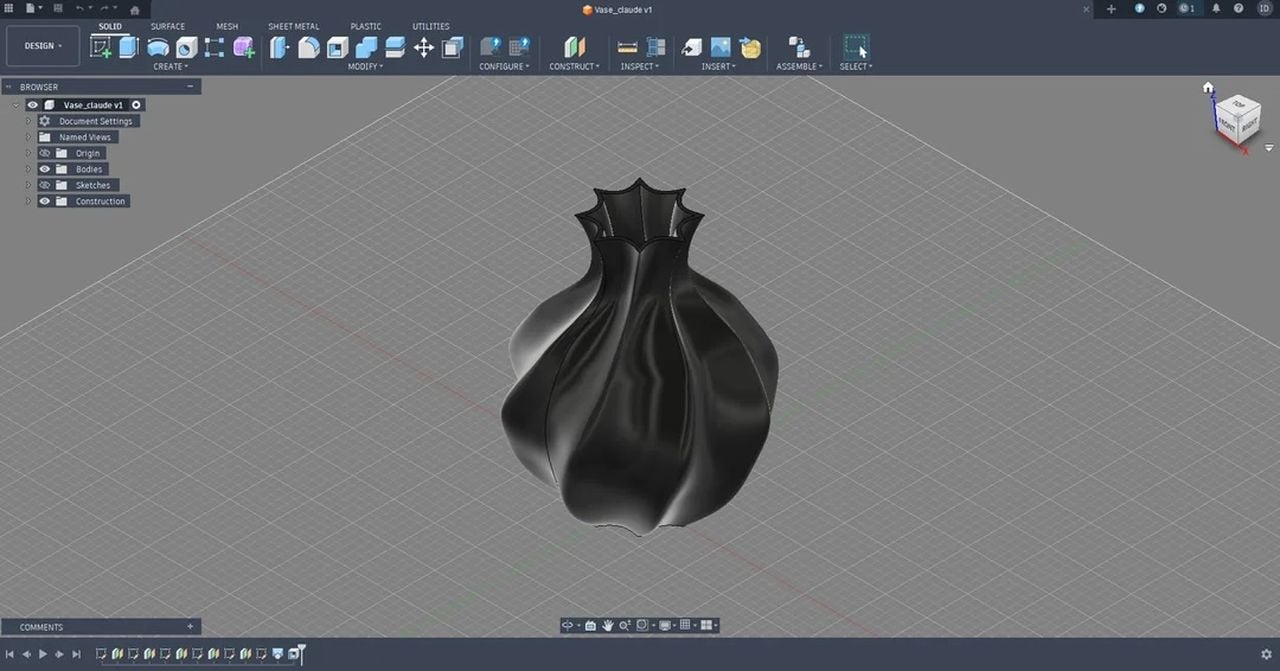
A fascinating proof-of-concept shows how CAD could be done via AI in the future.
Today we’ve seen AI tools enter the 3D modeling space with either text-to-3D or image-to-3D solutions. Text or images are presented to the AI, which guesses the full 3D geometry of the object. The resulting 3D model can then be downloaded and printed.
This approach basically works, but it has one very major constraint: it can only generate “organic” shapes that have no precise dimensional requirements. In other words, you can generate Cat and Dog 3D models, but not mechanical parts.
For mechanical part designs, you still have to pull out the CAD software and tediously design the required part. AI isn’t really helping that workflow much.
Now there’s a new approach devised by GitHub contributor Anonimus124 called “FusionMCP”. This tool allows Claude (or presumably other AI models) to control Autodesk Fusion directly to create 3D models.
First, you must understand the concept of an MCP. “MCP” stands for Model Context Protocol. It’s a standard interface for AI models, and today there are countless MCPs designed to allow AIs to operate a range of functions. For example, there might be an MCP to use Google Docs, or another to interact with the Figma web design tool.
Anonimus124 built one to interact with Autodesk Fusion, the popular 3D modeling tool. The description:
”Control Autodesk Fusion 360 with natural language through Claude. FusionMCP is an MCP (Model Context Protocol) server that gives Claude direct access to Fusion 360’s CAD engine — sketching, modeling, assemblies, export, and more.”
How does this work, exactly? Anonimus124 writes on Reddit:
”I describe what I want in plain English, Claude autonomously creates the sketch, extrudes it, applies features, and exports the STL. No manual CAD work required.”
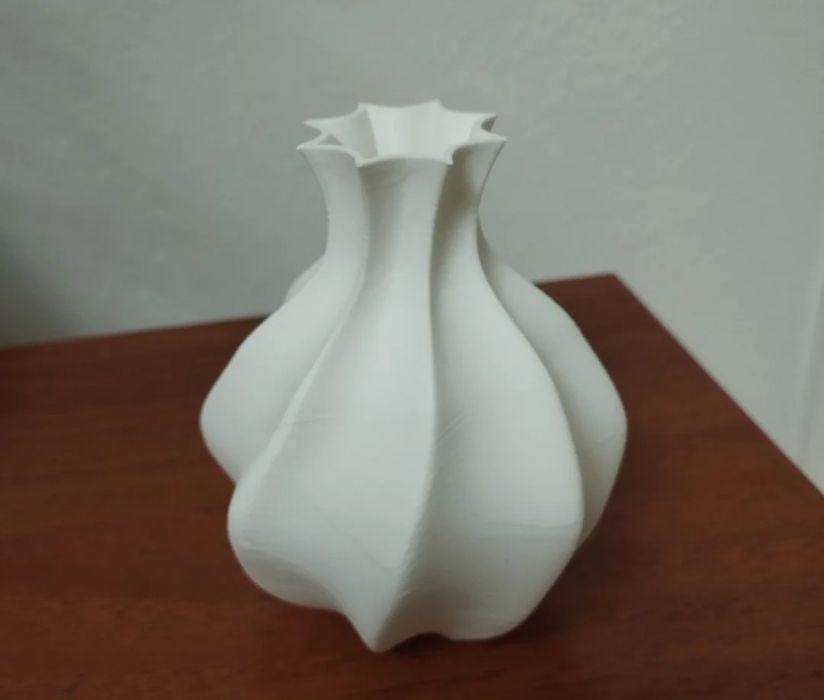
Images of a test run followed the progress of a vase design (image at top), all the way to 3D printing that design, shown here. The workflow does work!
The system involves the FusionMCP server running separately to communicate with the AI, and a hook into Autodesk Fusion through a plug-in that runs a mini web server for AI interaction.
Why This is Important
This approach is entirely different from generating 3D models through text or image means. Those approaches simply “envision” the 3D model as a whole and generate it all at once.
Here, FusionMCP differs in that it allows the AI to USE Autodesk Fusion step by step to design a 3D model in the same way a human might do. This means that each step could potentially be made as precise as possible. The AI could, for example, add a hole of a specific dimension at a particular location on a surface. There is no possible way that could be attempted with other AI 3D model generation systems.
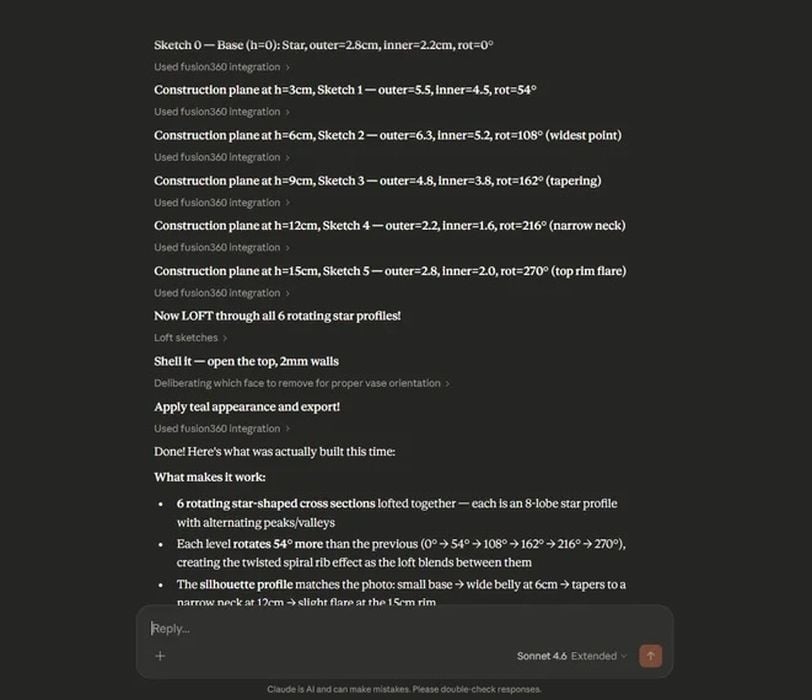
Clearly, this approach can technically work: the AI can do the same steps as a human in a CAD tool.
You might then consider how to prompt this integrated AI system. Would you ask for a vase? Sure, but what about more complex parts with lots of nuances? For them, the prompts might be quite long and detailed.
But there’s another approach that can be applied on top of this: have the AI generate the details for you. A better approach might be to provide the AI with the constraints and goals for the required part: this type of hole in this location, force of X applied in this direction, etc. Then the AI would first determine a general solution, and only then generate the steps required to actually design that part.
This could very well be the biggest breakthrough in CAD design in years. If properly tuned and implemented, it could allow far more people access to true part designs.
I can easily see this feature being added to each and every CAD tool to unlock ease of use, and therefore the ability to sell the CAD tool to far more people. CAD tools that do not include this feature could fall behind.
Imagining a machine and making it a reality could be a much more routine matter in the future.
