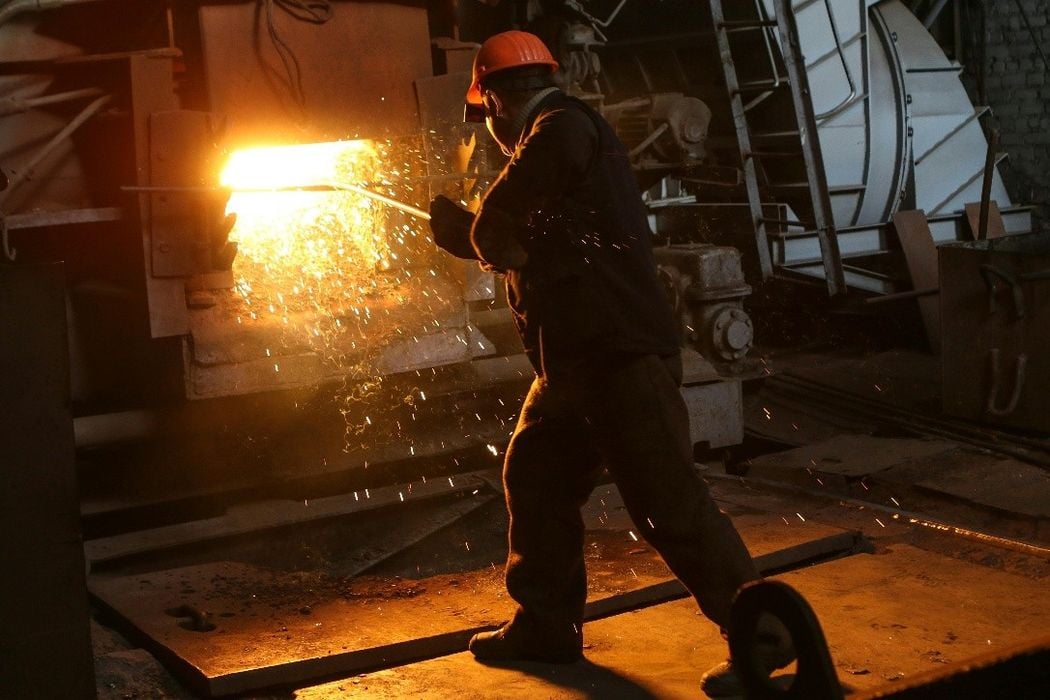
Charles R. Goulding and Aaron Rofe reveal why billions in new investment are turning Birmingham into a modern powerhouse for steel, innovation, and advanced manufacturing.
As the US manufacturing renaissance accelerates, the Southeast has quietly emerged as the country’s most dynamic industrial region, and Birmingham, Alabama, is reaping the benefits. Long known as the “Steel City of the South,” Birmingham is experiencing a modern resurgence that aligns with major reshoring trends, population growth, and shifting supply chain strategies that increasingly favor Southern markets over traditional Rust Belt hubs.
According to the Reshoring Initiative, nearly 240,000 manufacturing jobs are projected to have been reshored to the United States in 2025, continuing strong momentum from 2024. While earlier reshoring discussions often centered on the Midwest and Great Lakes region, the Southeastern United States is now the manufacturing epicenter drawing the most attention. In 2025 alone, the American South secured more the US$300 billion in capital investment, signaling a structural shift in where companies are choosing to build, expand, and modernize facilities.
This industrial acceleration is closely tied to population growth and sustained demand for logistics and manufacturing capacity. Since 2019, the Southeast has absorbed approximately 545 million square feet of industrial space, far outpacing many other regions of the country. The region continues to attract reshoring-driven projects in automotive, aerospace, clean energy, metals, and advanced manufacturing. These new facilities require enormous volumes of steel, piping, fabricated metals, and processed materials, creating renewed demand for regional metals producers and service centers.
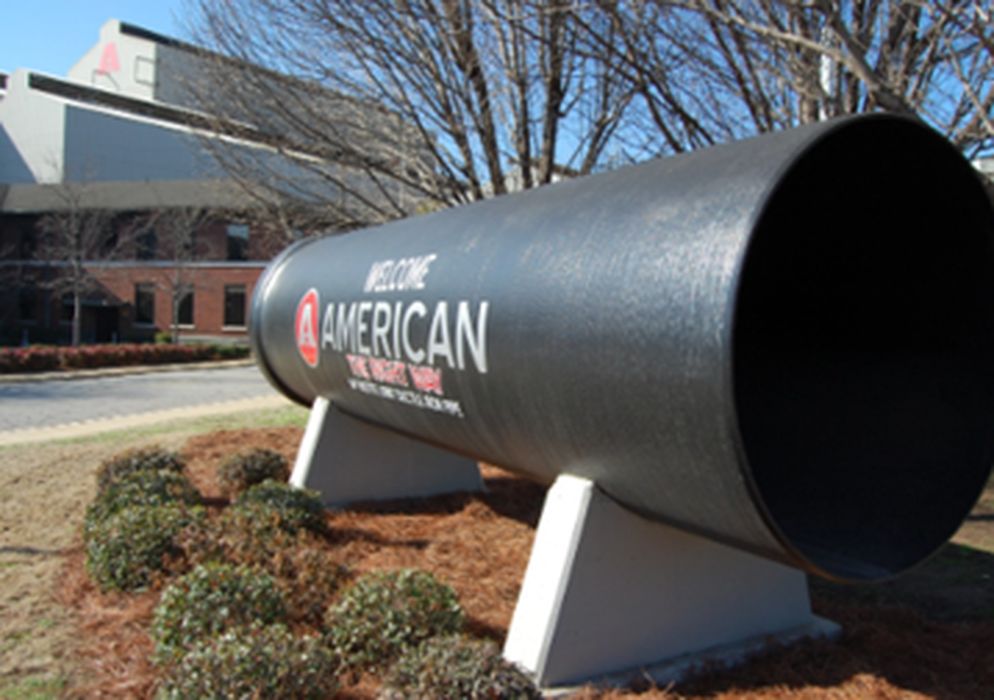
Birmingham’s steel ecosystem, originally built on the area’s abundant iron ore, coal, and limestone deposits, once made it one of the most productive iron-making districts in the world. Today, new investment suggests that a fresh growth cycle is underway. Over the past decade, Birmingham has secured more than US$1.5 billion in steel-related capital investment, including a nearly US$790 million expansion by the American Cast Iron Pipe Company (ACIPCO). The company’s “AMERICAN for Life 2030” initiative will replace existing furnaces with greener induction furnace technology, add new casting machines, construct a modern lining and coating facility, and build an employee center. The project is expected to create approximately 80 high-wage jobs with average annual earnings exceeding US$110,000. Local officials have highlighted that the shift to induction furnaces is expected to reduce emissions by more than 90 percent, marking a significant environmental advancement for a historically heavy industrial corridor.
US Steel (Now Nippon) has also reinforced the region’s momentum with a US$75 million investment in a new Premium Thread line at its Fairfield Tubular Operations in Alabama. The project will enhance threading capabilities and improve production efficiency through advanced automation and process upgrades. It is expected to bring 44 permanent jobs to the facility along with approximately 250 construction positions. The Fairfield campus, which includes an electric arc furnace and rounds caster, primarily serves energy-sector customers and reflects a broader commitment to American-made steel production.
These major projects complement expansions by CMC Steel and continued growth at O’Neal Steel, part of O’Neal industries, one of the largest family-owned metals service center networks in the United States. Founded in Birmingham in 1921, the company has grown into a diversified metals enterprise generating roughly US$3.6 billion in revenue and employing about 4,000 people across roughly 90 facilities spanning North America, Europe, and Asia. Through subsidiaries including O’Neal Steel, United Performance Metals, O’Neal Manufacturing Services, and other affiliated companies, the organization supplies aluminum, carbon and alloy steel, stainless steel, and specialty metals to industries ranging from heavy manufacturing and construction to aerospace and defense.
O’Neal Steel, itself, operates 19 distribution centers across the US, including locations in Alabama, Arkansas, Florida, Illinois, Indiana, Iowa, Louisiana, Mississippi, North Carolina, Pennsylvania, Tennessee, and Texas. From its headquarters in Birmingham, the company provides metals inventory alongside value-added processing services such as laser cutting, coil processing, rolling, forming, welding, punching, shearing, and sawing. These capabilities allow manufacturers to purchase steel and aluminum that has already been processed to precise specifications, reducing production time and improving supply chain efficiency.
The company also maintains close operational ties with domestic steel producers. One example is a manufacturing facility operated by O’Neal Manufacturing Services on property owned by Nucor Steel in Tuscaloosa, Alabama. The plant uses plasma cutting systems to process steel plate produced by Nucor, shaping the material into components used in products such as heavy equipment, elevators, locomotives, forklifts, and industrial machinery. By locating the processing facility directly adjacent to the steel mill, the operation reduced transportation costs while allowing scrap metal generated during cutting to be recycled back into the steelmaking process.
At the same time, O’Neal Industries is expanding into advanced manufacturing technologies. United Performance Metals, a subsidiary of the company, recently acquired Fabrisonic, a firm specializing in ultrasonic additive manufacturing capable of joining dissimilar metals and embedding sensors within printed parts. The solid-state ultrasonic process allows complex metal structures to be produced without the high temperatures used in traditional metal 3D printing, enabling applications such as heat exchangers, aerospace components, and defense systems.
Meanwhile, newer entrants such as Stella Source illustrate how Birmingham’s metals ecosystem is evolving beyond traditional production into technology-enabled innovation. Founded in 2022 and backed by O’Neal Industries, Stella Source develops digital platforms designed to modernize estimating, quoting, and procurement processes across the metals industry, signaling a broader shift toward data-driven efficiency within the sector.
As Birmingham’s steel and metals ecosystem modernizes, the region is also benefitting from a fast-growing innovation engine anchored at the University of Alabama. Just an hour southwest, the University’s Center for Advanced Manufacturing and Materials Design Integration has become a national leader in advanced metal processing, alloy development, and next-generation additive manufacturing. The program is expanding its work on metal powders, solid-states additive processes, and new alloy systems, and is increasingly partnering with private industry as a time when federal research funding is becoming more competitive. This creates a natural bridge between Birmingham’s traditional steel economy and Alabama’s research capabilities.
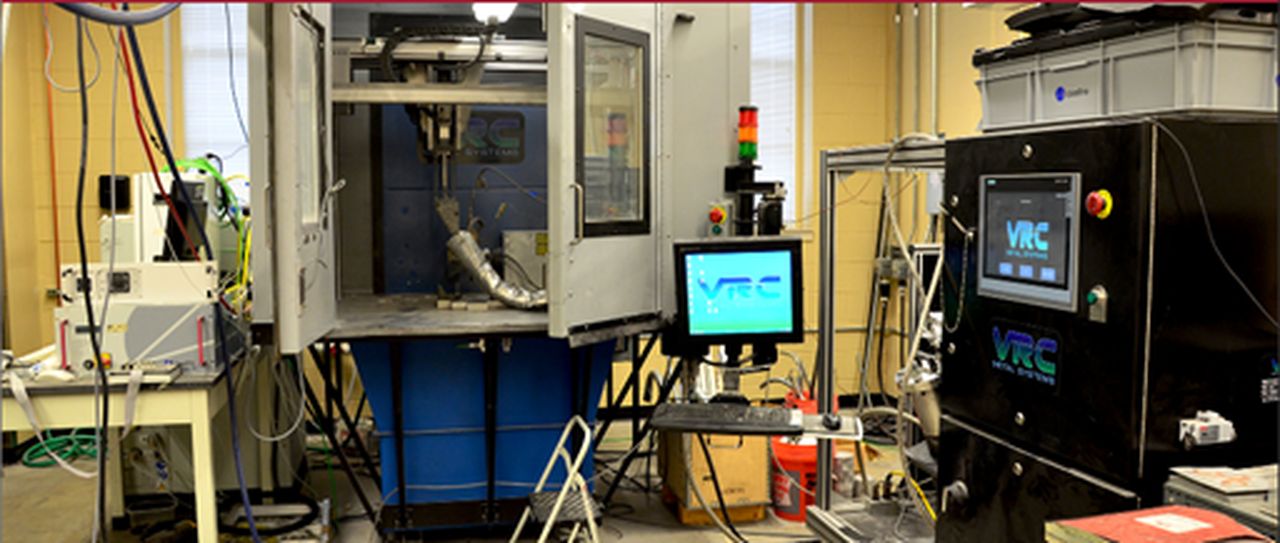
A major focus of the University’s work is “point-of-need” manufacturing – developing the ability to produce components directly at the location where they are needed, whether in an automotive assembly plant, on a seafaring vessel, inside spacecraft, or at remote civil-infrastructure sites where on-location fabrication can dramatically simplify supply chains. One of the University’s most significant efforts centers on Additive Friction Stir-Deposition (AFS-D), a solid-state additive manufacturing process capable of turning scrap metal into new or repaired parts without requiring expensive powdered feedstock. The method delivers high deposition rates, refined grain structures, and enhanced mechanical properties, making it valuable for defense, aerospace, and energy applications. Supported by sponsors such as the Department of Defense, NASA, and the Department of Energy, the University is positioning Alabama as a leader in the future of metal manufacturing.
For Birmingham, this research momentum provides a strategic advantage. As reshoring increases demand for steel, alloys, and fabricated metals, the region’s industrial base can grow not only through traditional production but also through advanced additive manufacturing. The combination of Birmingham’s heritage in heavy industry and the University of Alabama’s leadership in emerging metal technologies creates a unique ecosystem where old-line steelmaking and new-generation manufacturing innovation reinforce each other.
Aaron Rofe and Charlie Goulding of R&D Tax Savers recently interviewed Trevor Sutton, Vice President of Economic Development at the Birmingham Business Alliance, to discuss the factors driving Birmingham’s industrial resurgence. Sutton emphasized that one of the region’s greatest strengths is the increasingly interconnected supply chain that has developed between primary metals producers, service centers, fabricators, and research institutions. With companies such as Nucor, CMC Steel, and Nippon/US steel operating in the region alongside metals processors like O’Neal Industries, Birmingham has built a robust ecosystem that connects steel production directly with precision cutting, fabrication, and downstream manufacturing.
Sutton also highlighted the role of recent capital investment in accelerating the region’s momentum. Over the past several years, Birmingham has seen roughly US$1.5 billion in metal-related investment, strengthening the local industrial base and supporting a growing network of manufacturers and fabricators. Companies such as O’Neal Industries, continue to play an important role in linking steel producers with end users through advanced processing, distribution, and increasingly sophisticated manufacturing capabilities.
Beyond traditional infrastructure projects, Sutton noted that emerging sectors are also contributing to renewed demand for metals and fabrication services. The rapid growth of data centers across the Southeast has created new opportunities for custom fabrication firms such as NAFCO, which continues to invest heavily in specialized metal fabrication projects to serve major technology and infrastructure customers. At the same time, the defense sector centered in Huntsville, Alabama has created additional demand for precision machining and metal processing that can be supported by manufacturers and fabricators in the Birmingham region.
Sutton also emphasized that the region’s industrial growth is supported by a long-standing workforce culture rooted in metals manufacturing. Many employees working in steel mills, fabrication shops, and machining facilities represent multiple generations of families employed in the industry. While the work can be physically demanding, Sutton noted that it remains well-compensated and continues to attract skilled workers who take pride in maintaining Birmingham’s industrial legacy. At the same time, Sutton sees signs that Birmingham’s legacy industries are embracing innovation. Investments by Nippon Steel in US Steel’s operations, including the recent US$75 million expansion in tubular operation, demonstrate continued confidence in the region’s infrastructure manufacturing capabilities.
Several factors explain why Birmingham is attracting renewed industrial investment. Compared to legacy northern steel market, the region offers lower operating costs, competitive labor structures, and access to strategic transportation infrastructure. Its proximity to the Gulf of Mexico, major rail networks, and rapidly expanding manufacturing clusters throughout the Southeast provides supply chain advantages that are increasingly valuable in an era focused on resilience and reshoring. Additionally, Birmingham maintains a deep and experienced metals workforce, with generations of expertise in fabrication, casting, pipe manufacturing, and steel processing.
The steel resurgence is part of a broader economic expansion across Jefferson County. In 2025, the county recorded more than $400 million in economic development projects across manufacturing, logistics, automotive, information technology, health care, and tourism sectors. Nearly 900 jobs were announced, and manufacturing wages in the region have risen significantly in recent years, with average annual wages now exceeding $71,000. Economic development officials indicate that additional large-scale projects may be announced in early 2026, potentially adding hundreds of millions of dollars more in investment.
Birmingham’s industrial revival carries symbolic weight as well. More than a century ago, landmarks such as Sloss Furnaces defined the city’s skyline and powered one of the largest pig iron production districts in the world. Founded in the early 1880s, Sloss Furnaces helped establish Birmingham as a cornerstone of Southern industrialization. While the city’s industrial profile evolved over the decades, today’s investments suggest a full-circle moment – this time defined by cleaner technologies, advanced automation, digital platforms, and strategic supply chain integration.
The Research & Development Tax Credit
The now permanent Research & Development Tax Credit (R&D) is available for companies developing new or improved products, processes, and/or software.
3D printing can help boost a company’s R&D Tax Credits. Wages for technical employees who create, test, and revise 3D printed prototypes can be included as a percentage of eligible time spent for the R&D Tax Credit. Similarly, when used as a method of improving a process, time spent integrating 3D printing hardware and software counts as an eligible activity. Lastly, when used for modeling and preproduction, the costs of filaments consumed during the development process may also be recovered.
Whether it is used for creating and testing prototypes or for final production, 3D printing is a strong indicator that R&D-eligible activities are taking place. Companies implementing this technology at any point should consider claiming R&D tax Credits.
Conclusion
Birmingham’s renewed steel growth is not merely nostalgic; it is structural. As reshoring continues to shape US economic strategy and manufacturers seek lower-cost, logistics-optimized regions with skilled labor pools, the Southeast – and Birmingham in particular – appears positioned for sustained expansion. With more than a billion dollars in steel-related investment, expanding metals-technology innovation, and a strategic role within the South’s manufacturing corridor, Birmingham is reasserting itself as the modern Steel City of the South, anchored not only by its legacy, but by its emerging role in the future of American manufacturing.