
There’s a new patent for a resin 3D printing method that tries to handle high viscosity materials without slowing the job.
The patent, CN122077923A, was published by China’s National Intellectual Property Administration on May 26, 2026. The applicant is none other than Shining 3D, the well known maker of 3D scanners.
The system described is aimed at clinical 3D printing situations, especially where high viscosity resin materials are used. The patent notes that applications such as dental restoration and surgical guide production, where biocompatible, high viscosity materials are being increasingly required.
Many resin 3D printers are optimized around relatively free flowing photopolymers. Once the resin becomes thick, sticky, or slow to self level, the machine can spend more time waiting for material movement than actually curing layers. Poor flow can also lead to instability, failed layers, or inconsistent part quality.
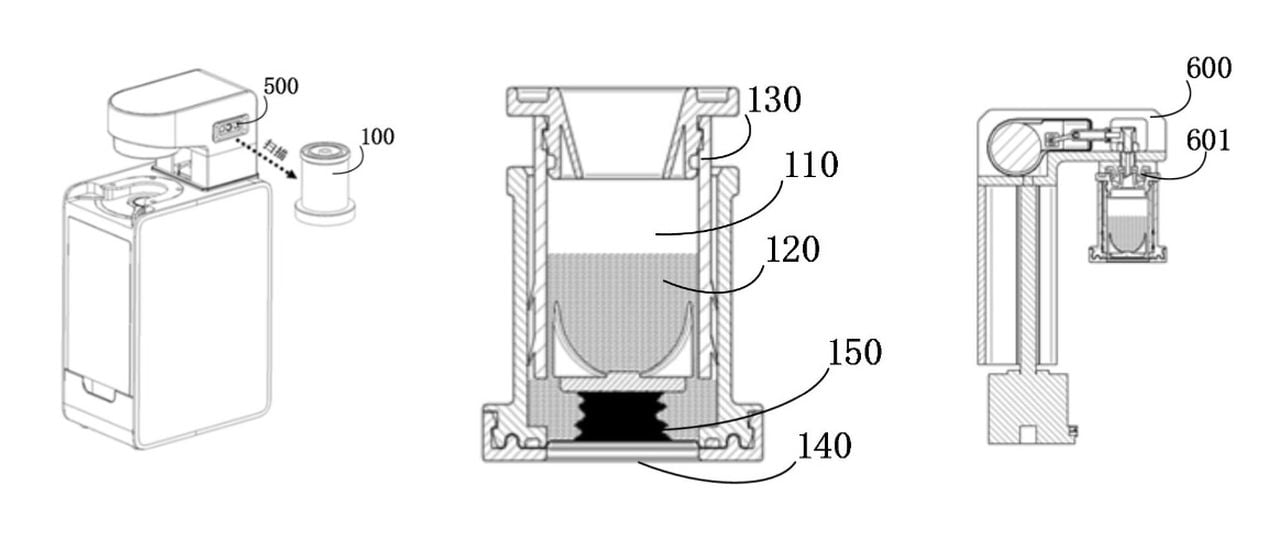
Shining 3D’s idea is to put the print material inside a sealed chamber within the forming module. The module includes a transparent component on one side and a build platform opposite it. The platform can move toward or away from the transparent optical component.
Before printing, the system performs a seal check. It pressurizes the chamber and monitors pressure data over a preset period. If the pressure does not drop beyond a threshold, the chamber is judged to be properly sealed.
Then comes the even more unusual part. During printing, the system moves the forming platform away from the transparent optical component while charging air into the chamber. That pressurization helps separate or “peel” the material from the optical window. The platform then moves to the next print position for light curing.
In other words, this looks like a controlled pressure assisted vat or chamber approach for photopolymer printing. Instead of relying only on mechanical motion and passive resin flow, the system actively uses chamber pressure to help manage separation, material movement, and curing.
The patent also describes stirring. The build platform can move back and forth to agitate the material, and the system can alternately charge and discharge air from the chamber. This is intended to improve mixing of the print material before or during the process.
That could be quite important for dental and medical resins, where fillers, pigments, or functional additives may settle or behave unevenly. A sealed, pressurized, mixed resin environment might make some difficult materials more usable.
There is also a sensing angle. The patent describes identifying a marker unit to obtain material property information and then dynamically adjusting the printer’s execution parameters. It also describes zero position detection and foreign object detection using a turbulence or flow sensor. If resistance is detected as the platform approaches the optical component, the system can identify a platform position or detect an obstruction between the platform and optical component.
This sounds like a closed process control concept rather than a simple mechanical tweak.
A sealed resin chamber raises practical questions. How easy is it to change materials? How is the chamber cleaned? What happens with bubbles? How reliable are the seals after repeated use? Those issues can be just as important as the printing mechanism itself.
Regardless, this idea is pretty unique. Resin 3D printing is increasingly getting into specialized, filled, biocompatible, and high performance materials. The harder those materials become to handle, the more important process control becomes.
If Shining 3D can turn this pressure assisted system into a reliable product, it could help make high viscosity medical resin printing less fussy.
Via Espacenet
