
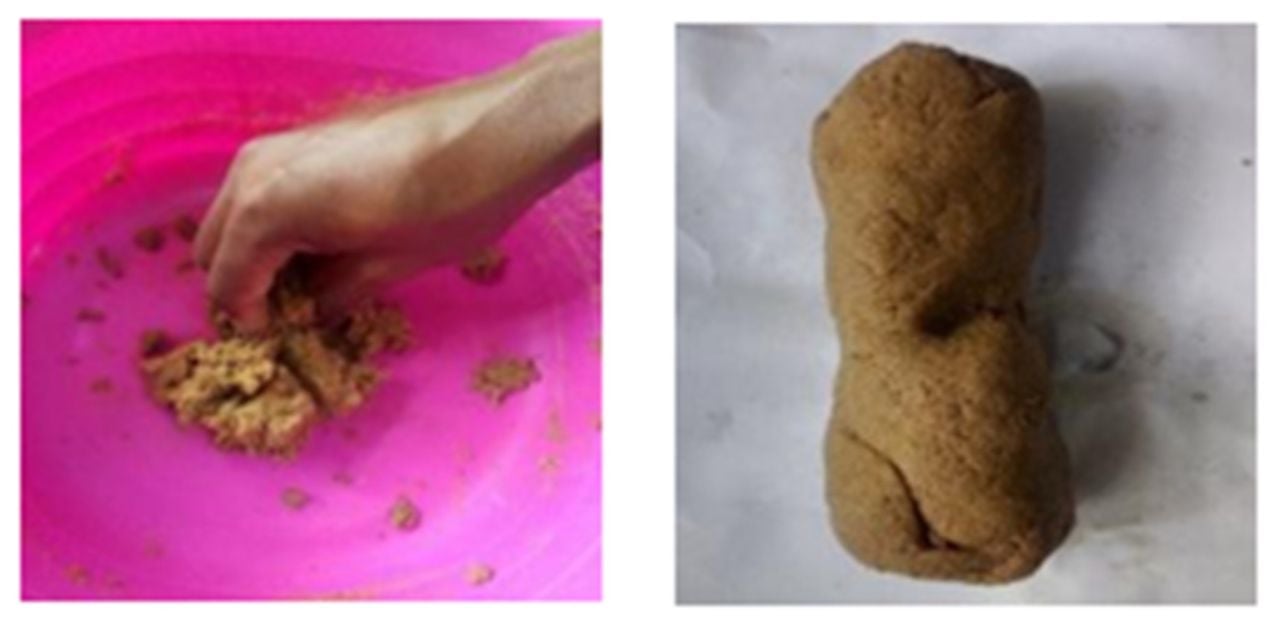
A new paper evaluates gum arabic as a natural binder for paste extrusion of rice husks, pointing to a low cost and bio based path for additive manufacturing.
The paper, titled “Gum Arabic as a Binder for Paste Extrusion Additive Manufacturing Using Rice Husks,” examines whether a widely available plant gum can deliver printable rheology and stable green parts when loaded with agricultural waste.
Paste extrusion — also called direct ink writing (DIW) or robocasting — is another thermoplastic printing process like FFF and photopolymers like SLA/DLP. Instead of melting filament or curing resin, DIW pushes a viscous paste through a nozzle and relies on yield stress, shear thinning and rapid green strength to hold shape. It is widely used for clays, cements, ceramics and bio inks, and it often uses inexpensive, local feedstocks.
Rice husks are among the world’s most abundant agricultural byproducts. They are cheap, silica rich, light and typically landfilled or burned. The idea here is pretty compelling: blend husk powder with water and a benign binder, print at room temperature, dry, and you have a biodegradable, low carbon article — or a porous preform that can be further processed.
Why Gum Arabic And Rice Husks?
Gum arabic is a natural polysaccharide exudate from acacia trees. It dissolves in water, is food safe, and is already used industrially as an adhesive, thickener and film former. Those are exactly the traits DIW inks need: shear thinning during extrusion, then rapid viscosity recovery to prevent slump, and enough tack to support interlayer adhesion.
Conventional DIW binders for particles include polyvinyl alcohol, carboxymethyl cellulose, alginate and starch. A gum arabic path would reduce synthetic polymers, ease disposal, and potentially lower costs in regions where acacia gum is common. Pairing it with rice husks doubles down on circularity: residue plus natural binder, minimal energy input.
The paper appears to test printability windows — solids loading, binder percentage and water content — and then assess part stability after drying. That is the right sequence: in DIW, the ink’s yield stress and recovery dominate feature fidelity, while drying governs shrinkage, cracking and final dimensions. The authors do not provide industrial performance metrics like compressive strength under wet conditions, but the exploration is a useful first pass.
Mechanism, Benefits And The Catch
In practical terms, gum arabic likely delivers a shear thinning ink with a workable extrusion pressure and moderate nozzle diameters, with tacky interlayer bonding at room temperature. That can mean simple hardware, low energy, and good safety. For labs, schools and small studios, a printable rice husk paste would be an accessible route to big parts without heaters, powders or lasers.
But there is one issue. Gum arabic is hydrophilic and biodegradable. Printed parts can reabsorb moisture, soften or creep, and will not handle high humidity. Unless crosslinked or sealed, durability will be modest at best. For outdoor use or structural loads, gum based parts will lag far behind cementitious DIW or fired ceramics.
Rice husk particles also bring constraints. Particle size distribution drives nozzle wear and clogging. High silica content may abrade tips, pushing users to larger nozzles and thicker beads, which limits resolution. Drying shrinkage can cause warping or microcracks if the binder fraction and drying profile are not tuned.
Economically, though, this might work. Think of packaging forms, temporary cores and molds that burn out cleanly, architectural models, acoustic panels, and art or craft objects. If the printed green bodies can be carbonized or converted to rice husk ash preforms, there are pathways to porous ceramics or metal infiltration. Service bureaus will not rush to adopt, but NGOs, educational makerspaces and local manufacturing projects could see immediate value.
This is a very interesting development for low energy, circular DIW. We just might end up with a new, sustainable extrusion material.
Via ETASR (DOI)
