
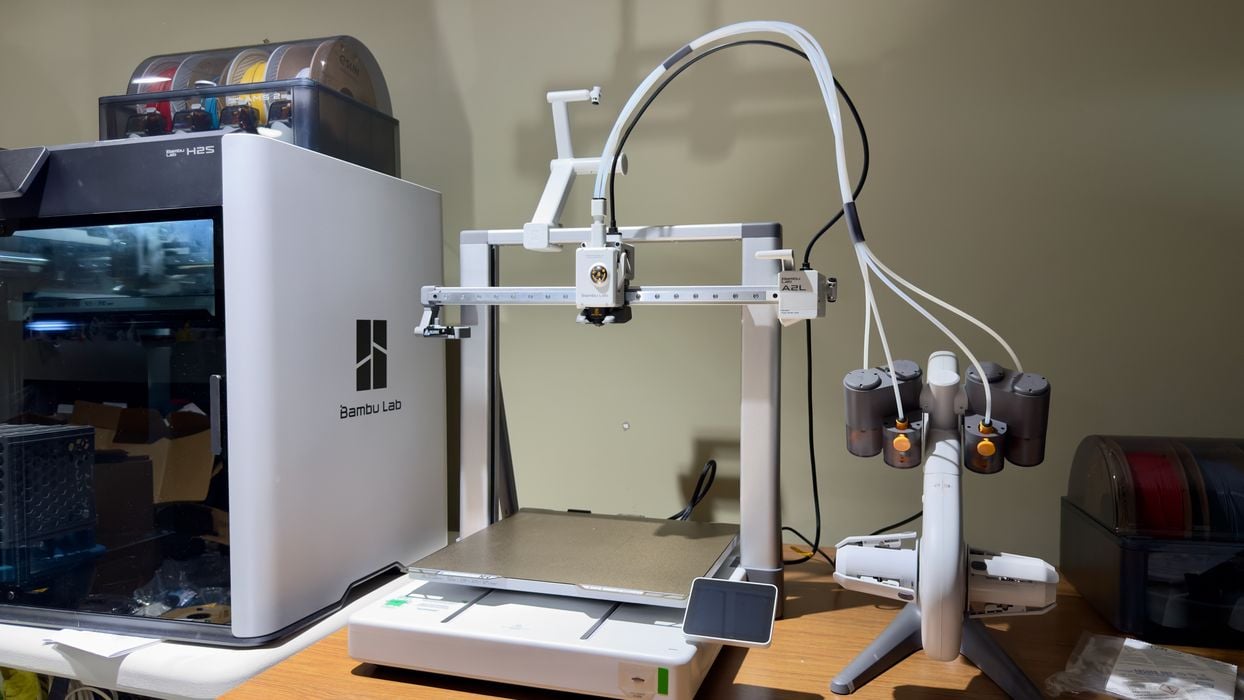
Bambu Lab suddenly announced the large A2L 3D printer, and we had a chance to give it a test.
This is part one of a three part series, please read parts two and three.
Bambu Lab A2L Background
Bambu Lab has mostly been focusing on their enclosed series of 3D printers in recent times, with announcements in the P and H series. But what about their lower cost A series? They had introduced the A1 mini and the somewhat larger A1 system a couple of years ago.
The absence of any developments in the A series hinted that the company might be moving entirely toward enclosed systems. But then a couple of weeks ago they unexpectedly announced the A2L, a larger version of the popular A1 system.
It seems that Bambu Lab is continuing with the open frame A series for a while yet.
Bambu Lab A2L Specifications and Features
At first glance the A2L would appear to be another A1. That is, until you notice the scale.
The A2L is a much larger 3D printer. Where the A1’s build volume is 256 x 256 x 256 mm, the new A2L sports a massive 330 × 320 × 325 mm. This is almost exactly 2X the volume of the earlier machine, and almost 6X the build volume of the now tiny A1 mini. Bambu Lab describes the system as “mega sized”.
If we somehow ignore the massive size of the A2L, how does it differ from the older A1 system? After all, the two are visually identical in almost every way.
One difference is actually not visible at all. They have placed a “granular damper” inside the top of the machine. The idea is to reduce vibration at the top of the machine.
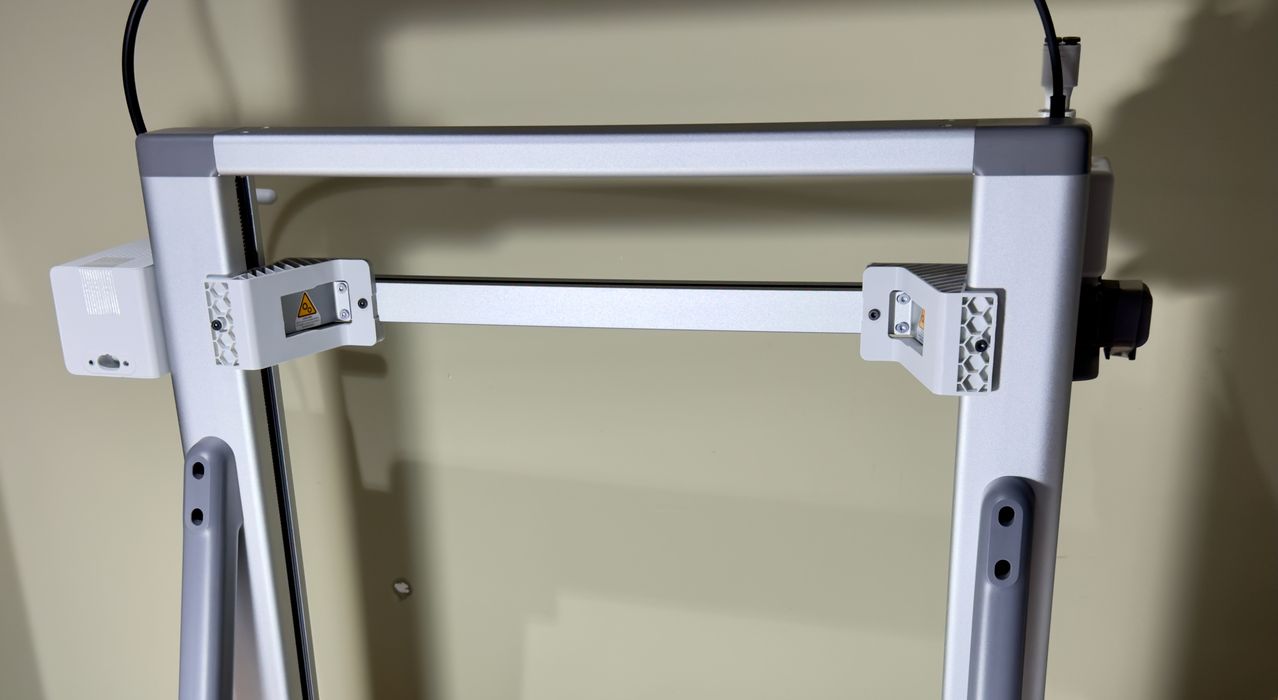
Vibration in a gantry system like the A2L is always amplified as the height increases: a slight movement at the bottom will generate a much larger movement at the top. It’s simple trigonometry. Systems like the A1 and A1 mini have less concerns about this due to their smaller size, but this effect becomes larger on the A2L.
The damper is basically a bag of small particles that bounce around when vibration occurs. As they hit each other, vibration is dampened, or so the theory goes. This is much like systems designed to keep skyscrapers from flopping around during earthquakes. But does it work? We will find out later.
An optional feature for the A2L is a cutting module, which provides a blade to cut 2D materials, as well as pen writing. We intend on testing this feature in a future post, so stay tuned for that.
Finally, the A2L can be purchased standalone or as a combo unit. We tested the combo, which includes the A2L itself and a four-spool AMS Lite filament swapper.
This is part one of a three part series, please read parts two and three.
Via Bambu Lab
