
Charles R. Goulding and Andressa Bonafe interview Dr. Mike Zimmerman, founder and CEO fo Z-Polymers and gain insight into the company’s high-performance fibers and filaments.
As additive manufacturing expands into more demanding industrial applications, material performance is becoming as important as improvements in printing hardware. At R&D Tax Savers, we have closely followed the development of polymers that could extend 3D printing beyond conventional engineering plastics while reducing some of the processing and design challenges associated with metals and traditional composites. Massachusetts-based Z-Polymers is approaching this challenge with TullomerTM, a proprietary liquid-crystal-polymer platform available in several forms, including 3D printing filament and high-performance fibers. We had the opportunity to speak with Dr. Mike Zimmerman, founder and CEO of Z-Polymers, about the origins of the company, the molecular architecture behind TullomerTM, its position within the advanced-materials market, and the convergence of additive manufacturing, composites, and technical textiles.
We know that Z-Polymers was founded with the goal of bringing new high-performance fibers and filaments to the U.S. manufacturing and textile industries. Can you tell us more about the company’s origins, how Tullomer emerged, and the specific challenge you initially set out to solve?
Z-Polymers was founded around a fundamental materials question: why should manufacturers have to choose between polymers that are easy to process and materials that provide the strength, stiffness, thermal stability, and dimensional control required for demanding applications?
Conventional engineering polymers are versatile, but they often lose stiffness as temperature increases, creep under sustained load, absorb moisture, or require reinforcement to achieve higher mechanical performance. At the other end of the spectrum, materials such as continuous carbon fiber can provide outstanding stiffness, but they can be expensive, electrically conductive, difficult to process into complex shapes, and challenging to recycle or integrate into conventional polymer manufacturing.
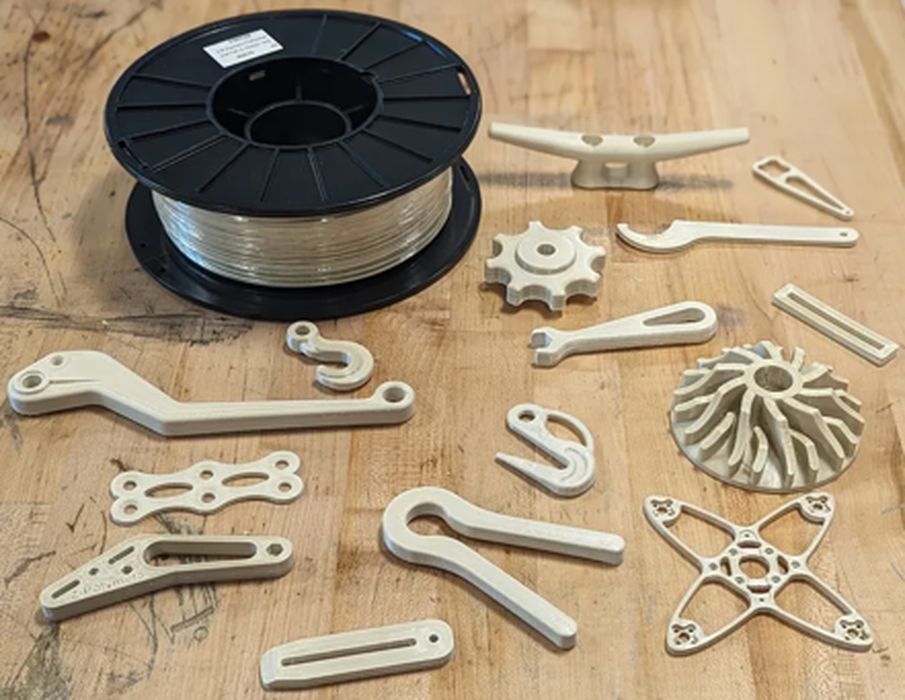
We began developing Tullomer to bridge that gap. The original objective was to create a highly oriented polymer material that could provide fiber-like mechanical performance while retaining the processing flexibility, chemical resistance, electrical insulation, and low density of a polymer.
That work led to a family of liquid-crystal-polymer-based materials that can be produced as monofilaments, multifilament fibers, braided structures, and 3D printing filament. The broader goal is not simply to introduce another high-performance polymer. It is to provide designers with a new structural material platform that can be used in applications where conventional polymers are not stiff or stable enough and traditional composites are too complex, conductive, or costly.
You described Tullomer as a new structural material platform designed to combine fiber-like performance with the flexibility of a polymer. At the molecular level, what makes that possible? How does molecular alignment occur, and how does it produce properties such as strength, stiffness, dimensional stability, and low creep?
A simple way to understand molecular alignment is to think about a bundle of uncooked spaghetti. When the strands are randomly arranged, the bundle can move and deform relatively easily. When those strands are straightened, aligned, and packed in the same direction, the bundle becomes much stiffer and can carry considerably more load along its length. Tullomer works through a similar principle at the molecular level. Its polymer molecules have relatively rigid, rod-like structures. During extrusion and subsequent proprietary thermal processing, those molecules are encouraged to align in the direction of material flow.
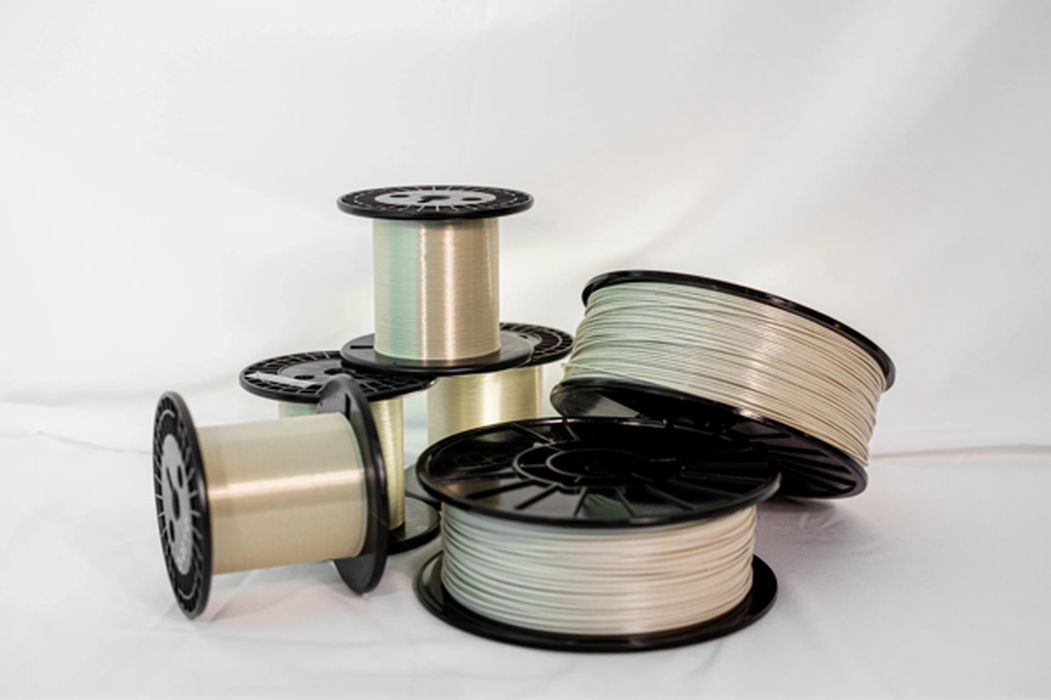
The extrusion process creates an initial level of orientation. Our post-processing technology then further develops and stabilizes the internal structure. This produces a highly organized molecular architecture rather than the more random molecular arrangement found in many conventional thermoplastics. Because the molecules are aligned, applied loads can be transferred more directly along the polymer backbone. That alignment is responsible for Tullomer’s high tensile strength and stiffness. The same structure also limits molecular movement. That contributes to low creep, low thermal expansion, good dimensional stability, and retention of useful mechanical properties at elevated temperatures. Tullomer also absorbs very little moisture, which helps parts and fibers maintain their dimensions and performance in humid or wet environments. The key point is that we are obtaining performance through molecular architecture, rather than simply adding large quantities of glass or carbon fiber to a conventional polymer.
That emphasis on molecular architecture, rather than added glass or carbon fiber, gives Tullomer a distinctive position among high-performance materials. How should manufacturers compare it with PEEK, Kevlar, Dyneema, Vectran, and continuous carbon fiber, and where do you see its clearest advantages?
We do not view Tullomer as a universal replacement for every high-performance material. Each of these materials has applications where it performs extremely well.
PEEK is an excellent chemically resistant, high-temperature thermoplastic, although it requires very high processing temperatures and does not inherently provide the same directional stiffness as a highly oriented fiber. Kevlar, by comparison, offers excellent toughness and impact resistance, but it can absorb moisture and may be difficult to process or bond in some systems. Dyneema and other ultra-high-molecular-weight polyethylene fibers provide exceptional strength-to-weight performance, yet their relatively low melting temperature and creep behavior can limit their use under heat or sustained loading. Vectran, which is also based on liquid-crystal-polymer chemistry, demonstrates the potential of highly oriented polymers in fiber applications. Continuous carbon fiber, meanwhile, provides exceptional stiffness, but it is electrically conductive, can be brittle, requires a separate resin matrix, and often involves complex manufacturing processes.
Tullomer is being developed as a broader processing platform, including fibers, monofilaments, multifilaments, braids, and additive-manufacturing materials. Tullomer’s clearest advantages are its combination of high specific strength and stiffness, low density, very low moisture absorption, low creep, electrical insulation, flame resistance, low outgassing, chemical resistance, and the ability to be processed into several different product forms.
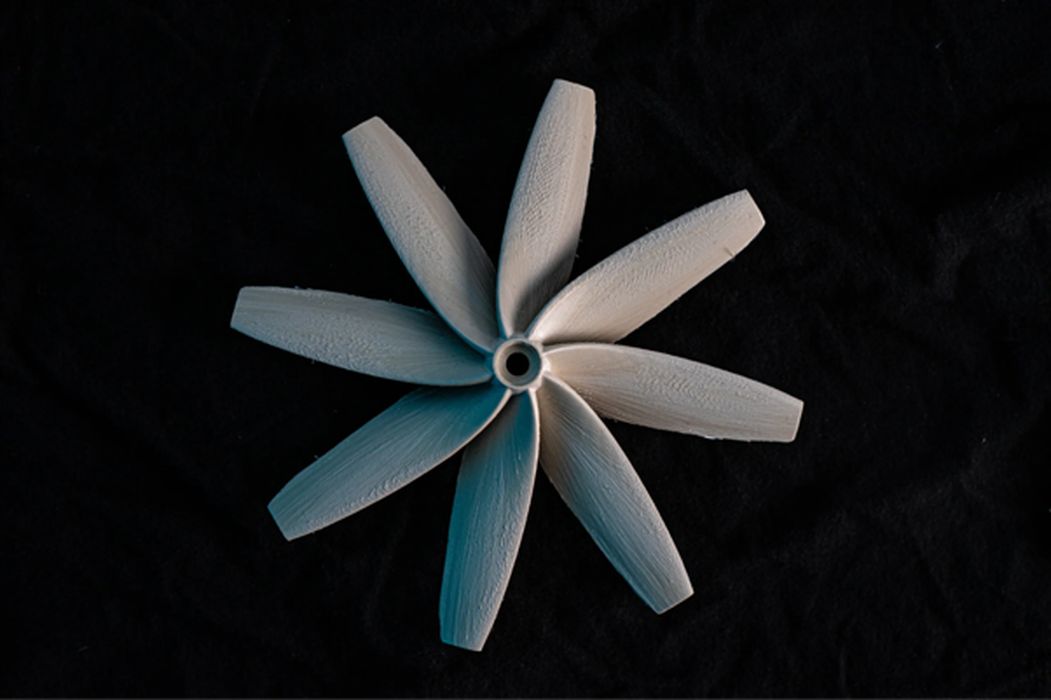
In 3D printing, pure Tullomer has demonstrated tensile properties well above typical unreinforced engineering polymers, with tensile modulus on the order of 30 GPa and tensile strength around 250 MPa in the strongest print direction. It can provide those properties without the electrical conductivity or abrasive printer wear associated with high carbon-fiber loadings.
We believe Tullomer is particularly well positioned for lightweight structural components, semiconductor handling and processing equipment, aerospace and space hardware, electrical and radio-frequency applications, high-temperature textiles, filtration, ropes and braids, fishing line, medical devices, and components where low outgassing or dimensional stability is critical. The best applications are generally those that value a combination of properties rather than a single extreme property.
You mentioned that additive manufacturing is one of the areas where Tullomer’s combination of properties may be especially valuable. What equipment and process controls are required to print it successfully, and what should designers understand about print orientation, layer adhesion, and the properties of the finished part?
Tullomer does require an advanced printing platform, but it does not necessarily require the extremely high chamber and nozzle temperatures associated with materials such as PEEK. The printer needs a high-temperature-capable extruder, accurate thermal control, a suitable build surface, controlled filament handling, and a sufficiently stable motion system. Depending on the printer and part geometry, a heated chamber may be helpful, particularly for controlling thermal gradients and reducing distortion in larger components. Moisture control is less demanding than it is for many hygroscopic engineering polymers because Tullomer absorbs very little moisture. Nevertheless, consistent filament storage and conditioning remain good manufacturing practice.
Designers must understand that Tullomer is highly anisotropic, meaning that its mechanical properties vary depending on the direction in which the material is printed and loaded. Its molecular orientation creates exceptional strength and stiffness along the deposited filament direction, but properties across layers are lower because interlayer bonding is governed by polymer fusion rather than continuous molecular alignment.
That means print orientation should be treated as a structural design variable. The principal loads should be aligned with the printed roads wherever possible. Designers should avoid placing the highest tensile or bending stresses directly across the layer interfaces. Ribs, shells, continuous toolpaths, generous radii, and load paths that follow the print direction can allow designers to take full advantage of the material. Mechanical fasteners, bonded joints, or hybrid designs may also be used when loads must be transferred through the thickness. This is similar to designing with a composite laminate. The material offers very high performance when its directional properties are incorporated into the design, but it should not be treated as though it were an isotropic, injection-molded plastic.
We are also developing multimaterial approaches in which Tullomer is printed as a reinforcing element inside materials such as polycarbonate, PET, or other engineering polymers. This allows the Tullomer to carry the primary structural load while the surrounding polymer contributes toughness, geometry, surface finish, and improved interlayer integration.
That opens promising design possibilities, but broader adoption will ultimately depend on consistency, validation, and scale. In your opinion, what will it take for Tullomer to move from strong material performance into wider industrial use?
The next stage is to demonstrate not only excellent material properties, but also repeatability, scalability, application performance, and a reliable supply chain. The first requirement is standardized testing. Customers need statistically meaningful tensile, flexural, impact, fatigue, creep, thermal, flammability, dielectric, moisture, chemical-resistance, and outgassing data. Those results must be generated using recognized test methods and, where appropriate, verified by independent laboratories. The second requirement is manufacturing consistency. We must demonstrate reliable filament diameter, molecular orientation, thermal-processing conditions, winding tension, and lot-to-lot properties as production moves from laboratory quantities to commercial volumes. The third requirement is application-specific validation. Most customers do not adopt a new material because of a datasheet alone. They adopt it because it solves a measurable problem in a real component.
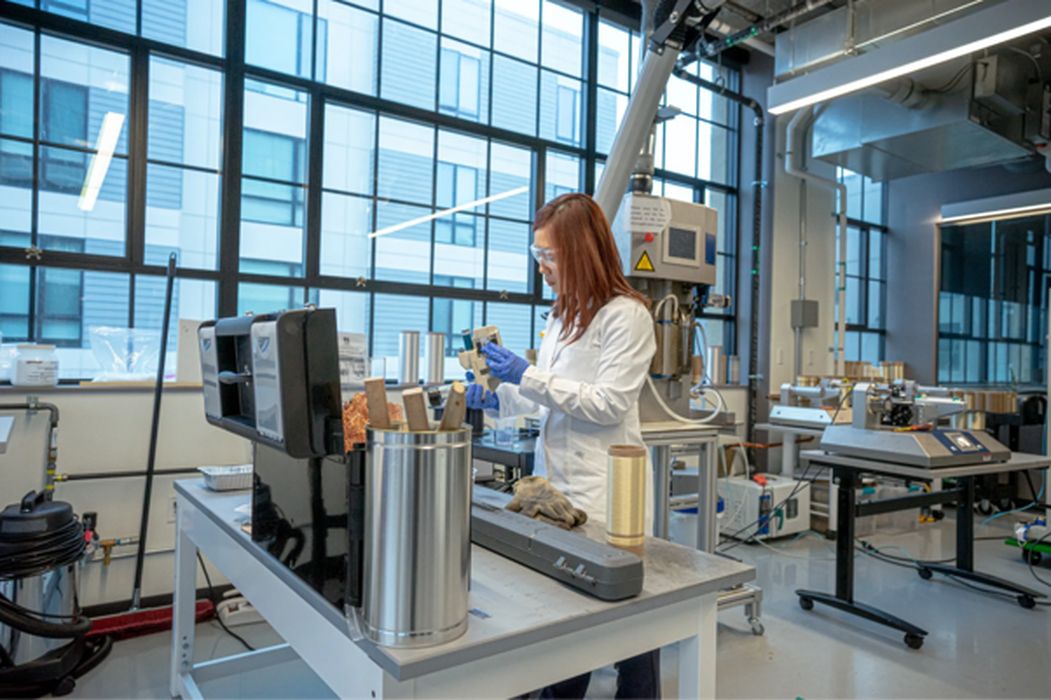
For additive manufacturing, that means producing reference parts that clearly demonstrate advantages such as higher stiffness, lower mass, better dimensional stability, electrical insulation, reduced outgassing, or improved performance at temperature. For fibers and braids, it means demonstrating performance in applications such as fishing line, high-temperature sewing thread, filtration, aerospace textiles, electrical insulation, and structural rope.
Partnerships will also be essential. Printer manufacturers, filament distributors, compounders, fiber processors, braiders, testing laboratories, universities, and major industrial customers can each help reduce adoption risk. Over the next few years, the most important milestones will be scaling our proprietary thermal process, establishing robust quality-control standards, increasing production capacity, completing independent qualification testing, and working with customers on several highly visible commercial applications. The transition from an interesting material to an industrial material occurs when customers can design around it confidently, purchase it reliably, process it consistently, and quantify its economic value.
As Tullomer moves toward broader industrial adoption, it is also entering a market where traditional boundaries between polymers, fibers, composites, textiles, and additive manufacturing are becoming less distinct. How do you see these technologies converging, and what role could Tullomer play in that evolution?
Historically, these markets developed in relatively separate categories. A company might have selected an injection-molded polymer, a continuous-fiber composite, a woven textile, or a 3D printed material as distinct manufacturing options. Those boundaries are now beginning to disappear.
Additive manufacturing can place different materials in specific locations within a part. Automated fiber placement and continuous-fiber printing can orient reinforcement along predicted load paths. Advanced textiles can be engineered with local variations in braid angle, fiber count, density, coating, and functionality. Simulation tools can increasingly optimize both the geometry and the internal material architecture.
This creates an opportunity to design not only the shape of a component, but also the material structure within the component. A future structural part may contain a high-stiffness oriented polymer where loads are highest, a tougher polymer around impact-sensitive regions, a low-friction surface in wear areas, and embedded electrical, thermal, or sensing functions. The distinction between a printed part, a composite, and a textile structure will become less clear.
I believe high-performance polymers will increasingly be evaluated based on how well they operate within these hybrid manufacturing systems. Materials will need to provide more than strength. They will also need to be lightweight, processable, electrically appropriate, environmentally stable, compatible with digital manufacturing, and capable of being placed only where their properties are needed.
That convergence is precisely where we see the greatest long-term opportunity for Tullomer. It can function as a standalone printed material, an oriented reinforcing element, a fiber, a braid, or part of a multimaterial structure. That flexibility may ultimately be as important as any individual property.
The Research & Development Tax Credit
Enacted in 1981, the now permanent Federal Research and Development (R&D) Tax Credit allows a credit that typically ranges from 4%-7% of eligible spending for new and improved products and processes.
Qualified research must meet the following four criteria:
- Must be technological in nature
- Must be a component of the taxpayer’s business
- Must represent R&D in the experimental sense and generally includes all such costs related to the development or improvement of a product or process
- Must eliminate uncertainty through a process of experimentation that considers one or more alternatives
Eligible costs include U.S. employee wages, cost of supplies consumed in the R&D process, cost of pre-production testing, U.S. contract research expenses, and certain costs associated with developing a patent.
On December 18, 2015, President Obama signed the PATH Act, making the R&D Tax Credit permanent. Since 2016, the R&D credit has been used to offset Alternative Minimum Tax (AMT) for companies with revenue below US$50 million. And, now, pre-profitable and pre-revenue startup businesses can also obtain up to US$500,000 per year in payroll tax offsets and cash rebates for up to five years.
Conclusion
Our conversation with Zimmerman highlights the broader work required to move an advanced material from laboratory development to dependable industrial use. Standardized testing, process refinement, manufacturing scale-up, quality control, and customer validation all require sustained experimentation and technical problem-solving. In the United States, many of these activities may qualify for federal and state Research and Development Tax Credits, including eligible employee wages, materials consumed during testing, and certain third-party research expenses. For companies developing new materials or adapting them to additive manufacturing and other emerging production methods, these incentives can help offset the cost of turning promising research into commercial capability.