Charles R. Goulding and Kate Esposito reveal how a transatlantic aerospace collaboration is combining cutting-edge defense innovation with additive manufacturing to redefine the future of airpower.
In a landmark development for transatlantic defense, two of the most secretive and innovative companies in Western aerospace have forged a strategic alliance to redefine the future of air combat. Announced on September 9th, 2025 at the DSEI global defense conference in London, the partnership between Lockheed Martin’s Skunk Works and BAE Systems’ FalconWorks aims to develop a range of uncrewed autonomous air systems that will be rapidly deployable and have multiple launch options.
Both companies have extensive design, prototyping, and additive machining expertise that they will combine to focus on electronic warfare and attack capabilities that could enhance the survivability of current crewed combat aircraft.
In recent years, both Lockheed Martin and BAE Systems have significantly increased their additive manufacturing capabilities. Through the Skunk Works and FalconWorks alliance, the aerospace titans plan to utilize 3D printing to quickly move from concepts to prototypes, create structural components, and design parts with intricate geometries. Additive manufacturing will bolster the collaboration and its development of revolutionary technologies that could support future US and UK air combat requirements.
A Transatlantic Strategic Partnership for Next Generation Airpower
The partnership between Skunk Works and Falconworks comes at a time when myriad nations are seeking to develop a mix of crewed and uncrewed assets to address the requirements of today’s rapidly evolving war efforts. Many global powers require the ability to quickly develop and launch affordable combat mass to support frontline operations. As a result of this, the alliance has a key focus on developing economical systems with disruptive capabilities that can quickly make a considerable difference for customers. It also aims to shorten development timelines for uncrewed autonomous air systems, manned-unmanned teaming systems, and sixth-generation fighter technologies.
Furthermore, it is important to both companies that future systems work seamlessly together across domains to ensure the interoperability of aircraft between members of NATO. There is a growing urgency among NATO allies to access next-generation fighter capabilities amid intensifying competition, in part from China’s J-20B program and Russia’s investment in newer models of the Su-57. Together, Skunk Works and FalconWorks hope to bolster the aerospace prowess of NATO members by developing state-of-the-art technology.
The Blizzard UAS Launches the Future of Aircraft Technology
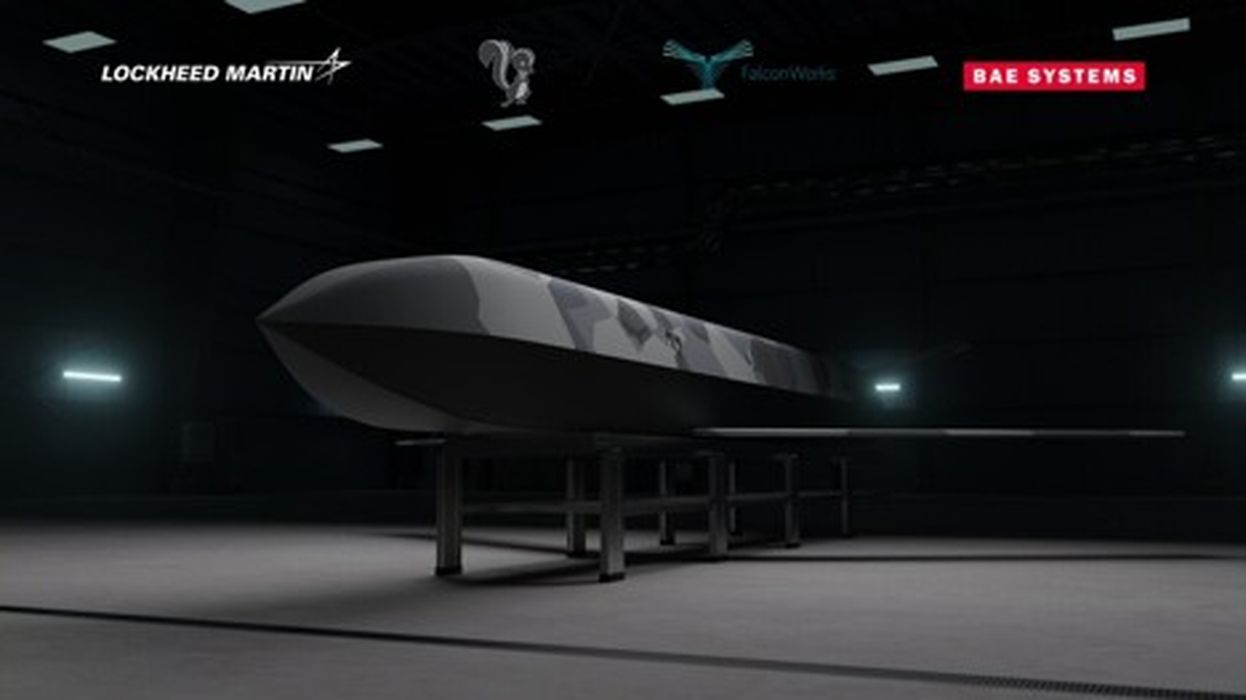
The first aircraft revealed from this partnership is the Blizzard, a modular, missile-shaped uncrewed autonomous system (UAS) that was formally unveiled at the Farnborough International Airshow on July 20th, 2026. Weighing 330 pounds, the Blizzard is designed for rapid operations and is classified as an air-launched effect meant to perform high-risk tasks in place of more expensive, crewed aircraft.
It can penetrate sophisticated air defense networks and provide a range of operational effects, including electronic warfare, attack missions, and collaborative battlefield capabilities. The Blizzard is operational in GPS-denied environments, enabling it to decoy, jam, and confuse hostile radars. The system is meant to function alongside traditional crewed aircraft and provide additional combat mass.
The initial Blizzard variant is designed with modularity and is adaptable for different missions. To ensure the Blizzard has full operational flexibility, it is capable of deploying from multiple platforms, such as air drops, ground launches, maritime launches, and launches from wide-body logistic aircraft. The ability to launch from larger aircraft is particularly important because it allows for grand-scale deployment of autonomous systems from transport vehicles, which is quickly becoming the standard for fighter jet technology.
Many of the Blizzard’s capabilities, such as its dynamic retasking ability and weapon open system architecture, reflect air combat requirements that emerged from recent conflicts. Military forces increasingly request systems capable of operating in heavily contested environments affected by electronic warfare, decreased communications, and sophisticated air defense networks.
The Blizzard’s ability to generate collaborative effects against targets independently or as a wider network of autonomous systems aligns with modern concepts of distributed warfare and drone swarms. Thanks to the strategic planning of Skunk Works and FalconWorks, the Blizzard is a perfect example of the future of aerospace engineering.
Additive Manufacturing Helps Advance Production
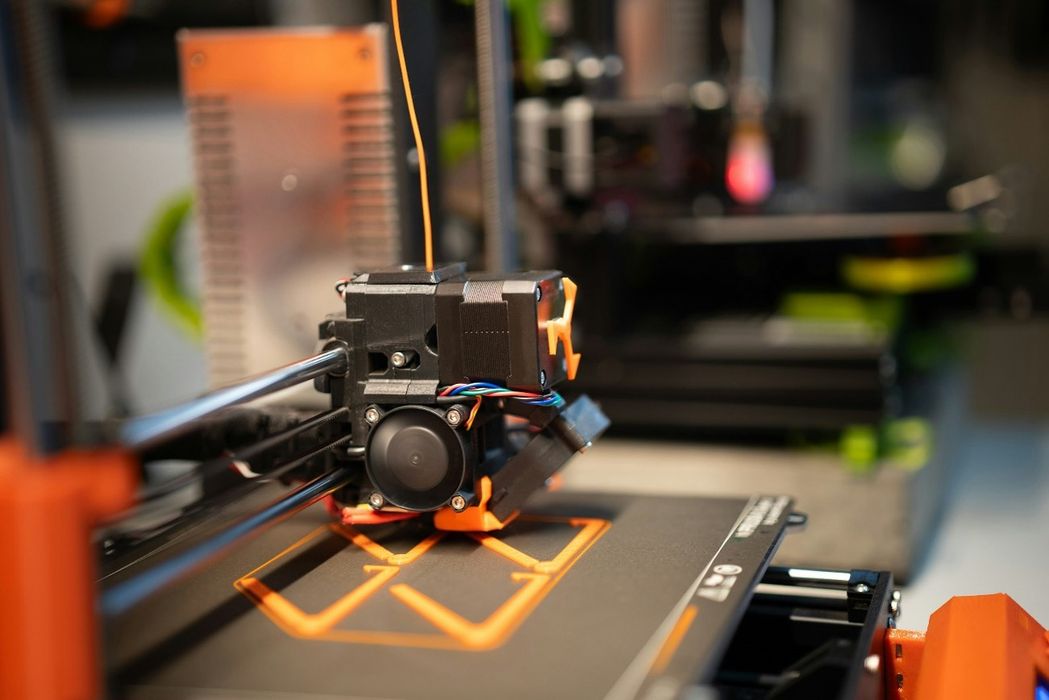
While BAE Systems and Lockheed Martin have worked with additive manufacturing for many years, they both recently increased their implementation of 3D printing across their holdings. In 2024, Lockheed Martin added 16,000 square feet of state-of-the-art additive manufacturing space to its Grand Prairie, Texas facility. This expansion included some of the largest format, multi-laser machines in Texas, in addition to heat treatment and inspection equipment that enables rapid development and production of AM parts.
Furthermore, as part of the 1LMX digital transformation initiative, Lockheed Martin is implementing additive manufacturing in the early phases of product designs to reduce technical risks. While developing the Mako hypersonic missile, engineers used 3D-printed parts that enabled them to meet requirements at 1/10th of the cost and greatly reduced production time, making AM 10 times faster and cheaper compared to conventional subtractive methods.
BAE Systems has used additive manufacturing over several years to support their Factory of the Future initiative, which is designed to leverage disruptive technologies and pave the way for future military aircraft production and maintenance operations. At their Samlesbury site, BAE uses four Stratasys F900 3D printers to revolutionize manufacturing operations.
The printers run around the clock and are implemented across aircraft ground equipment operations for a wide range of applications. BAE says additive manufacturing is especially beneficial when designing new vehicles because they can quickly create and test parts, which allows developers to detect and solve potential problems early in the process.
In 2024, BAE announced they are using 3D printing in the development of the Tempest, a next-generation fighter jet. Additive manufacturing is in use to make primary structural components for the jet. Paul Wilde, head of the Tempest project at BAE, says, “There are parts on the aircraft that you can’t make in other ways now than using additive processes.” According to BAE, 30% of the Tempest’s components will be 3D printed.
To move from concepts to production for not only the Blizzard but also all other joint ventures, it is highly likely that Skunk Works and FalconWorks will take advantage of their superior additive manufacturing capabilities.
Both companies greatly rely on additive manufacturing to decrease costs, rapidly design and develop prototypes, mitigate supply chain risks, and create critical components for a wide range of products. As a result, the use of additive manufacturing throughout this alliance would no doubt be extremely beneficial and could foster revolutionary breakthroughs for aircraft production.
The Research & Development Tax Credit
IRC § 41 generally requires qualified research to satisfy a four-part framework: qualifying domestic research expenditures, technological research, development or improvement of a business component, and substantially all activities being part of a process of experimentation for a qualified purpose. Research may qualify even if it fails, but it must address uncertainty about capability, method, or design. A process of experimentation generally involves identifying uncertainty, testing alternatives, and evaluating results through modeling, simulation, or systematic trial and error.
These developments can help companies tell a stronger IRC § 41 story because they suggest technical uncertainty and iterative engineering – not just routine production. Under the § 174A/domestic R&E requirement, companies should identify U.S.-based R&D expenditures tied to developing UAS systems, subsystems, and enabling processes described in the article.
For the “technological in nature” test, the Blizzard modular UAS and related uncrewed autonomous air systems involve engineering and computer science challenges (autonomy/networking, open architecture/dynamic re-tasking), electronic warfare performance, and operation in GPS-denied, contested environments.
For the “business component” test, each potentially creditable component should be scoped separately (e.g., the Blizzard airframe, launch methods, EW payload functions, autonomy software, and the additive-manufacturing production process). The R&D tax credit is available for all for-profit companies to claim for designing or developing new and/or improved products or processes. R&D Tax Savers has helped hundreds of companies claim these credits since the credit’s inception in 1981.
Strategic Alliance
The strategic alliance between Lockheed Martin’s Skunk Works and BAE Systems’ FalconWorks signals the birth of a new transatlantic axis of aerospace innovation. By uniting the most secretive research houses in Western defense, the partnership is uniquely positioned to deliver affordable combat mass, disruptive capabilities, and revolutionary technology to meet the evolving needs of the modern battlefield.
The integration of additive manufacturing will ensure that this next generation of airpower is not only technologically superior but also economically viable and industrially resilient.
With the ability to produce critical hardware and complex structural parts at 10 times the speed and 1/10th the cost of traditional methods, additive manufacturing is completely transforming defense production. Together, Skunk Works and FalconWorks are bringing in a new era of aerospace engineering.