
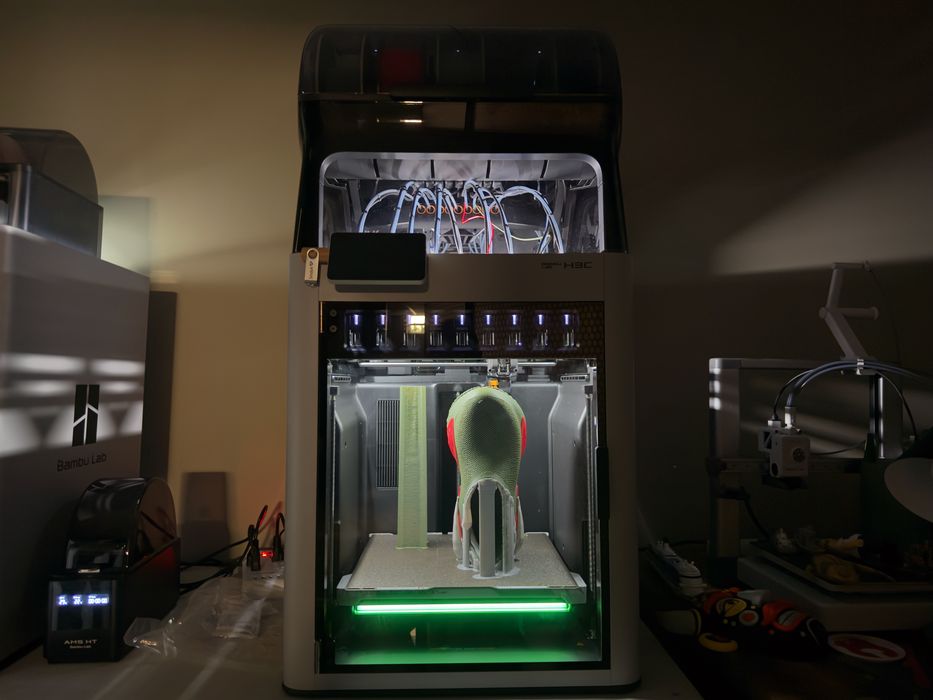
Our look at the Bambu Lab H3C 3D printer concludes with Print Results and Final Thoughts.
This is part four of a four part series, please read parts one, two and three.
Bambu Lab H3C Print Results
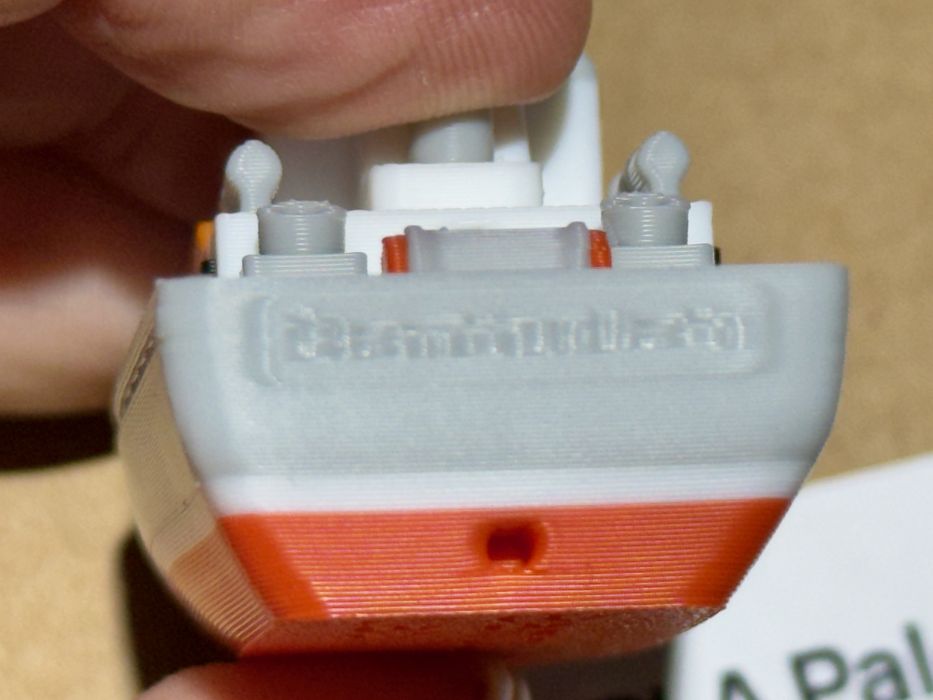
The print results on the H3C I received were all exceptional. I didn’t get a single bad print, aside from the one PAHT-CF print that failed because of my spool clip. Here you can see that the word “#3DBenchy” is almost readable on the test print.
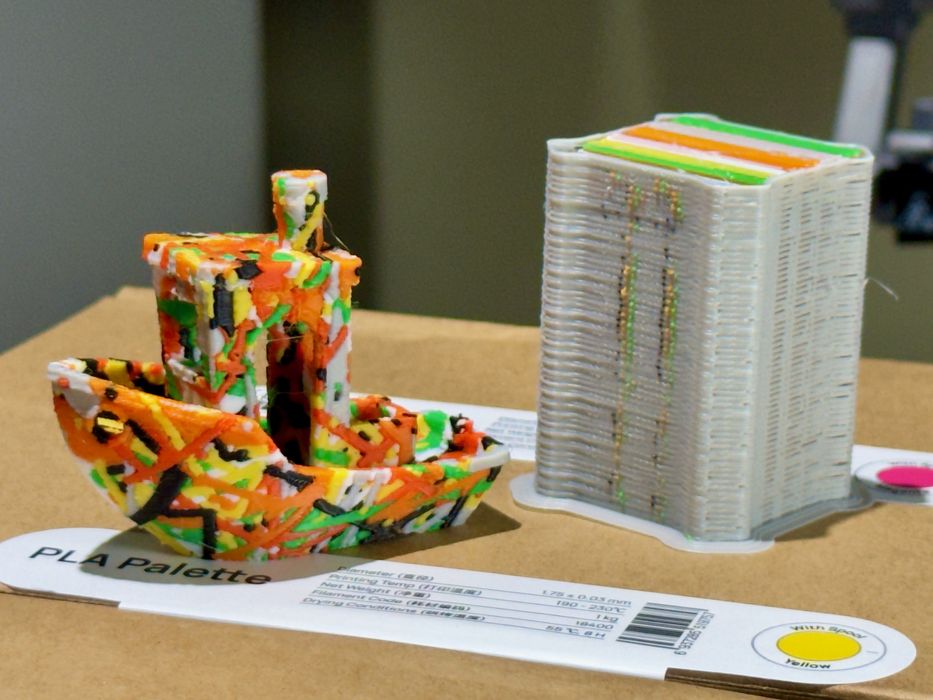
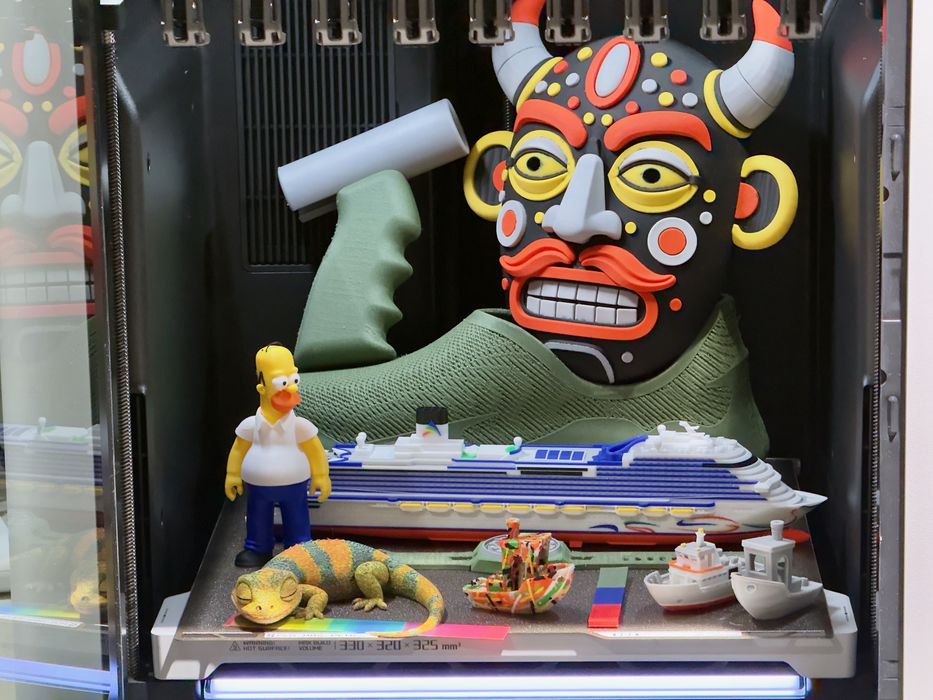
I tested multicolour printing with this ridiculous #3DBenchy, which must have been inspired by Jackson Pollock. There are so many color changes in this print that it would be insane to print it on a normal filament swapper.
Printing this on an H2S, this 17g #3DBenchy would require an astounding 431g of waste material for color purges. However, on the H3C the print produced only 37g of waste. That is literally a saving of about US$10 of material in a single job.
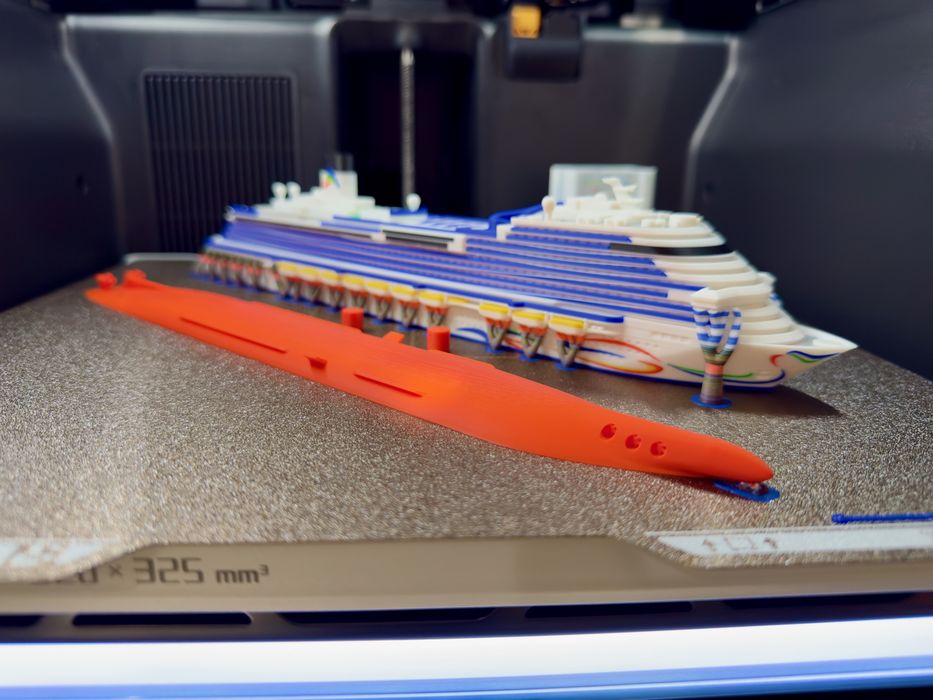
This giant ocean liner 3D model came out wonderfully, with sorts of fine details quite visible. And again, there was very little waste.
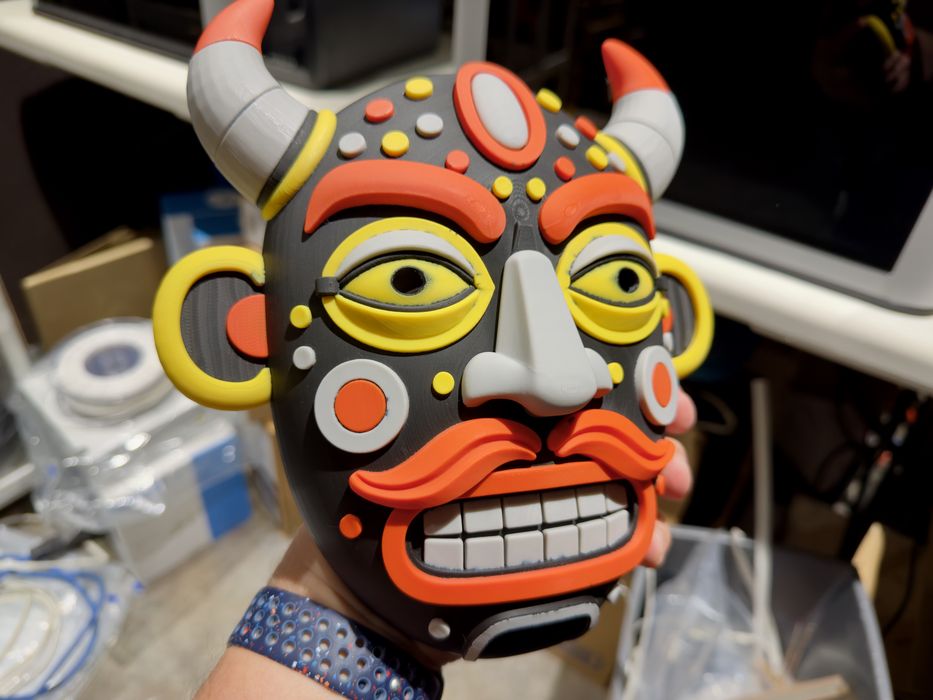
This mask also printed extremely well. It’s quite colorful, but its large size did require 31 hours of printing, and it completed without incident.
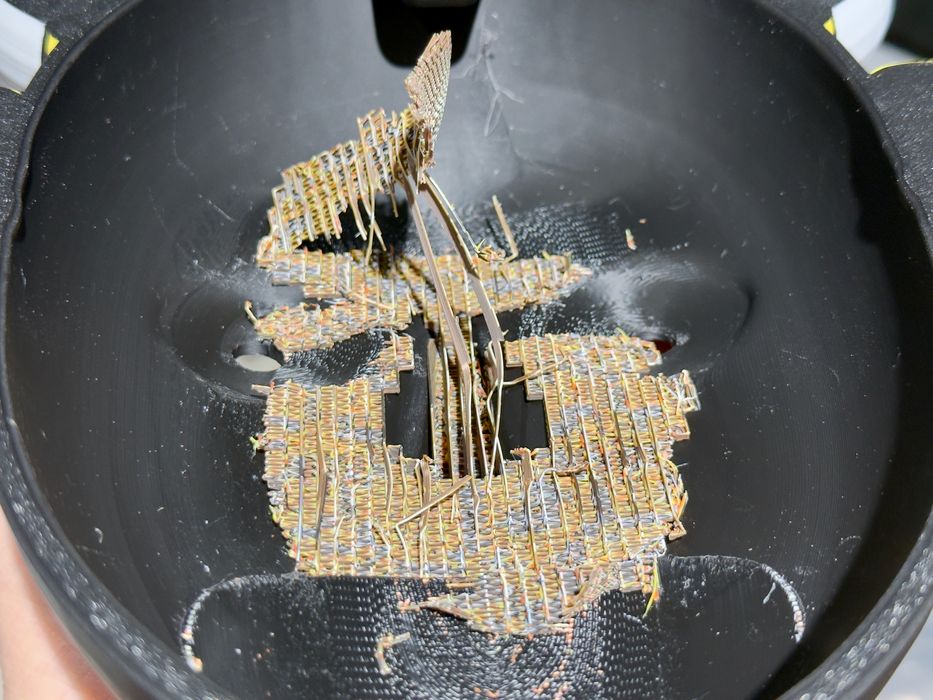
But there was actually one issue. Underneath the mask was a bunch of support towers to hold up the mask. These proved extremely difficult to remove because they basically bonded with the model. I double checked the settings, and they were correct. My only suspicion is that perhaps there is some very slight difference in positioning between multiple tools.
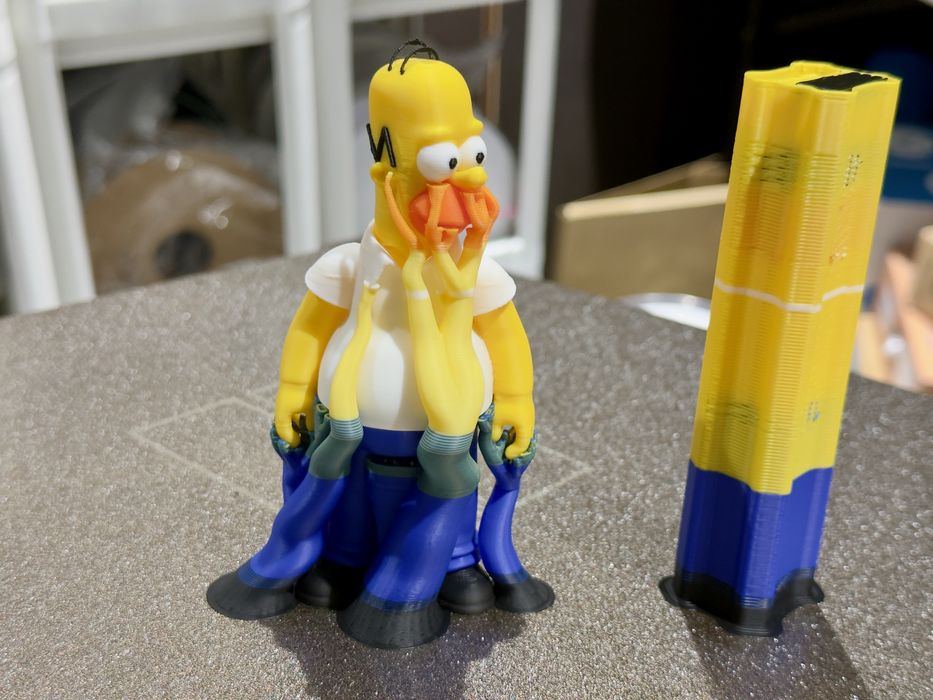
After the support issue, I thought there would be another approach: use a different material for supports. Specifically, PETG as the support interface material. PETG does not bond well with PLA, so the supports should just break away. And, they did! This was especially useful on Homer’s fingers, which surely would have broken off with normal supports.
This is important: with so many spool slots, it’s easy to just have a spool of PETG or whatever ready to go at any time. This should greatly simplify support structures.
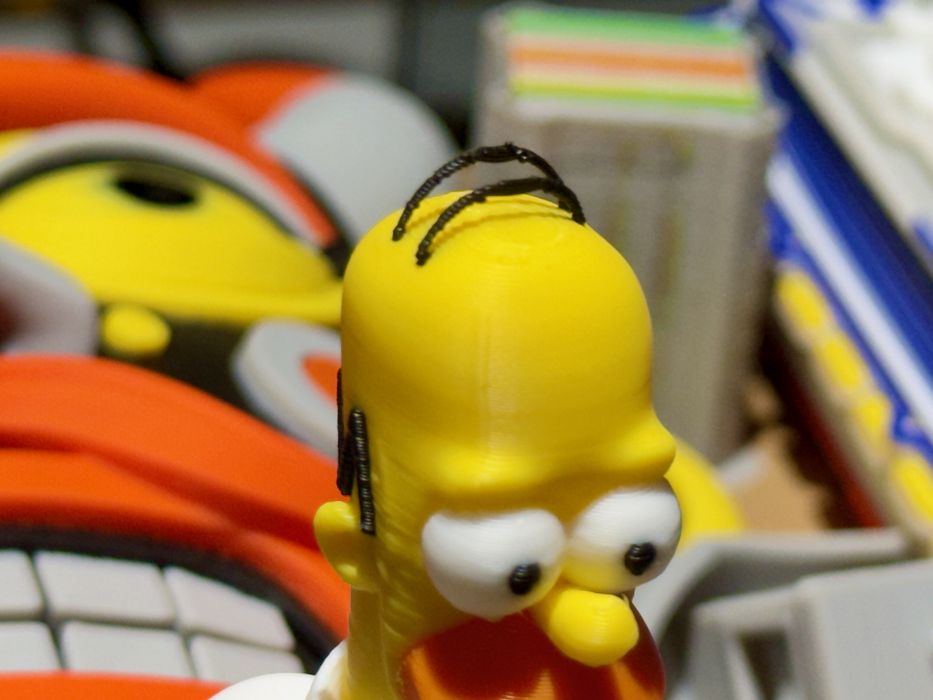
By the way, Homer’s hairs came out incredibly well. There was a time when structures like this were near impossible to print, but not anymore.
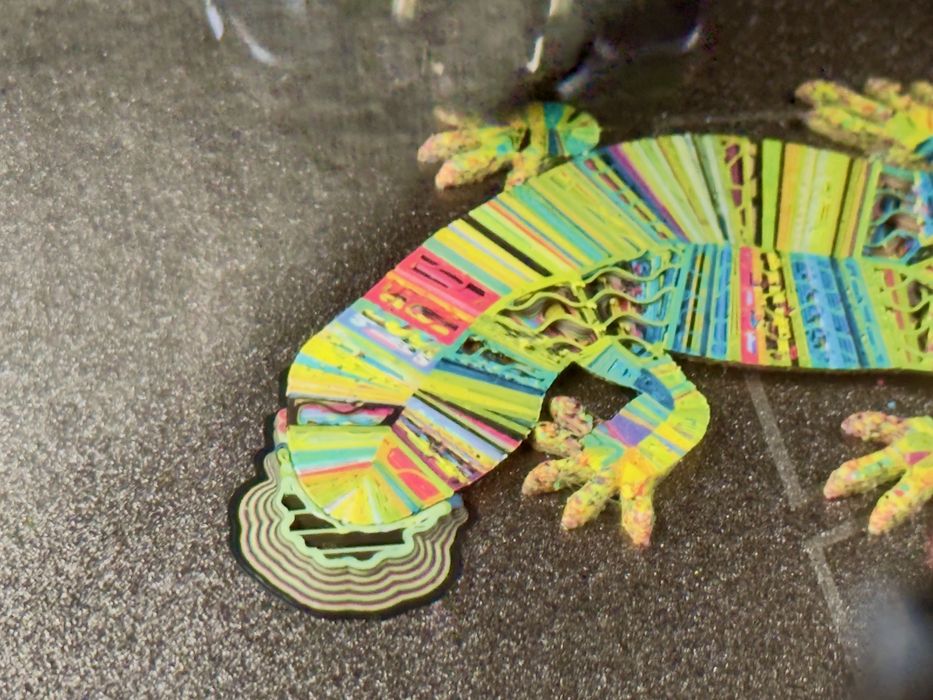
I tried to print a full spectrum lizard using only CMYKW spools, and it was an interesting process. Here you can see how the slicer embedded each color deep into the lizard.
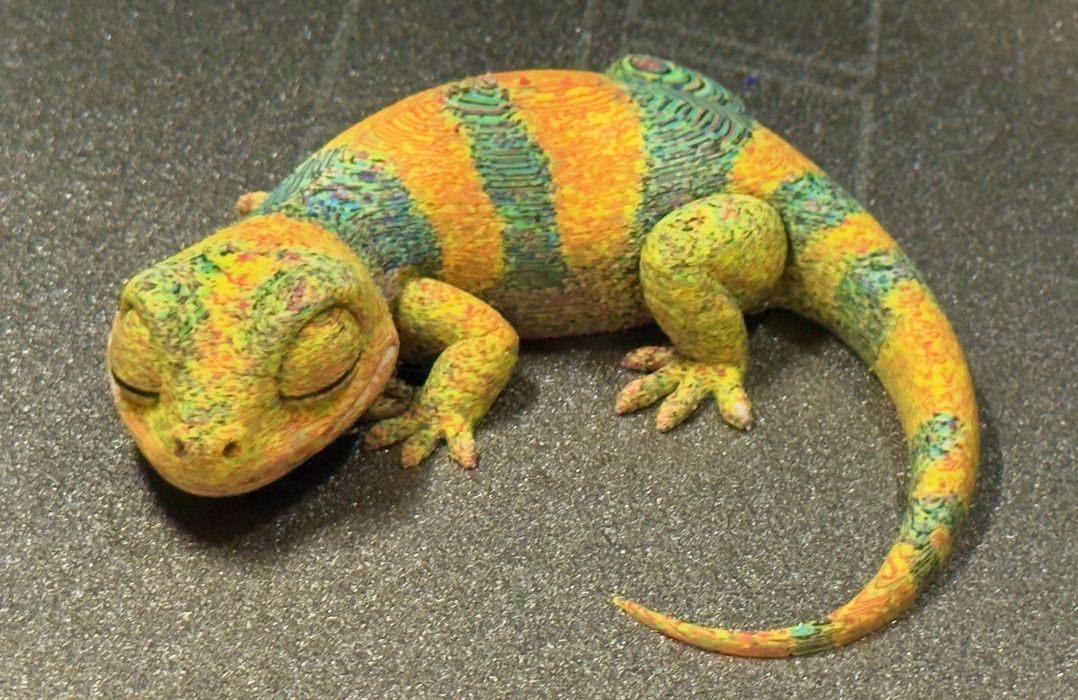
Once finished, the lizard looked incredible. If you were to look very closely at it, you’d see the layer lines of different colors. But from a distance other colors appear. For example, there is clearly green on the lizard, yet no green spool was mounted during the job.
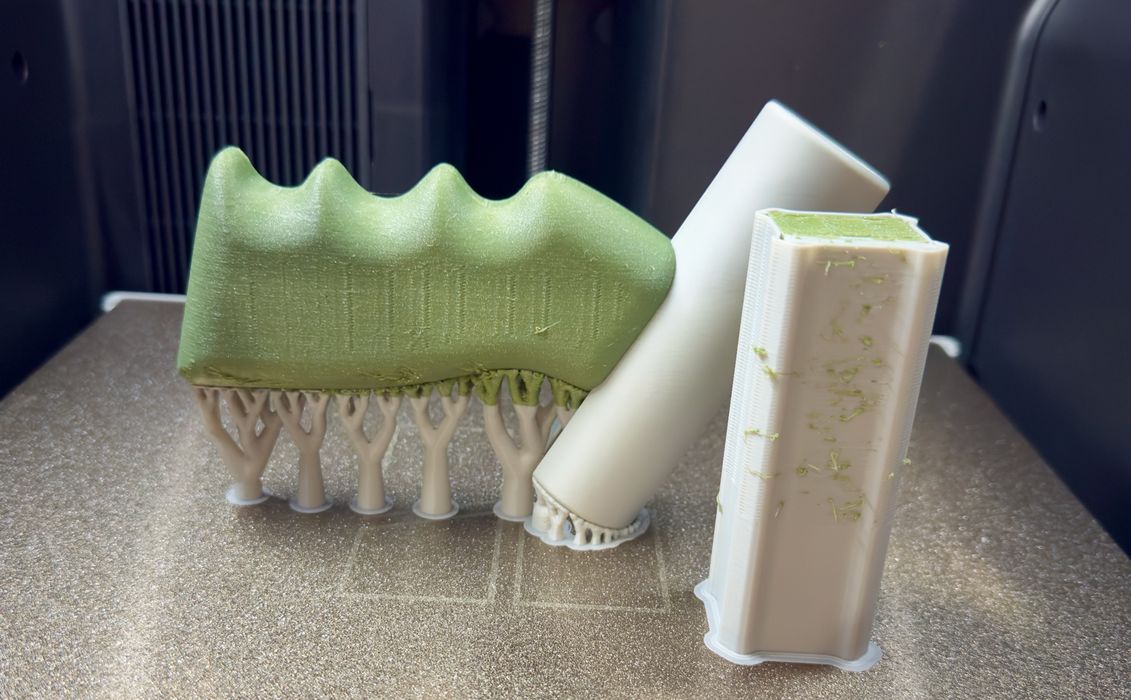
Here I quickly designed a handle, and set it up to have a TPU 75A overwrap. The print took a while to complete, but it worked perfectly. The grip is comfortable to hold, yet underneath the PLA provides rigidity. The H3C can clearly print overwraps easily.
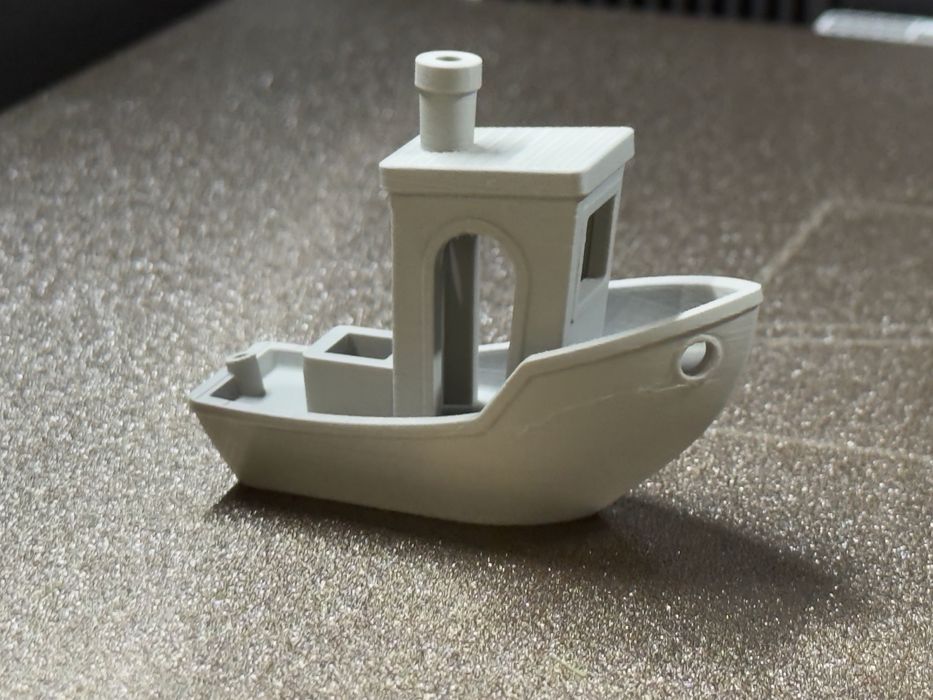
When I printed a #3DBenchy with the 0.2mm nozzle, the details were obviously much better. It was a fine #3DBenchy.
But here’s the thing: Bambu Studio now allows use of multiple extruder diameters in the same job! This is something I’ve wanted to do for what seems like forever. This means you can, for example, print fine details with a 0.2mm nozzle, structures with a 0.4mm nozzle, and infill with a 0.6mm coarse nozzle, all in the same job.
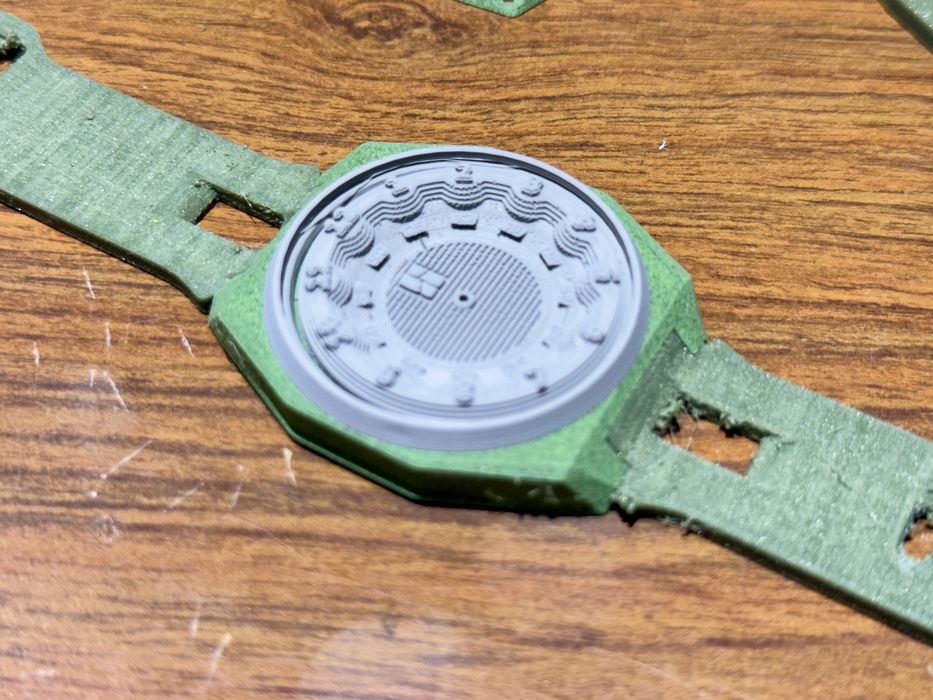
Here’s a print of a test job supplied by Bambu Lab, which is a wristwatch where multiple materials are used. The face is printed with the 0.2mm nozzle for the fine details. The watch case is printed in PLA-CF for strength, and the band is highly flexible TPU 75A (2.85mm).
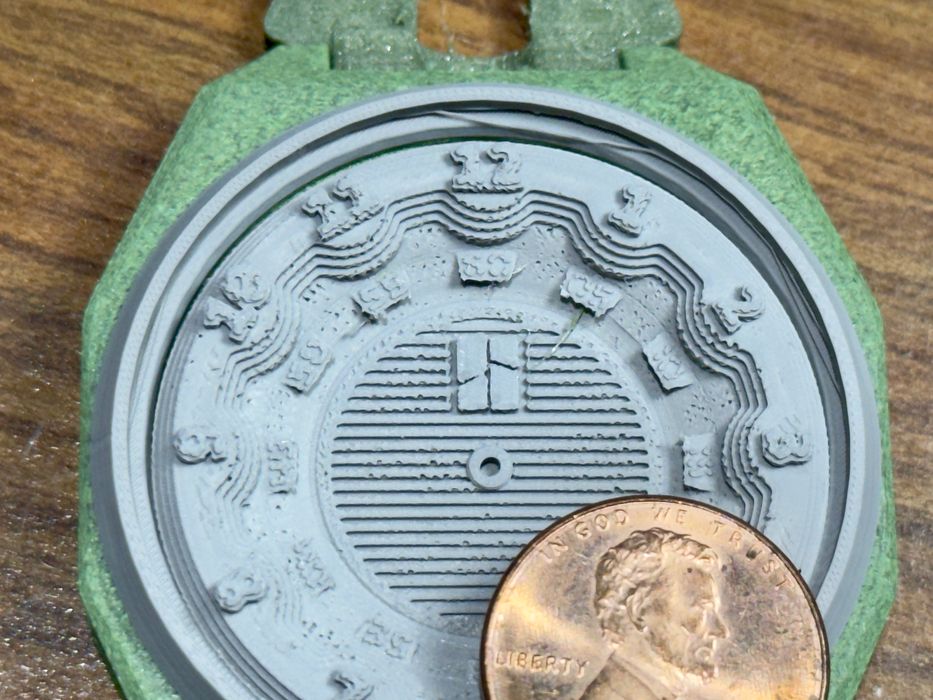
The details are quite good, and I can’t imagine what people will do with this new capability.
Also, Bambu Lab announced that multi-diameter capability will be coming to certain other existing models: the H2D, H2C and X2D. This is fairly complex, and because of that the company is expecting to release the features between this month and March of next year. Or you could just get an H3C right away.
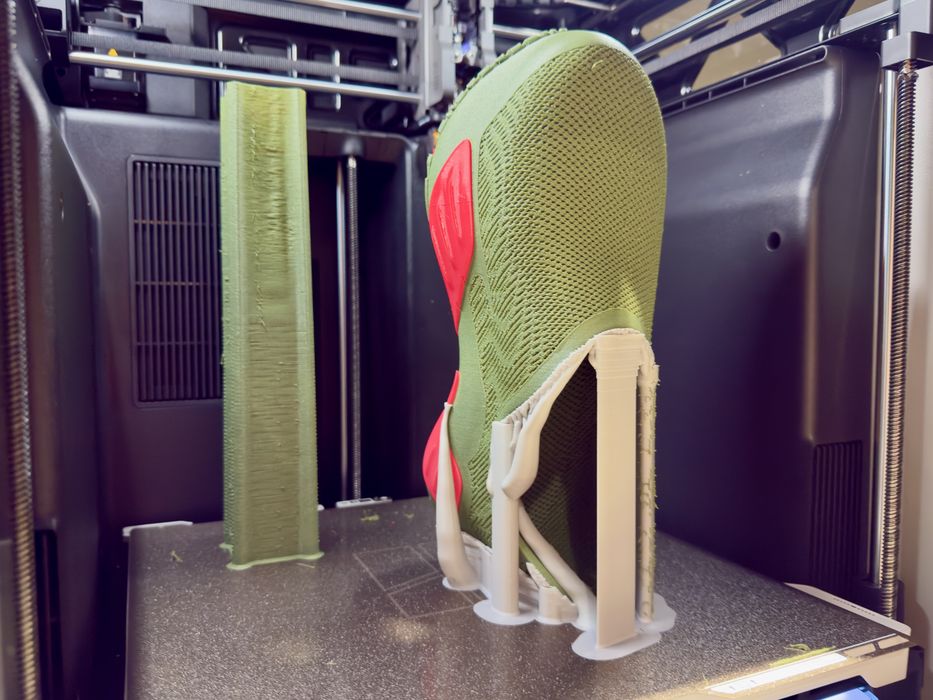
My final test print was a shoe! It is made from two kinds of TPU, TPU 90A and TPU 75A. PLA was used for support structures. After an astonishing 64.5 hours (2.7 days), it completed perfectly.
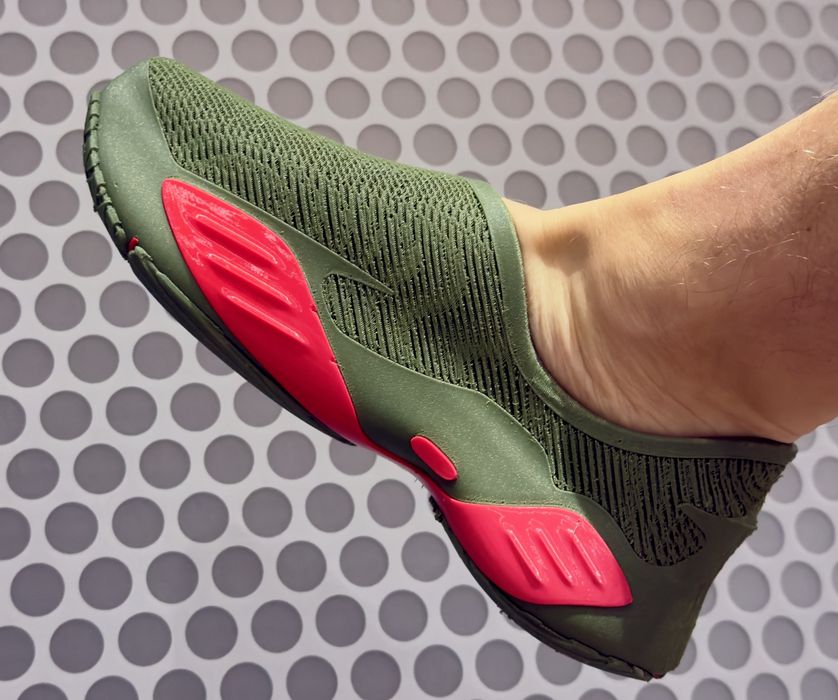
How perfect? It actually fits! It’s a bit heavy for a shoe, but the mere fact that I was able to print my own wearable shoe is breaking some kind of barrier.
Bambu Lab H3C Final Thoughts
The H3C has to be the most amazing 3D printer I’ve ever tested, and I’ve tested a lot of 3D printers (almost 200 now).
The machine is incredibly versatile, able to print in many different ways. The multicolour capabilities are absolutely going to allow operators to print incredible pieces. In fact, Bambu Lab provided some even more intricate 3D models that I did not attempt. But you might.
The H3C inherits all the best features of previous Bambu Lab equipment, including reliability, great print quality and ease of use.
There were moments of frustration, however. This is quite a large machine, and you won’t want to move it around once you’ve put it in place.
My biggest complaint, which is actually minor, is access inside the machine. As I mentioned, there are two smallish panels on the sides that clip on with magnets. These are effectively the only way to reach inside the machine to do anything, and it’s really awkward. I kept wanting to lift the top off and reach in, but of course you cannot — the AMS 3H is in the way.
But even with that constraint, the H3C is a totally amazing machine, one that every 3D printer operator should consider. That is, if you can afford its US$2499 price tag.
Finally, I should mention there are a couple of optional accessories. One is an air purifier, which would make the H3C even more ideal to use in an office, and the other just might solve one of the issues I encountered: height. It’s the “Bambu Station”, which is a rollable table that raises the printer to a “comfortable height”, and provides storage for tools and other stuff.
If I was buying another H3C, I would consider the Bambu Station, because normal tables are just too high for this huge 3D printer.
BAMBU LAB
H3C
★ BEGINNER 7/10
★ ENTHUSIAST 10/10
★ PRODUCTION 9/10
BEST FEATURES
✔︎ Easy multicolor
✔︎ Multiple TPUs
✔︎ Reliable, high quality
QUESTIONS
✖︎ Height and access
✖︎ TPU complications
✖︎ Color management
This is part four of a four part series, please read parts one, two and three.
Via Bambu Lab