
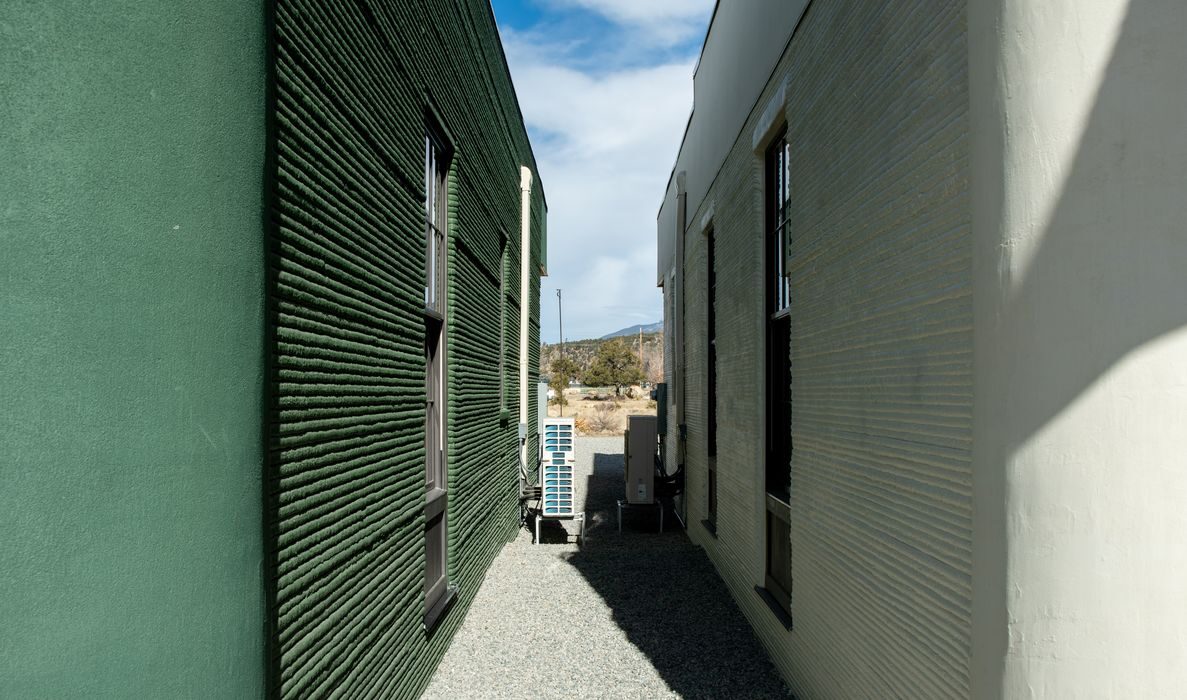
We’ve heard of 3D printed homes, but what exactly do they cost? Now there’s some hints of real 3DCP home price levels.
The world of 3DCP is rapidly growing, and there are a number of construction firms now adopting the technology for their projects. Some are older traditional companies adding a new technology to their portfolio, while others are entirely new and focused on additive approaches.
One of them is Colorado-based VeroTouch. It’s a small firm that provides a services ranging from design to engineering to actual construction. It seems they are using COBOD 3DCP technology and equipment for their operations.
Colorado Springs TV channel KKTV recently published a report on VeroTouch’s activities in that area, and there was mention of the pricing of 3DCP homes.
Evidently VeroTouch has been working on a project in Salida, a city slightly west of Colorado Springs in the mountains. Apparently it is a popular tourist spot, and as such it is a relatively pricey area. The VeroTouch project is to print 30 homes in that city.
In the report, VeroTouch CCO Jake Rishavy said:
“Salida is not an inexpensive housing market. This is at that higher end because it’s tourism driven, it’s a world class place to live. But we believe … within a year or two, we should be significantly lower than the market prices.”
This is quite interesting. What they seem to be saying is that the 3DCP homes are more expensive than typical construction prices — in an expensive city.
Their pricing is different than what we normally hear because they are likely including all the costs of construction, not just focusing on the 3D printing part of the project.
Typically we hear that using 3DCP to print the foundation and walls of a building can be faster, but rarely do we hear much about the price levels. The assumption is that because it’s done with fewer people and takes less time that it is less expensive.
That doesn’t seem to be the case here: a house project would include not only the 3D printed components, but also all the remaining activities, such as HVAC, plumbing, electrical, finishes, etc.
This is important because buyers are not (usually) making a decision based on the fact that the concrete is 3D printing; instead they are making a decision on the cost of the entire project. They’re buying a house, not a technology.
This is both good and bad news. It’s bad because it tells us that 3DCP is very likely too expensive for most housing markets, at least in a cost competitive sense. On the other hand, there is good news that VeroTouch believes they will be able to lower the cost of their 3DCP process to become competitive in the future.
If VeroTouch can do it with existing shared technology, then so can other 3DCP companies.
Via KKTV
