
Charles R. Goulding and Preeti examine how Nobel laureates Joel Mokyr, Philippe Aghion, and Peter Howitt link innovation, AI, and creative destruction to the next great wave of economic growth.
The 2025 Nobel Prize in Economic Sciences made a powerful statement: supporting innovation is not just good policy, it’s the foundation of long-term prosperity. This year’s prize was awarded to three economists whose collective work explains how invention, culture, and creative destruction drive growth. Half the award went to Joel Mokyr of Northwestern University, celebrated for his lifelong research on the cultural and institutional roots of technological progress. The other half was shared by Philippe Aghion of the Collège de France and Peter Howitt of Brown University, who together developed the influential model of innovation-led “creative destruction.”
Northwestern University, where Mokyr has spent much of his career, has long stood at the forefront of innovation studies. Charles R. Goulding has been privileged to attend its conferences for many years, which bring together leading academics from around the world to examine how technology reshapes economies and societies. Mokyr’s Nobel win reflects that intellectual legacy—and affirms decades of work connecting technological dynamism with economic growth.
The Nobel Committee’s conclusion was clear: nations that actively design and sustain policies supporting innovation experience above-average economic performance. That principle aligns perfectly with what we’ve seen over more than 40 years working in the R&D tax credit field. Programs such as federal and state R&D tax credits and full expensing for R&D investments directly encourage the kind of experimentation that fuels both private-sector breakthroughs and national competitiveness.
Innovation Policy as an Engine of Growth
The Nobel Committee’s conclusion was clear: nations that actively support innovation policies experience above-average economic growth. This insight echoes what those of us working in the research and development (R&D) tax credit field have observed for decades.
For over 40 years, our firm has helped companies quantify the impact of potential innovation projects on their federal and state R&D tax credits. These incentives are not theoretical—they are tangible tools that help firms invest in new products, manufacturing processes, and technologies that keep the U.S. competitive.
The “One Big Beautiful Bill Act” reestablished full R&D expensing for tax purposes and reinforced the value of R&D tax credits. This combination remains a cornerstone of U.S. innovation policy, encouraging businesses of all sizes to pursue bold, high-risk projects that can transform industries.
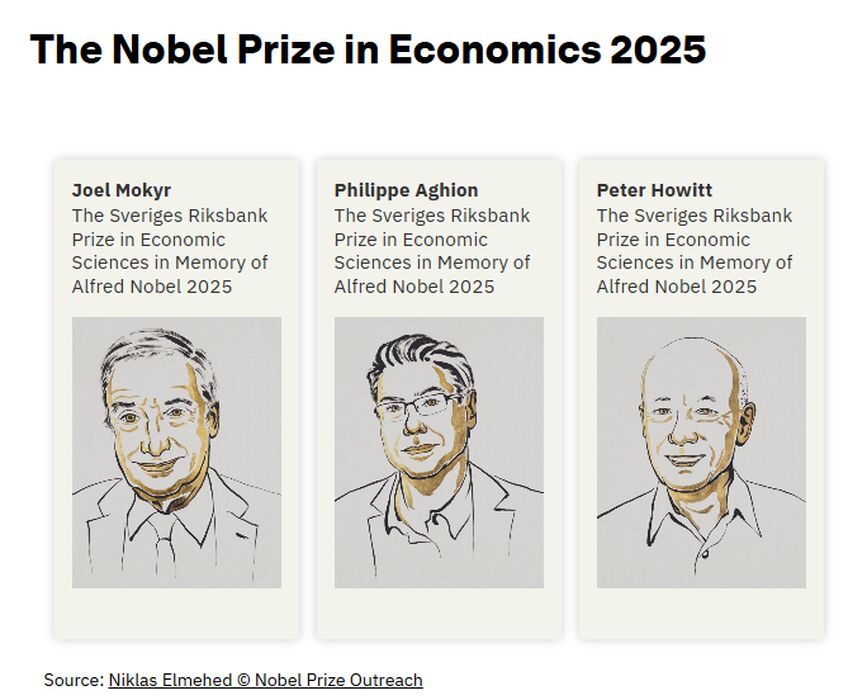
Together, their insights form a complete picture of how societies move forward. Mokyr explains why innovation emerges, while Aghion and Howitt describe how it transforms economies.
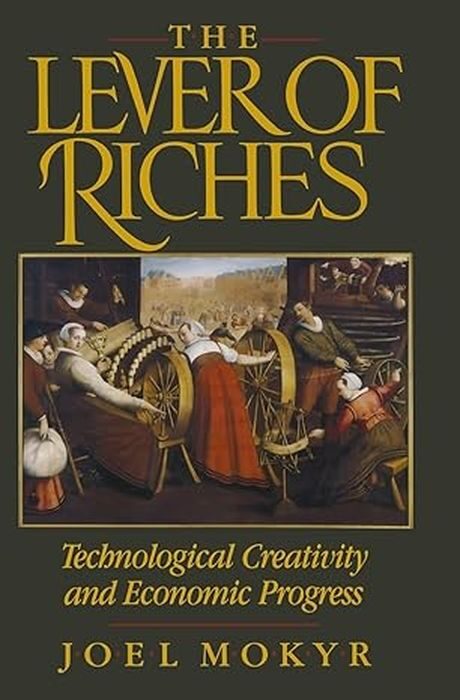
Mokyr’s research shows that breakthroughs don’t arise in a vacuum—they flourish in open, knowledge-rich environments where experimentation and risk-taking are encouraged. His work draws a direct line from the Enlightenment’s culture of inquiry to today’s digital revolution. In his view, the rise of artificial intelligence represents the next major leap in human productivity, akin to the Industrial Revolution. But he warns that success depends on how institutions and policies absorb this technology. They support learning, adaptation, and diffusion across industries.
Aghion and Howitt’s theory of creative destruction captures the same dynamic from another angle. Innovation inevitably replaces outdated methods, reallocating resources toward newer, more efficient uses. While this process can be disruptive, it’s also essential to economic renewal. As AI integrates into every sector, design, manufacturing, healthcare, and energy, it’s driving exactly that kind of renewal: dismantling legacy processes while unlocking new possibilities. In this sense, AI is the living embodiment of creative destruction. It challenges established systems even as it multiplies human capability. It doesn’t just automate tasks; it expands imagination. By merging human insight with computational speed, AI is helping engineers, scientists, and entrepreneurs design the next generation of products and services faster and smarter than ever before.
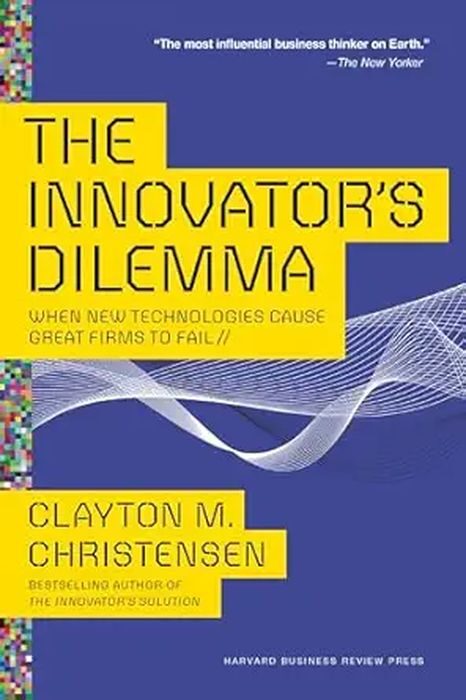
Professor Mokyr is optimistic regarding the potentially positive impact of AI. All three professors also emphasized the value of creative destruction, a concept that Clayton Christensen developed in his best-selling book, “The Innovator’s Dilemma.”
3D Printing: Innovation in Physical Form
After a long gestation period, 3D printing has finally matured into a technology driving measurable economic growth. It is no longer confined to prototyping labs—it’s powering production lines in aerospace, healthcare, automotive, and increasingly, energy infrastructure.
This progress didn’t happen in isolation. A web of federal and state programs, university maker spaces, and public libraries has nurtured the ecosystem from the ground up. Many startups in the 3D printing space have also benefited directly from R&D tax credits, including the cash payroll offset of up to US$500,000 per year, a crucial funding mechanism for early-stage companies that need liquidity to sustain experimentation.
The synergy between 3D printing and AI is particularly promising. AI can optimize print parameters, predict part defects, and generate geometries that maximize strength and minimize material use. Combined with supportive innovation policies and targeted tax incentives, these technologies are reshaping the economics of manufacturing—from design through delivery.
The Research and Development Tax Credit
The now permanent Research and Development (R&D) Tax Credit is available for companies developing new or improved products, processes, and/or software. 3D printing can help boost a company’s R&D Tax Credits. Wages for technical employees creating, testing, and revising 3D printed prototypes can be included as a percentage of the eligible time spent on the R&D Tax Credit. Similarly, when used as a method of improving a process, time spent integrating 3D printing hardware and software counts as an eligible activity. Lastly, when used for modeling and preproduction, the costs of filaments consumed during the development process may also be recovered.
Whether it is used for creating and testing prototypes or for final production, 3D printing is a great indicator that R&D Credit-eligible activities are taking place. Companies implementing this technology at any point should consider taking advantage of R&D Tax Credits.
The Road Ahead
The message of this year’s Nobel Prize is both timely and practical: innovation policy works. When governments design frameworks that reward experimentation and de-risk investment in new technologies, economies flourish.
AI and 3D printing exemplify the next frontier of that growth. Together, they are redefining how value is created, how goods are produced, and how knowledge is transferred from the lab to the market. As Mokyr and his co-laureates have demonstrated, the interplay between technology, policy, and entrepreneurship remains the most powerful driver of long-term prosperity.
For policymakers, innovators, and businesses alike, the takeaway is clear: keep supporting innovation—and the rewards will follow.