
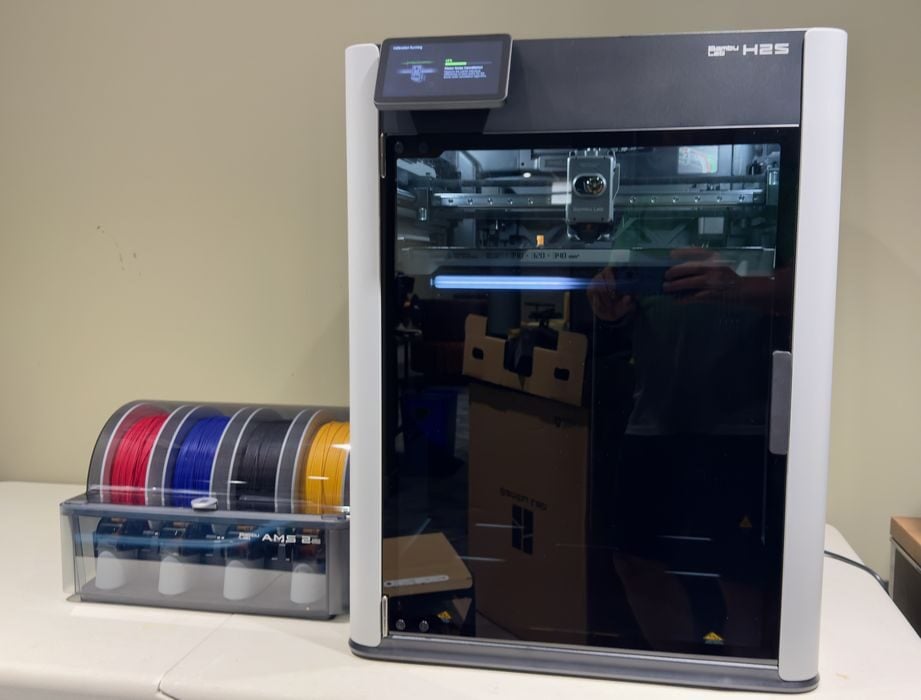
It’s here: Bambu Lab announced the new H2S 3D printer today.
The new machine, which was highly anticipated by the community, has been strongly hinted at by Bambu Lab in the past few days. They published obscure images of portions of the H2S, growing interest.
The H2S is a follow-on from the previous H2D machine. The H2D was a larger, dual-nozzle machine that provided more flexibility, automation, and reliability than the previous X or P series machines.
The H2S is visibly quite similar to the H2D, and you might ask what the difference between the two is. The key is in the product name. The “D” in H2D stands for “dual”, whereas the “S” in H2S stands for single. We’re talking nozzles here.
The H2S is a single-nozzle 3D printer, but that doesn’t mean it can’t print in multiple materials. By attaching the AMS 2 Pro, you can swap between four different filaments in the same print job. With multiple AMS units attached, you can grow that up to 24 different colours.
The single-nozzle design has implications for the build volume. The H2D’s build volume was much larger than the prior X and P series machines. H2D users quickly realized that the X-axis dimension wasn’t quite as big as thought because of the dual nozzles. The nozzles are mounted side-by-side, meaning the left nozzle can’t quite reach as far as the right nozzle, and vice versa. This contracted the H2D’s build volume a little bit.
Not so with the H2S: the single nozzle can reach all areas of the print plate without issue. And that print plate is a whopping 340 x 320 x 340 mm. This is quite a large 3D printer.
Inside the H2S, you will find many of the technologies that first appeared in the H2D, including a servo motor-powered extruder, advanced airflow, chamber heating and venting, and something Bambu Lab calls “full filament path AI detection” that ensures complete knowledge of filament status.
At launch, there are two models of H2S:
- H2S Combo (with one AMS 2 Pro unit)
- H2S Laser Combo (with one AMS 2 Pro unit and 10W laser module)
There is also an option for a standalone H2S 3D printer, if you don’t want the AMS 2 Pro included. Note that it is possible to upgrade an H2S to the laser version with a number of optional upgrades and modules.
The H2S offers an incredible range of advanced features, with many focused on print quality, as well as safety. Safety is a considerable concern when the laser module is installed, so the H2S Laser Combo includes five flame sensors, a flame retardant chamber, and a “safety key”.
The safety key is a red knob that, when pulled out, immediately shuts down the machine. This is very much like the red emergency power-off buttons seen on industrial equipment, but here the key is in the back where it is less visible.
An interesting optional feature is the “vision encoder”. It’s a specialized plate containing optical symbols. When mounted, the H2S can “super calibrate” itself using these markings, making its XY accuracy even better (up to 0.05mm).
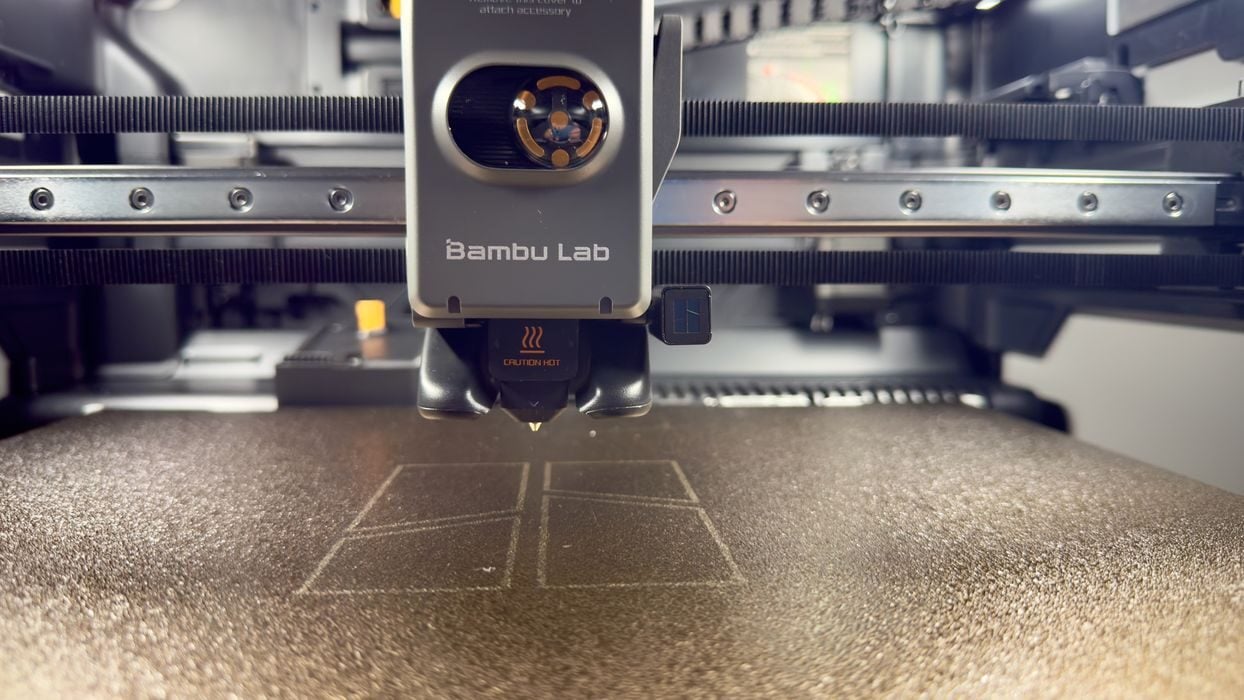
The extruder servo motor is quite interesting, as it replaces the typical stepper motors used in most FFF 3D printer extruders. It’s a closed-loop system with 20kHz feedback for constant monitoring. It’s also quite a bit stronger (67%), which ensures filament movement in almost any situation.
Like previous Bambu Lab equipment, the H2S includes many smart features. The onboard AI uses three cameras to monitor operations and is able to detect issues before they cause problems. It even monitors the purge chute for overflow.
The build chamber is actively heated up to 65C, which dramatically reduces warping when printing high-temperature materials. That’s because the thermal gradient is smaller between the freshly printed material at the top and the cooled material at the bottom.
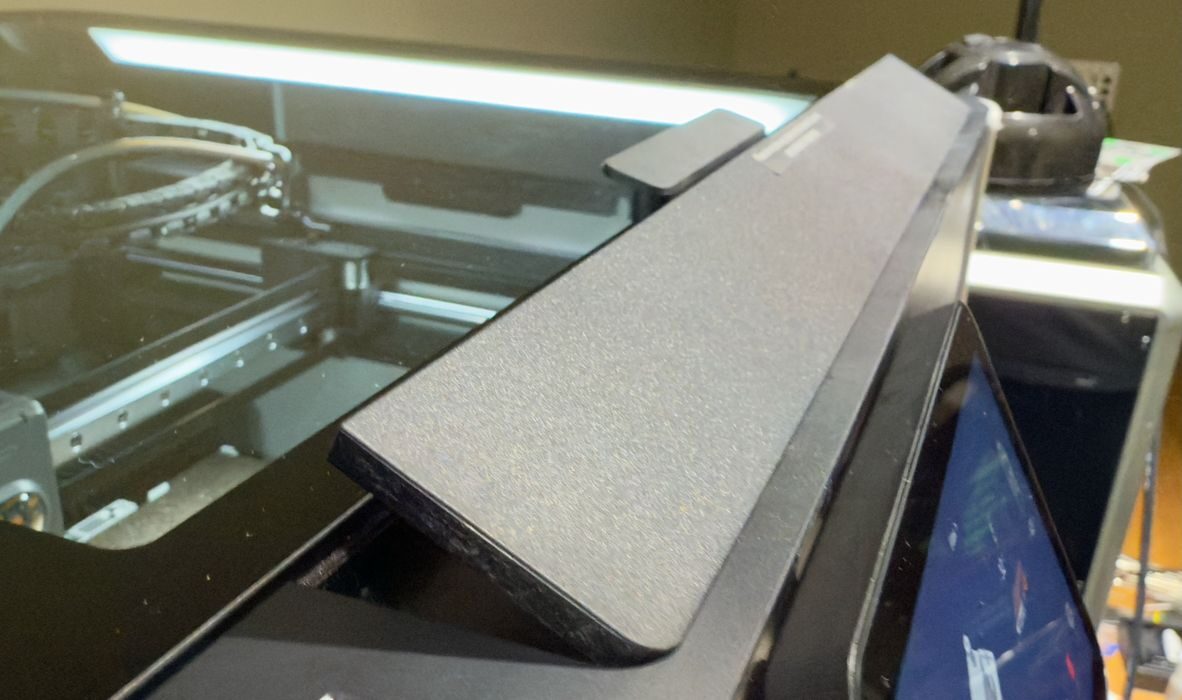
There’s also a unique vent at the top of the H2S. It’s used to ensure the chamber temperature does not exceed the recommended values for lower-temperature materials like PLA. It automatically opens up when these materials are being printed.
The nozzle is hardened steel, making it ideal to print abrasive filaments like CF and GF reinforced materials. It can also reach a whopping 350°C, putting it in reach of many exotic engineering materials, such as PAHT, PC, PA, PPS, etc.
The nozzle is, of course, swappable, and is visibly similar to the A-series nozzles. They’re well known for being easy to change, and that’s the same with the H2S.
The H2S prints at high speeds like all Bambu Lab devices, but with the optional high flow nozzle, the H2S can print up to 15% faster. Even the standard nozzle is quite capable, having a maximum volumetric flow rate of 40 cubic mm/s, more than the X1C.
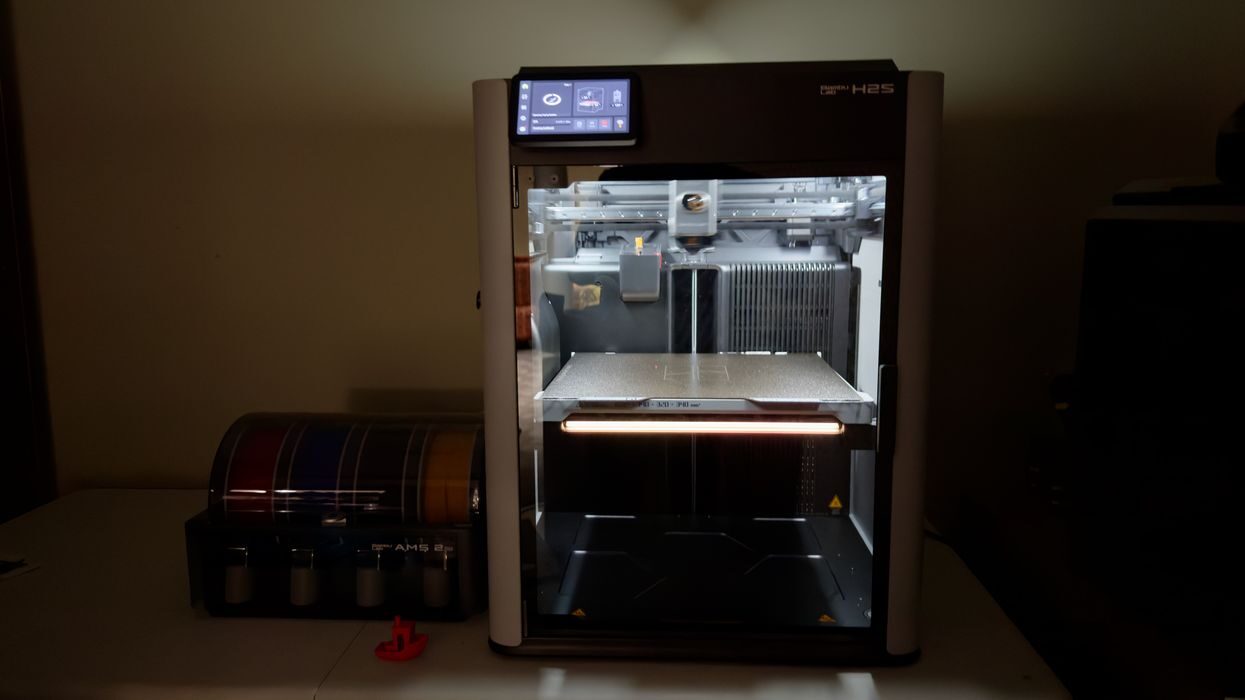
We’ve been secretly testing the H2S and we’ve been very impressed so far. Watch for our full review in coming days.
The two H2S product versions are now available for purchase from the company’s official store. Pricing as follows:
- H2S AMS Combo: US$1499
- H2S Laser Combo: US$2099
- H2S Standalone: US$1249
Via Bambu Lab
