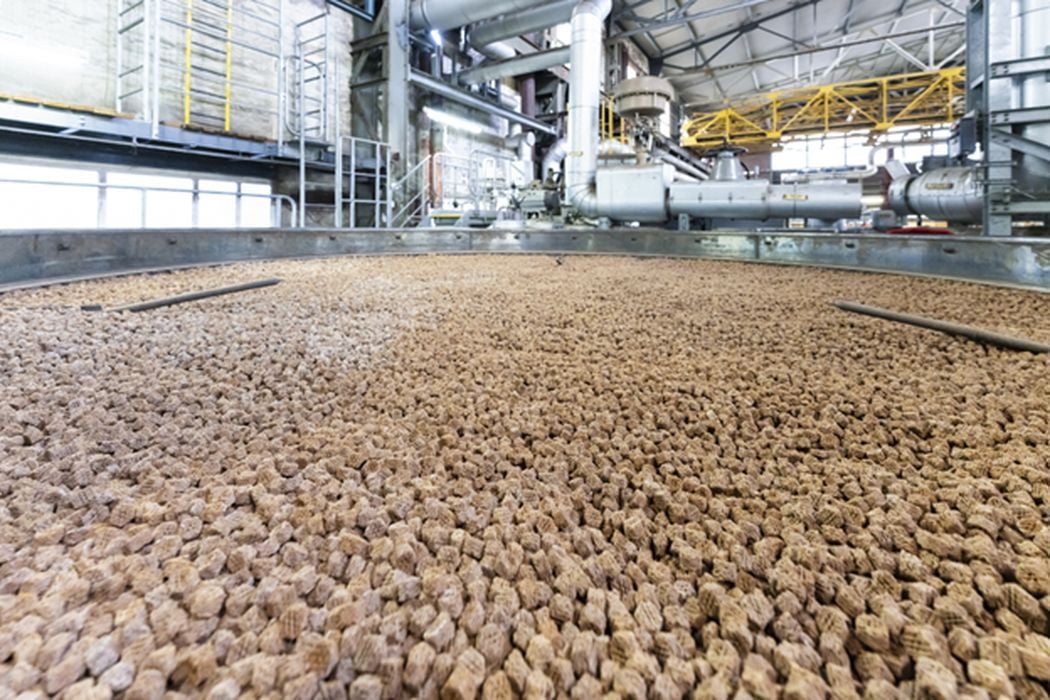
Charles R. Goulding and Andressa Bonafe discuss BASF’s advancement in 3D printed catalysts and its impact on the future of industrial processes.
On March 19, 2026, BASF made global chemical industry history. The world’s largest chemical company started up the world’s first industrial-scale production plant for catalysts manufactured using its proprietary X3D® technology, located at its flagship Verbund site in Ludwigshafen, Germany. This milestone marks the moment 3D printing moved from a laboratory curiosity in catalyst design to a fully operational industrial process, one capable of reshaping the efficiency, sustainability, and competitiveness of chemical manufacturing at scale.
This article builds on our December 2024 piece, “From Molecules to Machines: The Synergy of Catalysts and 3D Printing,” in which we explored the foundational science of catalysts, the limitations of traditional manufacturing methods, and the early promise of additive manufacturing (AM) as a solution. What was promise in December 2024 is now production reality in 2026. Here, we examine BASF’s unique position in the AM landscape, the technical and commercial achievements of X3D® technology, the vertical markets most affected, and why these developments open compelling R&D tax credit opportunities for U.S. companies engaged in similar work.
BASF and 3D Printing: From Materials Pioneer to Production Reality
BASF was an early and ambitious entrant into additive manufacturing. Starting in 2017, the company built a dedicated AM subsidiary that eventually became Forward AM, offering one of the broadest industrial materials portfolios in the industry, spanning metal filaments, photopolymers, and high-performance engineering plastics. That chapter closed in 2024 when Forward AM was spun out via a management buyout and later acquired by Stratasys in 2025. While the materials business made headlines, the real shift was occurring inside BASF’s chemical operations.
Today, BASF integrates additive manufacturing directly into its research and production workflows. Within its catalyst development pipeline, 3D printing is used to rapidly prototype new geometric shapes before scaling to production, with clay-based 3D printers used at the materials testing stage to iterate on catalyst structures quickly and cost-effectively. This rapid prototyping capability sits within a broader R&D program thatinvests approximately €2 billion annually, employs around 10,000 researchers globally, and generated over 1,000 new patents in 2024 alone. It is this integration of 3D printing into the core innovation pipeline, not as a materials product but as a manufacturing tool, that ultimately gave rise to X3D technology.
X3D Technology: A Breakthrough in Catalyst Design
For over 70 years, industrial catalysts have been manufactured using two fundamental methods: extrusion, in which a raw material is pushed through a die to form catalyst bodies, and tableting, in which material is compressed into pellets. Both approaches have proven effective but share an inherent limitation: they restrict the complexity and geometry of the catalyst’s internal structure. As a result, conventional catalysts are often constrained by inefficient mass transfer, elevated pressure drop across reactors, and suboptimal flow dynamics.
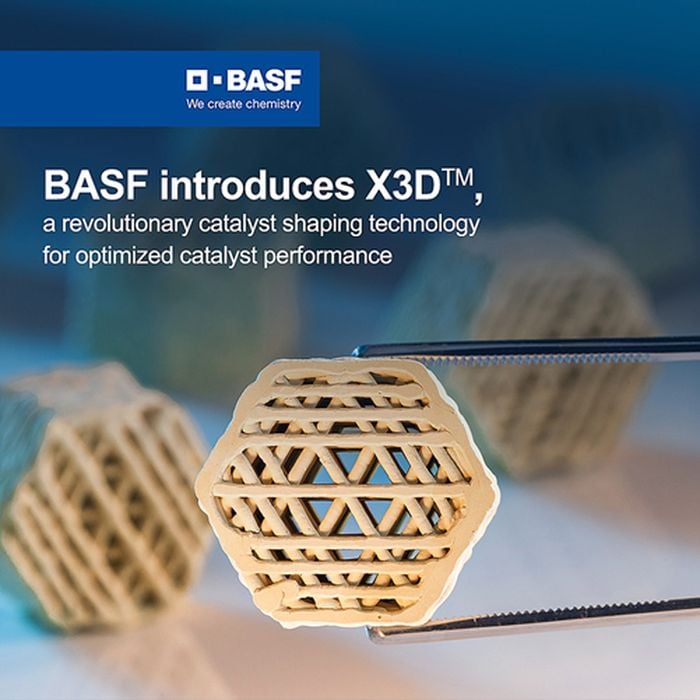
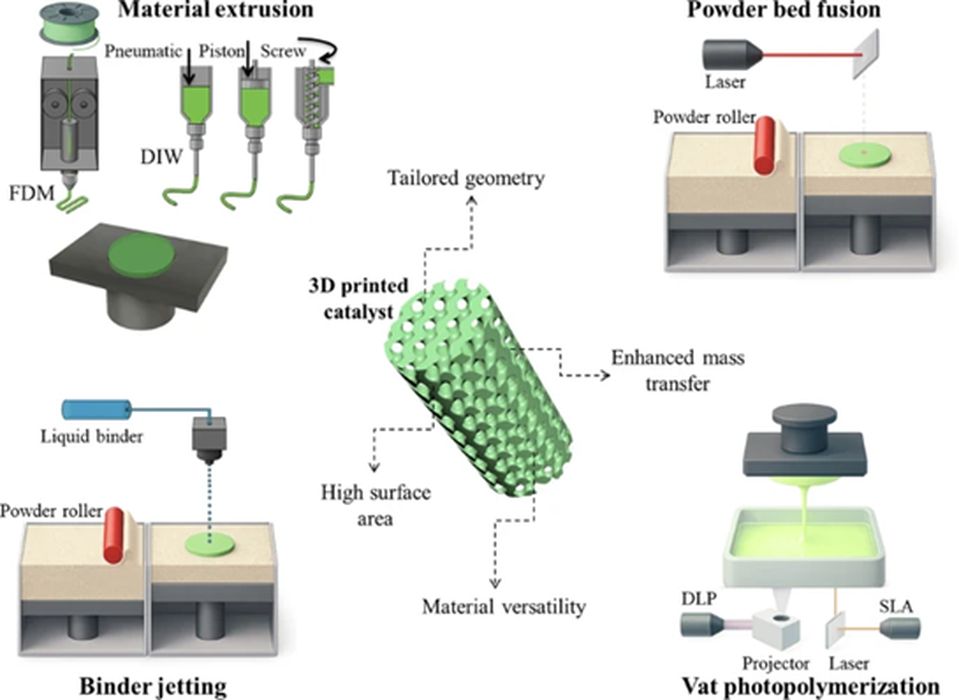
BASF began developing X3D technology as early as 2019, when it first sold the Sulfuric Acid catalyst O4-115 based on the new approach. In September 2022, BASF formally introduced X3D™ to the market as a revolutionary catalyst shaping technology, announcing commercial availability of the O4-111 X3D and O4-115 X3D sulfuric acid catalysts for use in industrial plants. The technology’s core breakthrough lies in its application of additive manufacturing to produce catalyst bodies with custom three-dimensional geometries that would be impossible to achieve through traditional extrusion or tableting.
X3D-produced catalysts combine high mechanical stability with an open, optimized internal structure. This design significantly reduces pressure drop across reactors while simultaneously increasing the catalytically active surface area. The practical outcome for plant operators is higher reactor throughput, improved product quality, and substantially lower energy consumption compared to catalysts made with conventional methods. The technology is also highly versatile: it can be applied to a broad range of catalyst materials, including precious and base metal catalysts as well as various support materials.
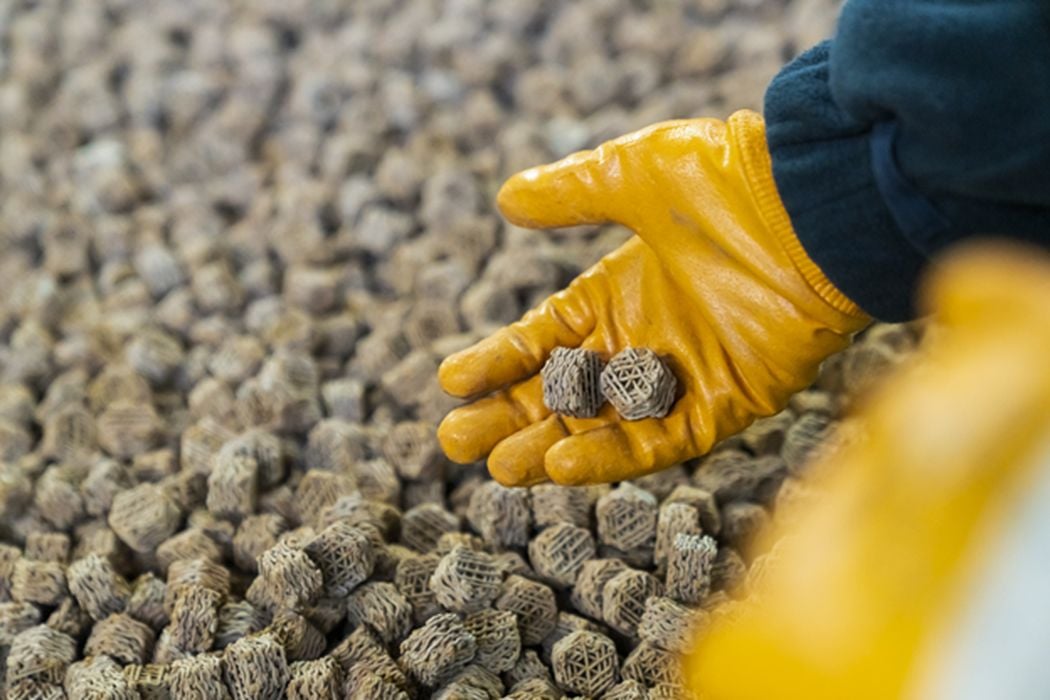
In November 2024, BASF announced additional investment in X3D production capacity ahead of the Ludwigshafen plant’s launch. At the plant commissioning on March 19, 2026, Detlef Ruff, Senior Vice President Chemical Catalysts and Adsorbents at BASF, stated: “We can supply catalysts tailored precisely to their specific chemical processes – quickly and in large quantities.” His successor, Yaqian Liu, who assumed leadership of the business on April 1, 2026, described the moment as “groundbreaking.”
Proven in the Field: Commercial Results
X3D technology has not remained theoretical. BASF has compiled measurable, real-world performance data from commercial deployments. In one sulfonation plant with a 32 MTPD capacity, a single catalyst bed of 1.2 cubic meters was replaced with X3D catalyst. The results were substantial: a 1% increase in conversion (equal to 1 MTPD or €25,000/year in additional output), caustic soda savings of 162.4 tons per year (worth approximately €58,000/year), and energy savings of 106 MW/year due to reduced pressure drop (approximately €18,000/year). Total savings from that single catalyst bed replacement reached approximately €100,000/year.
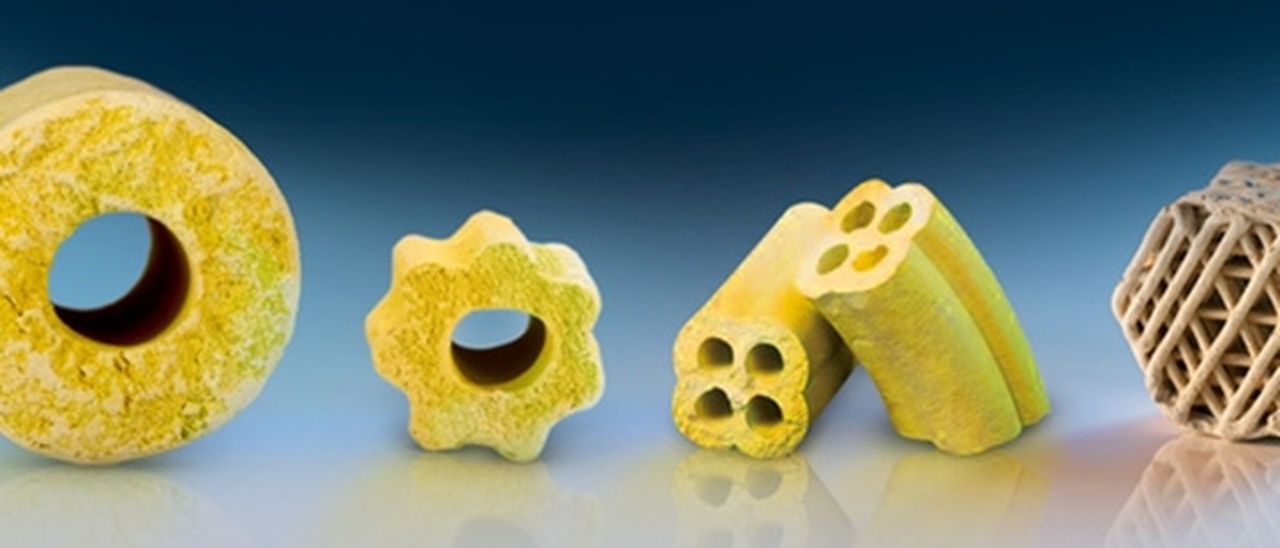
In the nitrogen chemistry sector, since the end of 2023, BASF’s N2O abatement X3D catalyst has been installed in a commercial nitric acid plant for long-term operation, demonstrating high N2O removal rates at low investment costs. Replacing a full catalyst bed of 0.6 cubic meters with the X3D variant delivered savings of more than €3 million per year. These figures illustrate that the impact of a 3D printed catalyst extends far beyond incremental performance gains.
In 2025, Chinese fine chemical company An Hui Jintung filled its production plant with BASF’s sulfuric acid catalyst O4-115 X3D. According to Eter Zhu, General Manager at An Hui Jintung, “production achieved a record high, generating substantial economic benefits” for the company, with a smooth plant startup and significantly improved performance compared to prior operations. An Hui Jintung has committed to continuing the collaboration with BASF to upgrade catalysts across additional units.
Vertical Markets: Who Stands to Gain
The implications of scalable 3D printed catalyst production extend across several major industrial sectors. The global catalyst market was valued at approximately US$43 billion in 2025, and catalytic processes are involved in 90% of all commercially produced chemical products, underscoring how central catalyst performance is to virtually every industrial sector. Any efficiency improvement in catalyst design ripples through these sectors in measurable ways.
The chemical and petrochemical sector stands among the most immediate beneficiaries. Sulfuric acid, one of the highest-volume industrial chemicals in the world, is a linchpin of modern manufacturing. Approximately 60% of the global sulfuric acid supply is used to produce phosphate fertilizers, while another 20% goes to chemicals ranging from detergents and pharmaceuticals to pesticides and antifreeze. X3D catalysts for sulfuric acid production therefore carry compounding downstream effects.
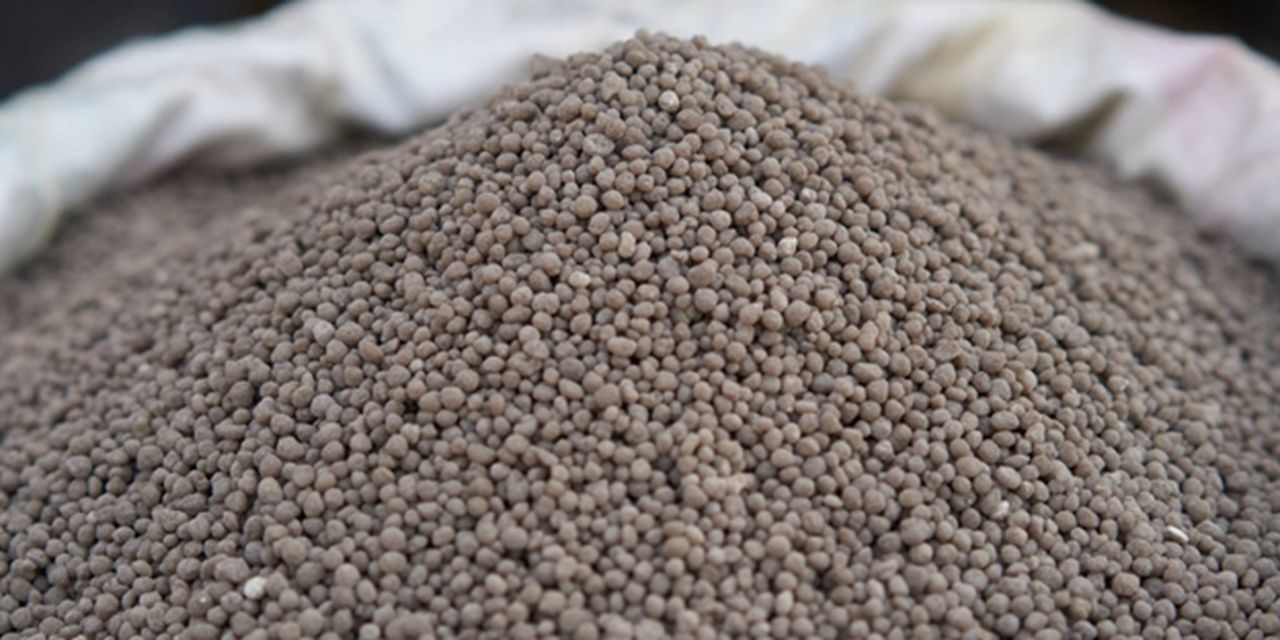
In oil refining and petrochemicals, catalytic cracking and hydroprocessing are foundational processes. Any catalyst that reduces pressure drop across reactor beds while increasing yield has immediate operational and financial value at the refinery level. According to industry analysis, petrochemicals will account for roughly 40% of high-performance catalyst demand in 2025, making this sector one of the highest-stakes markets for X3D technology adoption.
Pharmaceutical manufacturing relies on catalysts for the efficient synthesis of complex compounds, including enantioselective processes that produce targeted medicines. The ability to rapidly prototype and iterate on catalyst geometries via 3D printing, accelerates the development of novel catalytic materials for drug synthesis. With BASF’s new industrial plant compressing development and market introduction timelines, pharmaceutical producers can access customized catalyst solutions more rapidly than before.
The environmental and energy sectors represent another cluster of high-impact applications, spanning both emissions abatement and the transition to cleaner energy sources. The automotive and transportation sector has long depended on catalysts for emissions control. Catalytic converters, selective catalytic reduction (SCR) systems for NOx abatement, and diesel particulate filters are all areas where catalyst geometry improvements can directly affect pollutant reduction rates and system longevity. BASF’s N2O abatement catalyst for nitric acid plants represents a parallel application: demonstrating that 3D printed catalyst geometry can achieve superior removal rates at lower operating cost than conventional designs.
Looking further along the energy transition, the emerging hydrogen economy, CO2 capture and conversion, and biomass-to-chemicals processes all depend on high-performance catalysts. Ammonia is increasingly recognized as a practical hydrogen carrier (energy-dense, easy to transport, and carbon-free), and researchers have demonstrated that 3D printed catalysts for ammonia decomposition, the process of cracking ammonia back into hydrogen, achieve superior performance through more precise geometric control, lower pressure drop, and improved mass transfer compared to conventional pellet designs. The same geometric advantages extend to biomass conversion: as reviewed in a December 2025 paper in Communications Chemistry, 3D printed catalysts for biomass valorization show significant promise, with tailored pore architectures that enhance mass transfer and active site accessibility compared to conventional catalyst geometries. Together, these applications make the hydrogen and clean energy sector one of the most promising vertical markets for 3D printed catalyst technology.
The R&D Tax Credit
The now permanent Research and Development (R&D) Tax Credit is available for companies developing new or improved products, processes and/or software.
3D printing can help boost a company’s R&D Tax Credits. Wages for technical employees creating, testing and revising 3D printed prototypes are typically eligible expenses toward the R&D Tax Credit. Similarly, when used as a method of improving a process, time spent integrating 3D printing hardware and software can also be an eligible R&D expense. Lastly, when used for modeling and preproduction, the costs of filaments consumed during the development process may also be recovered.
Whether it is used for creating and testing prototypes or for final production, 3D printing is a great indicator that R&D Credit-eligible activities are taking place. Companies implementing this technology at any point should consider taking advantage of R&D Tax Credits.
Conclusion
BASF’s commissioning of the world’s first industrial-scale 3D printed catalyst plant in Ludwigshafen is a signal that additive manufacturing has crossed the threshold from advanced prototyping to actual production infrastructure in one of chemistry’s most critical domains. From sulfuric acid plants achieving six-figure annual savings per catalyst bed, to nitrogen chemistry facilities realizing multi-million-euro efficiencies, to a new generation of customized catalysts being delivered to sectors as diverse as fertilizers, pharmaceuticals, automotive emissions, oil refining, and green hydrogen, the vertical market impact is broad and accelerating. For U.S. companies engaged in 3D printed catalyst research, development, and deployment, the activity happening at BASF’s Ludwigshafen site serves as both inspiration and a benchmark; and for those companies, the federal R&D Tax Credit represents a meaningful financial tool to support the very work that could define the next era of industrial chemistry.