
Charles R. Goulding and Preeti examine Corning’s success with the AI boom due to its fiber optic research and development, all while setting a place for 3D printing to hedge any unforeseen risks.
Corning’s AI Glow-Up: How 3D Printing Could Shape Its Next Big Win
Corning, often associated with glass manufacturing and kitchenware more than fiber optics, has hit it big with the AI boom. According to one analyst, Mehdi Hosseini, “They were in the right place at the right time, and they have basically monopolized the fiber used for AI application.” As AI data centers have skyrocketed in recent years due to surging demand, the industry has required fiber-optic connections with the highest bandwidth, speed, and efficiency. Corning’s research and development (R&D) teams have engineered next-generation fiber optics that operate with lower latency and consume less energy, cementing the company’s role as a key supplier for the AI infrastructure race.
Still, there’s a shadow in Corning’s AI rainbow—how much of the industry’s soaring profits will actually reach the company’s bottom line? It’s too early to tell, but one way Corning can hedge that uncertainty is by betting on technology. Just as AI and 3D printing are transforming industries across the board, Corning is positioning itself at the intersection of these two revolutions—using additive manufacturing to reinvent how glass and ceramics are designed, tested, and built.
How Corning Is Partnering With Industry Experts on 3D Printing
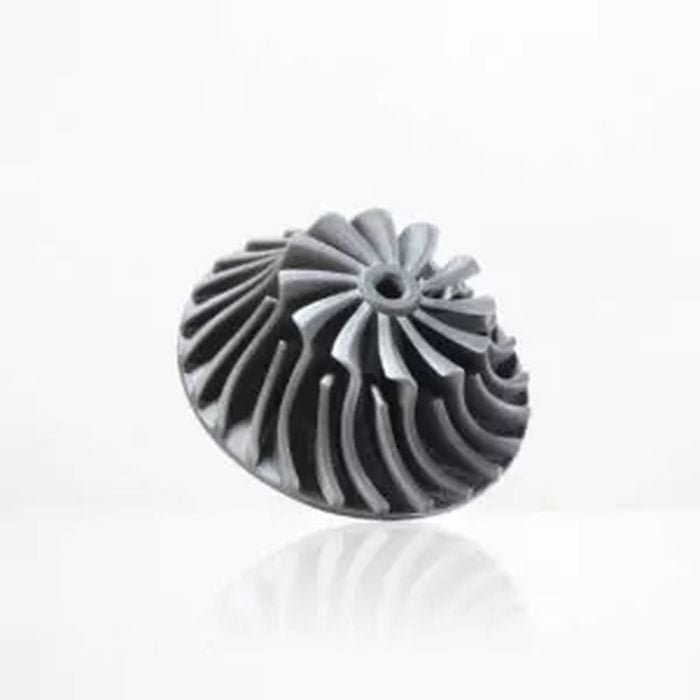
Corning has quietly become a major force in the evolution of additive manufacturing for glass and ceramics, turning what was once a traditional materials business into a hub of high-tech innovation. One of its most prominent collaborations is with Lithoz, an Austrian pioneer in ceramic 3D printing. Together, the two companies have shown that Corning’s proprietary glass-ceramic materials can be successfully 3D printed using Lithoz’s lithography-based ceramic manufacturing (LCM) process. By blending Corning’s advanced glass-ceramic powders with Lithoz’s resin system, they produced dense, high-strength parts that mirror the physical and thermal properties of conventionally manufactured Corning materials. With fired densities reaching 2.7 g/cm³ and flexural strengths over 150 MPa, the printed parts open new possibilities for applications in dental implants, microelectronics, aerospace components, and specialty cookware—industries where complex geometries and material resilience are key.
Beyond the Lithoz partnership, Corning is pushing the limits of laser-based fabrication. Its ultrafast laser nanoPerforation process allows for clean, high-precision cutting of 3D glass without mechanical stress, enabling the creation of complex curved and freeform components. This technology, already used in next-generation display glass and optical devices, complements 3D printing by allowing hybrid manufacturing—where additive and laser-shaping methods work together to produce intricate parts with optical-grade finishes.
Corning’s influence also extends to micro- and nanoscale manufacturing. Recent research using Corning’s ultra-low expansion (ULE) glass demonstrated that femtosecond laser selective etching (SLE) can carve highly detailed 3D microstructures such as fiber alignment arrays and optical mounts with submicron precision. These advancements are particularly relevant for photonics, semiconductor packaging, and AI data center components—areas that require both optical accuracy and thermal stability. Additionally, Corning’s partnership with QuantumScape to develop ceramic separators for solid-state batteries shows how its materials science expertise continues to bridge into new, high-growth sectors. While not directly tied to additive manufacturing, the same core competencies—precision ceramics, controlled crystallization, and structural integrity—fuel both efforts.
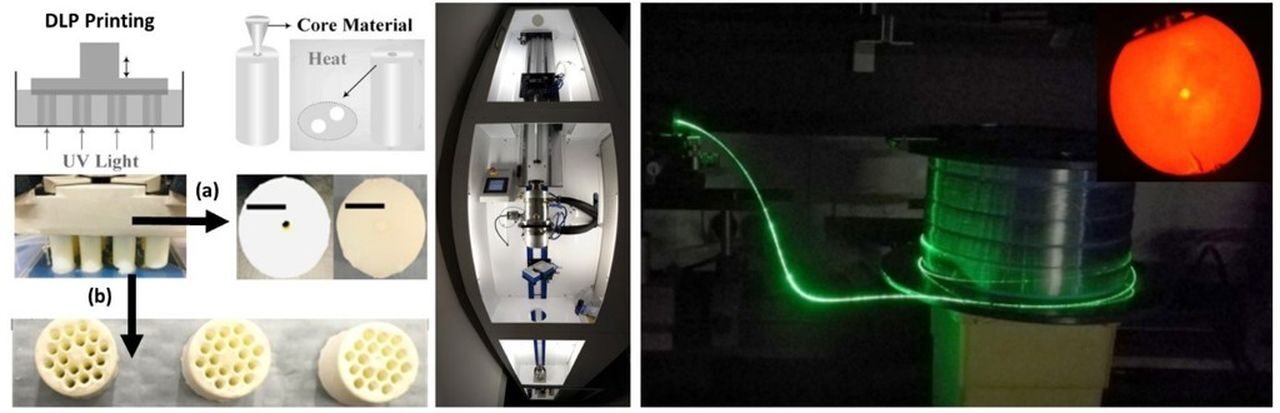
Together, these projects signal a shift in how Corning approaches manufacturing. Instead of relying solely on large-scale batch processes, it’s now exploring digital and additive production that allows faster prototyping, lower waste, and the ability to create parts with complex internal structures. This agility matters as the AI era demands increasingly customized, high-performance components—from energy-efficient fiber optics to heat-resistant glass modules in photonics and electronics.

The Research and Development Tax Credit
The now permanent Research and Development (R&D) Tax Credit is available for companies developing new or improved products, processes, and/or software. 3D printing can help boost a company’s R&D Tax Credits. Wages for technical employees creating, testing, and revising 3D-printed prototypes can be included as a percentage of the eligible time spent on the R&D Tax Credit. Similarly, when used as a method of improving a process, time spent integrating 3D printing hardware and software counts as an eligible activity. Lastly, when used for modeling and preproduction, the costs of filaments consumed during the development process may also be recovered.
Whether it is used for creating and testing prototypes or for final production, 3D printing is a great indicator that R&D Credit-eligible activities are taking place. Companies implementing this technology at any point should consider taking advantage of R&D Tax Credits.
Conclusion: Printing the Future of Glass and AI
Corning’s embrace of 3D printing and advanced fabrication isn’t just an R&D experiment—it’s a strategic evolution. By combining additive manufacturing with its unmatched glass and ceramics expertise, Corning is creating a pathway toward faster innovation, higher margins, and deeper integration into the technologies driving the AI boom. The ability to design and produce complex optical and structural components on demand gives Corning the flexibility to serve new market AI infrastructure, photonics, quantum computing, and solid-state batteries—while reinforcing its dominance in existing ones.
In an industry where performance and precision are everything, 3D printing could become Corning’s secret advantage. It bridges the gap between material science and manufacturing agility, letting the company shape—not just supply—the future of connectivity and computation. If Corning continues to build on these partnerships and investments, it won’t just ride the AI wave; it’ll help engineer the glass, ceramics, and fibers that make the wave possible.