
Late last week Prusa Research announced something that could be the most important development in desktop 3D printing in 2025.
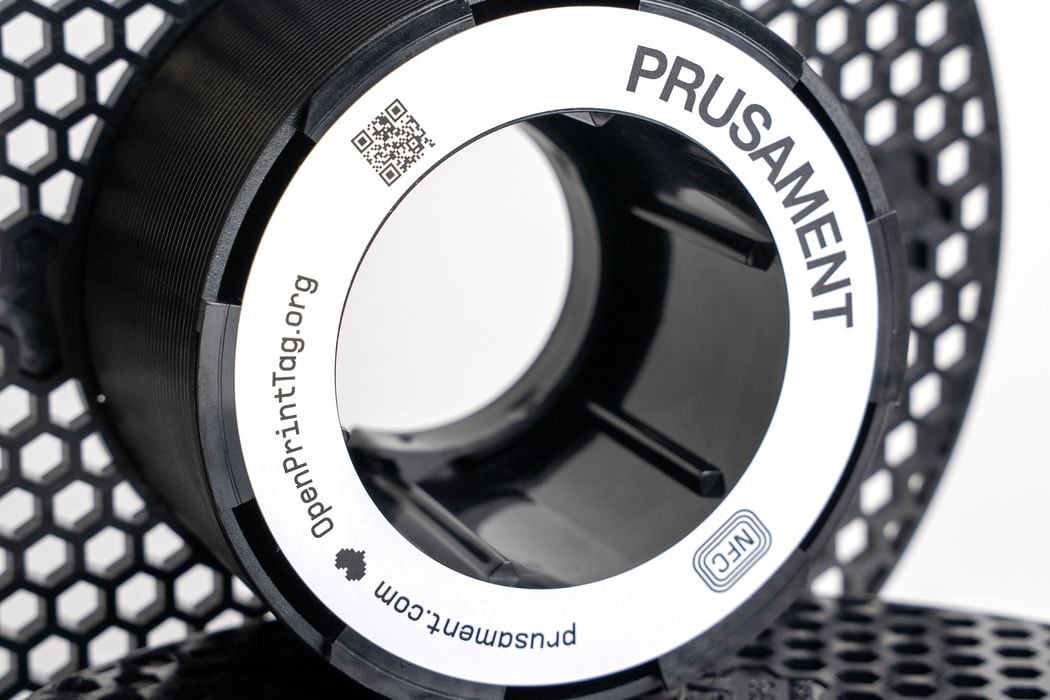
Their announcement was for a new protocol called OpenPrintTag. It’s an NFC-based protocol that allows for wireless identification of 3D printer filament spools. Information including the type of material, the color and even the specific spool. That allows an external system to track usage on spools automatically.
This type of technology has been around for several years now, but has always been proprietary: a 3D printer would only read their own spools, and “foreign” spools would have to be manually identified.
For those of us that have used these systems, the level of convenience is incredible — and they also prevent mistakes from happening: you would never be able to print that PLA model with ABS loaded because the printer “knows” what’s going on. But you get that only when using the manufacturer’s spools.
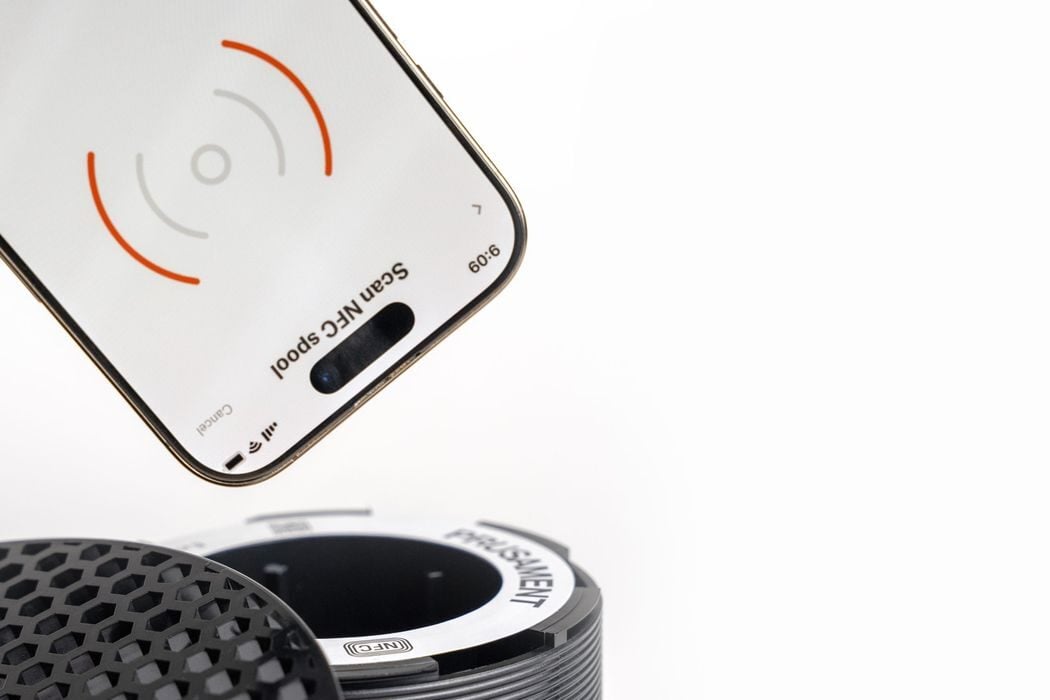
Prusa Research has chosen NFC (near field communication) over the RFID (radio frequency id) approach used by most other spool protocols. It’s the same technology your smartphone uses to pay at cashless stations. The entire protocol stack has been built “from the ground up” by the Prusa Research team.
The most important difference here is that Prusa Research has open sourced the entire protocol — any manufacturer of filament or 3D printers can use it.
OpenPrintTag Adoption
Now, the biggest question of them all: will the industry adopt this protocol? Will we end up in a world where you can smartly use any spool on any 3D printer?
The history on this topic is mixed. Over a decade ago certain desktop 3D printers were issued with similar tagging tech, but were locked down — the printers could not use ANY other spools than those from the original manufacturer. This approach rapidly failed, and largely hasn’t been repeated.
However, there’s a competing force here: money. Imagine you spend US$1000 on a 3D printer and keep it for three years. If you print a US$25 spool of filament every month for that period, you’re also spending US$900 in spools.
3D printer manufacturers want to get a piece of that action.
To ensure that they do, they have taken a number of steps, all not quite as far as making things entirely proprietary:
- Made their equipment hold spools of a peculiar size to slow down others from making compatible spools
- Made detailed print profiles for their own materials and leaving everything else as “generic”
- Created long processes to certify third party materials to be adopted in a print profile database
- Touted the benefits of using materials that are “officially certified” on their equipment
- Made spool id systems work only with their own spools (as described above)
Most systems now permit the use of third party materials, it’s just that doing so is a bit more difficult than using the original equipment manufacturer’s materials.
That almost certainly drives more cash towards the equipment manufacturers, but also puts operators in a difficult spot. What if there is a material they want to use, but the manufacturer doesn’t provide it? They are forced to take the “difficult” path to use the “generic” material, or somehow find / create a proper print profile.
This is all BS. Every operator simply wants to run the equipment they purchased with any suitable material without a productivity penalty.
OpenPrintTag should solve this, if it is adopted.
Elegoo proposed an RFID standard for spools, and solicited feedback from the community back in May of this year. I’ve heard nothing from them since on this topic, and I don’t believe any other material or equipment manufacturer has adopted it. It’s not even clear if they even built physical prototypes of the system. While a large part of the system is the protocol, there are also physical tags and readers involved.
That tells you how difficult it is to bring a standard like this to the 3D print universe.
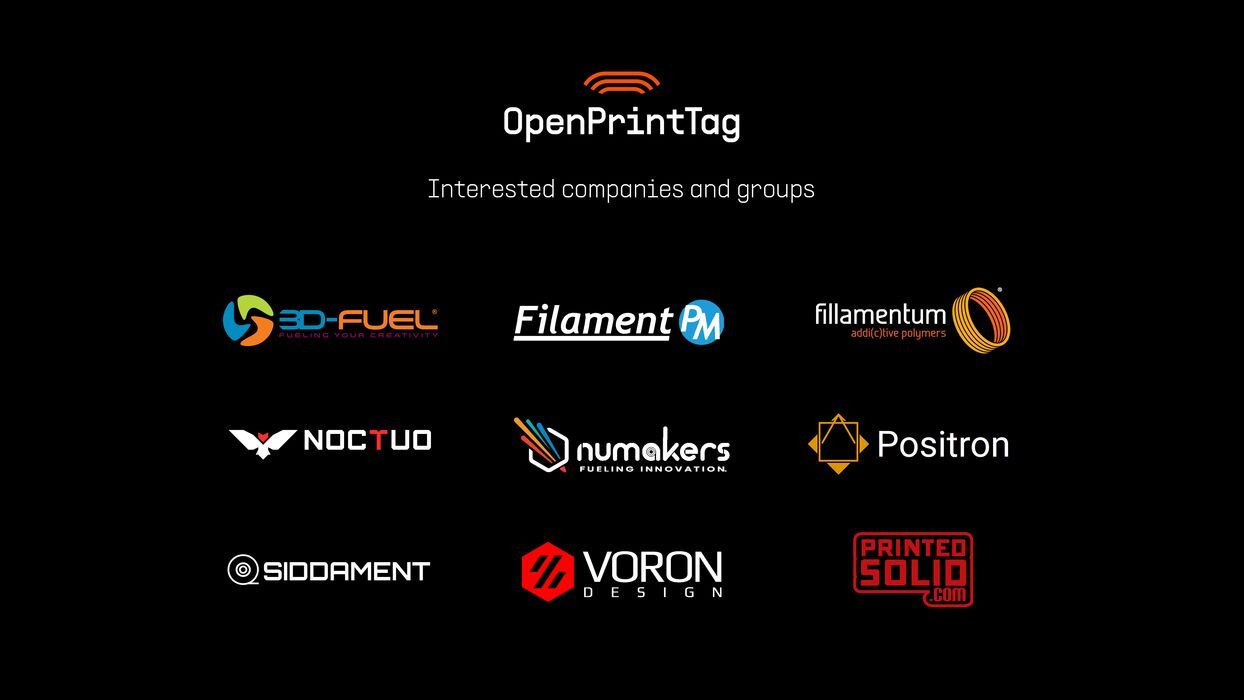
Prusa Research is facing the same struggle. However, they may have the inside track, as they have more connections and relationships than Elegoo. So far they seem to have these companies expressing interest:
- 3D-Fuel (filament maker)
- FilamentPM (filament maker)
- Filamentum (filament maker)
- Noctuo Filaments (filament maker)
- Numakers (filament maker)
- Positron (equipment maker)
- Siddament (filament maker)
- Voron Design (equipment maker)
- Printed Solid (Prusa Research reseller)
That’s a pretty good start, and there is a reason why third party filament producers would want to join this party.
Companies like Bambu Lab and Creality are selling the majority of the machines these days, and they also sell filament. That filament works well within the closed spool ecosystems of those companies, basically putting up a barrier to third party filament producers. It is in the interest of third party filament makers to join OpenPrintTag.
If a sufficient number of machines and filament producers outside of the major players “go OpenPrintTag”, then there will be great pressure on the market leaders to adopt it as well. It could even be seen as a negative feature if OpenPrintTag compatibility is not present on a machine’s spec sheet. However, general adoption of something like this will take years.
I support the OpenPrintTag effort, and hope it succeeds. You should, too.
Via Prusa Research and OpenPrintTag
