
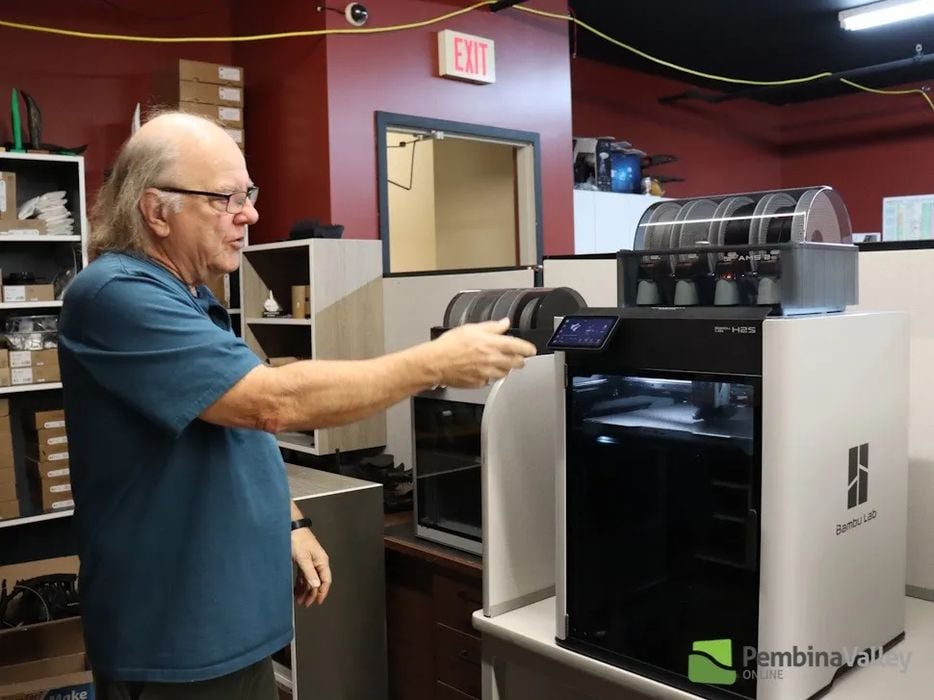
This week’s selection is the Styxosaurus project by the Canadian Fossil Discovery Centre.
The Centre, located in southern Manitoba, contains the largest collection of marine reptile fossils in Canada, including multiple notable specimens. Recently they’ve begun work on a project to 3D print a life-size replica of a Styxosaurus.
Are you familiar with the Styxosaurus? I wasn’t, so I looked it up. The Styxosaurus to be quite different from your stereotypical dinosaur: this one is a marine reptile that swam in shallow oceans, feeding on fish.
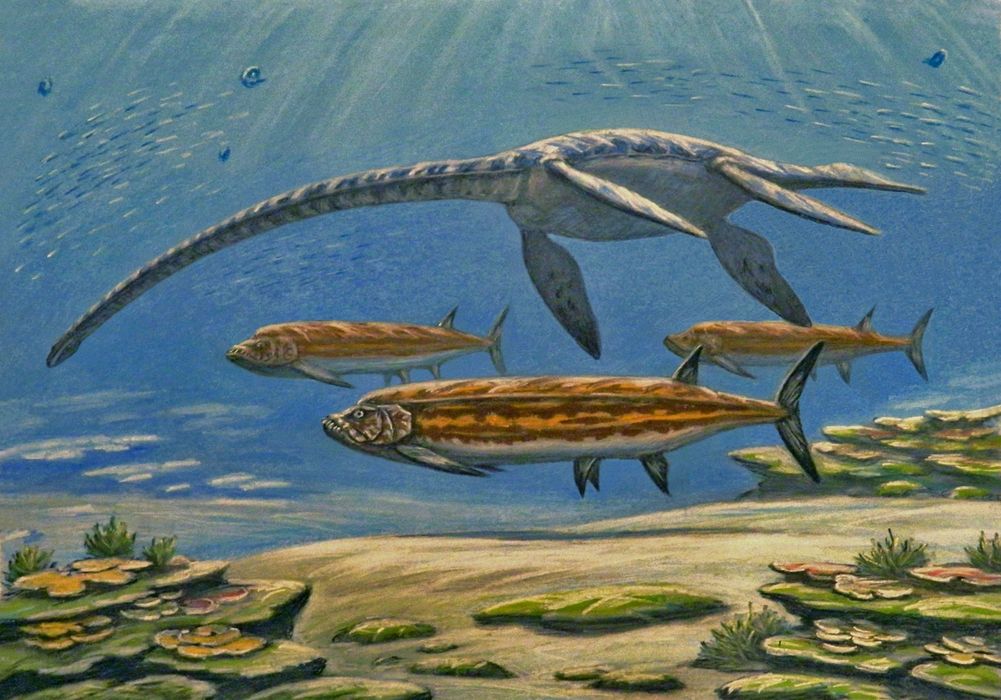
Hold on, southern Manitoba is kinda far from any ocean, how could a marine reptile be found there? It turns out that many millions of years ago, the middle of North America was actually an ocean due to a higher sea level. In those waters 82 million years ago, swam the Styxosaurus, a four-finned, long-necked animal that looks very much like a classic sea monster.
The museum owns a partial fossil skeleton of a Styxosaurus, and wants to make a proper, life size display. They embarked on a project to recreate the entire fossil using modern 3D technology.
It’s an enormous amount of work, which involves 3D scanning each individual piece of the fossil, and converting them into printable 3D models. For the parts that are missing, which is often the case with fossils, they are 3D modeling them, one by one.
Then there’s the staggering task of printing literally hundreds of pieces. So far their five 3D printers, including a Bambu Lab H2S, have been running constantly for months.
This is a lot more complex than you might think. Each part will have to be carefully labelled, as they are all different — but very similar in geometry. You’d never want to lose track of the part identifications when there are hundreds involved.
Once the printing is complete, then there’s the equally enormous task of putting it all together. They will first have to decide on a pose for the fossil, and then build a steel armature that can hold all the pieces in appropriate positions. Finally, they will mount all the parts and the replica will be complete.
The project is ongoing, and I am very curious to see how it turns out. There are plenty more details in the report from Pembina Valley Online.
