Charles R. Goulding and Jacob Nolan examine how Duke University’s research strategy, shaped by federal funding uncertainty, healthcare innovation, and advanced manufacturing trends, is positioning 3D printing as a key driver of biomedical, engineering, and life science advancement within the Research Triangle.
Duke University is a private research institution based in Durham, North Carolina, and one of the three anchor universities of the state’s Research Triangle alongside the University of North Carolina at Chapel Hill and North Carolina State University. Founded in 1838, Duke has built a global reputation for excellence in medicine, engineering, and interdisciplinary research, with Duke Health serving as a major hub for clinical innovation. Its close integration between academic research, healthcare, and industry partnerships positions the university as a leading environment for advanced manufacturing technologies such as 3D printing.
As one of the three anchor institutions of North Carolina’s Research Triangle, Duke University occupies a strategic position in U.S. academic research at a time when healthcare systems, biotechnology firms, and advanced manufacturing sectors are reshaping how innovation moves from lab to market. Alongside the UNC and North Carolina State University, Duke has long been a catalyst for breakthroughs in medicine, engineering, and data driven science. Duke’s interdisciplinary research model, tight integration with its medical center, and strong industry relationships place it at the forefront of emerging technologies such as additive manufacturing, commonly referred to as 3D printing.
Like many research universities in 2025, Duke operates in a funding environment marked by heightened competition for federal dollars and increased pressure to demonstrate real-world impact. Federal research budgets are more constrained, and universities are increasingly required to diversify funding sources through industry partnerships, philanthropy, and commercialization of research. For Duke, this environment has reinforced a strategic focus on translational science, converting academic research into scalable technologies that address pressing healthcare, engineering, and manufacturing challenges.
In response, Duke leadership has emphasized cross-disciplinary collaboration, commercialization pathways, and investment in technologies that shorten development cycles and reduce prototyping costs. Advanced manufacturing tools, particularly 3D printing, fit squarely within this strategy. Additive manufacturing allows Duke researchers to rapidly design, test, and refine medical devices, implants, sensors, and tissue engineering platforms in ways that traditional fabrication methods cannot match.
At the same time, Duke’s close connection to its health system gives it a unique advantage. Innovations developed in engineering and materials labs can be quickly evaluated in clinical contexts. This translational ecosystem makes additive manufacturing not simply an experimental tool, but a practical engine for healthcare innovation, biomedical research, and advanced device development.
Duke’s Accomplishments in the Fast-Growing 3D Printing Biomedical Area
Duke University is widely recognized for its leadership in medical research, biomedical engineering, and health technology. While not always branded as a 3D printing hub, Duke has built a substantial portfolio of additive manufacturing initiatives that span tissue engineering, medical devices, diagnostics, and materials science. The following examples illustrate how Duke is applying 3D printing to solve real-world healthcare and engineering challenges.
1. 3D Printed Tissue Scaffolds and Regenerative Medicine
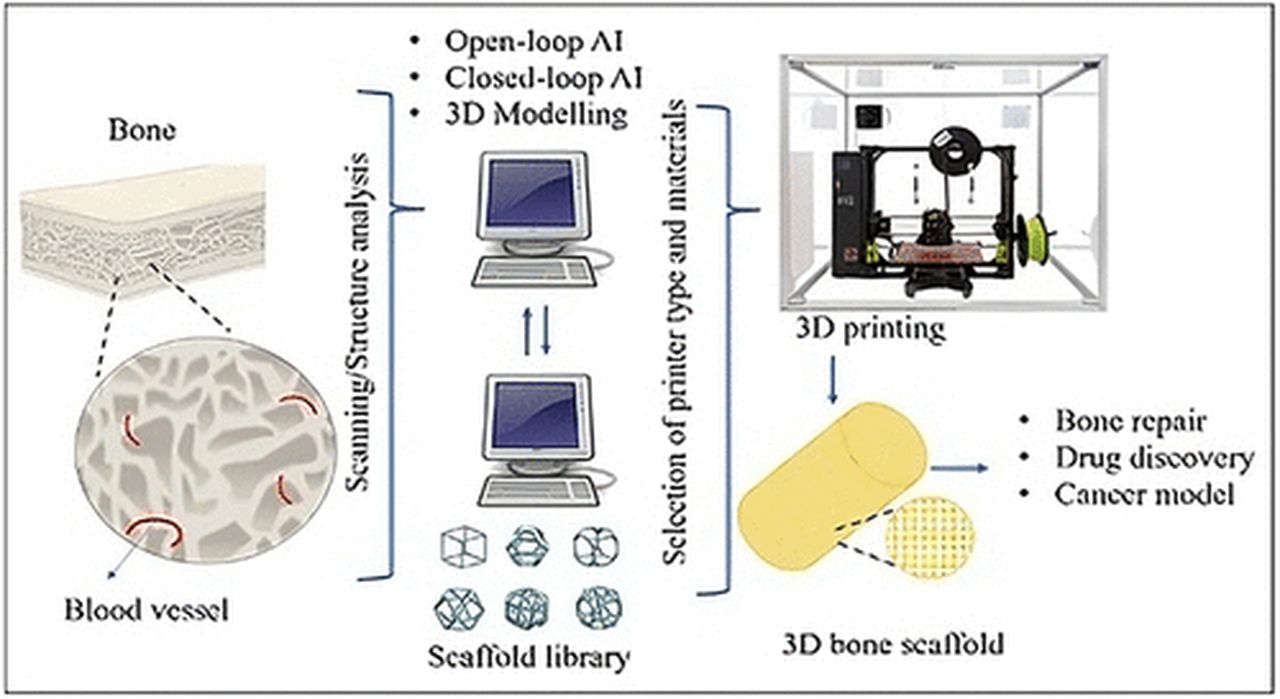
Duke researchers in biomedical engineering and regenerative medicine have advanced the use of 3D printed scaffolds designed to support tissue growth and repair. These structures, fabricated using biocompatible polymers and composite materials, provide precise control over pore size, geometry, and mechanical properties. These factors are critical for guiding cell growth and vascularization.
Such scaffolds are being explored for applications ranging from bone regeneration to soft tissue repair. By enabling the fabrication of patient-specific architectures, 3D printing allows researchers to move beyond standardized implants toward customized biological structures that better integrate with the body’s natural healing processes.
2. Additive Manufacturing in Medical Device Prototyping
Within Duke’s Pratt School of Engineering, faculty and students routinely use 3D printing to accelerate the design and testing of medical devices. From surgical tools to wearable health monitors, additive manufacturing enables rapid iteration, allowing prototypes to be tested, refined, and validated in days rather than months.
This approach is particularly valuable in early-stage device development, where geometry, ergonomics, and functional integration must be repeatedly optimized. Duke’s device-focused research illustrates how 3D printing shortens development timelines while lowering costs, a critical advantage in the highly regulated and resource-intensive medical device industry.
3. 3D Printed Models for Surgical Planning and Education
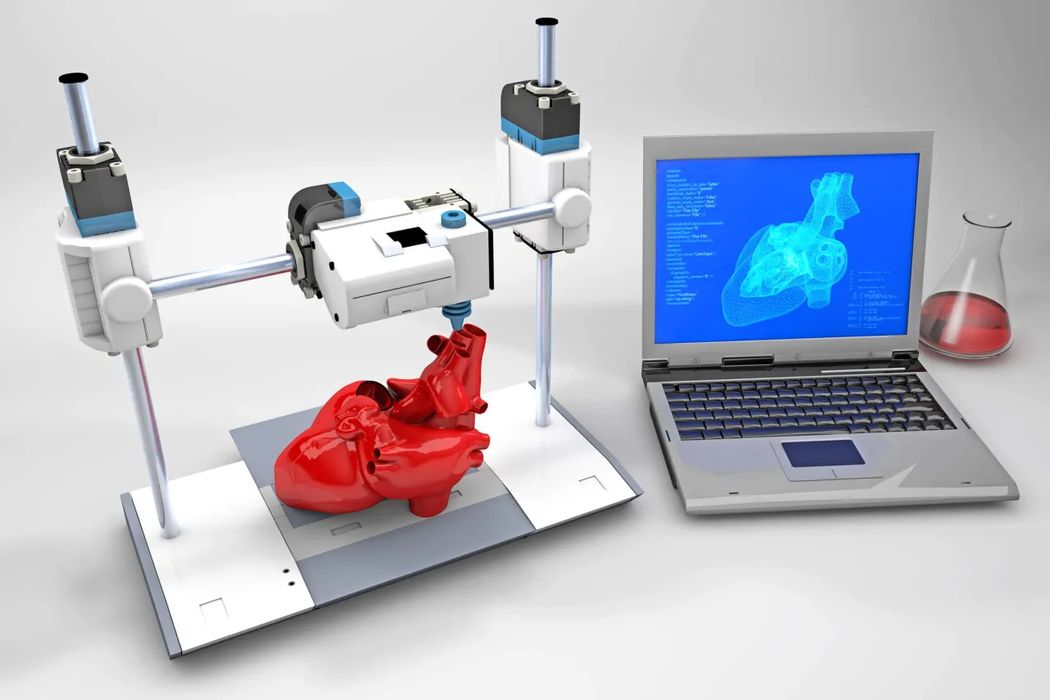
Duke Health has incorporated 3D printing into clinical education and surgical planning, producing anatomical models derived from patient imaging data. These models allow surgeons to visualize complex anatomies prior to procedures, practice techniques, and improve preoperative planning for high risk or highly individualized cases.
This application of additive manufacturing demonstrates how 3D printing bridges engineering and medicine, transforming digital scans into tangible tools that enhance surgical precision, reduce operative uncertainty, and support training for medical students and residents.
4. Bioprinting and Advanced Biomaterials Research
Duke researchers are also engaged in bioprinting and advanced biomaterials development, exploring how 3D printing can be used to fabricate constructs that combine living cells with structural materials. These efforts support long-term goals in organ modeling, drug testing platforms, and personalized regenerative therapies.
By integrating materials science, cellular biology, and mechanical engineering, Duke’s bioprinting research reflects the interdisciplinary future of healthcare manufacturing, one where devices, tissues, and diagnostics are designed simultaneously rather than in isolation.
5. Makerspaces and Student Led Additive Innovation
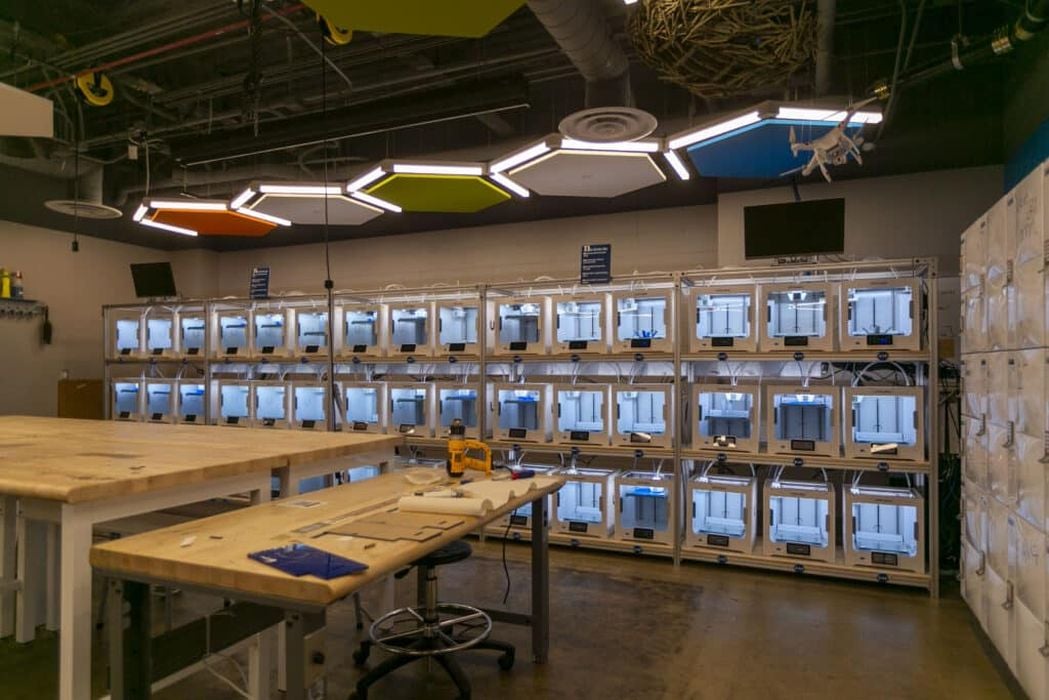
Beyond formal research labs, Duke maintains makerspaces and fabrication facilities that provide students with access to 3D printers and digital manufacturing tools. These environments support engineering capstone projects, medical innovation challenges, and entrepreneurial ventures focused on healthcare technology.
Hands on exposure to additive manufacturing equips students with industry-relevant skills while fostering a culture of rapid experimentation. This pipeline of trained designers and engineers strengthens Duke’s long-term capacity to contribute to advanced manufacturing in the biomedical and engineering sectors.
The Research & Development Tax Credit
The now permanent Research & Development Tax Credit, R&D Tax Credit, is available for companies developing new or improved products, processes and our software.
3D printing can help boost a company’s R&D Tax Credits. Wages for technical employees creating, testing and revising 3D printed prototypes can be included as a percentage of the eligible time spent on the R&D Tax Credit. Similarly, when used as a method of improving a process, time spent integrating 3D printing hardware and software counts as an eligible activity. Lastly, when used for modeling and preproduction, the costs of filaments consumed during the development process may also be recovered.
Whether it is used for creating and testing prototypes or for final production, 3D printing is a great indicator that R&D Credit-eligible activities are taking place. Companies implementing this technology at any point should consider taking advantage of R&D Tax Credits.
Conclusion
Duke University’s position within the Research Triangle, its globally recognized medical enterprise, and its interdisciplinary research culture provide a powerful foundation for advancing 3D printing in healthcare and engineering. As U.S. policy emphasizes domestic manufacturing, healthcare innovation, and translational research, universities like Duke are increasingly central to shaping how advanced technologies move from laboratory concepts to clinical and commercial applications.
Despite a more constrained federal funding environment, Duke’s strategic focus on medical devices, regenerative medicine, bioprinting, and advanced materials demonstrates how additive manufacturing can serve as both a research accelerator and an innovation platform. From 3D printed tissue scaffolds and surgical planning models to rapid device prototyping and student-driven design initiatives, Duke is embedding 3D printing across its biomedical and engineering ecosystem.
For research universities nationwide, Duke’s approach highlights the growing importance of aligning academic priorities with healthcare, advanced manufacturing, and commercialization pathways. In an era where innovation must be both scientifically rigorous and economically viable, Duke’s integration of 3D printing into its research strategy offers a compelling model for how higher education can remain relevant, impactful, and transformative in the evolving landscape of biomedical technology.