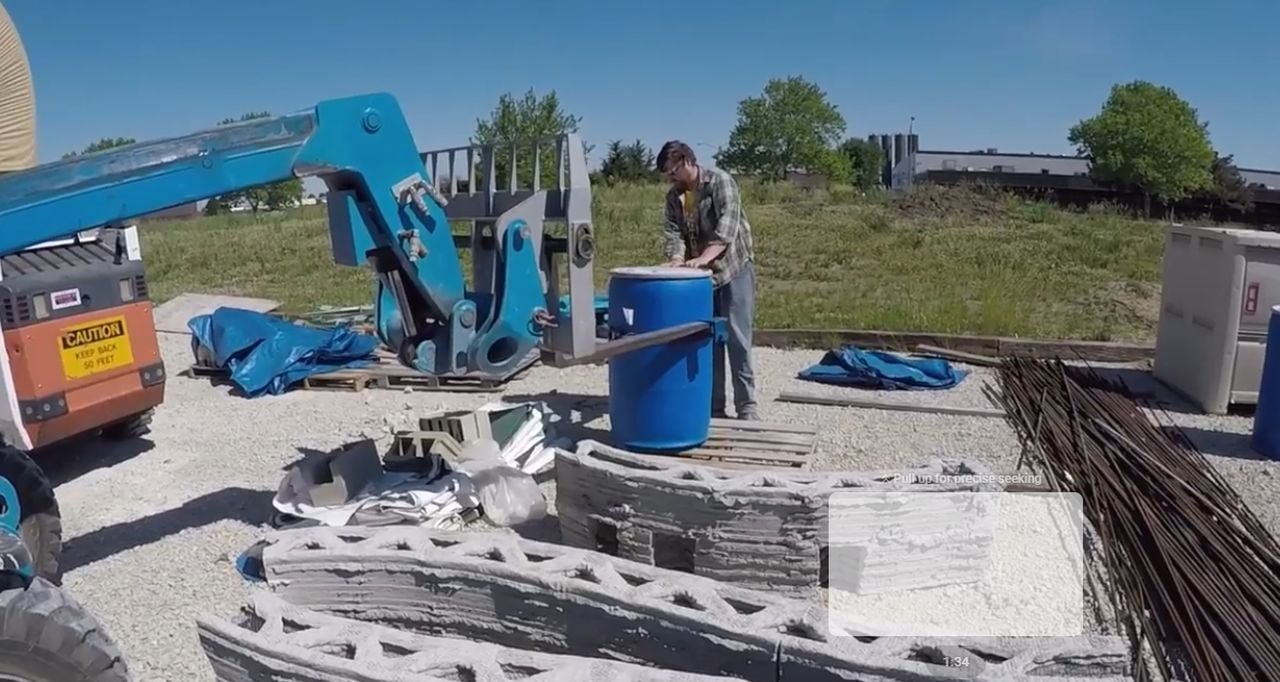
Charles R. Goulding and Preeti Sulibhavi break down how federal additive manufacturing is moving from concept to battlefield-ready infrastructure, where 3D printed concrete and earth-based materials could soon replace tents with hardened, rapidly built military structures.
On May 13, 2026, the Additive Manufacturing Coalition (AMC) hosted a webinar titled “The Federal Landscape for Additive Manufacturing Construction.” The session brought together military, academic, and industry leaders to examine how 3D concrete printing (3DCP), ultra-high-performance materials, and on-site construction using local resources are shifting from experimental demonstrations into real federal deployment pathways.
While additive manufacturing in construction has often been framed as futuristic, the tone of the webinar was noticeably practical. The focus was not on whether the technology works, but where it is already working, what still limits scale, and how federal agencies, especially the U.S. Army and Air Force, are beginning to treat it as part of operational infrastructure planning rather than research curiosity.
A central theme running through the discussion was logistics. Traditional military construction depends heavily on transporting materials, skilled labor, and heavy equipment into remote or contested environments. The presenters repeatedly returned to a simple question: what if infrastructure could be built largely from what is already on the ground? That question links directly to earth-based 3D printing and concrete systems designed for rapid curing, high durability, and minimal supply chain dependence.
The webinar also highlighted a broader transition happening in federal infrastructure thinking. Additive construction is no longer just about novelty structures or demonstration homes. It is increasingly being evaluated for mission-critical uses such as mobility corridors, base infrastructure hardening, and expeditionary shelter systems that can replace or supplement traditional tents.
Dr. Atorod Azizinamini: Advancing UHPC and Structural Resilience
Dr. Atorod Azizinamini, P.E., Vasant Surti Professor at Florida International University (FIU), opened the technical discussion by focusing on materials science, particularly the evolution of sprayable Ultra-High-Performance Concrete (UHPC).
His core argument was that the future of federal additive construction depends less on printers and more on material behavior. UHPC, he explained, is not just stronger than conventional concrete, but fundamentally more reliable under extreme stress conditions. Its dense microstructure provides durability advantages that are particularly relevant for military infrastructure exposed to blast loads, heavy traffic, and environmental extremes.
Dr. Azizinamini emphasized that mix design is not a secondary concern. Instead, it is the foundation of success for 3D-printed structures. Poorly optimized mixtures can lead to cracking, curing inconsistencies, or structural weaknesses that undermine the advantages of automation.
He also highlighted ongoing applications in bridge repair and rapid infrastructure rehabilitation. Sprayable UHPC, he noted, can be deployed in ways that complement additive manufacturing rather than replacing it, especially for hybrid systems where printed forms are reinforced or retrofitted with high-performance materials.
Mr. Aiman Hussein: From Experimental Printing to Scalable Housing
Mr. Aiman Hussein brought a commercial and deployment-focused perspective, drawing from his experience in residential and commercial 3D printed construction projects.
His main message was that 3D construction printing is no longer a prototype-stage technology. Instead, it is increasingly viable for scalable housing delivery, particularly in cost-sensitive environments where speed and labor shortages are persistent constraints.
He referenced successful builds in Virginia, where 3D printed homes have demonstrated that construction timelines can be reduced significantly compared to conventional methods. More importantly, he emphasized consistency. Once a printing system is calibrated, repeatability becomes a major advantage over traditional construction variability.
Hussein also addressed the shift in perception among developers and regulators. Early skepticism about structural integrity and permitting is gradually giving way to acceptance, especially as more long-term performance data becomes available.
For federal applications, his comments suggested a dual opportunity: addressing civilian housing shortages while simultaneously building a workforce and supply chain capable of supporting defense-related additive construction.
Mr. James Mantes: ACME Tech and Indigenous Material Construction
Mr. James Mantes, Principal Program Manager at Applied Research Associates (ARA), presented one of the most strategically significant concepts of the webinar: the ACME Tech project.
ACME focuses on using indigenous soil materials for additive construction in expeditionary environments. Instead of transporting cement, aggregate, or prefabricated components into operational zones, the system is designed to process local earth materials into usable construction feedstock.
The implications for military logistics are substantial. Construction supply chains are among the heaviest and most vulnerable components of deployment operations. By reducing dependence on external materials, ACME aims to shorten timelines and reduce exposure risk in contested environments.
Mantes explained that the system is particularly suited for horizontal infrastructure such as roads, landing zones, and mobility pathways. These are critical for force movement and sustainment, especially in early-stage deployment scenarios where permanent infrastructure is not yet established.
He framed the technology not as a replacement for conventional engineering, but as an operational tool that expands what is possible in austere environments. The ability to build using what is already present on-site changes both planning assumptions and tactical flexibility.
Lt Col Brian A. Vickers: Air Force Innovation and Base Readiness
Lt Col Brian A. Vickers, Deputy Base Civil Engineer for the 175th Wing of the Air National Guard, provided an operational military perspective grounded in active experimentation and deployment readiness.
He described ongoing Air Force initiatives under “Construction Additive Manufacturing,” particularly innovation efforts at Martin State Air National Guard Base. These initiatives are focused on integrating additive manufacturing into base civil engineering operations in practical, repeatable ways.
Vickers emphasized that innovation in this space is increasingly driven by Airmen themselves. Rather than relying solely on external contractors or research institutions, operational personnel are actively testing and adapting additive tools to meet immediate infrastructure needs. For instance, many soldiers generate a significant amount of laundry, and one resourceful service member noticed that many washing machines were inoperable due to a defective door latch that was not replaceable because of supply chain issues. The soldier 3D printed the latch, getting the machines back in operation.
His presentation reinforced a key shift: additive manufacturing is becoming part of base readiness strategy. It is not only about new construction but also about maintaining and repairing existing infrastructure more efficiently.
He also highlighted the importance of experimentation within controlled environments. Bases serve as testbeds where new methods can be validated before broader deployment in expeditionary contexts.
SQ4D and the Commercial Bridge to Federal Adoption
A recurring reference point in discussions around scalable 3D concrete printing is SQ4D, a company we previously covered by. SQ4D has been notable for demonstrating large-scale residential 3D printing systems capable of producing durable housing structures using automated concrete deposition.
What makes SQ4D relevant in the federal context is not just its technology, but its positioning between residential construction and industrial-scale deployment. It represents a category of companies proving that 3DCP can move beyond prototypes and into standardized production environments.
In the context of the AMC webinar, this kind of commercial validation is important. Federal agencies are not only evaluating academic research or defense prototypes but also watching private-sector systems that have already demonstrated repeatable construction workflows. SQ4D’s work illustrates how residential innovation can inform military and infrastructure applications, particularly where speed and material efficiency are critical.
Earth Materials, Concrete, and the Logic of On-Site Construction
One of the most practical implications of the webinar is the increasing interest in earth-based construction materials for military infrastructure. Using indigenous soil reduces logistical burden significantly, particularly in forward-deployed environments where transporting concrete or steel can be costly and slow.
At the same time, UHPC and advanced concrete systems remain essential for structural integrity. The combination suggests a hybrid future: earth materials for speed and availability, and engineered concrete for reinforcement and durability.
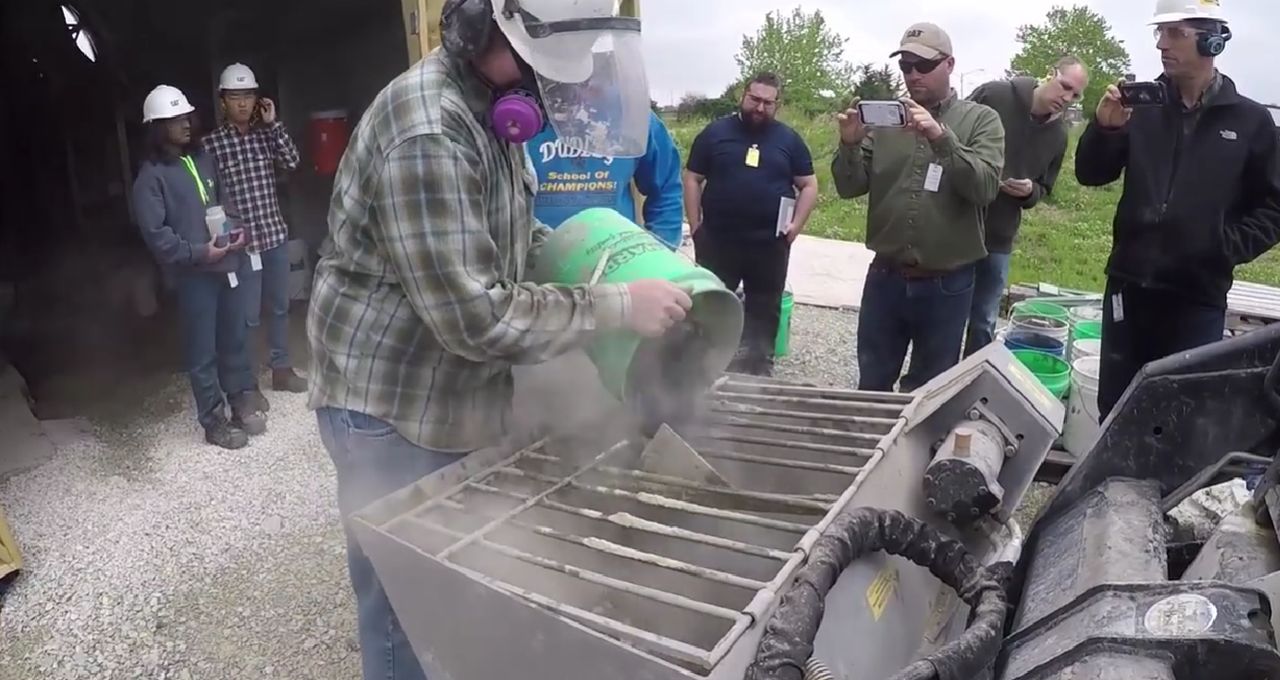
There is also a defensive advantage in hardened concrete structures. Unlike temporary shelters, properly engineered concrete infrastructure can provide resistance to environmental stress and physical impact, making it more suitable for semi-permanent or strategic installations.
This shift reflects a broader change in thinking about military infrastructure itself. Instead of treating deployed bases as temporary encampments built from tents and modular units, there is growing interest in rapidly deployable but structurally robust environments that can evolve into semi-permanent installations.
| Capability | Innovation | Strategic Impact |
| Material Logistics | Use of indigenous earth and local soil | Drastically reduces fuel and transport costs in “Contested Logistics” environments. |
| Force Protection | 3D-printed concrete barriers and T-walls | Provides superior ballistic defense and “hardening” compared to traditional plywood or fabric tents. |
| Speed of Delivery | Robotic 3DCP technology | Enables the rapid deployment of barracks and shelters that exceed the lifespan of temporary structures. |
The Federal Landscape for Additive Manufacturing Construction: Military Infrastructure and R&D Tax Incentives
Additive Manufacturing (AM) in construction is transforming federal infrastructure by replacing temporary structures with 3D printed concrete and indigenous earth materials to enhance military readiness and ballistic protection. These advancements in 3D Concrete Printing (3DCP) qualify as Qualified Research Expenses (QREs) under Section 41 and Section 174, offering significant tax recovery for firms developing sustainable, high-performance building materials.
Last
The webinar concluded with a forward-looking view of how additive manufacturing could reshape federal and military construction over the next decade.
The clearest trajectory is increased integration into base infrastructure and expeditionary operations. Rather than replacing all traditional methods, additive construction is expected to augment existing engineering capabilities, particularly in early-stage deployment, rapid repair, and localized infrastructure development.
For the Army and Air Force, the value proposition is straightforward: reduced logistics, faster construction timelines, and greater operational flexibility. Whether building roads, fortifying bases, or replacing temporary shelters with printed structures, the goal is the same—reduce dependence on long supply chains while increasing resilience on the ground.
If current pilot programs continue to scale, additive manufacturing may become a standard component of military engineering toolkits rather than a niche capability. The webinar made clear that this transition is already underway, driven by a combination of academic research, commercial validation, and direct operational experimentation.
What remains is scaling these systems from isolated success stories into integrated infrastructure strategies that can function reliably in real-world deployments.