Charles R. Goulding and Preeti Sulibhavi connect Vaughn College’s Manufacturing Day and CIRCOR’s additive-manufacturing advances to the massive U.S. talent demand ahead.
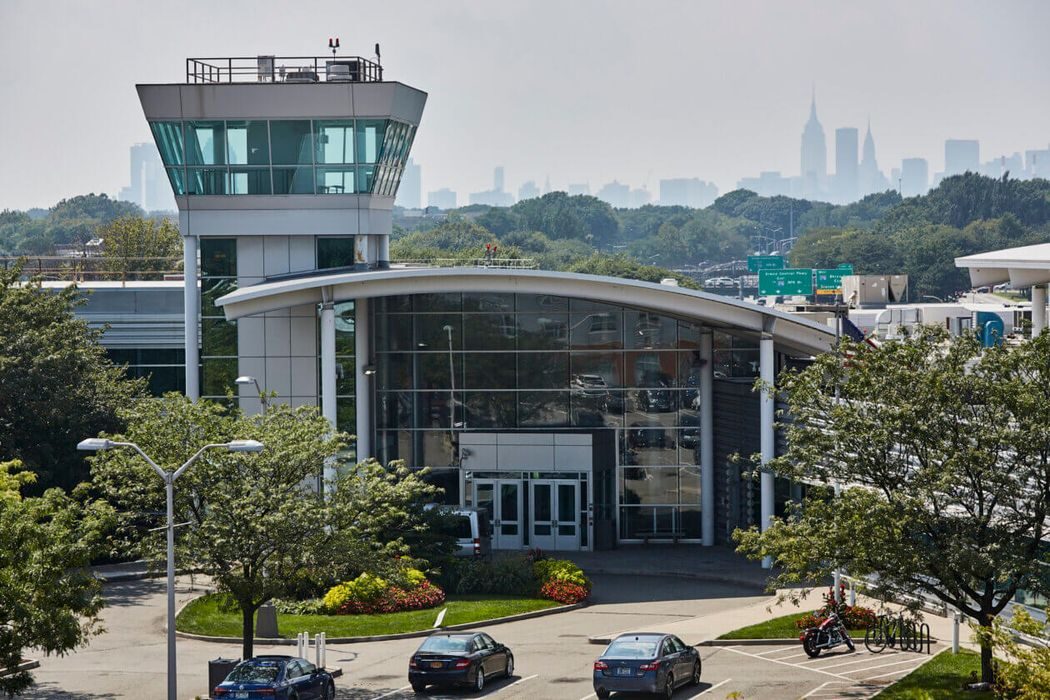
On November 7, 2025, Vaughn College of Aeronautics and Technology in Flushing, NY, hosted its 11th Annual Manufacturing Day event, welcoming high school and community college students into the world of engineering, technology, and manufacturing careers. The day featured presentations by alumni of the College who now work in advanced manufacturing and defense sectors, hands-on drone, rover, and robotics workshops led by student clubs, and a strong dose of messaging about the need for the next generation of makers and technologists.
This event comes at a critical time: according to The Manufacturing Institute and Deloitte, U.S. manufacturers will need as many as 3.8 million new employees by 2033, and about half of those jobs may go unfilled due to talent and skills gaps.
The convergence of workforce demand, technological change (notably additive manufacturing/3D printing), and education/outreach efforts makes this a moment worth highlighting. In this article, I’ll walk through what the event at Vaughn signaled, where manufacturing jobs stand today, and how specific players — particularly CIRCOR International and Vaughn themselves – are leveraging 3D printing / additive manufacturing both as a production tool and as a recruitment/training vehicle.
The event: Vaughn College’s Manufacturing Day
At its heart, Manufacturing Day at Vaughn is about exposure, inspiration and pathways: high‐schoolers and community college students arrive on campus, see engineering labs, meet alumni and industry folks, and begin to imagine themselves in manufacturing and tech careers.
Among the featured speakers were Vaughn alumni:
- Daniel Doscher ’23, mechatronics engineer at ArcBest Technologies, a logistics company that uses autonomous mobile robots (AMRs) and AI for warehousing and material handling.
- Ariel Ferrera ’20, co-founder of a start-up called Hoppion, that specializes in AI compliance for medical device and aerospace engineering (two 3D printing – intensive areas).
- Bilal Siddique ’12, senior project manager at Honeywell Building Solutions, who spoke on bridging engineering and management.
- Michael Wroblewski ’14, business development and product manager for CIRCOR Aerospace & Defense.
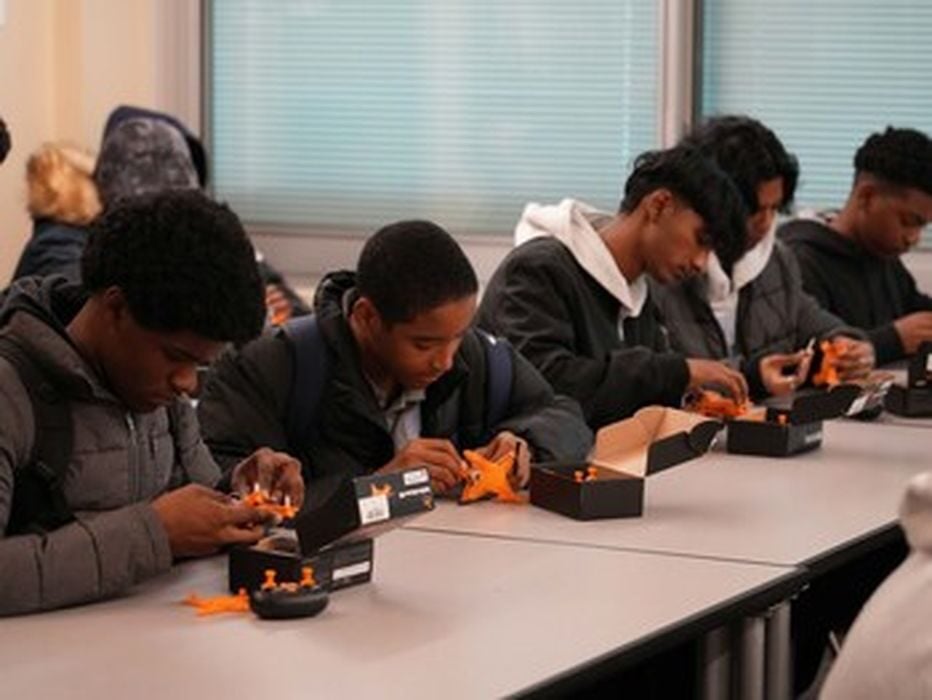
The event also included hands-on STEM workshops: students were able to fly drones, build rovers, explore robotics design, and autonomous programming courtesy of Vaughn’s Robotics, UAV, and Rover Clubs.
Vaughn’s engineering & technology department chair, Hossein Rahemi, emphasized that the speakers were all graduates of the College, offering strong role models for current students: “These alumni are contributing what they learned at the College and sharing their knowledge with the next generation.”
In addition, Vaughn announced a US$125,000 grant from the GE Aerospace Foundation to support a new flagship program to boost the number of highly skilled manufacturing workers, beginning in 2026.
The message was loud and clear: manufacturing is not the rust-belt relic of old—it’s high-tech, its additive, its aerospace, robotics, drone hubs, and there is a growing demand. The event synced with the broader talent gap within manufacturing.
The manufacturing job gap: Why the urgency?
According to The Manufacturing Institute and Deloitte, the U.S. manufacturing sector will need to fill about 3.8 million jobs by 2033.
Key insights:
- Many of the jobs will stem from retirements and turnover, not just growth.
- The roles increasingly require technical skill: automation, robotics, data analytics, additive manufacturing (3D printing), and advanced materials.
- A significant share of jobs risk going unfilled because of a skills mismatch.
So, when Vaughn focuses on young students and exposure to robotics, drones, additive manufacturing labs, and so on, they are targeting a pipeline at a moment of acute demand.
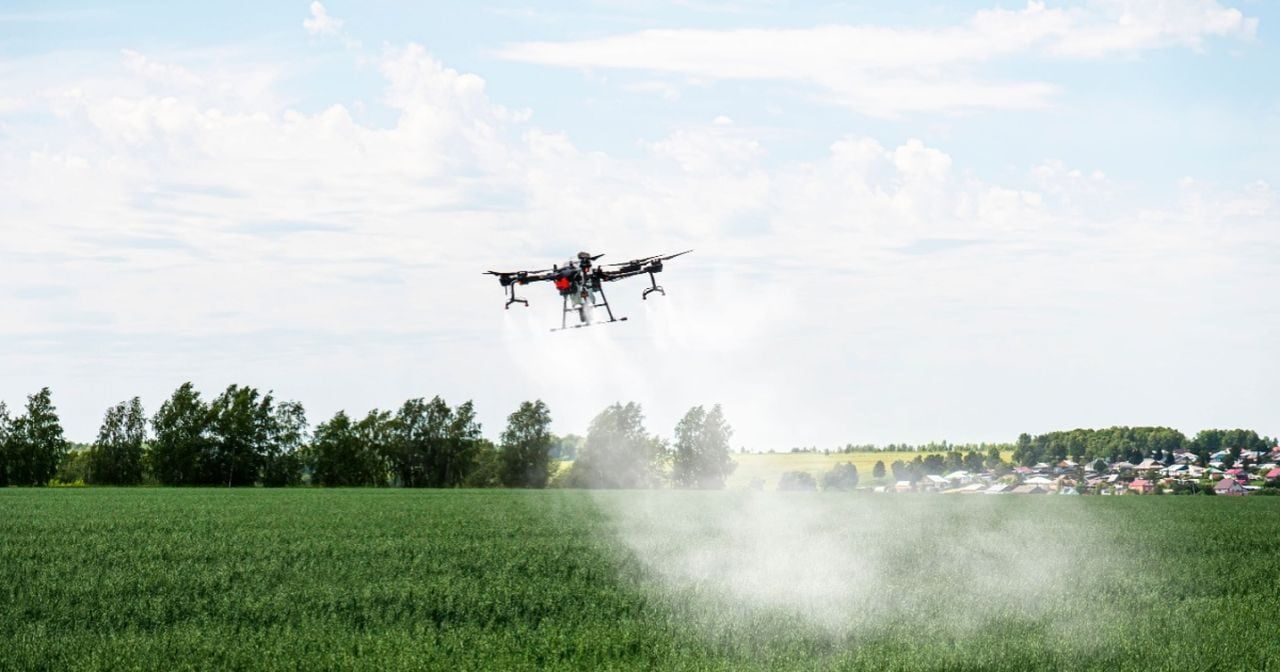
For students, this means: a career in manufacturing nowadays might involve aerospace parts, 3D printed components, robotics, and UAS (unmanned aerial systems)—not just conveyor belts.
3D printing and manufacturing: Why it matters
Additive manufacturing (AM) or 3D-printing is increasingly embedded in manufacturing workflows for aerospace, defense, oil & gas, automotive and industrial sectors. The reasons:
- Rapid prototyping gives faster iteration of parts and design concepts.
- For mission-critical components, custom geometry, lightweighting and complex internal channels are possible only via AM.
- For training/manufacturing workforce, exposure to these tools develops skills for today’s jobs.
At Vaughn, the Engineering & Technology department has invested in additive manufacturing labs and 3D scanning/CAM/AM infrastructure. For example, in their 2022 journal, they report addition of a Flashforge Creator 3 Pro 3D printer, metrology-grade 3D scanner and stackable certificate programs in CNC, additive/subtractive manufacturing and composites.
In 2018, the “Fourth Annual Manufacturing Day” at Vaughn included a specific session on additive manufacturing/3D printing and composite manufacturing.
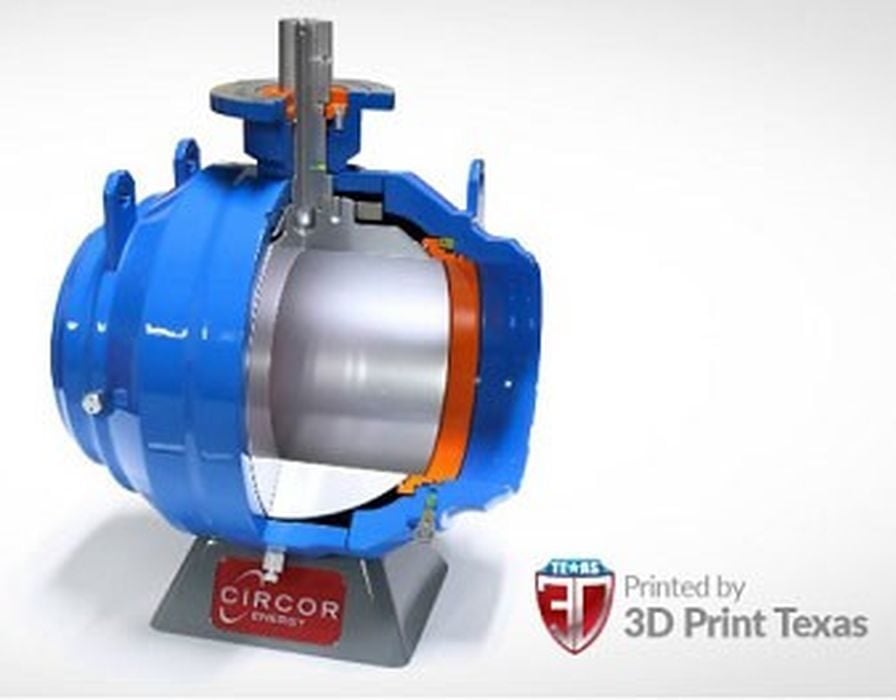
From the industry side, companies like CIRCOR are applying 3D printing in real production settings: e.g., CIRCOR Energy’s Series WB welded-body trunnion-ball valve was 3D printed by 3D Print Texas. In our Fabbaloo article, we covered CIRCOR’s acquisition by KKR.
Here are three recent examples of 3D printing in manufacturing that tie into the players and themes here:
- CIRCOR Energy – 3D printed trunnion ball valve: CIRCOR Energy introduced its Series WB (welded body) trunnion-mounted ball valve, which was 3D printed by 3D Print Texas. The weld-body version meets API 6D for pipeline service.
Why significant: It demonstrates that additive manufacturing (3D printing) isn’t only for prototypes but can produce high-performance, mission-critical fluid-control hardware. It also indicates the kind of jobs requiring designers, engineers, and production specialists familiar with AM.
- Vaughn College – Additive manufacturing / 3D innovation lab: Vaughn’s engineering and technology department created a 3D Prototyping Innovation Center (with 3D printers, scanners, CAM/CNC labs) to give students hands-on skills.
Why significant: This shows how educational institutions adapt to meet the manufacturing skills demand. Students are being trained on additive manufacturing, meaning they’ll be prepared for the 3.8 million jobs forecasted.
- Vaughn College – Manufacturing Day, Additive manufacturing theme: In the 2023 Ninth Annual Manufacturing Day, one of the topics was additive manufacturing in aerospace, and the speaker was Vaughn professor Manuel Jesus.
Why significant: It shows the integration of AM into outreach, showing students that manufacturing today involves additive manufacturing rather than only machining or assembly.
What CIRCOR is doing: Deep dive
Let’s look more closely at CIRCOR. CIRCOR is a global engineering firm delivering pumps and valve systems for severe-service environments (on land, sea, air, under the ocean) across oil & gas, aerospace, power generation and more.
A relevant example: the “3D Printed Trunnion Ball Valve” — CIRCOR Energy’s Series WB valve, 3D printed by 3D Print Texas. This shows CIRCOR is embracing additive manufacturing for critical components, not just prototypes.
What this means for jobs: to develop, qualify and manufacture such components requires engineers, AM-technicians, quality & metrology specialists, supply-chain professionals—all roles that fit into the expanding manufacturing job landscape. Hence, when Vaughn alumni speak from CIRCOR, they show students a real pathway into manufacturing using cutting-edge tech.
What Vaughn College is doing: Workforce & education link
Vaughn’s Manufacturing Day event is one piece of a broader strategy: their Engineering & Technology Department is preparing students for careers in aerospace, aviation, manufacturing, robotics and additive manufacturing.
Key elements:
- The College has a 3D Prototyping Innovation Center (3D printers/scanners/CNC labs) developed under federal grants.
- They run Manufacturing Day & STEM outreach → giving high schoolers a view of real-life manufacturing careers.
- They emphasize club‐based learning (Robotics Club, UAV Club, Rover Club) and hands-on workshops (build a drone, drive a rover).
- They partner with industry and alumni (who work at firms like CIRCOR, Honeywell, ArcBest) to provide role models and connections to jobs.
For students considering engineering/manufacturing careers, Vaughn makes the link explicit: you can train in additive manufacturing, robotics, CNC, then work at firms making 3D-printed valves for oil & gas, aerospace components, unmanned systems, etc.
Why this matters for students and the economy
Here are some key takeaways:
- Jobs are there: As the report shows, manufacturers need millions of new employees by 2033. That’s both an opportunity and a challenge.
- Skills are changing: Manufacturing isn’t just “machining parts and stamping metal.” It increasingly involves additive manufacturing, scanning, robotics, automation, data analytics and hybrid manufacturing workflows.
- Training matters: Schools like Vaughn are bridging the gap by giving hands-on equipment, labs, 3D printing, CNC, robotics and outreach to pull in younger students.
- Industry is adapting: Companies like CIRCOR are adopting additive manufacturing, meaning the jobs require different skills (design for AM, metrology, qualification of AM parts) and the workforce pipeline has to adapt accordingly.
- Outreach is critical: Many future high-schoolers don’t think of “manufacturing” as high-tech or aspirational. Events like Manufacturing Day help reframe the narrative: manufacturing = aerospace, robotics, 3D printing, innovation, not only old-factory work.
Looking forward: Opportunities and Potential Drawbacks
Opportunities:
- A student or technician trained in additive manufacturing, CNC, robotics and automation has a strong shot at modern manufacturing careers – which can be well-paid and growth-oriented.
- Educational institutions that partner with industry (as Vaughn does) can place students in internships, jobs and capstone projects that align with real employer needs.
- Firms that embrace AM and advanced manufacturing not only improve competitiveness but also create roles (design for AM engineers, AM quality specialists, AM production technicians).
Cautions/Challenges:
- While the job numbers are large (3.8 million by 2033), the skills gap means not everyone will find an easy path—schools must build relevant curricula and students must be prepared (both academically and with hands-on skills).
- The excitement around AM must not overshadow the foundational manufacturing skills: machining, metrology, quality, materials science still matters.
- Outreach and broadening access are essential: Many students (especially from under-represented communities) may not see manufacturing as “cool” or viable—so events like Vaughn’s must continue and scale.
- Employers may need to rethink workforce development: older models of manufacturing jobs are shifting; training frameworks must shift too.
The Research and Development Tax Credit
The now permanent Research and Development (R&D) Tax Credit is available for companies developing new or improved products, processes, and/or software. 3D printing can help boost a company’s R&D Tax Credits. Wages for technical employees creating, testing, and revising 3D-printed prototypes can be included as a percentage of the eligible time spent on the R&D Tax Credit. Similarly, when used as a method of improving a process, time spent integrating 3D printing hardware and software counts as an eligible activity. Lastly, when used for modeling and preproduction, the costs of filaments consumed during the development process may also be recovered.
Whether it is used for creating and testing prototypes or for final production, 3D printing is a great indicator that R&D Credit-eligible activities are taking place. Companies implementing this technology at any point should consider taking advantage of R&D Tax Credits.
Final thoughts
The 11th Annual Manufacturing Day at Vaughn College highlighted a clear alignment: rising demand for manufacturing talent + the increasing importance of additive manufacturing and robotics + education institutions stepping up to prepare students for these opportunities.
In that landscape, CIRCOR’s adoption of 3D printed valves and Vaughn’s creation of a 3D prototyping lab show the interplay between industry innovation and workforce training. The manufacturing job of 2030 will look very different from the factory job of 1980: it will involve drones, rovers, robots, 3D printers and digital workflows. But the good news is that the jobs are there, and the pathways exist.
For students, consider: if you can master 3D printing, robotics, CAM/CNC, you’re positioned in a sector that needs you. For educators and institutions: keep building labs, keeping industry partners close, making the outreach tangible. And for industry, ensure your workforce pipeline is aligned, diversified and ready for the next wave.