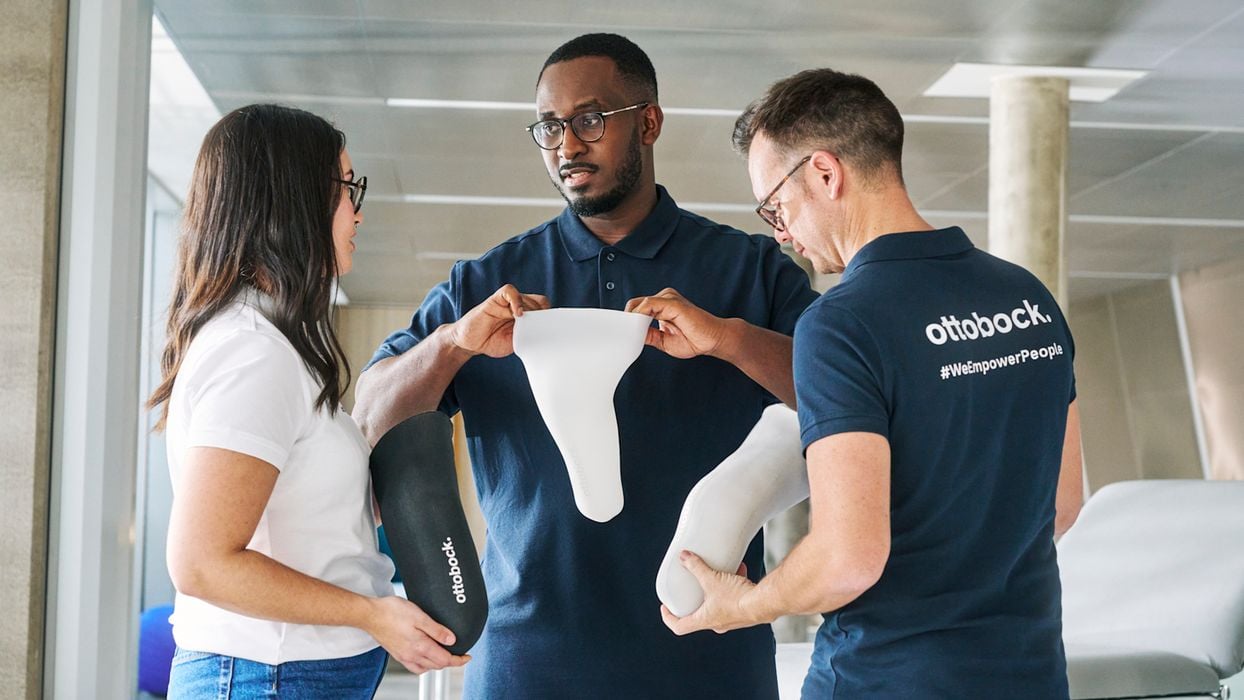
Charles R. Goulding and Preeti Sulibhavi examine how Ottobock’s new 3D printed silicone prosthetic liner reflects a broader movement toward mass-customized healthcare enabled by additive manufacturing and digital workflows.
For years, the prosthetics industry has faced a difficult tradeoff. Clinicians could choose standardized products that were affordable and scalable, or highly customized solutions that delivered a better fit but required labor-intensive fabrication and higher costs.
A new product from Ottobock suggests that compromise may finally be disappearing.
The German medical technology company recently unveiled iconiq, a 3D printed silicone prosthetic liner designed to be customized for each patient’s residual limb using digital scans and additive manufacturing. While the announcement itself is noteworthy, the larger story is what it says about the future of healthcare manufacturing. The launch represents another step toward mass customization, where individualized medical devices can be produced at industrial scale rather than handcrafted one at a time.
The liner sits between the residual limb and the prosthetic socket, arguably one of the most important but least visible components in a prosthetic system. Even small fit issues can lead to discomfort, skin irritation, pressure points, and reduced mobility. Ottobock cites data showing that nearly 68% of lower-limb prosthesis users experience residual limb problems ranging from pain and sores to skin reactions. Those issues can significantly reduce prosthesis usage and quality of life.
With iconiq, clinicians perform a digital scan of the residual limb and upload the data through Ottobock’s ordering platform. The liner is then additively manufactured with variable thicknesses tailored to the patient’s anatomy, scar tissue, and sensitive regions. Unlike traditional custom liner production, the process eliminates mold creation and integrates directly into a digital workflow.
Why This Matters Beyond Prosthetics
The significance of this development extends far beyond a single prosthetic component.
Healthcare is increasingly moving toward personalized treatment. Advances in medical imaging, digital scanning, artificial intelligence, and additive manufacturing are enabling providers to customize devices for individual patients rather than forcing patients to adapt to standardized products.
This trend is especially important in prosthetics and orthotics because every patient is unique. Residual limb shape, tissue composition, activity level, and medical history vary dramatically from person to person. Traditional manufacturing methods struggle to accommodate that variability efficiently.
3D printing changes the equation. Instead of requiring new tooling or molds for every design variation, manufacturers can produce individualized geometries directly from digital files. The result is a production model that combines customization with repeatability and scale.
Healthcare systems worldwide are paying attention. Analysts estimate that tens of millions of people globally require prosthetic or orthotic devices, while access remains uneven and customization is often expensive. Digital manufacturing workflows offer a potential pathway to reduce production bottlenecks while improving patient outcomes. The broader healthcare industry increasingly views additive manufacturing as a way to shorten lead times, improve fit, and enable more patient-specific care.
Ottobock Has Been Building Toward This Moment
The iconiq liner did not emerge in isolation. Ottobock has spent years developing a digital ecosystem for prosthetic fabrication, and several recent offerings provide context for understanding where the company is heading.
1. MyFit TT 3D Printed Prosthetic Socket
One of Ottobock’s most significant additive manufacturing initiatives is MyFit TT, a fully digital transtibial socket production system.
Instead of using plaster casting and traditional fabrication techniques, clinicians capture a digital scan of the residual limb. The socket is then produced using Multi Jet Fusion technology and PA12 nylon. According to Ottobock, the resulting socket combines low weight, high strength, and repeatable manufacturing quality while maintaining a streamlined clinical workflow.
The relationship between MyFit TT and iconiq is obvious. The liner and socket work together as a system. A highly customized liner can only achieve its full potential when paired with a precisely fitting socket. As both components become digitally designed and additively manufactured, the entire prosthetic fitting process becomes more integrated and data-driven.
This also creates opportunities for future optimization. Digital records of both socket and liner designs can be retained, modified, and reproduced without restarting the entire fabrication process.
2. MyFit TF for Transfemoral Patients
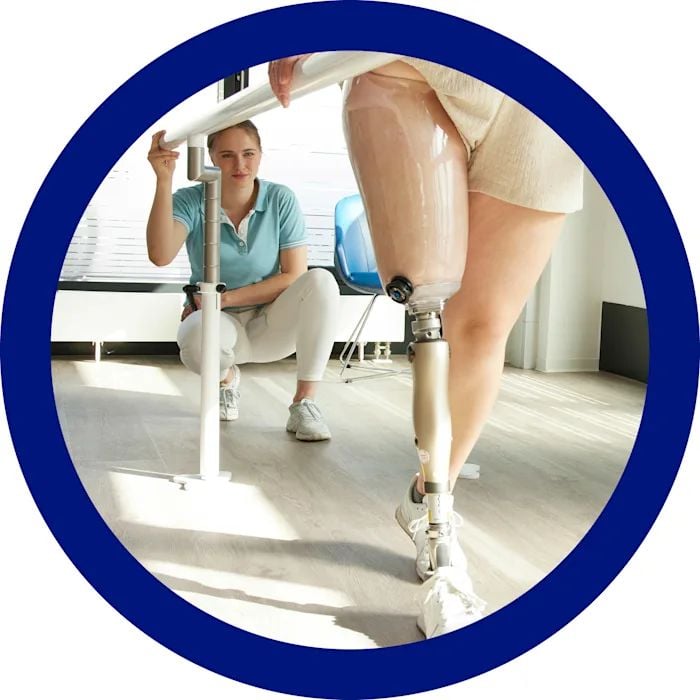
Ottobock has expanded the MyFit concept beyond below-knee applications to include transfemoral patients as well.
The MyFit TT/TF platform provides digital workflows for both transtibial and transfemoral prosthetic sockets, allowing clinicians to leverage scanning and additive manufacturing across a broader patient population. The company highlights advantages such as lightweight structures, integrated design features, and improved reproducibility compared to traditional fabrication methods.
The significance here lies in scalability. Healthcare providers often struggle when adopting new technologies because each clinical category requires separate processes and training. By extending digital manufacturing workflows across multiple prosthetic applications, Ottobock is creating a more comprehensive platform rather than a collection of isolated products.
The iconiq liner can be viewed as another layer added to this digital ecosystem.
3. Skeo Unique and Other Custom Liner Programs
Before introducing iconiq, Ottobock already offered custom liner solutions through its Skeo Unique and Uneo Unique product lines.
These liners are tailored to patients with unusual residual limb geometries, sensitive tissue, scarring, or other complex clinical needs. Custom modifications can include pressure-relief zones and material adjustments designed around individual anatomy.
What makes iconiq interesting is that it appears to industrialize many of the benefits previously associated with custom fabrication. Instead of relying heavily on manual production processes, additive manufacturing allows those individualized characteristics to be incorporated directly into a digital workflow.
In other words, iconiq is not replacing customization. It is attempting to make customization scalable.
The Industry-Wide Trend Toward Digital Prosthetics
Ottobock is not alone in pursuing this direction.
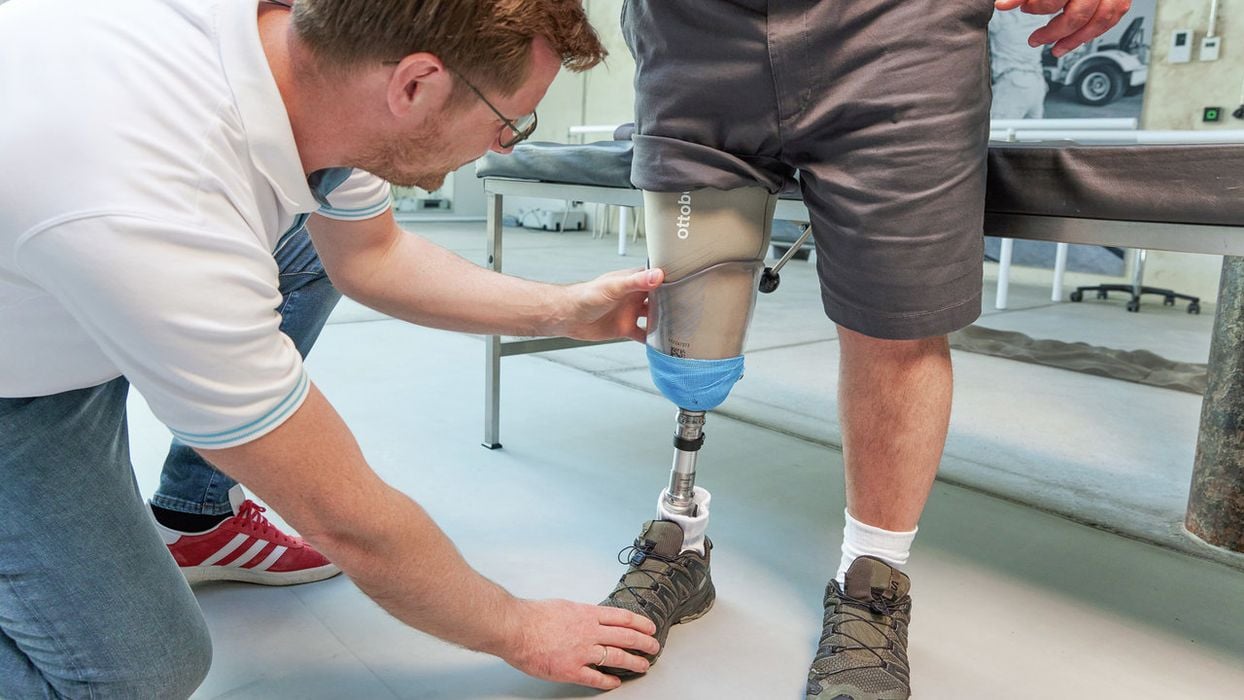
Across the prosthetics industry, manufacturers are adopting 3D scanning, computational design, and additive manufacturing to address longstanding challenges related to fit, comfort, and production efficiency.
Traditionally, prosthetic fabrication has involved multiple manual steps including casting, molding, modification, and finishing. These methods can produce excellent results but often require substantial technician expertise and significant labor time.
Digital workflows change that process fundamentally. Once anatomy is captured through scanning, clinicians and manufacturers can collaborate through software, maintain digital records, and reproduce designs with greater consistency. Additive manufacturing then becomes the production method that enables those digital designs to become physical products.
The benefits extend beyond convenience. Better fit can improve comfort, compliance, mobility, and overall patient satisfaction. For healthcare systems facing rising costs and growing demand for personalized care, those improvements are increasingly important.
How Does 3D Printing in Medical Device Manufacturing Qualify for the R&D Tax Credit?
Medical technology companies and prosthetic manufacturers can claim the Section 41 R&D Tax Credit for Qualified Research Expenses (QREs) incurred while developing digital fabrication workflows, additive manufacturing processes, and mass-customized healthcare devices.
What Types of Additive Manufacturing and Digital Workflows Eligible for Section 41?
The shift from standardized medical products to scalable, mass-customized healthcare devices requires significant technical experimentation that generates eligible QREs. Key technological vectors include:
1. Multi-Material and Variable-Thickness Additive Manufacturing
Developing 3D printing parameters to produce variable thicknesses tailored to complex geometries (e.g., patient anatomy, scar tissue, and pressure-relief zones) requires substantial engineering trial-and-error. Optimizing printing speeds, layer adhesion, and curing profiles for medical-grade silicone or PA12 nylon to prevent component failure qualifies as technical uncertainty resolution.
2. End-to-End Digital Workflow Integration
Designing proprietary software platforms that seamlessly translate 3D digital scans or medical imaging into production-ready print files involves qualified software engineering. Eligible activities include creating algorithms for automated computational design, structural simulation, and repeatable manufacturing quality across multi-device ecosystems.
3. Industrial Scalability of Custom Devices
Engineering processes that transform manual fabrication into scalable, automated, and repeatable industrial-scale manufacturing models represents a massive process improvement. Eliminating manual molds and physical tooling through direct-to-digital production qualifies as advanced process engineering.
Healthcare Additive Manufacturing Innovation Matrix
| Medical Subsector | Additive Innovation Vector | Technical R&D Impact |
| Prosthetics & Orthotics | 3D printed silicone liners with variable thicknesses | Replaces labor-intensive manual fabrication with automated digital scanning workflows. |
| O&P Sockets | Multi Jet Fusion technology using PA12 nylon | Optimizes low weight, high strength, and repeatable manufacturing tolerances. |
| Custom Clinical Lines | Scalable digital ecosystems across multiple product applications | Unifies disparate clinical categories into repeatable, data-driven fabrication platforms. |
Executive Insight for CFOs & Technical Directors: When medical device innovators like Ottobock scale digital ecosystems, the underlying engineering hours—ranging from CAD configuration to materials characterization—directly constitute qualified wages under Section 41. For complex engineering initiatives that bridge advanced materials and energy-efficient digital workflows.
How 3D Printing Keeps the Doctor Away…
The launch of iconiq may seem like a relatively modest product announcement. After all, it is “just” a liner.
But healthcare innovation is often driven by improvements in components rather than dramatic breakthroughs. A better liner can reduce pain. Reduced pain can increase prosthesis use. Increased use can improve mobility, independence, and quality of life.
More importantly, iconiq demonstrates how additive manufacturing is maturing within healthcare. The industry is moving beyond experimental prototypes and one-off demonstrations toward repeatable production systems that can deliver personalized devices at scale.
Healthcare today faces a difficult challenge: patients expect increasingly individualized treatment, while providers must control costs and improve efficiency. Technologies that make customization scalable will become increasingly valuable.
Ottobock’s new 3D printed silicone liner is one example of how that future may look. Instead of asking patients to adapt to standardized medical products, manufacturers are beginning to design products around individual patients. For prosthetics users, that could mean better comfort and mobility. For healthcare as a whole, it points toward a future where personalization is no longer a premium service but a standard expectation.