
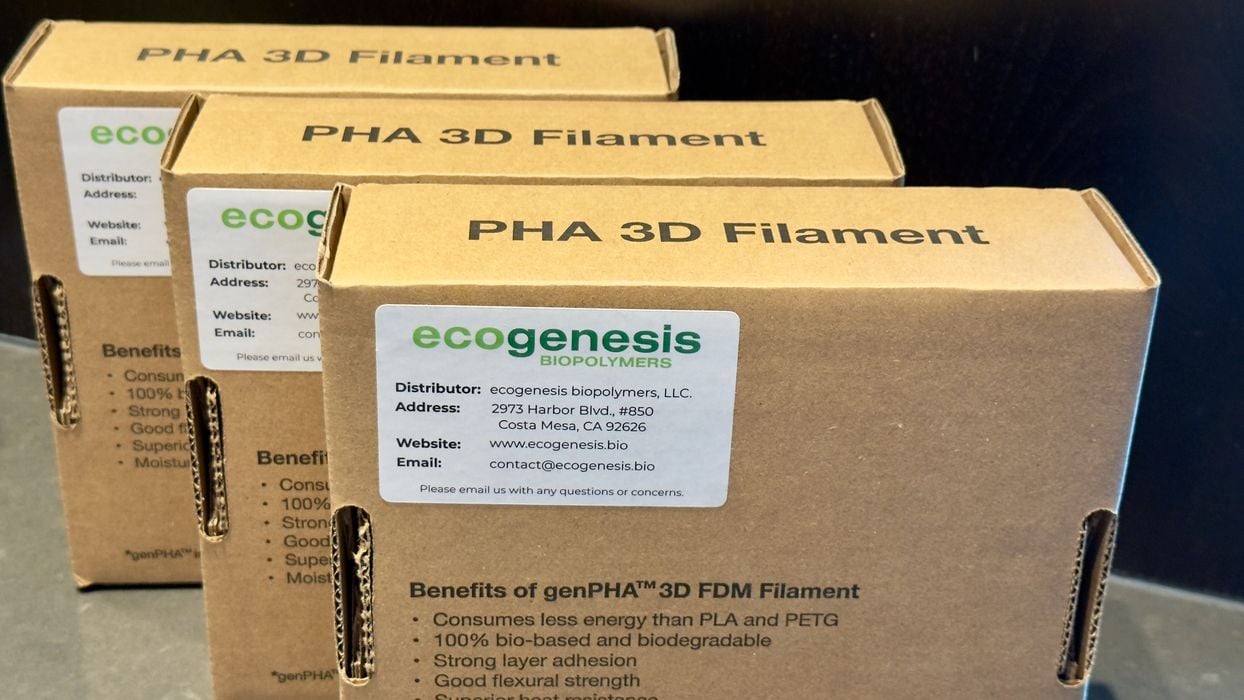
We had the chance to test out a new type of 3D print material, PHA.
What is PHA?
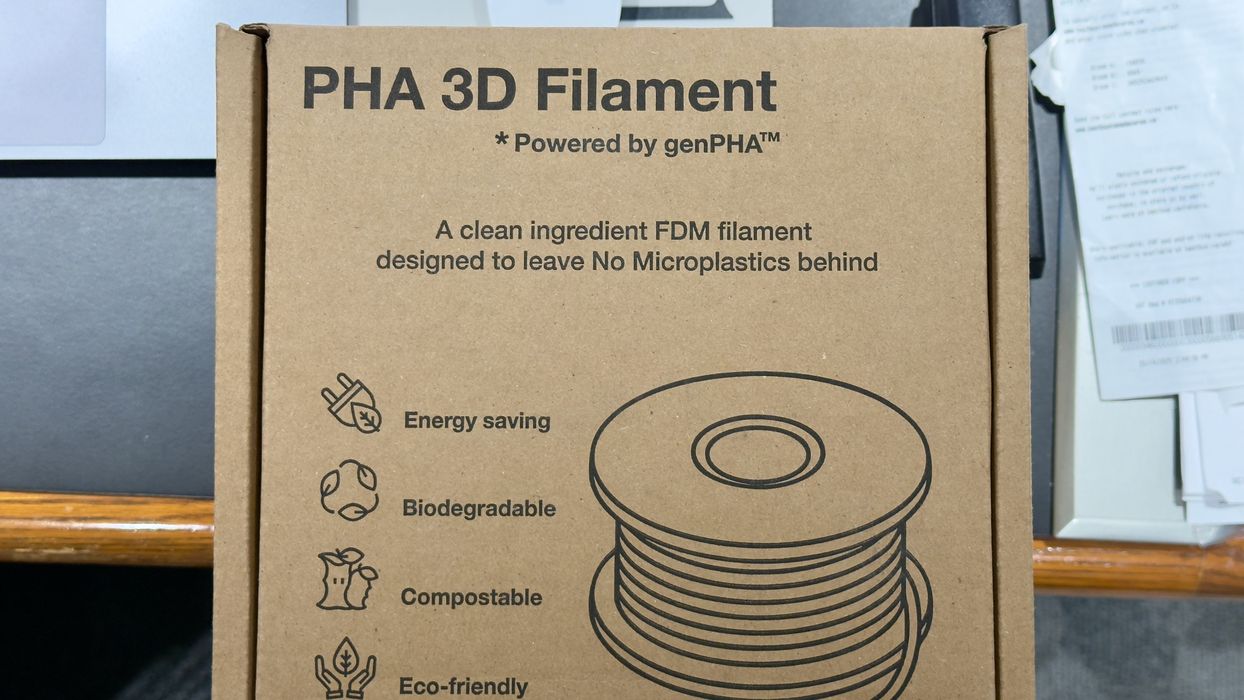
PHA, or Polyhydroxyalkanoates, is a natural thermoplastic polyester that can be 3D printed. In the 3D print world, PHA is basically the only material that is fully biodegradable in natural settings. In other words, if you toss out some PHA scraps, they will not become microplastics; instead, the material will simply break down chemically while in the environment.
PHA is a bit of a strange material, and for that reason, it hasn’t yet taken off as a typical 3D print material. In fact, I often check new machines in the lab to see if they support PHA. Some do, some do not.
There are not very many producers of PHA material for 3D printing. The first might have been colorFabb, which produces PHA blends. These are hybrid materials that are only partly PHA. Why do a blend? It’s because it makes the material easier to print.
ecogenesis biopolymer PHA
The challenges in printing PHA are what have been holding it back. Nevertheless, California-based ecogenesis biopolymers is taking the ball and running with it, providing a range of PHA materials designed for FFF 3D printing under the “genPHA” brand.
They don’t just rely on PHA’s reputation: they have actually obtained official marine certifications for their materials. These certify that their PHA products will harmlessly dissolve in water, leaving no waste products behind. Their certifications include ASTM 6691 Marine Biodegradable and TÜV Austria Marine Biodegradable. No other 3D print materials have these certifications, even the PHA blends.
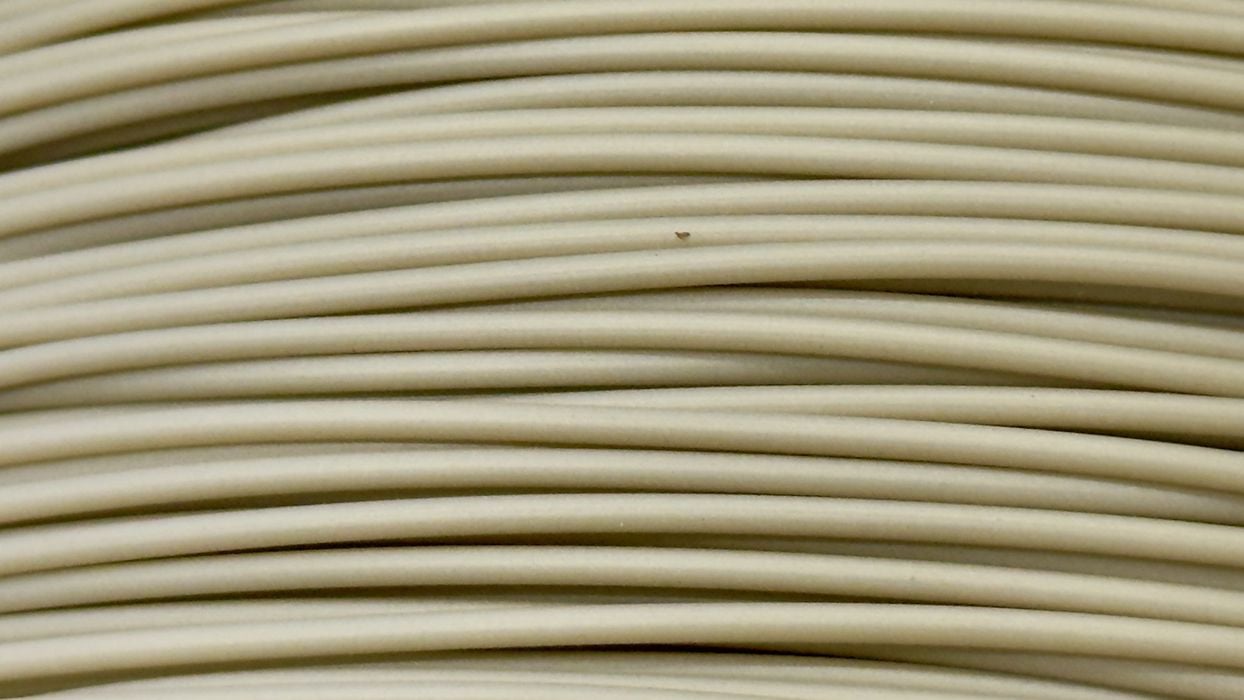
What does PHA look like? Filament, of course. However, it does have a slightly waxy appearance and texture. It is pretty easy to distinguish it from normal PLA or other materials by its appearance. It has a bit less rigidity than harder PLA, but nowhere near the softness of TPU.
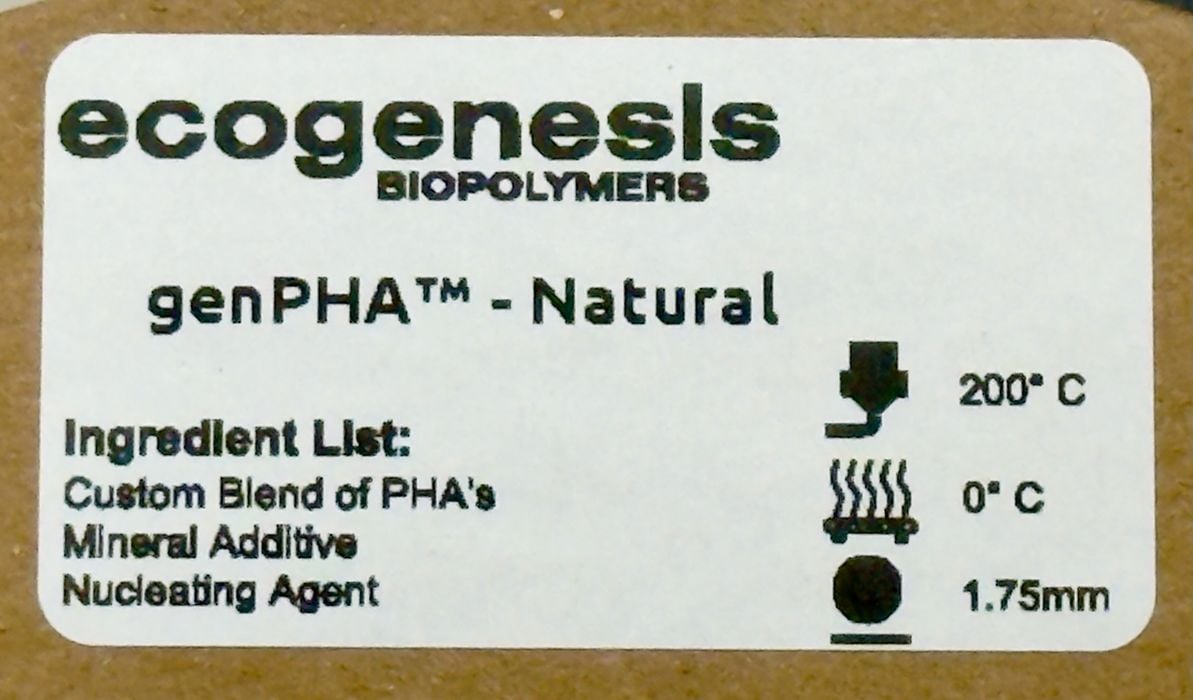
The company positions genPHA as a “direct PLA replacement”, so that’s what I decided to try. Above you can see that the characteristics are similar to PLA printing profiles, except for the bed temperature, which we’ll get into later. There are print profiles available from ecogenesis biopolymers to help you get started. I decided to test on an open gantry Bambu Lab A1, which is representative of most 3D printers.
Printing PHA
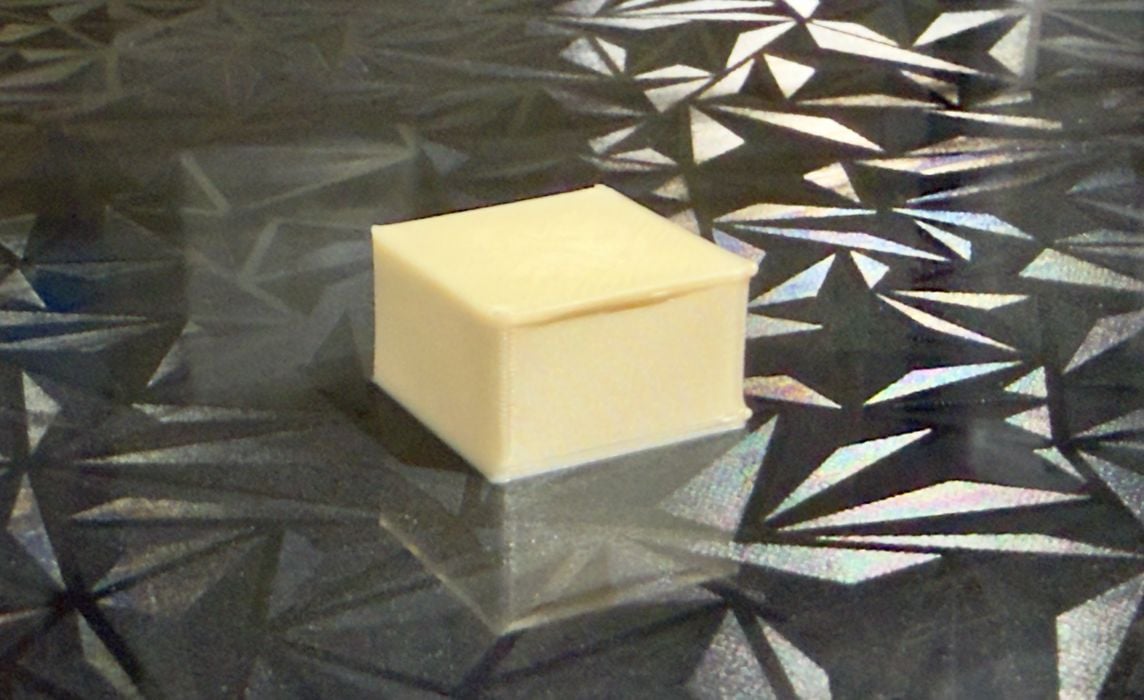
My first test PHA print was a simple cube, which is hard to get wrong. It did work, but seemed a bit droopy.
The cube was quite small, so my next print attempts were for larger objects. These all failed miserably, and I ended up with a pile of PHA scrap. At this point I realized that I should have no concerns about tossing those scraps into the bin — they would eventually break down on their own, causing no pollution whatsoever.
However, my bigger concern was the print failures, which are all due to poor adhesion. The prints simply would not stick very well. As you can see in the print above, I had been using a specialized flat plate with a diamond pattern. This was not a good idea at all.
I tried a textured plate, figuring that it would provide a bit more adhesion. It did, but not enough, as prints continued to fail.
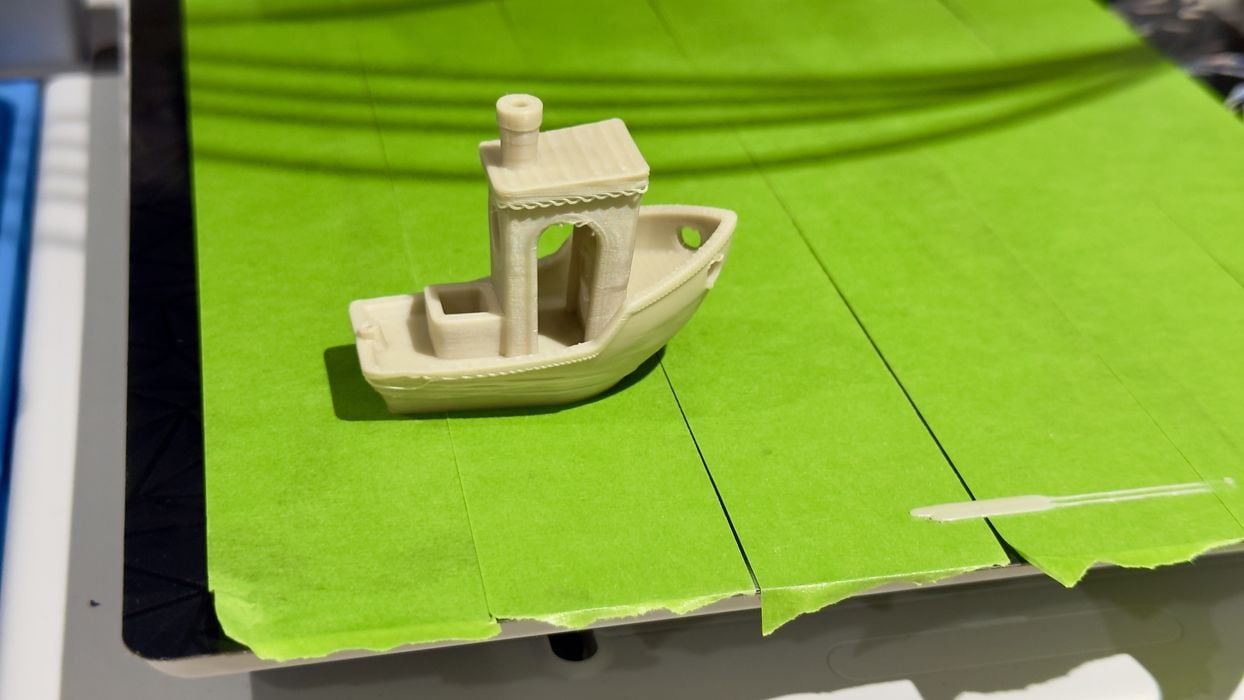
After some reading up on this issue — there is a small group of folks that print PHA — the recommendation is to use tape or glue stick on the print bed. I really dislike glue, so I went with the tape approach.
And it worked, sort of. Above you can see a #3DBenchy that successfully printed. However, that again is a relatively small model that prints quickly.
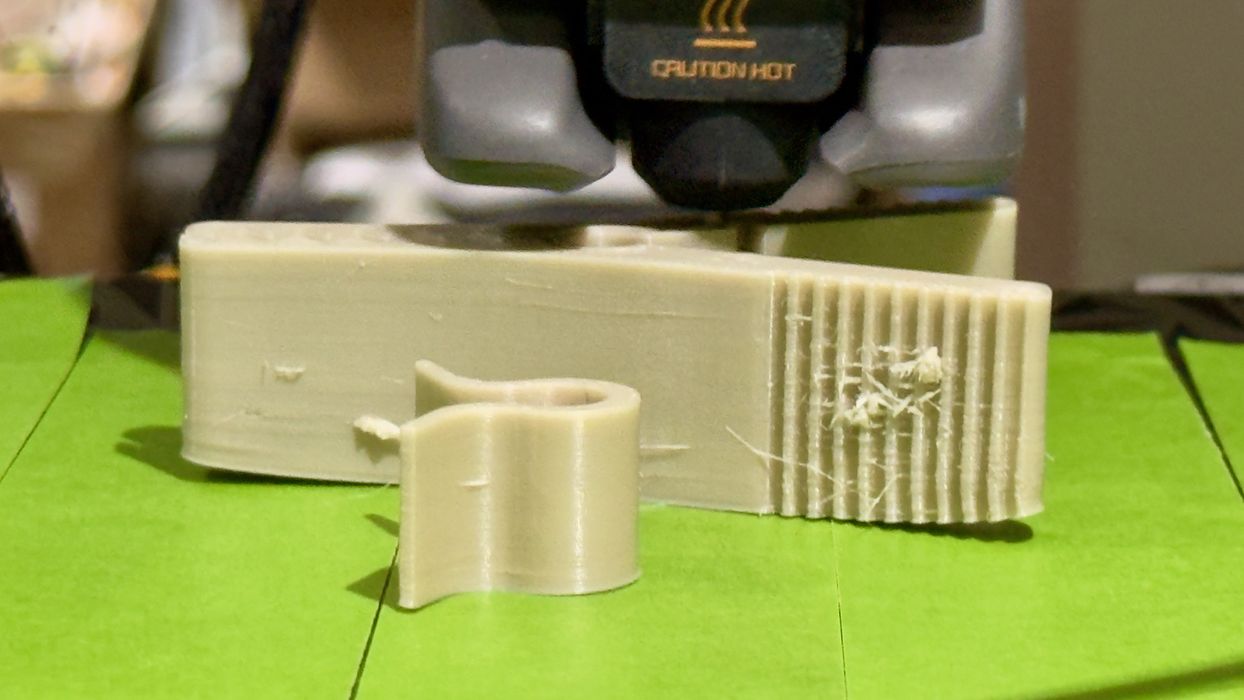
I tried a larger model that had more contact with the build plate, and it did not come out very well. The corners of this item (a bag clip) were warping upwards, and there was quite a bit of sloppy bits all over the print.
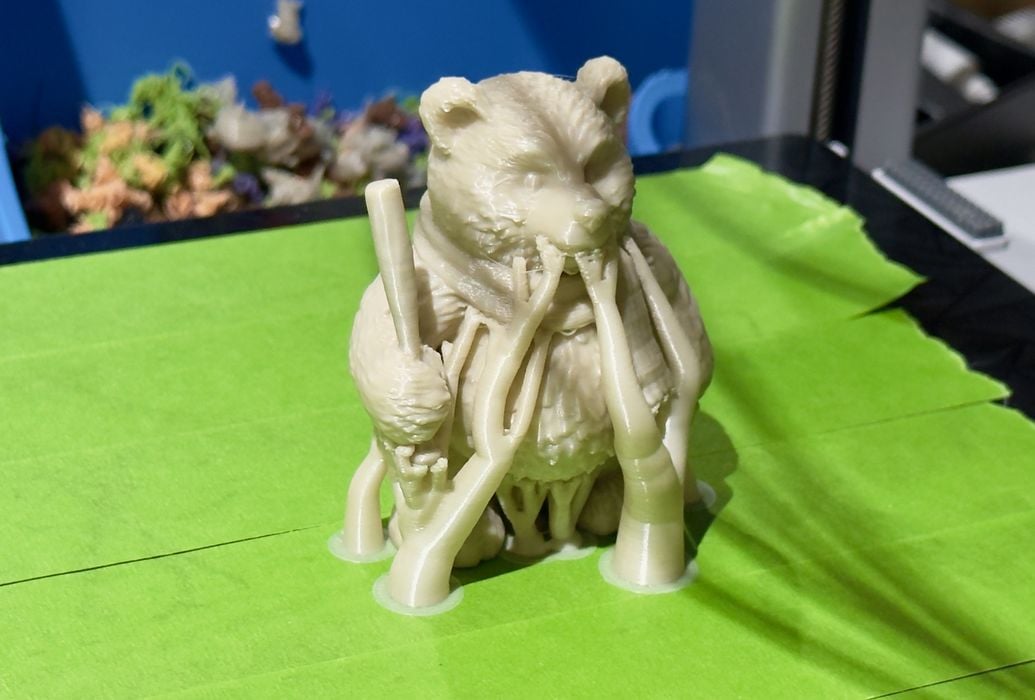
This print worked reasonably well. It is an AI-generated bear model, which had only the feet on the plate, as well as some support structures. It succeeded, again because it was a short print with little material touching the plate.
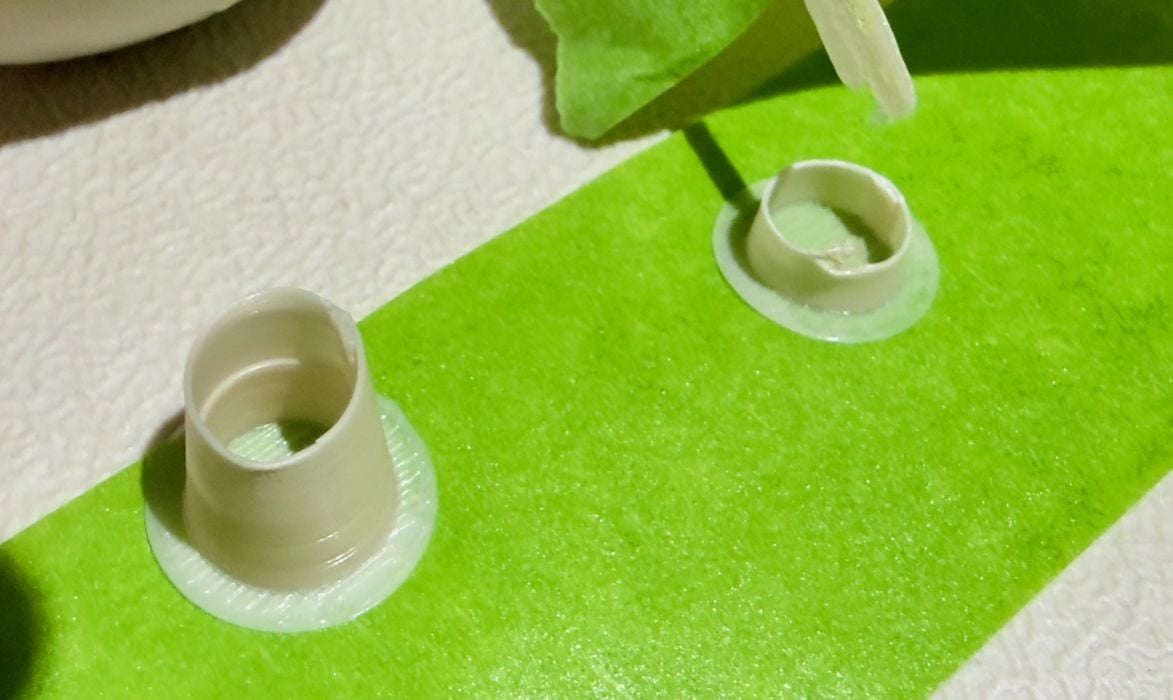
Another issue: when removing the bear, the support structures broke, because they do. However, in the process of breaking, they would lift off the tape. This required me to reapply the tape. I am now disliking tape, too.
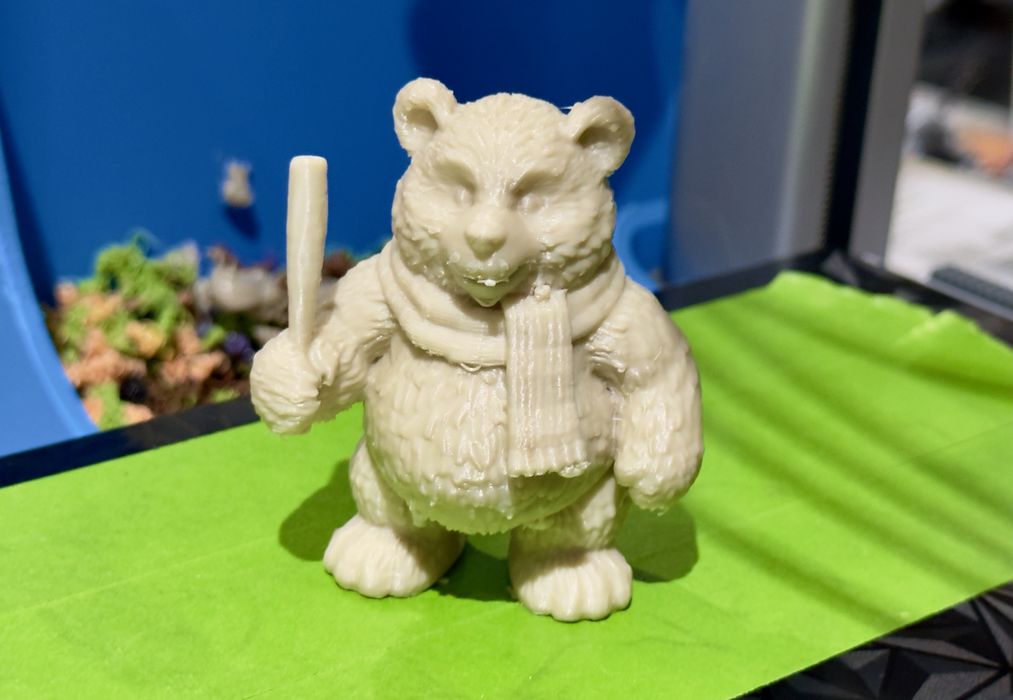
In the end, the bear turned out quite well. The print quality was excellent, and that strange waxy-like texture was present on the bear.
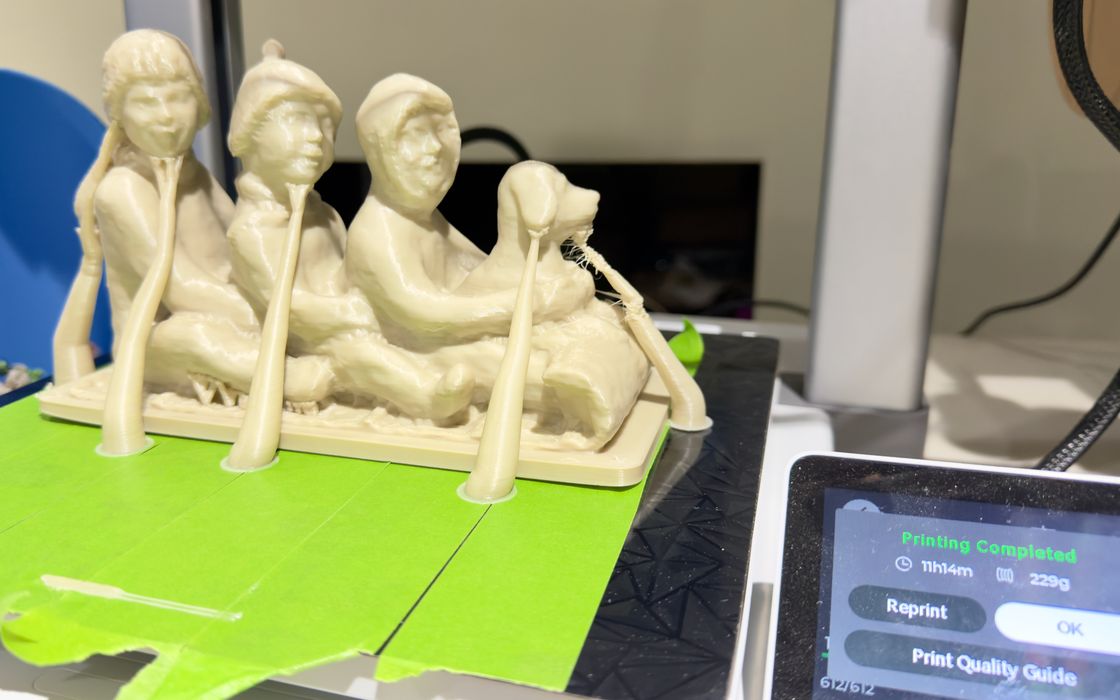
I tried something much larger, this 3D scanned sculpture of kids on a toboggan. It mostly worked, but the eleven-hour print was simply too much for the tape, and it began to lift at the corners.
At this point, I was becoming frustrated with PHA as it seems to have severe adhesion issues, regardless of the surface and temperatures I tested. Then I had an idea.
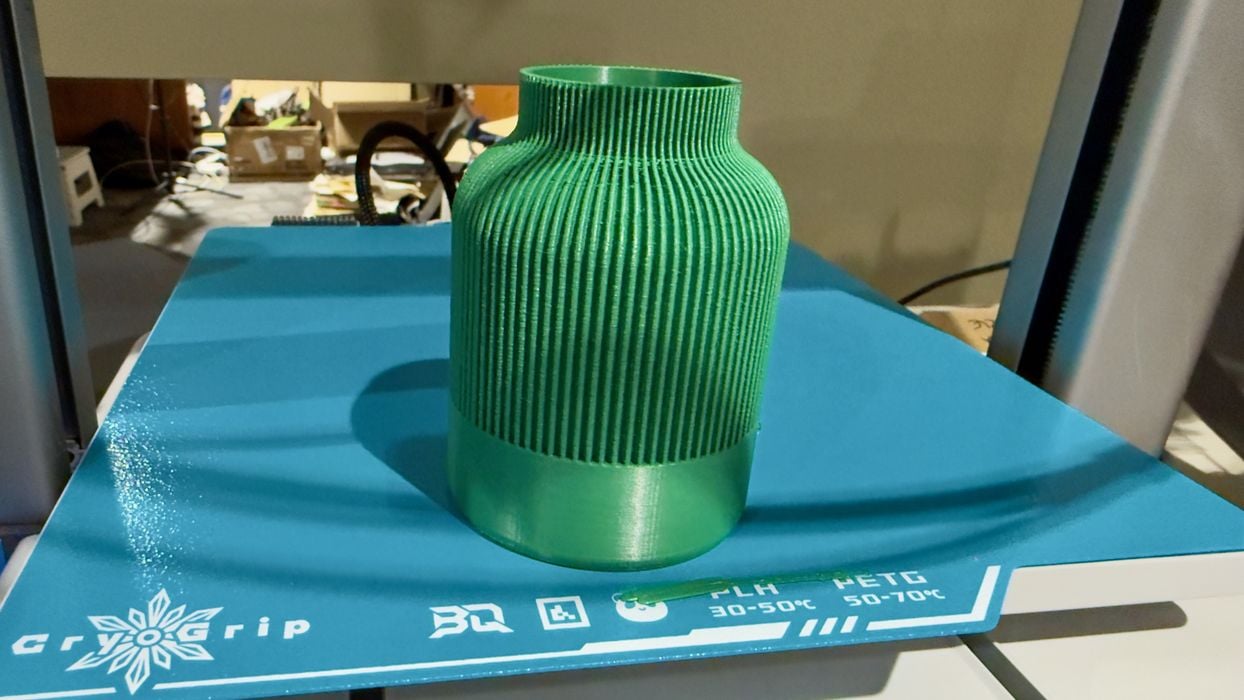
I got one of those specialized CryoGrip plates from BIQU. These plates provide extra strong adhesion for PLA materials — could they do the same for PHA?
It turns out yes, they do. This vase printed perfectly without any warping. The surface quality of the print was also very good, but I’m not sure if it’s because I used a different colour.
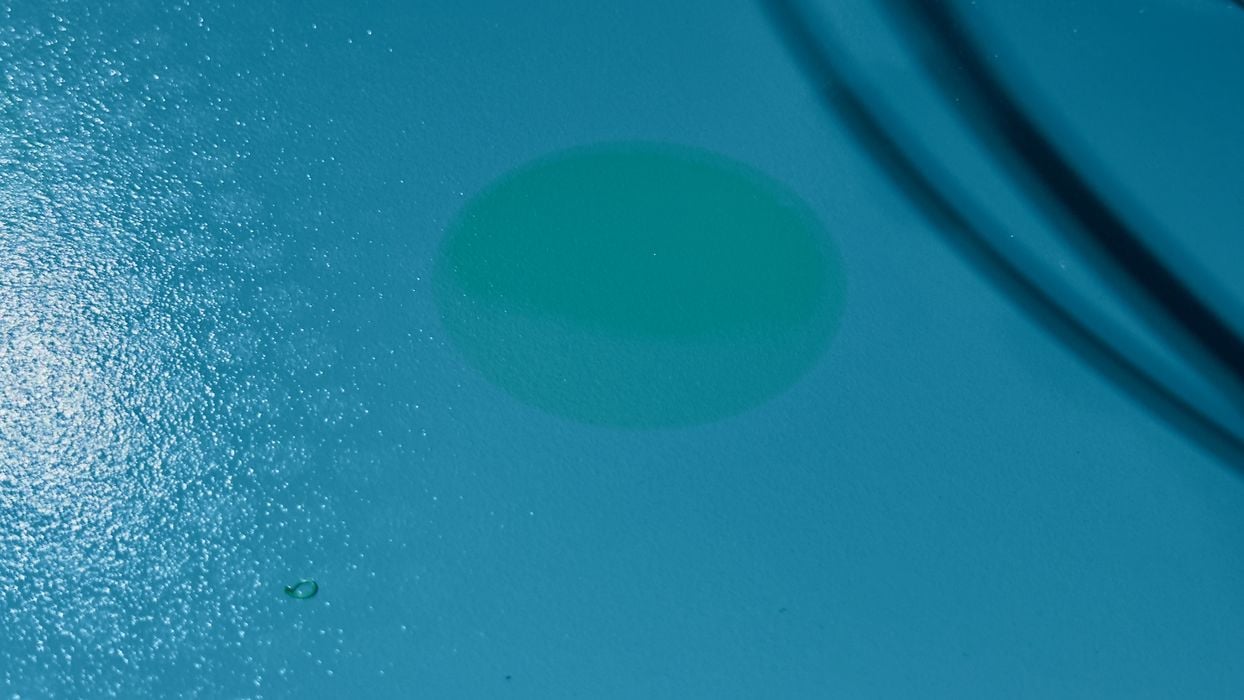
One possible issue: after the vase print, I noticed a suspicious green stain on the CryoGrip plate. I don’t believe this will affect adhesion, but the plate does look quite different.
If you’re going to try PHA, you might consider getting a CryoGrip plate for your 3D printer.
genPHA is readily available from ecogenesis biopolymers through their distributors with prices ranging from US$30-50 per 1kg spool. They haven’t got very many resellers yet, but perhaps that will grow as people gradually get more familiar with PHA.
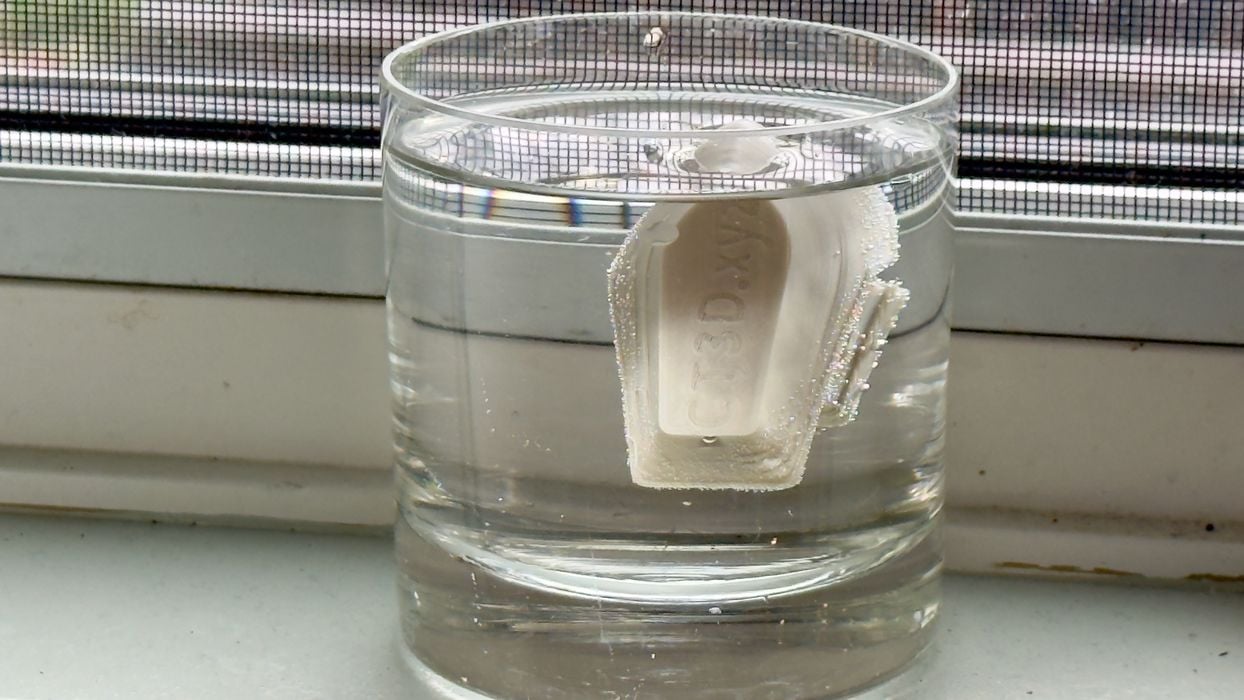
One more thing: I am very curious about the biodegradability, so I placed a PHA #3DBenchy in a glass of water in the sunlight, and I am waiting to see how long it takes to break down. I will report on this in a few months.
