
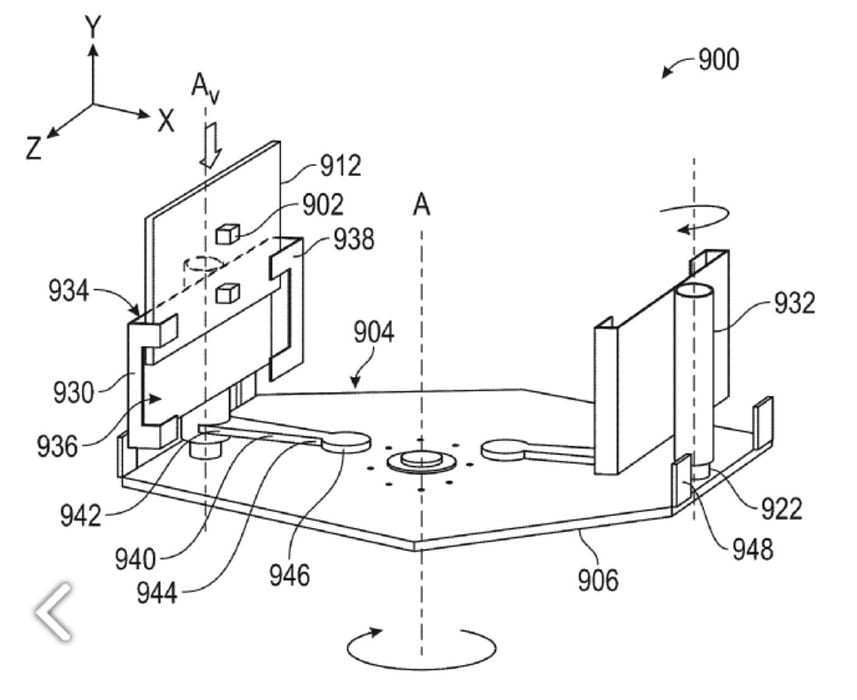
A newly published US patent describes a multiangle centrifuge that tilts build plates during spin to strip viscous resin from complex parts.
Resin post-processing is a bottleneck for many resin workflows, especially when parts trap high-viscosity resin or present vertical faces that centrifugal force pushes against rather than off. Shops typically rely on solvent baths, agitation, ultrasonics, or simple spinners holding parts at a fixed angle. Those approaches struggle with highly filled or hot lithography resins and intricate dental geometries, and they add manual labor between wash, dry and cure stations.
This patent application outlines a spinner that intentionally changes orientation while rotating, so centrifugal force sees different faces over the cycle. The inventors target parts built on a substrate or build platform and explicitly call out dental appliances, but the principle applies broadly to vat polymerization, including SLA, DLP and CLIP processes.
Why Multiangle Centrifugation Matters
In a conventional centrifuge, faces parallel to the spin axis experience force pressing resin into the surface instead of shedding it. By tilting laterally and vertically during the run, more surfaces end up canted to the force vector, encouraging resin to flow outward and off the part. The document talks of forces of roughly 50 g to 500 g at rotation speeds from about 50 RPM to above 500 RPM, with tilt travel up to ninety degrees in either direction depending on configuration.
The system can enclose the rotor in a housing for containment, optional heating to lower viscosity, environmental control and resin capture for reuse. A controller may step the RPM so the mechanism passively “snaps” between angles, or actively command angles directly, creating a programmable sequence that maps to resin type, geometry and target cleanliness.
Passive, Guided And Instrumented Tilting
Several mechanisms are proposed. One uses spring elements between a stationary support and the substrate: as centrifugal force rises, springs extend and the plate tilts outward; reducing speed lets springs contract and tilt back. Force–displacement behaviors can be tuned to be linear or multi-phase, enabling rapid transitions between discrete angles when thresholds are crossed.
A second approach mounts the substrate in a holder with a counterweight on an arm. As RPM increases, the counterweight’s moment grows and the holder swivels around a vertical axis to a new locked angle until speed changes. A third adds guide channels and followers on the substrate to define a two-axis tilt path, effectively choreographing both vertical and lateral tilt through the cycle. Variants layer in actuators at the corners or edges of the plate for closed-loop control.
The patent also contemplates tilt indicators and sensors to verify that target angles were actually reached. That feedback could be used to adjust speeds mid-cycle or to flag runs for rework. Importantly, the housing and openings are arranged to shed material efficiently, and the system can be paired with downstream post-curing to finish the parts.
Compared with solvent-only washers from companies like Formlabs or agitation and chemistry solutions from PostProcess Technologies, this concept leans on centrifugal force and orientation control rather than long bath times. If it works as described, it could cut human touch time, reduce solvent use and improve consistency for service bureaus and dental labs running high-throughput DLP.
There are, however, unknowns. The filing provides no cycle-time benchmarks, build volume capacity, or quantitative cleanliness metrics. Balancing multi-plate loads, managing resin ejected at speed, noise, and maintenance of moving guides and springs in a resin-laden environment will matter in production. It is also unclear how supports and fragile features are protected from mechanical stress at higher g levels.
Residual mass of uncured resin per part before and after, part-to-part variability, compatibility with common chemistries, and whether angle sensing enables closed-loop cleaning profiles should be examined next. Pricing, footprint and integration with existing cure stations will determine adoption in dental, consumer goods and prototyping cells.
Spinning parts is not new, but spinning them smartly at changing angles might finally make resin removal feel less like an art and more like a recipe.
Via Google Patents
