In this article, Anthony Palumbo and Charles Goulding show how DOE’s fast-track test-reactor pilot converts policy into product by pushing designs toward factory replication, with additive manufacturing (AM) accelerating qualification, thermal hardware performance, and supply-chain resilience.
Turning Policy into Product
The Department of Energy’s Reactor Pilot Program is designed to accelerate how nuclear hardware proves itself. For the first time, DOE is authorizing integrated, fueled test reactors for R&D at non-laboratory sites, allowing teams to gather engineering and manufacturability data without waiting for a full commercial NRC license. Commercial plants will still pass through NRC review—the pilot simply provides a DOE-managed test venue.
Lifecycle responsibility remains with the participants (design, construction, operation, and decommissioning), which drives designs toward cadence: stable bills of material, repeatable inspection plans, and controlled parameters. A May 2025 executive order directs the NRC to consider expedited pathways for designs already tested under DOE or DoD authority, limiting further review to risks unique to commercial deployment. In practice, DOE-generated evidence becomes the starting point for the commercial path.
The pilot is tightly synchronized with fuel planning. DOE paired the program with near-term fuel initiatives so that irradiation and endurance testing follow a calendar, not a wish list. This synchronization is crucial for additive manufacturing, where every qualified print is both a part and a measurement. With fueled tests scheduled, AM components can be produced, inspected, irradiated, and evaluated under realistic conditions within short, repeatable cycles. The result is not a shortcut around regulation; it is a structured route that converts design hypotheses into operating data quickly.
Where AM Enters First: A Practical Ladder
Civil and auxiliary applications
Large printed formwork and job-specific fixtures already shorten complex civil tasks (e.g., custom formwork for shielding columns) at tolerances suitable for nuclear construction. These are typically non-safety items with straightforward acceptance criteria, so they deliver immediate schedule gains. By contrast, plant structures such as the biological (reactor) shield are treated as important to safety and fall outside this early, non-safety envelope. Programs then typically advance into non-safety auxiliaries such as instrumentation mounts, housings, and shielding fixtures, where geometric freedom improves packaging and maintainability without heavy code burdens. This stage is ideal for locking print parameters, surface-condition controls, and dimensional stability on production-rate parts.
Thermal hardware
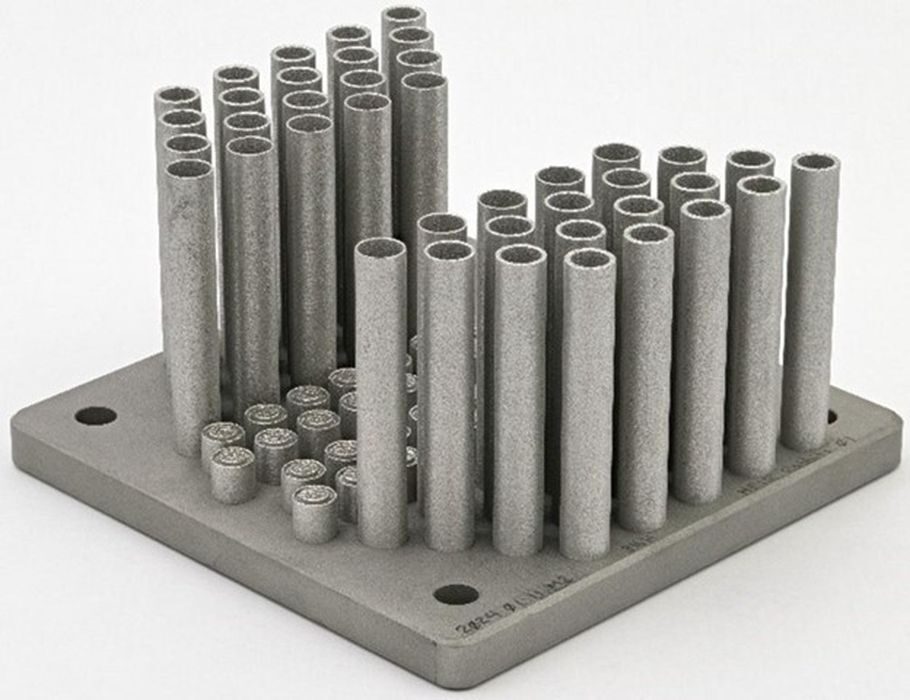
Compact heat exchangers and manifolds represent AM’s earliest practical wins. Internal passages provide higher thermal density and reduce weld count compared to conventional builds. However, these components require a supporting evidence package that addresses pressure and temperature endurance limits, corrosion and erosion in relevant chemistries (e.g., 316L and 316H families), fouling behavior over time, and validated non-destructive examination (NDE) capable of resolving internal features at production line speed.
Safety-class parts.
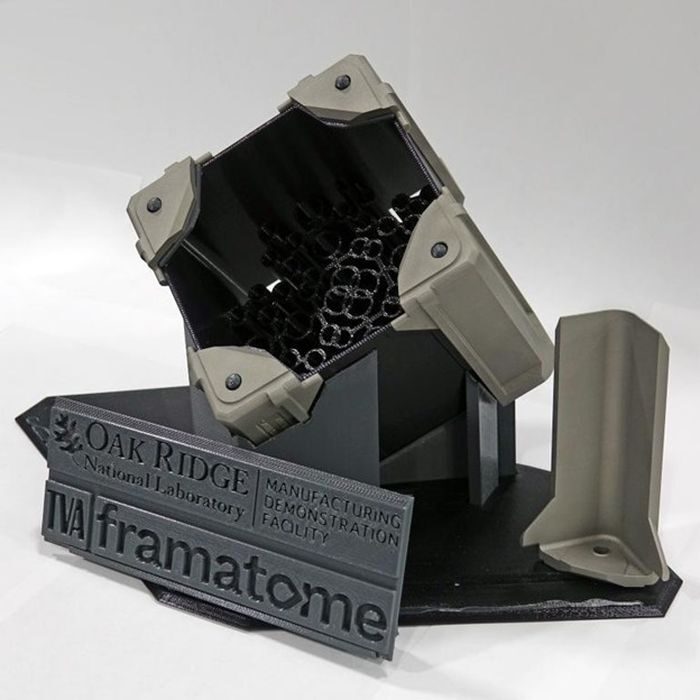
Progress here depends on irradiation behavior, fracture and creep performance, surface-finish effects, code acceptance, and plant-grade NDE integrated into routine production. Recent work at Oak Ridge National Laboratory’s High Flux Isotope Reactor (HFIR) demonstrated 3D printed steel capsules completing approximately one month of irradiation and retrieval for post-irradiation analysis. While this does not imply that safety-class service is fully resolved, it clarifies the empirical path forward: scaling from capsules to components with statistically meaningful sample sizes and repeatable inspection at takt.
The Pacing Item: Fuel Supply Sets the Takt
Design ingenuity cannot compensate for empty fuel bays. The near-term pace of meaningful testing and the rate at which AM parts take on tougher service depend on HALEU availability that is synchronized with program schedules. DOE’s enrichment partner Centrus delivered 900 kg of HALEU by June 30, 2025. As a result, DOE exercised an option to extend production through June 30, 2026, with additional options at its discretion and subject to appropriations.
In parallel, DOE’s Fuel Line Pilot Program funds domestic enrichment and fuel-fabrication lines, assigns end-to-end responsibility to awardees, and links the effort to the broader HALEU Availability Program. As fuel contracts lock to calendar dates, irradiation and endurance datasets move from plans to schedules. For AM, that is the catalyst: qualification of compact heat exchangers, manifolds, and other internals can proceed at factory cadence rather than on ad hoc timelines.
The Test Bed: DOME Converts Design Into Measured Runs
The Demonstration of Microreactor Experiments (DOME) facility at Idaho National Laboratory (INL) turns design ideas into instrumented, fueled data on short cycles. The historic Experimental Breeder Reactor-II (EBR-II) containment is repurposed as a microreactor test bed, with power, heat rejection, and metrology infrastructure to generate design quality datasets. DOE has conditionally selected Westinghouse and Radiant for inaugural campaigns, with the first experiment targeted as soon as 2026.
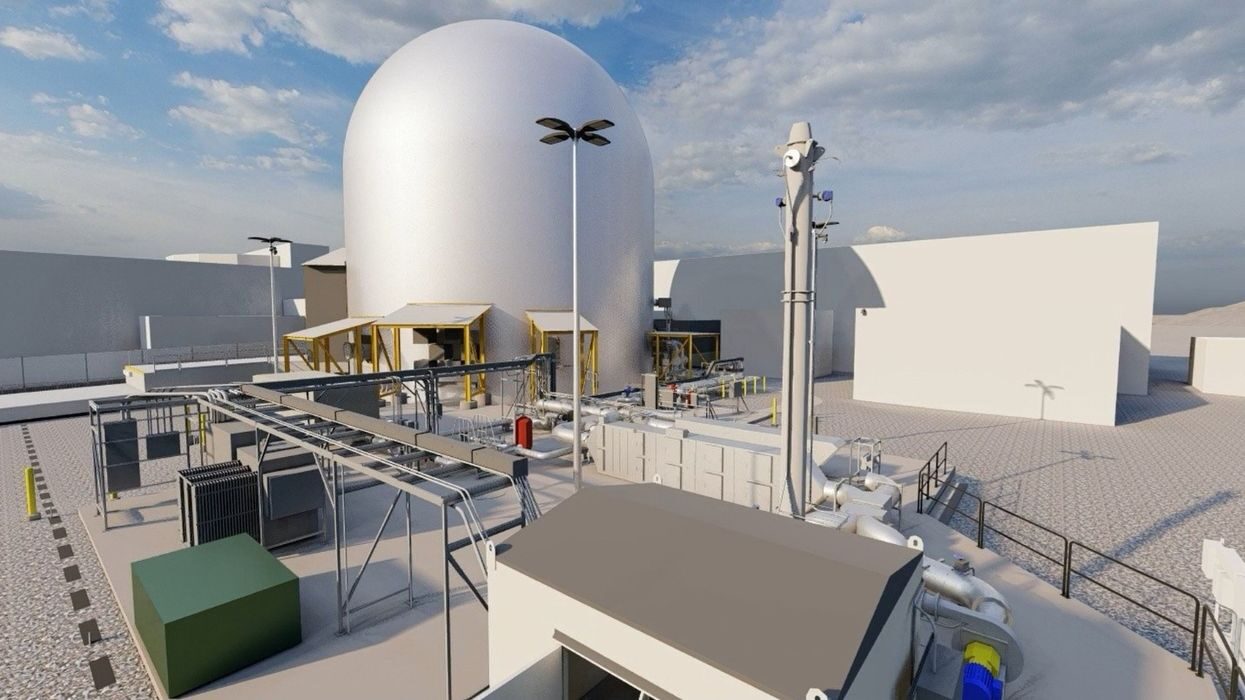
Campaigns emphasize pace and comparability. Runs of up to six months are sequenced based on technology readiness, fuel availability, and a credible regulatory plan, with annual application rounds that create a predictable revise and retest cadence as designs mature.
For AM, DOME converts promises into manufacturing metrics:
- Pressure drop across compact cores, mapped to geometry and build parameters
- Thermal effectiveness over thousands of hours, including fouling behavior
- NDE hours per part at a stated resolution and confidence level
- Transient performance under realistic operating envelopes
Those are the numbers product teams use to freeze parameters, finalize bills of material, and move from first articles to repeatable builds.
Programs on Deck: The Manufacturing Question
Radiant – Transportable HTGR, helium-side hardware first.
Radiant’s “Kaleidos” prismatic high-temperature gas-cooled reactor (HTGR) uses tristructural isotropic (TRISO) fuel and helium coolant, sized for containerized deployment of about 3 megawatts thermal (MWth) and roughly 1 megawatt electric (MWe). It is one of the first two selections to run fueled campaigns at INL’s DOME test bed, which supports experiments up to approximately 20 MWth. In this environment, AM’s near-term lift is on the helium side: micro-channel recuperators and pre-coolers with thin-web cores that maintain effectiveness and pressure drop (ΔP) across impurity-controlled helium service, plus compact hot-side manifolds and impingement features that preserve planarity and leak-tightness under thermal cycling. The manufacturing question becomes whether Radiant can freeze core geometries and show invariant ΔP-Q-ε maps (where Q is volumetric flow rate and ε is heat-exchanger effectiveness) across machine and powder lots at Reynolds (Re) and Prandtl (Pr) number ranges relevant to HTGR operation.
Terrestrial Energy – IMSR process heat, salt-facing internals.
The Integral Molten Salt Reactor (IMSR) integrates a graphite-moderated, liquid-fluoride-salt primary circuit targeting outlet temperatures near 600 °C. Terrestrial’s U.S. collaboration with Ameresco positions these units for industrial host sites where compact exchangers and salt-loop components define the system footprint. AM is especially useful where internal geometry governs performance: salt-to-salt or salt-to-gas compact cores and tailored pump or valve internals that mitigate cavitation and erosion in hot salts. The primary materials challenge involves fluoride-salt compatibility of printed nickel-base alloys (e.g., Hastelloy-N lineage) under controlled redox conditions. Validation relies on long-soak ΔP drift and fouling data derived from thermophysical property measurements completed with Argonne National Laboratory (ANL) under the Gateway for Accelerated Innovation in Nuclear (GAIN) program.
Oklo – Sodium-cooled fast reactor, IHX and sodium manifolds.
With ground now broken at INL for the Aurora-INL sodium-cooled, metal-fueled fast reactor, Oklo’s AM focus shifts from the earlier heat-pipe concept to sodium-side hardware: intermediate heat exchangers (IHX) where printed cores reduce weld count and limit thermal striping, along with leak-tight manifolds and headers that integrate flow straighteners and thermal sleeves. Translating policy to product here means publishing sodium (Na) loop evidence. This includes stable wetting and corrosion behavior, repeatable ΔP and heat-transfer coefficients through transients such as pump trips and load steps, and lot-to-lot consistency for closed-passage geometries, where IHX packages can be serialized with confidence.
Natura Resources / ACU – MSR-1 research platform, in-media AM proofs.
Abilene Christian University (ACU) holds a construction permit for the loop-type, liquid-fueled molten-salt reactor (MSR-1), establishing a non-power platform to conduct true salt-exposure experiments that bridge coupons to components. For AM, the fastest wins involve printed salt-exposure racks and compact experimental cores that quantify fouling kinetics and ΔP evolution in fluoride salts, along with calibrated CT and UT phantoms that benchmark internal-passage resolution at relevant MSR wall thicknesses. Publishing chemistry-specific datasets (composition, temperature, and redox) tied to microstructural evolution in printed alloys is what transforms laboratory equivalence into qualified, factory-relevant performance.
Factory-Ready: The One-Page Checklist
Factory-ready means parts leave the model and enter a repeatable flow. It is not one heroic test; it is a stack of consistent documents and measurements that hold across time, shifts, and sites.
- Locked hardware parameters and change control: Critical subsystems run on frozen bills of material and locked AM parameters (laser power, scan strategy, layer thickness, heat treat and HIP, surface conditioning) under a Process Qualification Plan. Portability is proven through first article to production studies, not just coupons.
- Inspection as part of the traveler: A plant-grade NDE plan specifies method (CT or UT), minimum resolvable feature for internal passages, acceptance bands for porosity and lack of fusion, gage R&R, and target hours per part. Those targets are met routinely without creating a metrology bottleneck.
- SPC proves control: Capability indices such as Cpk are tracked for porosity, dimensions, surface roughness, and post process response, with powder lot controls, moisture and oxygen limits, and reuse policies documented and correlated to outcomes.
- Supply-chain replication: A PPAP-style package (material certifications, process windows, first article reports, capability runs, and a control plan) allows a second site or supplier to build the same thing without rediscovery. Nonconformance and rework rates are low, stable, and trending down.
- Configuration management / digital thread: CAD, build files, parameter sets, simulation if used, inspection, and service history are linked under unique identifiers and revision control. Deviation permits are rare, time bounded, and risk assessed.
Outcome
When this works, the data is “boring” in the best way: identical inputs produce identical outputs over dozens of builds. Yield, cycle time, and NDE turnaround are published and predictable, encouraging questions about quarterly shipments rather than whether one good part can be made.
The Next 18–24 Months: Signs of Real Progress
Tangible progress will show up in execution, not announcements. Watch for five signals that indicate programs are scaling.
- Schedule discipline: First-metal dates are followed by installation photos that match released models, and test starts occur when teams said they would.
- Evidence with methods: Irradiation and endurance results include enough process detail to compare outcomes across vendors: alloy and build process, post processing, inspection method and resolution, and the operating envelope.
- Stabilizing manufacturing metrics: Yield is reported as a percentage and trending up, cycle time is measured in days, and scrap and rework are low enough to support takt. Frozen build sheets and control plans survive machine swaps and site changes without drift.
- Inspection as a production step: NDE hours per part settle into a predictable band at a stated confidence level, CT or UT throughput targets are explicit, gage R&R is published, and acceptance criteria map to field performance.
- Repeatability without re-qualification: The same component is produced multiple times under a locked window and accepted via the standard plan with no waivers and no bespoke inspections, while lead times remain stable.
The Research & Development Tax Credit
The now permanent Research and Development (R&D) Tax Credit is available for companies developing new or improved products, processes, and/or software. 3D printing can help boost a company’s R&D Tax Credits. Wages for technical employees creating, evaluating, and revising 3D printed prototypes are typically eligible expenses toward the R&D Tax Credit. Similarly, when used as a method of improving a process, time spent integrating 3D printing hardware and software can also be an eligible R&D expense. Lastly, when used for modeling and preproduction, the costs of filaments consumed during the development process may also be recovered.
Whether it is used for creating and testing prototypes or for final production, 3D printing is a great indicator that R&D Credit-eligible activities are taking place. Companies implementing this technology at any point should consider taking advantage of R&D Tax Credits.
Conclusion
The fast-track pilot does not commercialize advanced reactors on its own, but it creates conditions where AM can matter quickly. By running real hardware on real schedules, it forces teams to prove manufacturability: the same part, the same quality, again and again. AM compresses the loop between ideas and measurements and enables compact thermal hardware that is otherwise difficult to fabricate. Codes, inspection methods, and fuel supply still set the outer limits. Within those limits, the programs that master repeatability will turn today’s momentum into tomorrow’s product lines.