
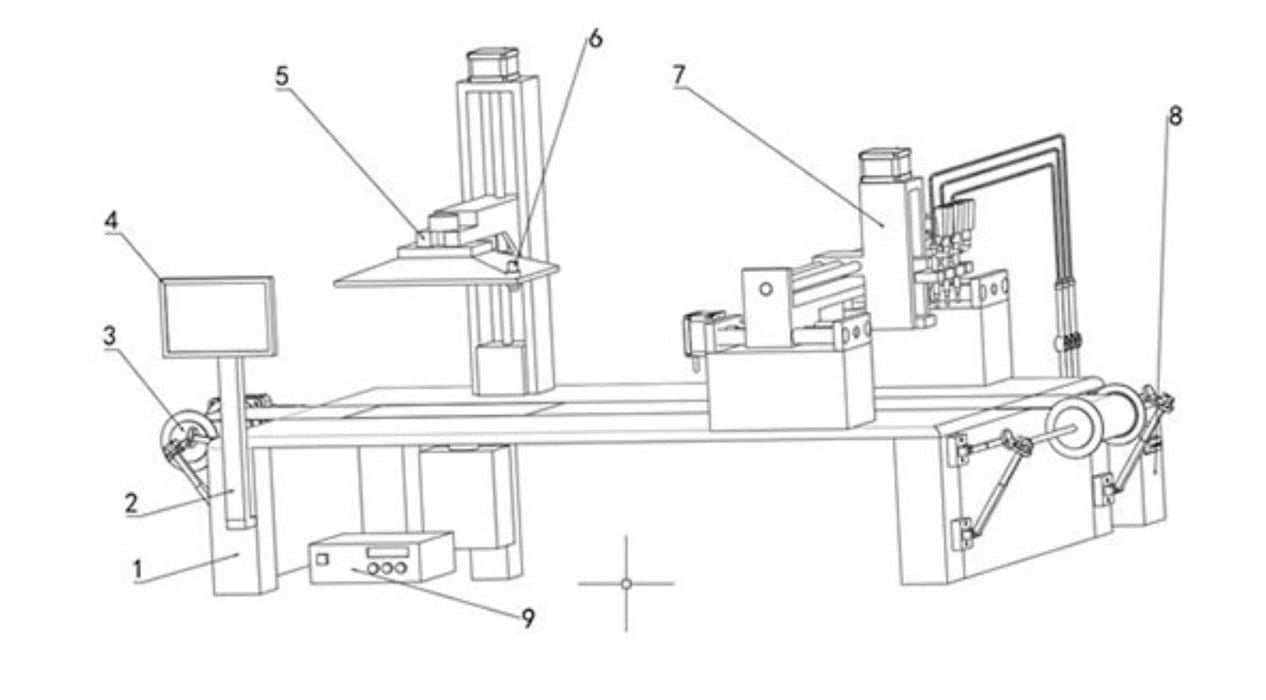
Qingdao University of Technology has filed a patent application for a light curing 3D printing method for functional gradient materials.
Functional gradient additive manufacturing is one of those concepts that has been around for years, yet is almost always awkward to achieve. The promise is simple: make a part whose composition or microstructure changes gradually across the geometry, rather than switching abruptly from one material to another.
In other words, a part might transition from metal to ceramic, stiff to flexible, conductive to insulating, or dense to porous. That could be useful in aerospace, biomedical devices, energy systems, flexible electronics, soft robotics, and other areas where a single uniform material is not ideal.
The patent application, CN122210929A, describes “a functional gradient material light curing 3D printing method.” It was published on June 16, 2026, and the applicant is Qingdao University of Technology.
The interesting part is not simply “multi-material resin printing.” There are already some approaches for switching resins in SLA, DLP, or material jetting systems. The problem is that switching materials usually involves tanks, cleaning, contamination risk, idle time, and a lot of messing around.
This patent proposes a different and simpler workflow.
Rather than filling a vat with one resin, the system deposits a functional gradient layer onto a moving film, preferably PET. The material is extruded from one or more nozzles under positive air pressure, spread according to a planned path, moved into the print area by the film transport system, positioned by a laser locator, and then cured from below by an ultraviolet module.
After curing, the printed layer adheres to the build platform. The platform lifts, the cured layer separates from the film, and the remaining uncured material is carried away by the film conveyor.
That is a pretty interesting separation of tasks. One part of the system handles material placement. Another handles optical curing. The film acts as a transport surface, release interface and waste removal mechanism.
The patent also allows for either multiple nozzles or a single nozzle with multiple inlets and an internal screw mixing structure. The latter is particularly interesting because it could, at least in theory, vary the material ratio continuously during deposition. The document mentions functional gradients in horizontal, vertical, or combined directions.
The patent describes liquid light-curable materials such as photosensitive resin, PDMS, hydrogels, and thermosetting epoxy resin. It also discusses mixtures containing micro and nano powders, including graphene and carbon nanotubes, and gives examples involving metal and ceramic slurry systems.
This suggests the inventors are thinking beyond ordinary photopolymer resin parts. The process includes post-curing, then debinding and sintering to improve density and reduce porosity. That places the idea closer to indirect ceramic or metal AM than to normal desktop resin printing.
The proposed film workflow could reduce vat cleaning and make material transitions easier. It could also improve material usage by laying down only the layer area needed, rather than filling a tank.
There are some questions, though. Can the system repeatedly place viscous, powder-loaded photopolymer mixtures with enough accuracy, cure them cleanly, and then survive post-processing without destroying the gradient structure?
This is a very interesting patent because it attacks a real limitation in multi-material resin printing. However, the proposed solution seems pretty complex and likely will require considerable engineering to perfect the operation.
Via Espacenet
