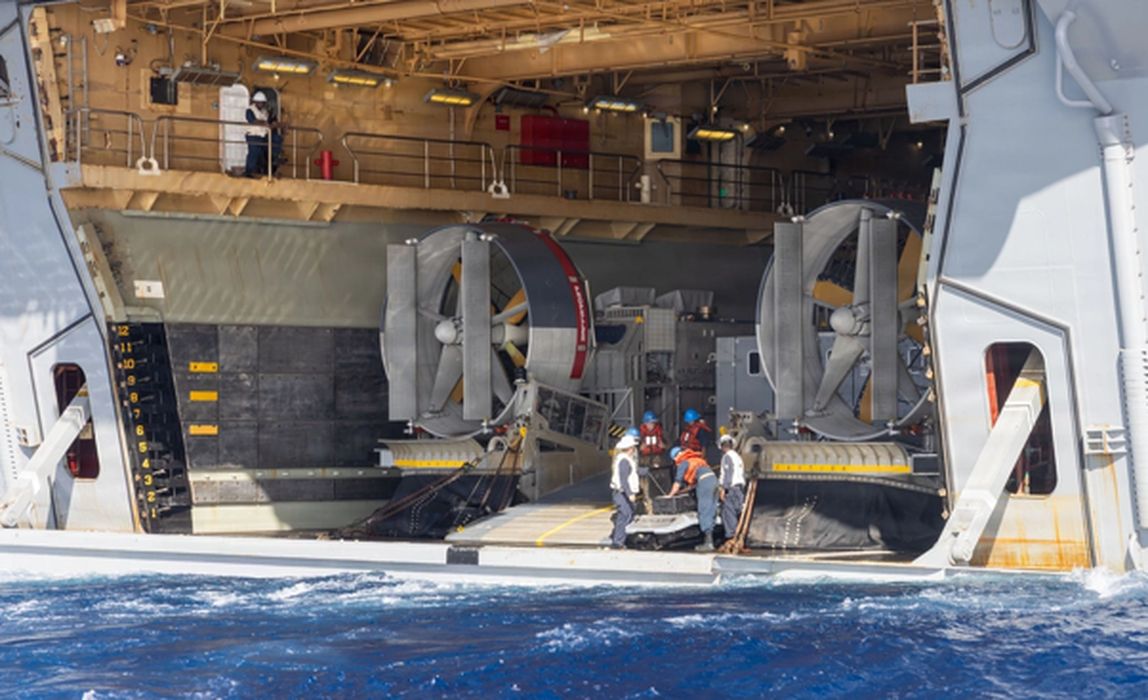
Charles R. Goulding and Andressa Bonafe explore how RIMPAC 2026 is transforming 3D printing from an onboard repair tool into a fleet-wide logistics network powered by digital manufacturing and autonomous delivery.
RIMPAC 2026 has brought naval 3D printing into a new phase. During the world’s largest international maritime exercise, additive manufacturing is being tested as the foundation of a distributed logistics network capable of producing, coordinating, and delivering parts across ships and shore facilities. Organizers have described the initiative as the largest advanced manufacturing demonstration yet conducted across the U.S. defense establishment.
At the center of the effort, the USS Essex is operating as a floating manufacturing hub. A containerized system aboard the ship reportedly produced more than 1,000 components while continuing to operate in waves reaching 12 feet, while autonomous vessels transported manufacturing supplies and finished cargo between ships and shore. As reported by Stars and Stripes, the demonstration brings together 3D printing, digital production management, metal repair, artificial intelligence, inspection, and autonomous delivery, offering a practical view of how additive manufacturing could reshape naval logistics in remote and contested environments.
The Evolution of Additive Manufacturing at RIMPAC
The Rim of the Pacific Exercise, commonly known as RIMPAC, is a biennial international maritime exercise organized by the U.S. Pacific Fleet. First held in 1971, it brings together ships, submarines, aircraft, land forces, and support organizations in and around Hawaii.
The 2026 event is the 30th exercise in the series and runs from June 24 through July 31, 2026. It includes approximately 30 participating nations, more than 30 surface ships, five submarines, and around 30,000 personnel. Its activities extend from maritime security and amphibious operations to disaster response, medical training, logistics, and the evaluation of emerging technologies.

The exercise provides a valuable environment for testing new manufacturing systems. Equipment can be evaluated aboard moving ships, across long distances, and within multinational operations where communications, logistics, personnel, and available infrastructure vary considerably. These conditions reveal practical problems that may remain invisible during controlled laboratory trials. RIMPAC’s recent additive manufacturing history can be traced through the three most recent exercises.
In 2022, the USS Essex participated in a Naval Postgraduate School research program focused on whether a metal additive manufacturing system designed for industrial environments could operate reliably aboard an active naval vessel. A Xerox ElemX system was installed inside a transportable container so researchers and sailors could evaluate the effects of ship movement, electrical requirements, materials handling, operator training, and the broader maritime environment.
In 2024, the work moved from equipment evaluation to an urgent operational application when a component of a reverse-osmosis pump used to produce drinking water failed aboard the USS Somerset. The embarked team manufactured and installed a stainless-steel replacement component, preventing the ship from ending its RIMPAC participation early, according to the U.S. Pacific Fleet’s account of the repair. The case demonstrated the immediate value of point-of-need production, as a part that might otherwise have taken weeks or months to obtain was produced while the vessel remained operational, while also highlighting the advantages of hybrid manufacturing, which combines additive deposition with conventional machining.
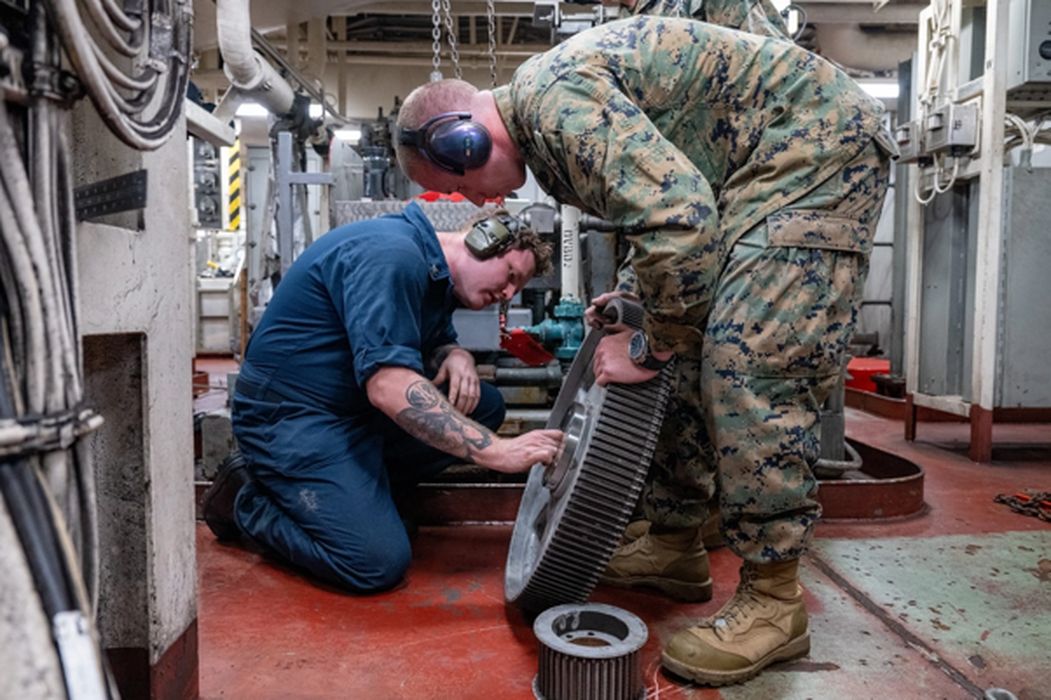
In 2026, the scope has expanded again. The central question is no longer limited to whether a printer can operate aboard a ship or solve an isolated equipment failure. RIMPAC is now evaluating whether multiple manufacturing systems, digital platforms, shore facilities, ships, universities, commercial partners, and autonomous vessels can operate as a coordinated logistics network.
What RIMPAC 2026 Is Demonstrating
RIMPAC 2026 marks the point at which naval 3D printing begins to be evaluated as a fleet-level logistics capability rather than a series of individual equipment trials. Five aspects of the demonstration show how far that transition has progressed:
- A distributed manufacturing network: More than 50 manufacturing nodes are connected across military installations, operational locations, universities, and manufacturing centers. Through the Joint Advanced Manufacturing System, production requests can be assigned to locations with suitable equipment, materials, expertise, and available capacity. The system can also track parts from fabrication through delivery, allowing ships to manufacture for themselves, other vessels, or forces ashore.
- Polymer, metal, and hybrid manufacturing at sea: The USS Essex carries several expeditionary and containerized manufacturing systems, while the USS Theodore Roosevelt is testing a deployable hybrid metal platform aboard an aircraft carrier. These technologies can produce polymer parts, deposit metal, rebuild damaged surfaces, and machine components to their final dimensions. The Essex team has also produced low-volume replacement items for shipboard medical and support equipment when commercial replacements were unavailable.
- Autonomous delivery and return logistics: Digitally crewed surface vessels are delivering manufacturing supplies and completed components between shore locations and ships. One vessel entered the Essex’s well deck, delivered cargo, and carried material back to shore. Another reportedly completed an 85-mile delivery to the USS Theodore Roosevelt. This addresses a central problem in distributed manufacturing: a component produced near the operational area still needs a dependable way to reach the final user.
- Production of materials and unmanned platforms: The demonstrations include the production of metal powder aboard a Canadian vessel, followed by the use of that material for manufacturing. There are also efforts to coordinate the production and assembly of additively manufactured unmanned air and surface platforms, examining how expeditionary manufacturing could rapidly replace or adapt low-volume systems without relying entirely on distant factories.
- A complete workflow under operational conditions: The exercise connects digital requests, design work, manufacturing, artificial intelligence-supported decision tools, inspection, transportation, and delivery. The systems must operate despite ship movement, limited workspace, power constraints, material storage requirements, communications challenges, and the availability of consumables. This makes RIMPAC an unusually demanding test of whether advanced manufacturing can become dependable infrastructure rather than an occasional emergency capability.
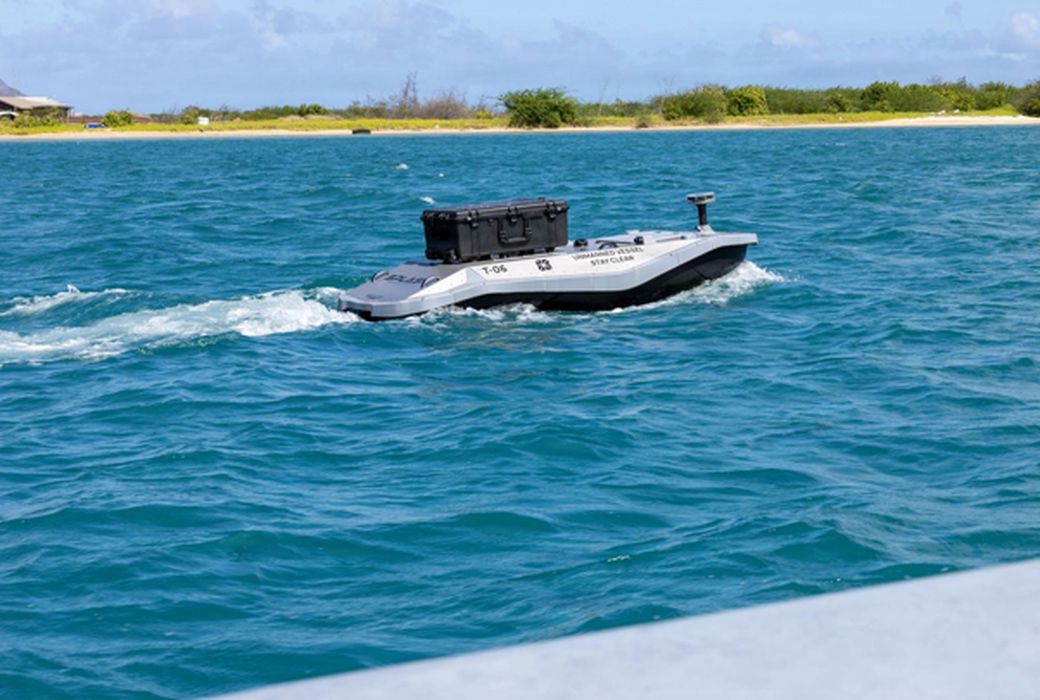
A Broader Shift in Naval Manufacturing
RIMPAC 2026 advances naval 3D printing from individual machine trials toward a coordinated fleet-level capability. The exercise is testing whether digital files, qualified processes, available equipment, trained personnel, inspection, and delivery can function together reliably across multiple locations.
These efforts complement broader shore-based initiatives already reshaping U.S. naval manufacturing. Our previous coverage has examined how the Ships for America Act could support shipbuilding and advanced manufacturing, how 3D printing can help naval vessels remain operational during longer deployments, and how additive manufacturing is expanding through HII’s supplier network and U.S. submarine programs.
The broader opportunity extends beyond printer manufacturers. Materials suppliers, software developers, inspection providers, engineering firms, training organizations, and autonomous-system companies will all be needed to support secure and traceable distributed production. RIMPAC also provides a setting to identify remaining challenges in qualification, technical data access, cybersecurity, and process control before these capabilities are adopted more widely. For the companies developing and refining these technologies, that process of experimentation, integration, and validation may also create valuable opportunities under the Research and Development Tax Credit.
The Research & Development Tax Credit
The now permanent Research and Development (R&D) Tax Credit is available for companies developing new or improved products, processes, and software. The federal credit is claimed using IRS Form 6765, and qualified research expenses may include eligible employee wages, supplies consumed during experimentation, certain computer costs, and a portion of qualifying contract research expenses.
Companies developing technologies represented at RIMPAC may be conducting eligible activities. Examples include designing transportable manufacturing cells, modifying printers for shipboard operation, developing hybrid metal processes, testing materials, creating secure production-management software, integrating autonomous delivery systems, developing inspection methods, and repeatedly evaluating prototypes under realistic operating conditions.
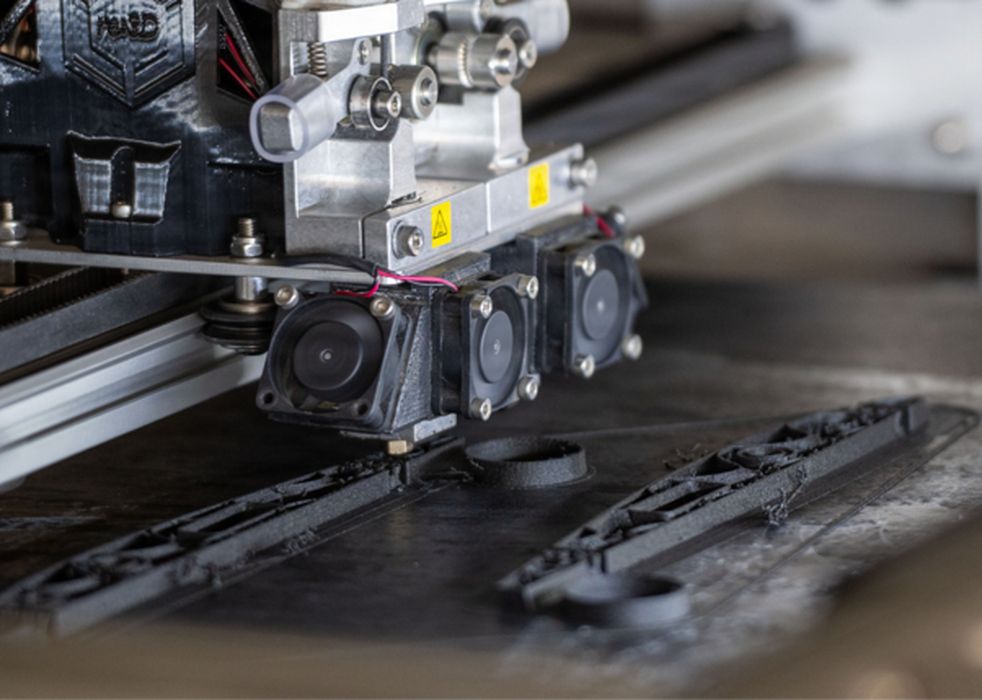
3D printing can be a strong indicator that qualifying experimentation is occurring. Engineers may test alternative geometries, materials, process parameters, machine configurations, and post-processing methods to resolve technical uncertainty. Wages associated with this work and supplies consumed in eligible trials may contribute to the credit when the statutory requirements are met and the activities are properly documented.
The integration work is also important. Connecting printers, software, sensors, inspection equipment, and autonomous vessels may require extensive software development and iterative system testing. Companies participating in these projects should maintain contemporaneous records identifying the technical uncertainties addressed, the alternatives evaluated, the personnel involved, and the expenses connected to each business component.
Conclusion
RIMPAC 2026 demonstrates how rapidly naval additive manufacturing has progressed. The program has evolved from testing a metal printer aboard the USS Essex in 2022, to resolving an actual shipboard failure aboard the USS Somerset in 2024, to coordinating production and autonomous delivery across a distributed network in 2026. By linking digital requests, qualified production capacity, at-sea manufacturing, and autonomous transportation, the exercise offers one of the clearest demonstrations yet of how 3D printing could strengthen naval logistics. The companies developing these printers, materials, software platforms, inspection systems, and delivery technologies are also undertaking the type of iterative technical work that may qualify for valuable federal and state R&D Tax Credits.