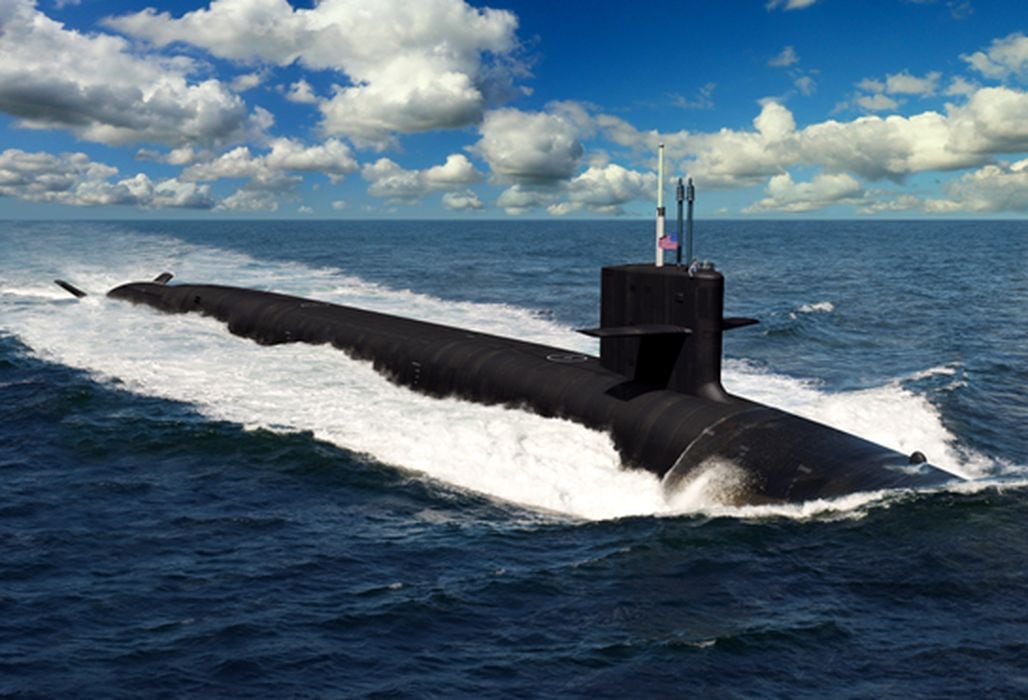
Charles R. Goulding and Andressa Bonafe explore how workforce scaling, new production models, and R&D incentives are converging to power the next era of U.S. naval dominance.
March 2026 was a watershed month for American submarine production. Within a week, the U.S. Navy announced a US$15.38 billion contract modification to General Dynamics Electric Boat for the Columbia-class submarine program, advanced manufacturing company Hadrian held the ribbon-cutting of its US$2.4 billion “Factory of the Future” in Cherokee, Alabama, and Electric Boat publicly confirmed plans to hire 8,000 new workers in 2026 alone. Days later, a separate US$1.27 billion contract for Virginia-class engineering support followed. The scale and speed of these announcements signal something larger than a procurement cycle: they reflect a national reckoning with decades of underinvestment in the maritime industrial base, and a bet that advanced manufacturing, including 3D printing, is the technology that can close the gap.
The macro context became even clearer on April 3, 2026, when the Pentagon released its FY2027 budget request seeking US$65.8 billion for shipbuilding, the second-largest in real terms since 1955, and the highest since 1962’s “41 for Freedom” ballistic missile nuclear submarine drive. The FY2027 proposal explicitly prioritizes Columbia-class and Virginia-class submarines, with Columbia-class funding alone set to rise to US$15.2 billion from US$9.3 billion the prior year. The administration’s budget documents described the plan as “the largest demand signal to the maritime industrial base since the administration of Franklin D. Roosevelt.” For submarine manufacturers and their supply chains, the message is unambiguous: this is a long-term commitment and the foundation of the “Golden Fleet”, Trump administration’s plan to rebuild U.S. naval power at a scale unseen since the Cold War.
We have written extensively about the role of additive manufacturing in submarine construction, including our 2020 piece on the Virginia-class contract,our look at Boeing supplier conversion to submarine manufacturing,the Navy’s Manhattan Project analogy for additive manufacturing, and Alabama’s own Austal shipbuilding expansion. March 2026 brought all of these threads together, signaling an industry-wide shift towards execution.
Hadrian’s Factory of the Future: A New Model for Defense Manufacturing
The most striking announcement of the month came from an unlikely source. Hadrian, a five-year-old advanced manufacturing startup founded by Australian entrepreneur Chris Power, opened what it calls Factory 4, a 2.2-million-square-foot facility at the Barton Riverfront Industrial Park in Cherokee, Alabama. The total investment exceeds US$2.4 billion, structured as a public-private partnership combining more than US$1.5 billion in private capital with approximately US$900 million in U.S. Navy funding.
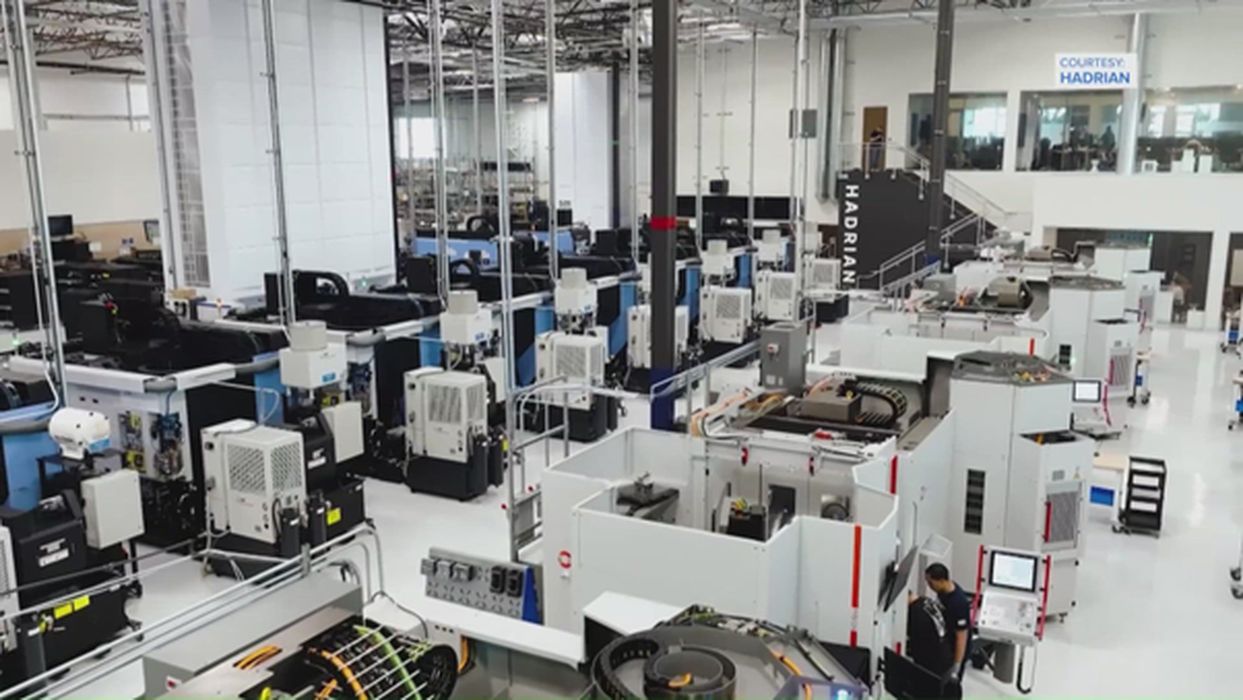
The Cherokee facility is not a conventional defense plant. Factory 4 is purpose-built to mass-produce critical submarine components (parts, assemblies, and finished products that have been identified by the Navy as the largest drivers of submarine production schedules). By concentrating component manufacturing in a dedicated inland facility, the model allows final assembly shipyards to focus on the high-complexity integration work that only they can do. Navy officials called this approach “distributed shipbuilding.”
Hadrian is not a traditional defense contractor, it is a manufacturing technology company that builds and operates AI-powered factories. Its proprietary platform, called Opus, automates the most technically demanding steps in the precision machining process, interprets legacy design files, and manages manufacturing and inspection workflows end to end. The result, according to the company, is that technicians with limited prior manufacturing experience can reach full productivity within 30 days. This is a transformational claim in an industry that has historically required years of specialized training before workers become production-ready.
Factory 4 is the first of three Hadrian facilities planned for the maritime industrial base. A second facility will focus on castings and forgings (a “Foundry of the Future”). CEO Chris Power has stated publicly that even five large facilities may not be enough to meet the administration’s Golden Fleet goals. The Cherokee site alone is expected to create more than 1,000 jobs paying north of $70,000 per year, a significant economic event for a small community that lost its only grocery store just months before the ribbon-cutting.
The building itself carries a certain symbolic weight. It was formerly the largest railcar manufacturing facility in the country, operated by FreightCar America until 2021 when production was moved to Mexico. Its transformation into a cutting-edge submarine component factory is the kind of industrial reinvention story that defines the current reshoring moment. We recently covered Alabama’s broader manufacturing renaissance, including Birmingham’s steel sector revival. Cherokee’s Factory 4 is the most dramatic expression yet of the state’s emergence as a defense manufacturing hub.
Electric Boat’s US$15.38 Billion Columbia-Class Contract
On March 18, 2026, the U.S. Navy awarded General Dynamics Electric Boat (GDEB) a US$15.38 billion contract modification to support the Columbia-class ballistic missile submarine program, the largest and most complex submarine ever procured by the U.S. Navy. The contract extends through June 2035 and covers design work, lead yard support, sustainment, integrated enterprise planning, and submarine industrial base supplier development.
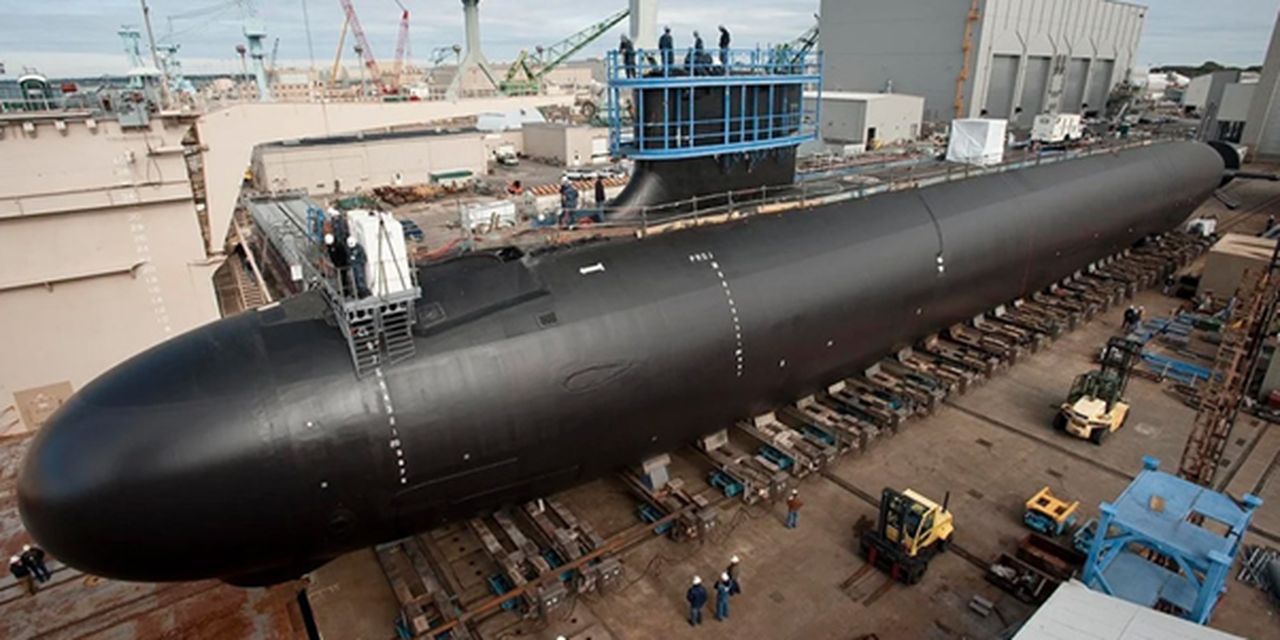
The Columbia-class program is the Navy’s top acquisition priority. Twelve submarines are planned to replace the fourteen Ohio-class boats that have formed the backbone of America’s sea-based nuclear deterrent since the early 1980s. Each Columbia-class submarine is approximately 560 feet long, displaces around 21,000 tons submerged (roughly two-and-a-half times the size of a Virginia-class boat) and is designed to carry 16 Trident II D5 ballistic missiles. The new class will remain operational into the mid-2080s.
In early April 2026, the Navy awarded Electric Boat a separate US$1.27 billion contract modification for Virginia-class submarine engineering and design support (covering lead yard support, development studies, and design work). Together, these two awards reflect the Navy’s urgent effort to maintain parallel momentum on both its attack submarine and strategic deterrence programs simultaneously.
Electric Boat Hiring 8,000 Workers: The Skills Imperative
While contracts matter, they are only as executable as the workforce available to deliver on them. That is why Electric Boat’s announcement of plans to hire 8,000 new employees in 2026 (more than double its 2025 hiring pace) may be the most consequential development of all.
EB President Mark Rayha laid out the breakdown at a March 23 legislative briefing: 3,250 positions at the Quonset Point, Rhode Island facility; 2,250 in operations at Groton; 1,000 in engineering and design at New London; and 1,500 in support roles across both hubs. The company currently employs approximately 25,000 people, meaning the 2026 hiring surge would expand its workforce by more than 25% in a single year.
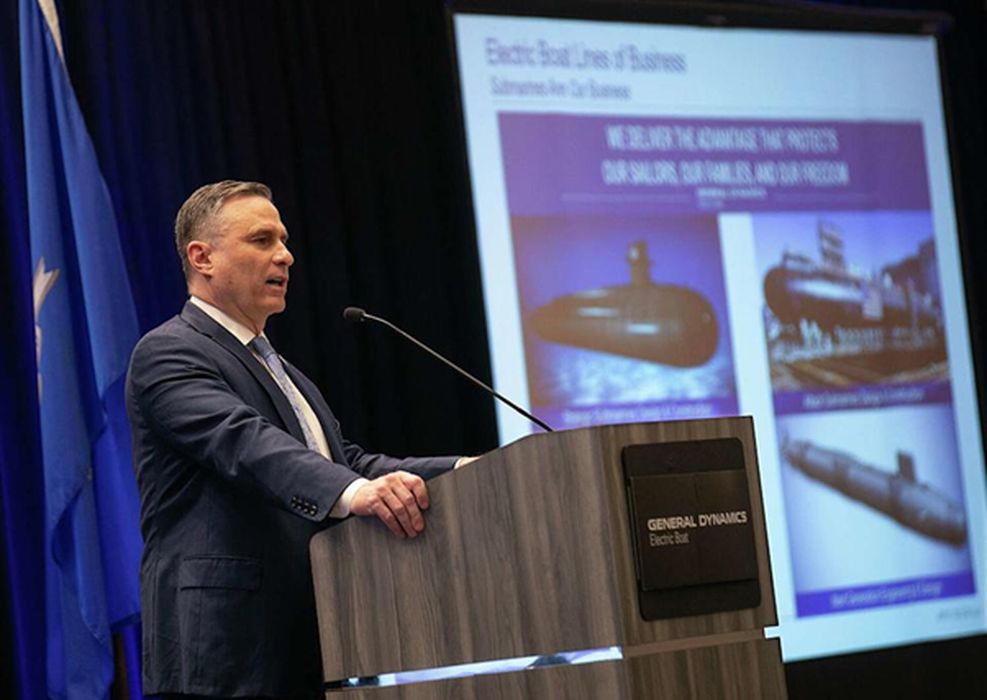
Rayha’s memo was direct about the challenge: “Collectively, we must put every effort into training and up-skilling our people to accomplish our mission.” Electric Boat spends approximately US$100 million per year on training, a figure that reflects just how technically demanding nuclear submarine construction is. It is estimated that building a single Virginia-class submarine requires aroundnine million labor hours and coordination across more than 4,000 suppliers, a scale of complexity that makes workforce training a strategic imperative in its own right.
The hiring goal also underscores a broader workforce crisis in U.S. shipbuilding. Officials from the Navy’s Maritime Industrial Base program office have estimated that the U.S. shipbuilding industry needs to add 250,000 skilled trade workers over the next decade to meet surging demand. From 2018 to 2025, Congress invested over US$10 billion in the submarine industrial base and the 2026 budget added significantly more.
This is a workforce development challenge with a national security dimension, and one the advanced manufacturing industry knows well. As we have previously explored, closing the skills gap requires not just more workers but smarter ways of training them, which is precisely where technology platforms like Hadrian’s Opus become strategically relevant.
3D Printing: Already Inside the Submarine Enterprise
Against this backdrop of scale and urgency, additive manufacturing has moved from experimental to essential inside the U.S. submarine industrial base. The pivot has been underway for several years, but the pace has accelerated significantly.
In September 2023, HII’s Newport News Shipbuilding and General Dynamics Electric Boat announced a joint effort to integrate 3D printing into Virginia-class submarine construction. Working with supplier AMMCON, the teams produced a copper-nickel deck drain assembly, an early milestone in HII and Electric Boat’s efforts to integrate 3D printed components into Virginia-class submarine construction. Electric Boat’s Vice President of Quality, Megan Roberts, framed the significance clearly: additive manufacturing has “the potential to dramatically reduce lead times for critical components, which will enable us to deliver more submarines faster.”
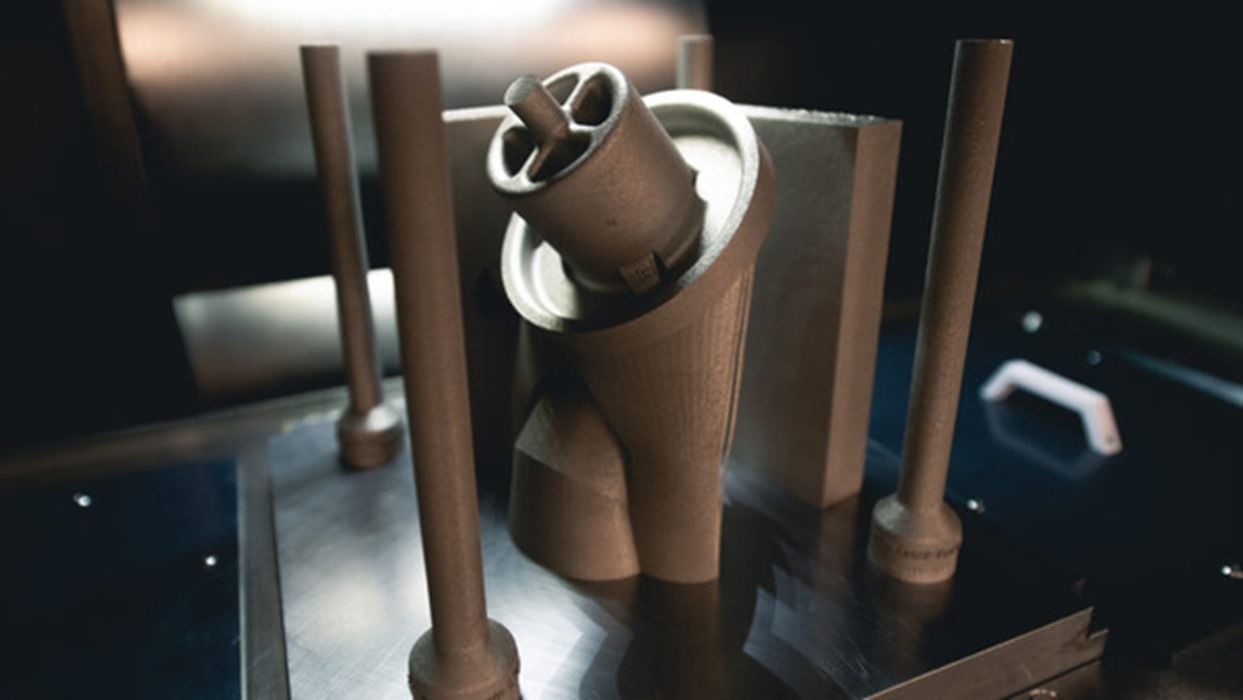
The effort expanded substantially in September 2025, when the Navy’s Maritime Industrial Base Program, General Dynamics Electric Boat, and Lincoln Electric announced a joint investment to accelerate integration of large-scale metal additive manufacturing into submarine construction. Through MIB Program funding, Electric Boat will source critical components from Lincoln Electric’s new large-scale metal AM facility in Cleveland, anchored by four SculptPrint™ robotic Wire Arc Additive Manufacturing (WAAM) systems, Lincoln Electric’s largest government-funded AM capital investment to date.
We have previously reported on the Navy’s broader Manhattan Project-scale ambitions for additive manufacturing, including Rear Admiral Jonathan Rucker’s call for industry partners to adopt 3D printing urgently. At the 2025 Additive Manufacturing Conference in New York, Matthew Sermon, Executive Director of the Maritime Industrial Base Program, envisioned a future where entire hull sections are produced using additive manufacturing techniques. The Navy is not treating 3D printing as a niche solution to spare parts shortages, it is considering it as a structural element of the future production system.
Hadrian, for its part, launched a dedicated additive manufacturing division in January 2026. Called Hadrian Additive, the division is built explicitly for production (not prototyping) with a focus on qualification, repeatability, and sustained throughput for defense programs. As CEO Chris Power put it: “America’s defense industrial base needs additive manufacturing that works in real production.” Integrated directly into the Opus factory platform, Hadrian Additive represents a full-stack approach: AI-powered precision machining, automated inspection, and now additive manufacturing.
For companies across the submarine supply chain investing in capabilities like these (including qualifying new alloys for additive processes, developing inspection protocols for printed components, or building the software systems that tie it all together) those development activities are precisely what the R&D Tax Credit was designed to reward.
The R&D Tax Credit
The now permanent Research and Development (R&D) Tax Credit is available for companies developing new or improved products, processes and/or software.
3D printing can help boost a company’s R&D Tax Credits. Wages for technical employees creating, testing and revising 3D printed prototypes are typically eligible expenses toward the R&D Tax Credit. Similarly, when used as a method of improving a process, time spent integrating 3D printing hardware and software can also be an eligible R&D expense. Lastly, when used for modeling and preproduction, the costs of filaments consumed during the development process may also be recovered.
Whether it is used for creating and testing prototypes or for final production, 3D printing is a great indicator that R&D Credit-eligible activities are taking place. Companies implementing this technology at any point should consider taking advantage of R&D Tax Credits.
Conclusion
March 2026’s submarine announcements represent the most significant mobilization of the U.S. submarine industrial base since the Cold War. The Pentagon’s subsequent FY2027 budget request of US$65.8 billion for shipbuilding, the highest in real terms since 1962, confirms that this is a generational commitment, not a single budget cycle. Additive manufacturing is no longer a peripheral technology in this story: it is embedded in the production plans of Electric Boat, the supply chain strategy of the Maritime Industrial Base Program, and the operational model of the factory that may define what American defense manufacturing looks like in the decades ahead. For companies across the submarine supply chain, the opportunity is real, the R&D Tax Credit incentive is in place, and the moment to act is now.