
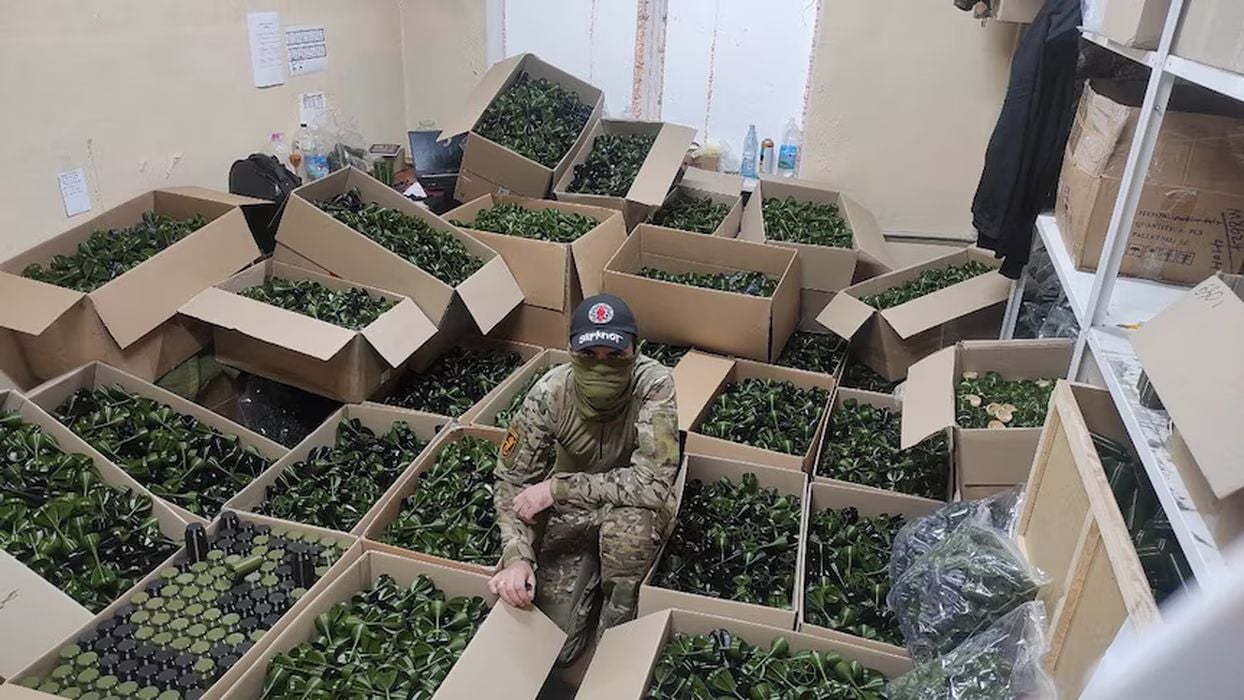
I’m reading a fascinating glimpse into a hidden world of military manufacturing using desktop 3D printers.
Published by ABC (Australia) news, the story describes how networks of individuals in Europe are silently providing Ukraine with tonnes of 3D printed drone parts continuously.
When the Ukraine conflict shifted into drones, it became clear that citizens in Ukraine might start printing their own drone parts, and that certainly did happen. But what this story is about is quite different.
It turns out that there were many people outside of Ukraine that had an interest in supporting that country in its struggle against Russia. And some of them had their own desktop 3D printers. They wanted to produce parts that could be used by the Ukrainian armed forces.
But 3D printer operators would immediately note a major obstacle: what, exactly, would they print? How would these independent 3D printer operators know how many of which parts were required?
This is where it gets really interesting. It turns out that Ukraine has set up several “manufacturing networks”, which are online “marketplaces” for matching up part needs with part producers.
This is quite similar to commercial manufacturing networks where part requests arrive and are dispatched to participating operators. These sites have restricted access, and apparently there are considerable checks performed before one can join them.
But once inside they will see part requests posted by the Ukrainian military, which they can then fulfill. In addition, it seems that the 3D models required are also provided through these sites. This provides the volunteers with everything they need to produce the parts, except for the machines, material and time.
This setup has matured over time, and the ABC report said that one 400-operator network alone produced 100 tonnes of various parts for Ukraine. Given that there are more networks, and that these parts are purposely very lightweight (they are for drones after all), this suggests a staggering number of parts are being produced, possibly in the tens of millions.
It also appears that many of these operators have multiple 3D printers, implying that these networks are effectively the equivalent of print farms of perhaps thousands of machines.
Up to now these networks were mostly in shadow, but this article provides some dimension to what’s been going on behind the scenes for years now.
But there may be a lesson for non-military applications here. The Ukrainian 3D print networks absolutely demonstrate that it is entirely possible to perform very large scale production manufacturing using inexpensive desktop 3D printers. And without any central factory, as well: these secret workshops are hidden in basements, garages and otherwise conventional housing in Europe.
With the dramatically increasing penetration of 3D printers into homes, could this concept be taken into the commercial world in a way that is different and more effective than prior attempts?
Via ABC
