Charles R. Goulding advocates that setting up international business operations at the early stages of a company’s growth can greatly impact its success in the future.
Peter Beck, the New Zealand founder of Rocket Lab, is known for a strategy of going International early, with new business ventures.
Our tax consultancy firm has the same philosophy and we now represent companies headquartered throughout the world, including but not limited to, one of Europe’s largest industrial and energy companies, a European aerospace company, a French fragrance company, a French furniture designer, a German rail products manufacturer, a Hong Kong technology company, a Dutch lighting company, an Irish electrical company, a large Indian pharmaceutical company and a British geothermal company.
We have multiple engineers performing services in India.
Fabbaloo itself is headquartered in Canada.
For our Fabbaloo international article writing, we have team members with strong international roots who often provide coverage on their home geographies.

Andressa Bonafe, born in Brazil, has worked with us while living in Brazil, Peru, and the United States. She has authored articles for our firm in English, Portuguese, Spanish, and French.
Two of her international articles include:
From Nose Gear to Net Zero: Safran’s 3D Printing Revolution in Aviation, and
From Stem Cells to Cosmetics: The Transformative Impact of 3D Bioprinting in Brazil
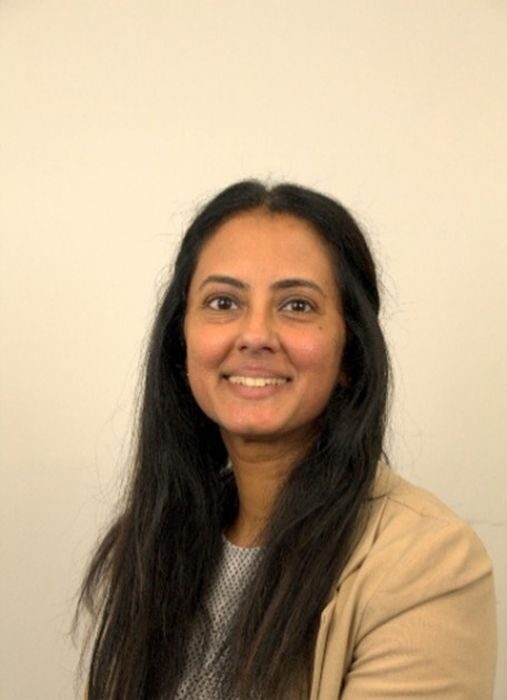
Preeti Sulibhavi’s family comes from Hyderabad, India. Besides numerous articles regarding 3D printing in India, she has authored many 3D printing articles regarding activities in Japan, Gaza, and other countries.
Three examples are:
India’s New Economic Shift: The Rise of 3D Printing in Electronics and Innovation,
Rebuilding Gaza: Harnessing 3D Printing for Infrastructure and Healthcare.

Leah Nabangi was born in Kenya. Leah has covered the semiconductor industry and is currently working on an article regarding 3D printing in the Nigerian oil and gas industry and one on Nigeria’s new Boeing partnership. Prospectively, she will be authoring more African-focused articles.

Nimra Shakoor is a first-generation American from Pakistan. She has written articles on 3D printing developments in Asia, specifically in China and Vietnam. She also writes about U.S. higher-education issues, such as satellite campuses and institutional structures.
The Research and Development Tax Credit and 3D Printing
The now permanent Research and Development (R&D) Tax Credit is available for companies developing new or improved products, processes, and/or software. 3D printing can help boost a company’s R&D Tax Credits. Wages for technical employees creating, testing, and revising 3D-printed prototypes can be included as a percentage of the eligible time spent on the R&D Tax Credit. Similarly, when used as a method of improving a process, time spent integrating 3D printing hardware and software counts as an eligible activity. Lastly, when used for modeling and preproduction, the costs of filaments consumed during the development process may also be recovered.
Whether it is used for creating and testing prototypes or for final production, 3D printing is a great indicator that R&D Credit-eligible activities are taking place. Companies implementing this technology at any point should consider taking advantage of R&D Tax Credits.
Final Note…
One can’t understand the true growth of 3D printing without analyzing international developments. Drones used in foreign wars; shoe production in Asia; large-profile printers in China; Scandinavian nuclear accomplishments; foreign automobiles; global cement companies; and Korean shipbuilding activities round out our list of global factors impacting business not just at home, but everywhere.
Our firm is a small but unique example of how integrating international talent can be impactful. With the advent of social media and advanced telecommunications, the world has become more connected than ever. The 3D printing industry should not overlook an opportunity to advance its technology and applications. Establishing international operations early in a company’s operations can set it up for future success.