
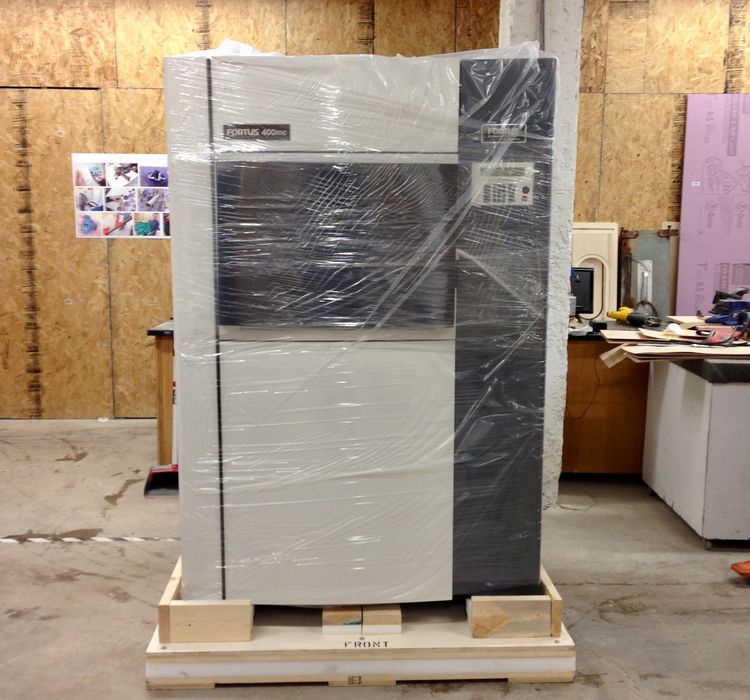
A recent secondary-market listing suggests some once-expensive industrial FFF systems may now be worth almost nothing, a shift that says a lot about aging hardware, leasing risk, and pressure from newer low cost alternatives.
The source here is not a formal market report, but a social post talking about an auction-style situation with older professional 3D printers.
A Mastodon post from Solarbird described the situation:
“Anyone need a legit industrial grade FDM 3D printer? UDub has two of ’em, $10 each, but, uh, the lighter one is 124kg and the heavier one is 227kg so bring a truck
oh and they’ll run on 120 but, uh, 240’s maybe better:
Stratasys F370, currently no bids at $10
Stratasys F120, currently no bids at $10″
A check as of this writing shows both systems now have bids near US$100. Which is pretty much zero considering the original prices of these machines.
A hundred bucks for a machine that only a few years ago would have been worth tens of thousands of US dollars.
This isn’t a survey or anything formal, but it shows an effect that’s been happening: a machine that may have cost a great deal when new can become surprisingly hard to sell a few years later. In industrial equipment markets it’s always been true that systems fall in cost, but the desktop and professional 3D printing options seem to be pushing operators into a much harsher phase where industrial 3D printer depreciation appears to be accelerating.
Many buyers once assumed industrial-branded FFF gear would hold at least some residual value. The thinking was straightforward: these were expensive systems, sold on reliability, support, enclosed thermal environments, and validated materials. But the ending value depends completely on demand, and demand appears to be dropping fast.
Why Older Machines are Getting Squeezed
Part of the problem is technical aging. A printer from even five or six years ago may still function, but the comparison point has changed. Newer systems now offer far better user interfaces, easier automated calibration, faster print speeds, remote management, and very noticeable better print quality. In other words, the machine does not have to be broken to become shunned by buyers.
Then there is the Bambu Lab effect, and the rise of aggressive Asian hardware suppliers. These companies have reset buyer expectations on price-performance. A machine that once looked like a reasonable capital investment can now look bloated if a far less expensive alternative delivers acceptable results for many applications. Not every low cost machine replaces an industrial platform, of course: thermal consistency, service contracts, certified workflows, and certified engineering material support are still quite important in certain environments. But for plenty of users, these machines are “good enough”.
You can see the consequences in the used market. Buyers are no longer just comparing old industrial equipment to similar old equipment. They are comparing it to brand-new machines with warranties, modern software, active communities, and lower operating friction. The differences are huge.
The leasing angle could get uncomfortable
The more interesting business question may involve leasing. If a printer was financed or leased on the assumption of some residual value at end of term, what happens when that value evaporates? It turns out residual assumptions can break quickly in a market where hardware performance improves while pricing collapses. That is not unique to 3D printing, but the sector may be especially vulnerable because many systems were originally sold at premiums that now look pretty hard to defend.
For leasing companies, the risk is obvious: recovered assets may not cover expectations. For manufacturers, there is a second-order problem. Weak resale value can make future buyers nervous, especially if they are comparing ownership models. Why commit to a high-ticket machine if the exit value is uncertain and lower cost competitors are improving every quarter? If this effect continues, it might make lease rates higher to compensate for the likely poor residual values in the future.
A lot of older professional 3D printers are becoming caught between two bad positions: they are too old to command premium pricing, but too specialized or cumbersome to compete with modern low cost gear. That leaves them in a rather narrow resale channel, and narrow resale channels usually mean weak prices, hence the US$100 bids.
If this trend continues, it will affect more than auction listings. It could change how printers are financed, how buyers evaluate total cost of ownership, and how manufacturers justify premium systems in a market that has become much less forgiving.
