
Charles R. Goulding and Preeti Sulibhavi discover how North Carolina’s booming aerospace sector—powered by giants like GE, Lockheed Martin, and Pratt & Whitney—is using 3D printing to reshape defense, design, and manufacturing.
North Carolina is home to a thriving aerospace industry that is anchored by major players such as GE Aerospace, Honda Aircraft Company, and Collins Aerospace. North Carolina has arguably become a major center for the US aerospace industry. With over 200 aerospace companies employing nearly 7,000 workers, the state’s aerospace sector has become a cornerstone of its advanced manufacturing landscape.
One of the most significant recent developments in this sector is GE Aerospace’s US$5 billion contract award from the U.S. Air Force. This contract will see GE supplying its advanced F110 engines, which power the F-15 and F-16 fighter jets, ensuring superior performance and reliability for the fleet. The F110 engine has earned a strong reputation for delivering increased thrust, improved fuel efficiency, and enhanced durability. This contract is a testament to GE Aerospace’s engineering prowess and reinforces North Carolina’s role in supporting national defense initiatives.
3D printing is playing an increasingly vital role in this industry, with several major aerospace firms leveraging additive manufacturing technologies to improve production efficiency, develop innovative components, and reduce costs.
Here is a list of some of the key aerospace leaders that have “landed” in North Carolina. We have covered many of these previously on Fabbaloo.
Aerospace Companies With North Carolina Operations
| HAECO Group |
| BOOM Supersonic |
| The Marshall Group |
| Honda Aircraft Company (HondaJet) |
| RTX/Raytheon/Pratt & Whitney |
| Triumph Group, Inc. |
| Lockheed Martin |
| Parker Hannifin Corp |
| GE Aviation |
| Allegheny Technologies Incorporated (ATI) |
| Spirit Aerosystems Holdings, Inc. |
| Bell Textron |
| Honeywell International Inc. |
| Curtiss-Wright Corp |
| RTX/Collins Aerospace |
| Volatus Aeropsace, Inc. (Flytrex) |
Each of the companies listed above has been utilizing 3D printing technology in various ways. We have highlighted a few of them below.
RTX/Pratt & Whitney
Pratt & Whitney, a division of RTX, has integrated 3D printing into its production process to enhance the development of turbine blades and other critical engine components. Using EOS M400-4 metal 3D printers, Pratt & Whitney has been able to produce complex geometries that were previously impossible to manufacture using traditional machining techniques. This capability has enabled them to improve engine performance while reducing material waste. For example, the company has successfully printed lightweight, high-temperature-resistant turbine blades that improve fuel efficiency in modern commercial jet engines.
Lockheed Martin
Lockheed Martin has adopted 3D printing to streamline production and accelerate component prototyping. The company has employed GE Additive’s Concept Laser M2 machines to produce precision parts for missile systems and satellite components. This innovative approach reduces lead times and allows engineers to iterate designs more efficiently. Lockheed Martin has also pioneered the use of 3D printing in developing heat exchangers for spacecraft, improving thermal regulation while minimizing component weight.
Parker Hannifin
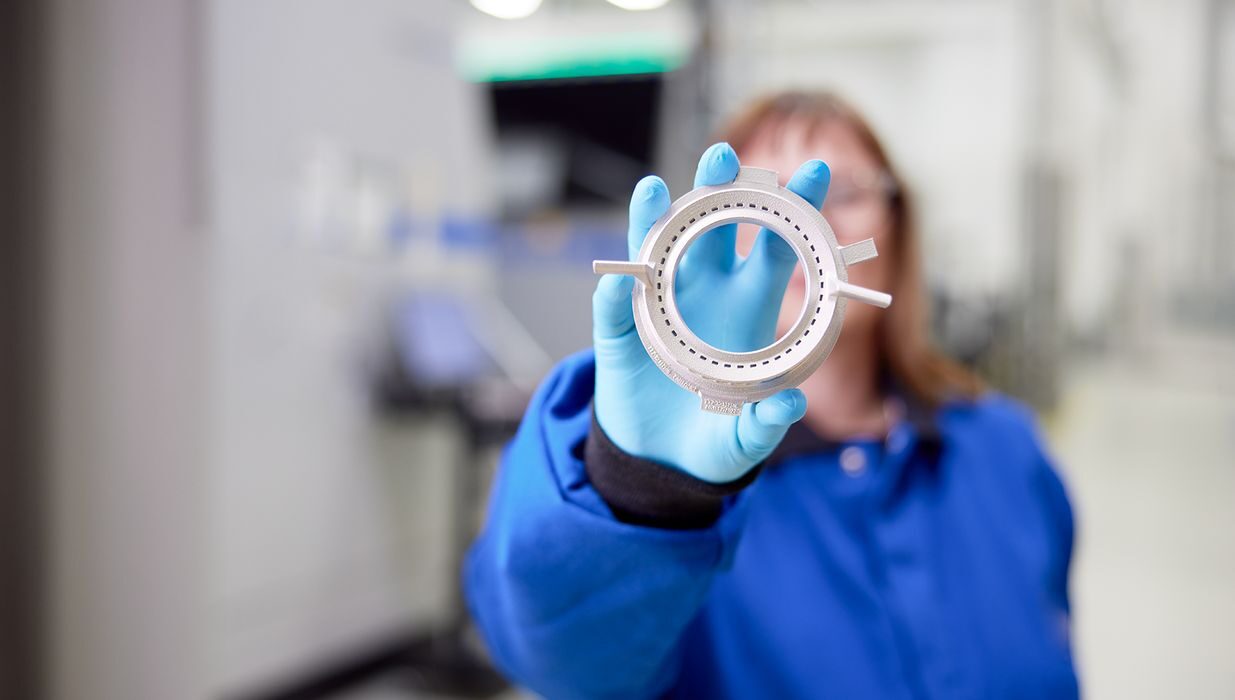
Parker Hannifin has implemented 3D printing for both prototyping and end-use parts in its fluid power and motion control systems. Utilizing Stratasys Fortus 450mc printers, Parker Hannifin has rapidly produced custom manifolds and valve housings that meet demanding aerospace standards. This process has significantly improved the company’s ability to deliver custom solutions for its clients while reducing the time required for development and testing.
GE Aviation
GE Aviation has leveraged additive manufacturing extensively in its production processes. The company has incorporated 3D printed fuel nozzles into its LEAP engines, which power the Airbus A320neo and Boeing 737 MAX aircraft. These fuel nozzles, manufactured using advanced laser powder bed fusion (LPBF) printers, are five times more durable and 25% lighter than their traditionally manufactured counterparts. GE Aviation’s embrace of 3D printing has revolutionized engine design by consolidating multiple components into single printed structures, reducing assembly complexity and improving reliability.
MRO Services
HAECO and The Marshall Group both engage in various maintenance, repair, and operations/overhaul (MRO) services for industries that extensively use 3D printing technology. We have previously written about MRO operations on Fabbaloo.
Flytrex
Flytrex engages in drone services and other industries that make heavy use of 3D printing technology. Flytrex is taking drones to new heights as they offer the first autonomous, on-demand, home drone delivery in multiple metropolitan centers now.
University of North Carolina
In addition to corporate advancements, educational institutions in North Carolina are equipping the next generation of engineers with vital 3D printing skills. The University of North Carolina (UNC) has emerged as a leader in integrating additive manufacturing into its research and teaching facilities.
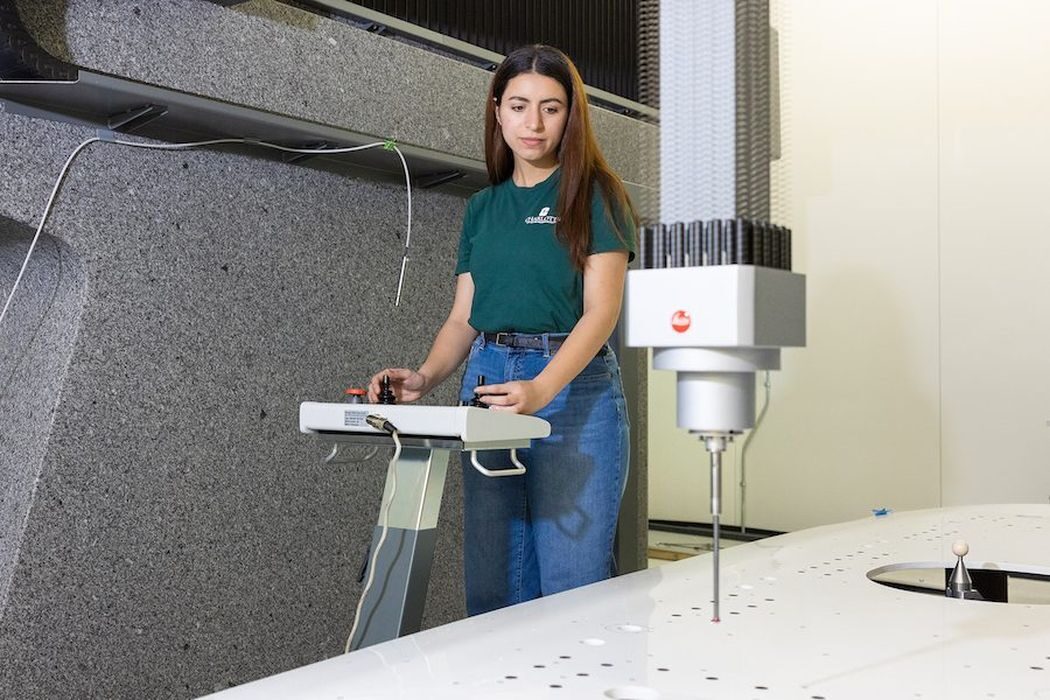
At UNC Charlotte’s William States Lee College of Engineering, students and researchers utilize a Formlabs Form 3L resin printer to develop complex prototypes for mechanical systems. This printer’s precision and high-resolution capabilities have enabled students to create intricate models for fluid dynamics studies and medical device design.
UNC Chapel Hill’s BeAM (Be A Maker) Makerspace has embraced 3D printing for student-led innovation and design projects. Equipped with Ultimaker S5 printers, this facility empowers students from engineering, art, and science disciplines to experiment with rapid prototyping and develop functional products. The BeAM Makerspace has been pivotal in fostering creative solutions, from biomedical devices to consumer product prototypes.
The Research & Development Tax Credit
The now permanent Research and Development (R&D) Tax Credit is available for companies developing new or improved products, processes and/or software.
3D printing can help boost a company’s R&D Tax Credits. Wages for technical employees creating, testing and revising 3D printed prototypes are typically eligible expenses toward the R&D Tax Credit. Similarly, when used as a method of improving a process, time spent integrating 3D printing hardware and software can also be an eligible R&D expense. Lastly, when used for modeling and preproduction, the costs of filaments consumed during the development process may also be recovered.
Whether it is used for creating and testing prototypes or for final production, 3D printing is a great indicator that R&D Credit-eligible activities are taking place. Companies implementing this technology at any point should consider taking advantage of R&D Tax Credits.
North Carolina’s Aerospace Future
North Carolina’s aerospace sector and its educational institutions are leveraging 3D printing to drive innovation, reduce costs, and improve efficiency. As major players like Pratt & Whitney, Lockheed Martin, Parker Hannifin, and GE Aviation continue to expand their additive manufacturing capabilities, the state’s role as a leader in advanced manufacturing is only set to soar.