
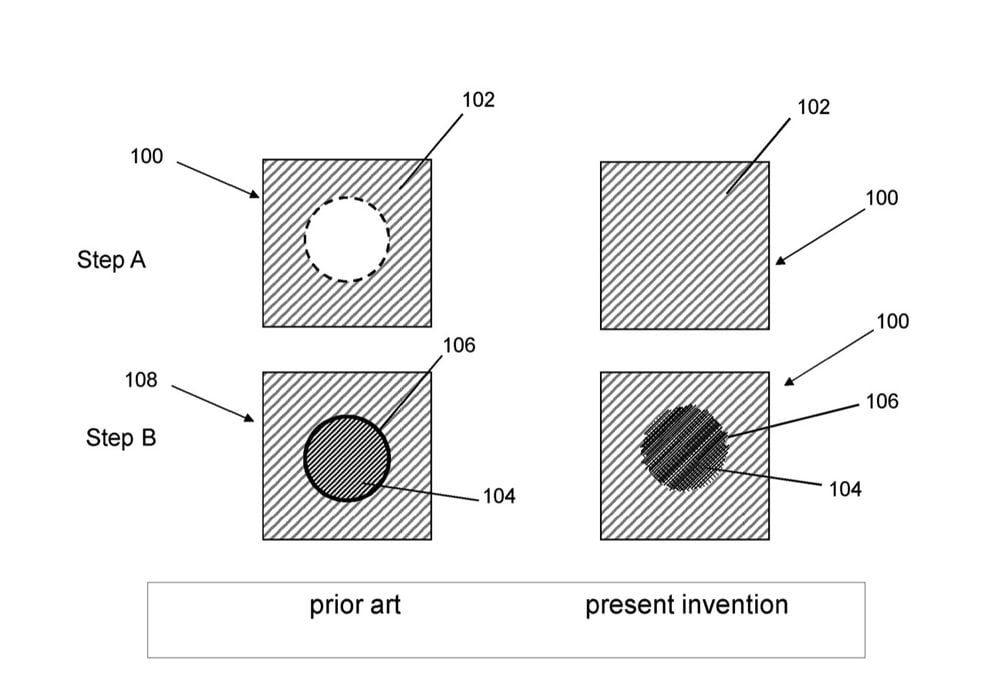
Kumovis has a new European patent application that digs into a very specific FFF problem: how to print parts with regions that transform smoothly from porous to solid.
The application is titled “Manufacturing Objects With Seamless Solid-To-Porous Transitions.” It was published by the European Patent Office in May 2026. The applicant is Kumovis GmbH, the Munich company known for high-performance polymer 3D printing, particularly in medical and implant-related applications.
In many prints, designers want different zones to behave differently. A porous region may reduce weight or provide flexibility. A dense region may provide stiffness, strength, screw fixation, or load-bearing support. Combinations of dense and porous regions are especially interesting for polymer implants, where a porous surface can be useful for biological integration while a denser core provides mechanical stability.
But there’s one issue: the boundary between those regions can become a problem.
The Transition Problem
In conventional FFF slicing, a porous region and a solid region are typically handled as distinct areas. The toolpath changes when it reaches the boundary. The extruder may turn, stop, restart, or move to a slightly different deposition strategy. That can create a visible border and, more importantly, a potential stress concentration.
In other words, the print may contain the right two structures, but the connection between them may be weaker than intended.
Kumovis’ patent proposes a different approach. Instead of leaving an unprinted solid area and then filling it later as a separate region, the method first deposits a porous layer across the relevant area. Then, within the same layer height, the printer selectively fills some of the pores to create denser zones.
The key detail is that the second toolpath crosses the first toolpath while maintaining a substantially consistent Z dimension. The printer is not simply stacking a solid island on top of a porous layer. It is using selected pore filling within that layer to build up a higher density region.
The patent describes first regions with lower infill, potentially porous, and second regions with higher infill, including ranges up to 70% to 100%. It also mentions patterns such as gyroid, Schwarz, diamond, rectilinear, honeycomb, triangular, concentric, and zigzag structures.
Why Kumovis Would Care
Kumovis’ interest is not surprising. The patent lists materials including PAEK, PEEK, PEKK, PPSU, BCP/HA filled polymers, and several biodegradable polymers such as PLLA, PLGA, PGA, PDO, and PCL. It also includes more common materials like PLA, ABS, and TPU, but the medical and high-performance polymer angle is clearly visible.
The patent specifically describes implants for spinal, foot, ankle, and cranio-maxillofacial applications. The porous regions would be configured to promote bone ingrowth, while the denser regions would provide mechanical stability.
That’s the commercial attraction. If a polymer implant can be printed with smoother transitions between biologically active porous areas and structurally strong dense areas, designers gain more control over mechanical behavior. It could also reduce failure risks at exactly the places where geometry and loading become complicated.
There is also a software implication. The patent refers to using a path tool and finite element analysis to define or optimize pathways. That suggests a workflow where simulation data could influence where pores remain open and where they are filled to tune stiffness, strength, elasticity, or weight.
This sounds useful, but it is still a patent application, not a product announcement.
Still, this is a very interesting concept. Many FFF improvements focus on speed, materials, or automation. Kumovis is looking at the internal architecture of the part, and specifically at how different architectures meet.
Via Espacenet
