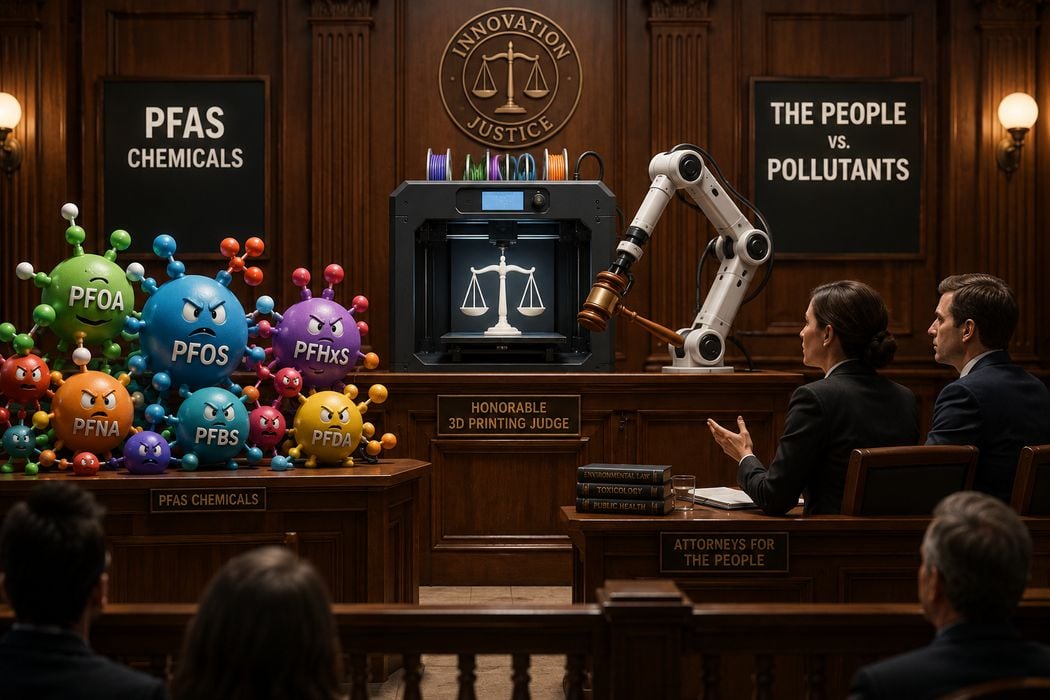
Charles R. Goulding and Preeti Sulibhavi explore how landmark PFAS litigation, municipal filtration projects, and emerging 3D printed water treatment technologies are reshaping the global fight against “forever chemicals.”
On April 29, 2026, I had the privilege of attending an award ceremony in Nassau County, New York honoring Robert Bilott, the environmental litigator from the Cincinnati law firm Taft Stettinius & Hollister. Accompanying me was my son, Charles G. Goulding, who is also an attorney. The evening was both inspiring and sobering because it highlighted one of the most important environmental battles of our era: the fight against “forever chemicals,” more formally known as PFAS.
The Taft name in the firm’s masthead traces back to former U.S. President and Supreme Court Chief Justice William Howard Taft, underscoring the firm’s long-standing place in American legal history. Yet on this occasion, the spotlight belonged to Bilott and his decades-long effort to expose the dangers of PFAS contamination.
Bilott became widely known for his groundbreaking litigation involving chemical giants such as DuPont and 3M. His legal work helped reveal that PFAS compounds, which had been used for decades in industrial applications and consumer products, posed severe environmental and health risks. These synthetic compounds were prized for their resistance to heat, water, oil, and stains. Unfortunately, those same characteristics also make them extraordinarily persistent in the environment and the human body.
PFAS chemicals are often referred to as “forever chemicals” because they do not naturally break down over time. Instead, they accumulate in soil, groundwater, rivers, lakes, and ultimately drinking water systems. Scientists have linked certain PFAS compounds to cancers, thyroid disorders, immune system impacts, liver damage, and developmental issues. One of the most troubling aspects of PFAS contamination is that these chemicals became widespread long before regulators fully understood their long-term consequences.
As part of his acceptance speech, Bilott delivered an extensive presentation recounting his long legal battle involving PFAS contamination. He described the years of investigation, scientific discovery, document review, and litigation required to bring these issues into public view. His work demonstrated how difficult it can be to identify environmental threats when the chemicals involved are not initially recognized by regulators as hazardous.
The most notable recent development involving PFAS was the landmark settlement reached with 3M. The company agreed to pay approximately US$10.3 billion to help municipalities nationwide address PFAS contamination in public water systems. The settlement represented one of the largest environmental agreements in American history and reflected growing public concern over water quality and chemical exposure.
What are PFAS “Forever Chemicals” and why are they hazardous?
Per- and Polyfluoroalkyl Substances (PFAS) are synthetic compounds prized for their resistance to heat, water, oil, and stains. They are termed “forever chemicals” because they do not naturally biodegrade, leading to bioaccumulation in soil, groundwater, and human tissue.
- Health Impacts: Exposure is linked to cancers, thyroid disorders, immune system suppression, and developmental issues.
- Environmental Persistence: PFAS compounds contaminate underground aquifers and municipal drinking water systems long before regulators identify them as hazardous.
How does the 3M Settlement impact water infrastructure?
The landmark US$10.3 billion settlement with 3M is designed to fund the remediation of PFAS contamination in public water systems across the United States.
- Infrastructure Deployment: Funds are currently being used to install large-scale granular activated carbon (GAC) and ion exchange filtration systems.
Regional Case Study: In Long Island, New York, facilities like those for the Jericho Water District/Cold Spring Harbor have deployed advanced treatment systems to protect vulnerable underground aquifers.
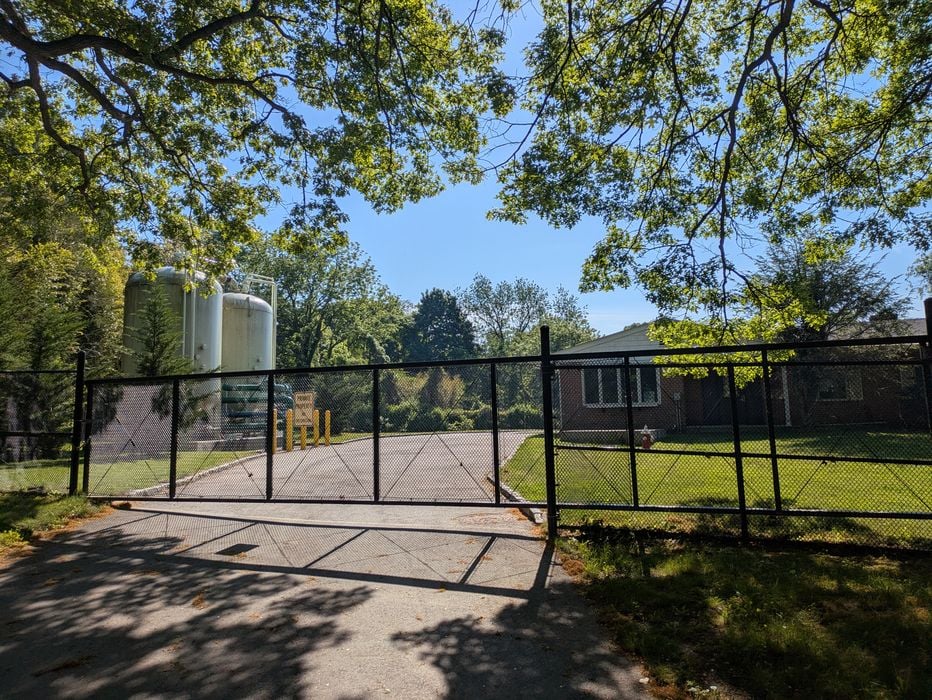
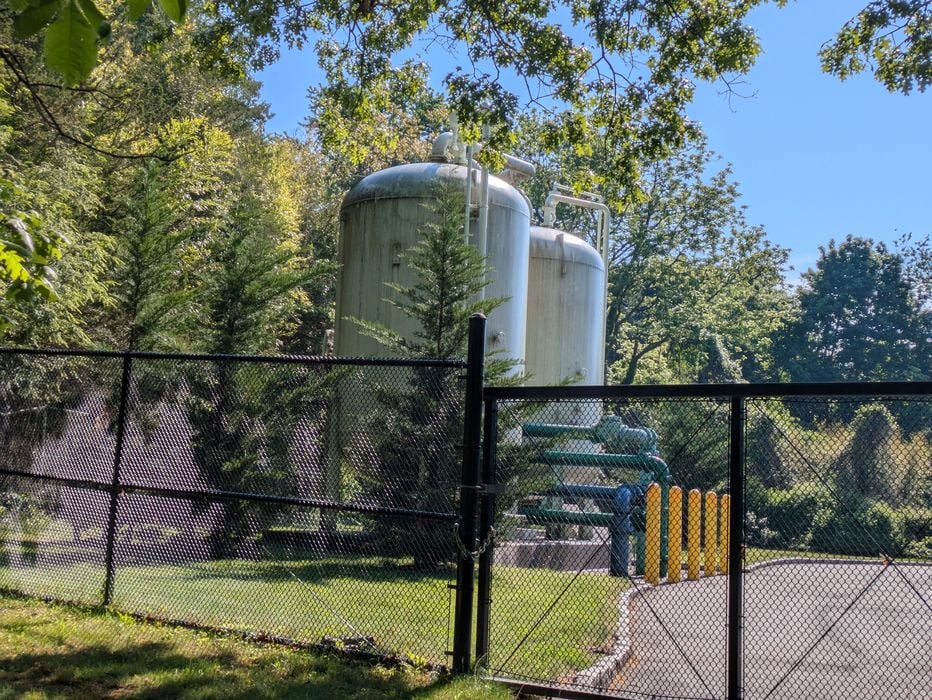
On Long Island, where we live, portions of the settlement money have already been used to install large-scale carbon filtration systems designed to remove PFAS compounds from municipal drinking water. Communities across Nassau and Suffolk Counties have faced increasing concern over groundwater contamination because Long Island relies heavily on underground aquifers for drinking water supplies. Unlike regions with major reservoirs or river systems, Long Island’s water infrastructure is uniquely vulnerable to groundwater pollutants.
One striking example is the filtration installation at the Jericho Water District/Cold Spring Harbor, where advanced treatment systems have been deployed to address PFAS contamination concerns. These systems often rely on granular activated carbon or ion exchange technologies capable of capturing microscopic chemical compounds from massive volumes of water. Similar projects are being implemented across Long Island as municipalities race to comply with increasingly strict federal and state PFAS standards.
Comparable filtration efforts are occurring nationwide. In Doylestown, Pennsylvania municipal authorities have also invested heavily in advanced filtration infrastructure to combat PFAS contamination in local drinking water supplies. Other communities in Pennsylvania, Michigan, Wisconsin, California, and elsewhere are confronting the same challenge: how to remove highly persistent chemicals from water systems that were never designed to handle contaminants of this nature.
While filtration technologies have improved significantly, they introduce an important secondary problem. Removing PFAS from water does not eliminate the chemicals entirely. Instead, the contaminants become concentrated in filtration media such as activated carbon, resins, or sludge. This creates large quantities of toxic waste material that must then be managed safely.
The disposal question is becoming one of the next major environmental dilemmas in the PFAS crisis. Sending contaminated water filtration waste to landfills risks creating additional contamination pathways through groundwater seepage or leachate runoff. Incineration presents its own concerns because some PFAS compounds may survive incomplete combustion or produce harmful byproducts. Researchers and regulators are still searching for scalable and economically viable destruction technologies capable of fully neutralizing these compounds.
This challenge is where advanced manufacturing and 3D printing technologies may begin to play an increasingly important role.
How can 3D printing technologies mitigate PFAS “forever chemical” contamination?
3D printing (additive manufacturing) provides a critical solution to the PFAS crisis by enabling the production of specialized filtration geometries and complex internal lattice structures that maximize surface area while maintaining high fluid flow rates. Unlike traditional manufacturing, 3D printing allows engineers to create customized membranes incorporating nanomaterials and specialized polymers tailored to capture microscopic chemical compounds with extreme precision. These innovations facilitate the deployment of decentralized, modular filtration systems in smaller communities and industrial sites where centralized infrastructure is unfeasible.
Water filtration has become an important and rapidly growing sector for 3D printing applications. We have authored multiple articles for Fabbaloo discussing how additive manufacturing technologies are helping improve filtration efficiency, reduce manufacturing costs, and enable customized treatment solutions. As water contamination concerns increase worldwide, engineers are turning to 3D printing to create highly specialized filtration structures that would be difficult or impossible to manufacture using conventional methods.
One promising area involves 3D printed filter geometries designed to maximize surface area while maintaining efficient water flow. Traditional filtration systems often rely on standardized components that may not be optimized for specific contaminants. With additive manufacturing, engineers can create highly complex internal lattice structures tailored to capture particular chemical compounds more effectively.
Researchers are also exploring 3D printed membranes capable of separating microscopic contaminants with greater precision. In some cases, these membranes incorporate nanomaterials or specialized polymers that improve contaminant adsorption. Additive manufacturing enables rapid prototyping and customization, allowing scientists to test multiple filtration designs much faster than with conventional manufacturing techniques.
Another advantage of 3D printing lies in decentralization. Smaller communities that cannot afford massive centralized treatment infrastructure may eventually benefit from modular 3D printed filtration systems tailored to local contamination conditions. Portable treatment units could also prove valuable for emergency response situations, industrial sites, or military applications where PFAS contamination is discovered unexpectedly.
The PFAS crisis also highlights the broader issue of how society evaluates emerging synthetic chemicals. The chemical industry continuously develops new man-made molecules for industrial, commercial, and consumer applications. Many of these compounds deliver significant performance advantages, but their long-term environmental behavior often remains poorly understood until years or decades after widespread adoption.
The Role of Innovation: 3D Printing in Environmental Engineering
As federal and state PFAS standards tighten, the additive manufacturing industry is emerging as a primary innovation driver for water treatment.
| Innovation Category | Technical Application | Impact on Remediation |
| Lattice Structures | 3D printed internal geometries | Maximizes adsorption surface area for chemical capture. |
| Advanced Membranes | Nano-material infused polymers | High-precision separation of microscopic contaminants. |
| Modular Systems | Decentralized 3D printed units | Rapid deployment for emergency response or small municipalities. |
Historically, regulators have struggled to keep pace with innovation in chemical manufacturing. Thousands of synthetic compounds enter commerce with relatively limited long-term environmental testing. In the case of PFAS, some warning signs existed for years, yet the chemicals continued to proliferate because their persistence and toxicity were not fully recognized or publicly disclosed.
This pattern raises important questions about future materials development. Emerging industries ranging from advanced batteries to semiconductors, biotechnology, and aerospace manufacturing increasingly rely on highly specialized chemical compounds. Without robust long-term environmental analysis, society risks repeating similar contamination cycles.
The PFAS experience demonstrates the importance of investigative journalism, scientific transparency, environmental law, and persistent litigation in uncovering hidden environmental threats. Bilott’s legal efforts required extraordinary perseverance because the science surrounding PFAS was initially incomplete and heavily contested. His work ultimately transformed public awareness of these chemicals and helped drive regulatory action worldwide.
At the same time, the crisis is creating substantial opportunities for innovation. Water treatment technologies are rapidly evolving as governments, municipalities, universities, and private companies invest heavily in contamination detection and removal systems. 3D printing companies working in filtration, advanced materials, fluid dynamics, and environmental engineering may find themselves at the center of a major long-term growth market.
In many respects, PFAS contamination resembles the growing concern surrounding microplastics. Both issues involve persistent synthetic materials spreading throughout ecosystems faster than society can fully understand their consequences. Both challenges require interdisciplinary solutions combining chemistry, engineering, manufacturing, environmental science, and public policy.
Protecting global water systems will almost certainly become one of the defining infrastructure and environmental challenges of the coming decades. Population growth, industrialization, climate pressures, and chemical contamination are converging to place enormous stress on freshwater resources worldwide.
For the additive manufacturing industry, this challenge presents not only a responsibility but also a significant opportunity. 3D printed filtration systems, advanced membrane technologies, modular treatment infrastructure, and next-generation environmental monitoring tools may become critical components in the global effort to secure safe drinking water.
Is 3D printing for PFAS filtration eligible for R&D Tax Credits?
Companies developing 3D printed filtration solutions, advanced membranes, or fluid dynamic optimizations for water treatment may qualify for Section 41 R&D Tax Credits. Eligible activities typically involve:
- Process of Experimentation: Testing multiple 3D printed geometries to optimize contaminant capture.
- Technical Uncertainty: Overcoming challenges related to PFAS destruction and toxic waste management from filtration media.
Last
The battle against forever chemicals is far from over. However, the combination of scientific research, legal accountability, public awareness, and technological innovation is beginning to produce meaningful progress. The work of Robert Bilott serves as a reminder that environmental problems once considered invisible can eventually be confronted when determined individuals combine persistence with evidence.
As municipalities continue installing filtration systems and researchers search for better solutions, the role of 3D printing in water treatment is likely to expand substantially. The world’s water infrastructure is entering a period of transformation, and additive manufacturing technologies may help shape the next generation of environmental protection systems.