
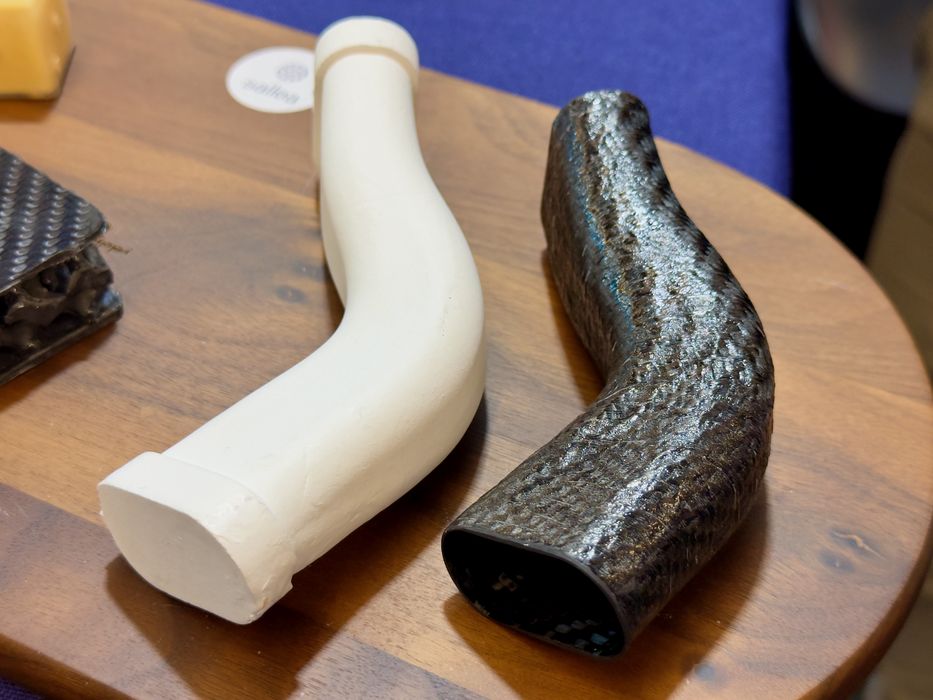
3D-printed salt could become a popular approach.
When at Formnext I heard there was a startup company proposing to 3D print salt, I first envisioned a huge machine that used ultra-high temperatures to somehow melt rock salt and deposit it into useful geometries.
That wasn’t the case at all, it turns out.
The company is Sallea, a Zurich-based startup company launched in 2023, and led by two young people. They currently have five employees.
They were attempting to make magnesium bone implants and were having considerable difficulties. This is because, of course, magnesium is rather challenging to work with. In fact, it can be quite explosive — that’s how challenging it was.
Their solution was to create a mold using 3D-printed salt. Once the mold was completed, they could produce the objects as required.
But they realized they might be on to something and formed Sallea to drive into the world of salt 3D printing.
The process is relatively straightforward:
- Use a standard binder jet 3D printing process, except with salt.
- Commercial binders are used, along with normal NACL — table salt.
- The salt is ground first into a very fine powder.
- The powder has a very specific and proprietary mix of grain sizes, which is one of the keys to the process.
- A coating is added to the print once done.
- The resulting salt part can be used as a mold for poured materials or composite wraps.
- The salt is then dissolved with warm water.
This sounds extremely simple, but it turns out the process requires significant tuning, and that’s what Sallea is all about.
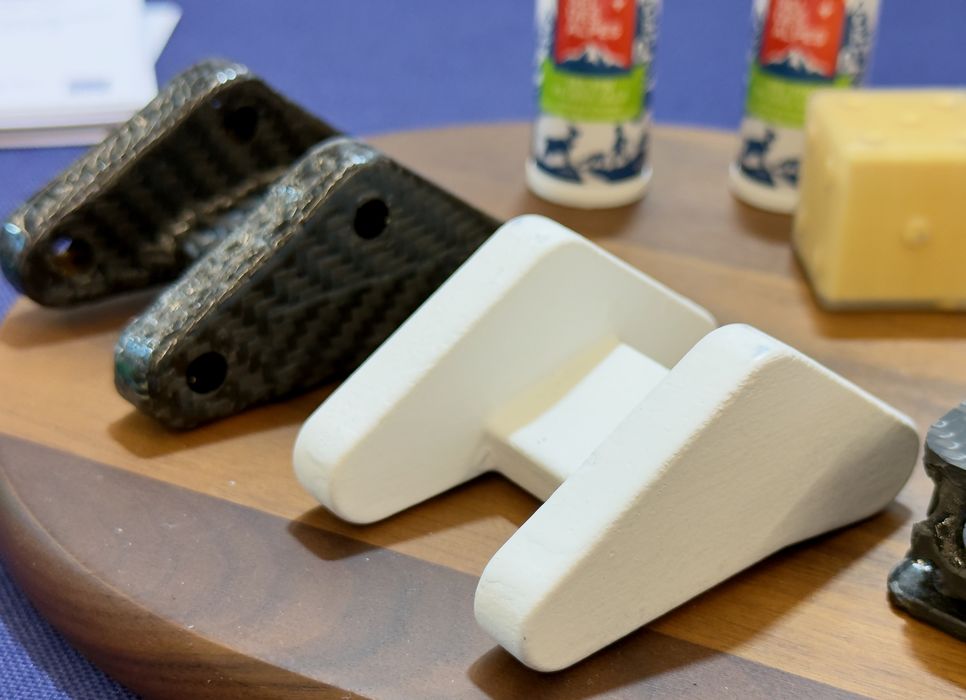
Currently, their process is capable of handling materials up to 140C, but they told us they are working on a way, presumably with a different binder, to reach over 600C. This would enable their salt molds to be used for some types of metal casting.
The benefit here is that the material used, salt, is extremely inexpensive. That’s quite different from most 3D print materials, so there could be a significant advantage here. Also, the binder jet process can be scaled up to produce very large molds with fine details, due to the combination of grain size and binder jet technology.
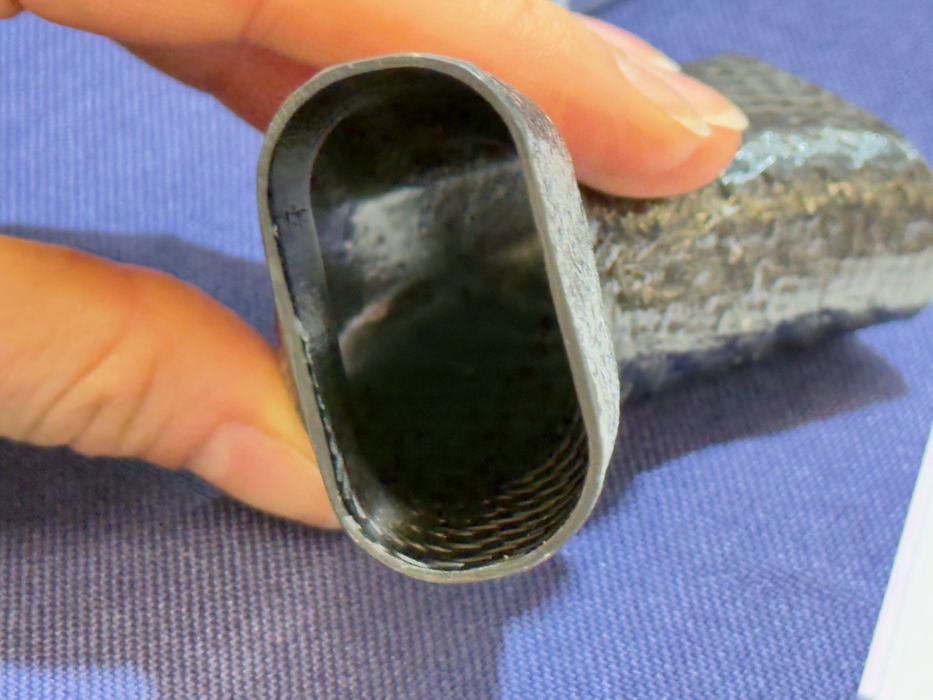
Here you can see inside a part, where the sides are perfectly smooth. This is the kind of interesting geometry made possible with Sallea tech.
On that, it also turns out that Sallea does not produce 3D printers. They are a materials play, as they partner with existing providers in this space, specifically ExOne. That company already produces equipment for making molds, so this is a natural fit.
It’s still early days for Sallea, but their technology appears very promising. I suspect that if it is implemented widely and does reduce costs, we could see an increase in metal/plastic casting using their materials.
Via Sallea