Charles R. Goulding and Preeti Sulibhavi examine Devonics’ growing automation ecosystem, highlighting its innovative end-of-arm tooling (EOAT), strategic robotics partnerships, and the role of 3D printing in rapid product development.
As industrial automation continues to expand across manufacturing, logistics, and material handling environments, companies are increasingly seeking faster ways to design, test, and deploy robotic systems. San Diego-based Devonics has positioned itself at the intersection of robotics, collaborative automation, and rapid product development, utilizing additive manufacturing and advanced engineering techniques to shorten deployment cycles and create highly customized automation solutions.
Founded as a provider of collaborative robotic systems and automation technologies, Devonics focuses on helping manufacturers automate repetitive processes through cobots, autonomous mobile robots (AMRs), vision systems, custom end-of-arm tooling (EOAT), and turnkey automation cells. The company’s philosophy centers on modularity, rapid deployment, and ease of integration, allowing manufacturers to adopt automation without the lengthy implementation cycles traditionally associated with industrial robotics. According to Devonics, its systems are designed around modular architectures, simplified operation, and scalable automation strategies that can be adapted to a wide range of industries.
Collaborative Robots at the Core
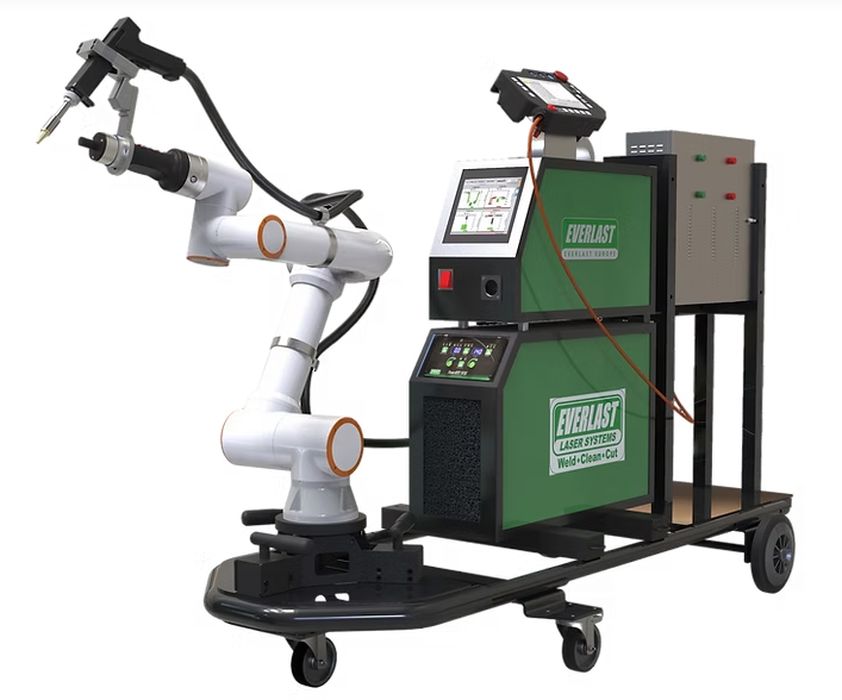
One of Devonics’ primary business areas is collaborative robotics. The company serves as Fairino’s exclusive North American partner and supplies a range of Fairino cobots designed for welding, machine tending, palletizing, material handling, and pick-and-place applications.
The Fairino product family includes payload classes ranging from compact units such as the FR3 through larger systems such as the FR30, enabling customers to match robot capabilities to specific production requirements. Devonics emphasizes the price-performance ratio of these systems while also providing engineering support, training, integration services, and lifecycle assistance.
Unlike traditional industrial robots that often require extensive guarding and specialized programming, collaborative robots are designed to work safely alongside human operators. Devonics promotes these systems as a way for manufacturers to address labor shortages, increase throughput, and improve process consistency while maintaining operational flexibility.
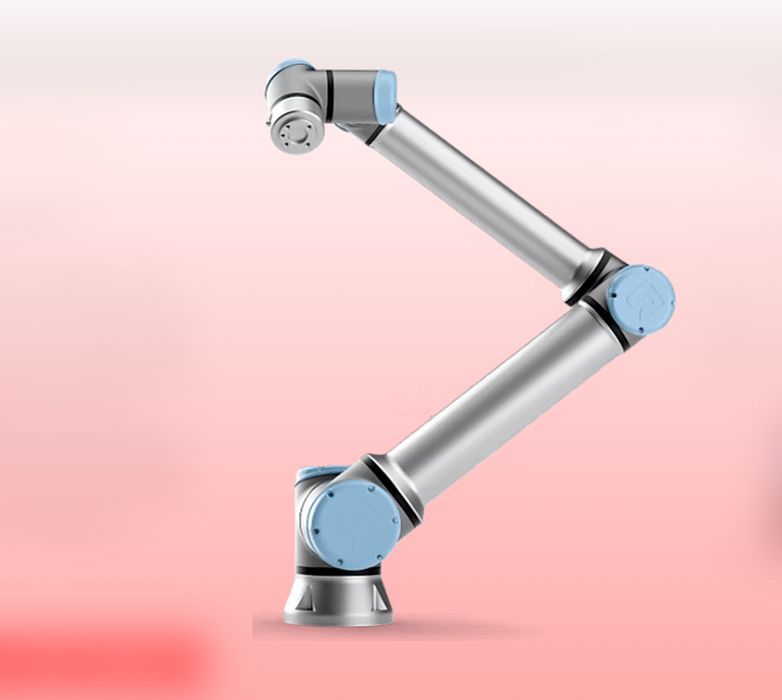
R&D Tax Savers handles the R&D tax credits for one of the nation’s leading integrators of Universal’s cobots.
Custom Automation Solutions
Beyond robot distribution, Devonics develops complete automation cells tailored to customer workflows. The company’s automation portfolio includes robotic welding systems, CNC machine tending solutions, palletizing cells, pick-and-place systems, and specialized handling equipment.
Its automation platforms integrate multiple technologies including:
- Collaborative robots
- Vision systems
- Custom EOAT
- Conveyors and fixtures
- Human-machine interfaces (HMIs)
- Autonomous mobile robots
The company also offers cleanroom-compatible and hygienic automation configurations suitable for pharmaceutical, biotechnology, and food-processing environments. These systems can incorporate sealed components, washdown-safe materials, and compliance-oriented documentation to support regulated manufacturing environments.
A notable example is Devonics’ CNC machine-tending platform, which combines Fairino cobots with custom vacuum grippers and Vention machine-tending bases to create modular production cells that can be deployed in a matter of weeks.
Additive Manufacturing as an Engineering Tool
While Devonics is best known for robotics and automation, additive manufacturing appears to play an important role in its engineering workflow.
For automation providers, 3D printing offers significant advantages during product development. Custom grippers, robotic fixtures, cable-management components, sensor mounts, and tooling adapters can be designed, printed, tested, and revised in days rather than weeks. This rapid iteration process is especially valuable when building automation systems for customers with unique product geometries or handling requirements.
The company’s emphasis on custom EOAT development strongly suggests the use of additive manufacturing technologies to accelerate prototyping and reduce development costs. Because end-effectors frequently require application-specific geometries, additive manufacturing enables engineers to produce lightweight and highly customized designs without the tooling expenses associated with conventional manufacturing.
This approach reflects a broader industry trend in which robotics companies increasingly rely on additive manufacturing to develop functional prototypes, lightweight robot accessories, and customized gripping solutions before transitioning selected components into production. The combination of robotics and additive manufacturing is becoming particularly valuable as manufacturers demand faster deployment and more flexible automation systems.
End-of-Arm Tooling: A Key Differentiator
One of Devonics’ most significant offerings is its growing portfolio of end-of-arm tooling solutions.
The company states that it designs, manufactures, and supplies robotic end effectors for a wide range of industrial applications while also creating custom EOAT solutions for unique customer requirements.
Several recent product offerings illustrate the direction of Devonics’ EOAT strategy.
Another major end-of-arm tooling integrator is Stabilus De-Sta-Co. R&D Tax Savers’ President, Charles R. Goulding, filed for their original credit over 25 years ago.
Soft 4 Finger Gripper
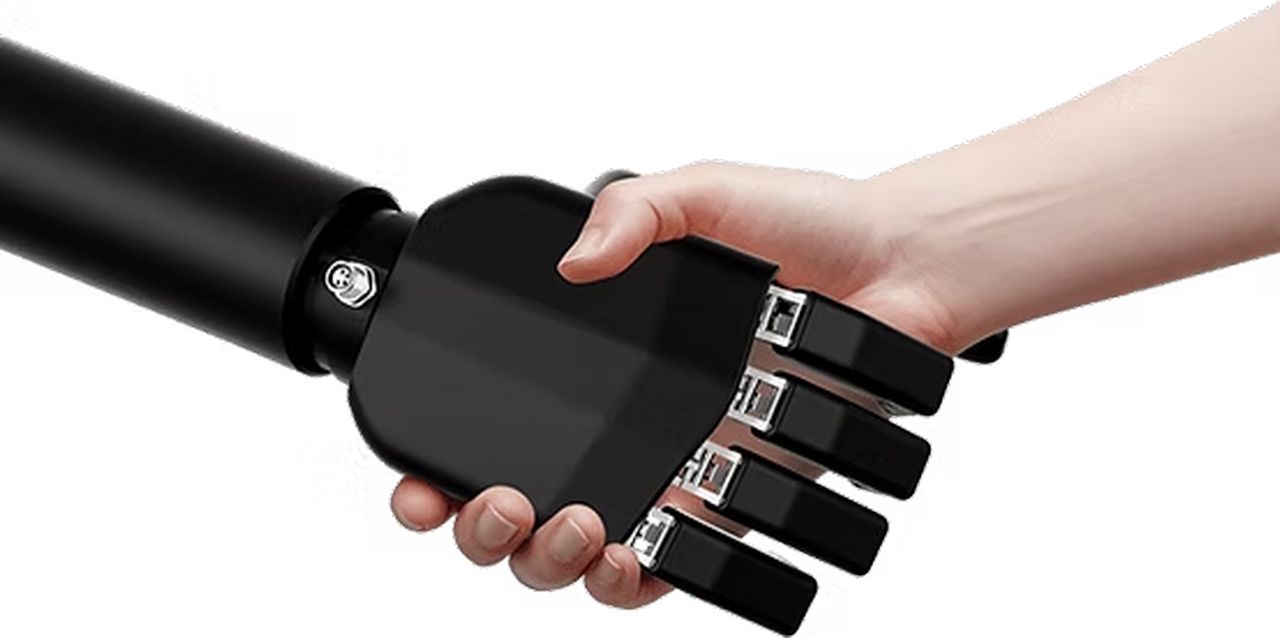
One of the company’s newer products is the Soft 4 Finger Gripper, marketed as the “Gentle Pro.” This adaptive soft robotic gripper uses four independently conforming fingers to establish broad contact surfaces when handling delicate or irregularly shaped products. Unlike pneumatic systems, the gripper operates electrically and is intended for applications in food processing, cosmetics handling, and laboratory automation.
The design reflects growing industry interest in soft robotics, where compliance and adaptability allow robots to manipulate fragile products that would be difficult to handle using conventional rigid grippers.
Adaptive Gripper Series
Devonics also offers a family of adaptive two-finger and three-finger grippers designed for flexible industrial handling tasks. These EOAT systems are intended to accommodate varying part geometries while reducing the need for dedicated tooling. Such adaptability is increasingly important in high-mix manufacturing environments where product configurations frequently change.
Combined with the company’s custom engineering capabilities, these gripper families provide a foundation for highly specialized automation deployments.
Can Automation Integrators Claim the R&D Tax Credit for Custom Additive Manufacturing and Robotics Solutions?
Yes. Robotics integrators and automation providers like Devonics can claim the Section 41 Research and Development (R&D) Tax Credit for the Qualified Research Expenses (QREs) incurred while designing, prototyping, and validating custom end-of-arm tooling (EOAT), modular automation cells, and rapid additive manufacturing workflows.
How Does Custom EOAT Engineering Qualify for the Research and Development Tax Credit?
Developing customized end-of-arm tooling to handle unique product geometries introduces significant technical uncertainty. When conventional rigid grippers fail to meet payload or fragility parameters, the engineering hours, iterative CAD modeling, and raw materials used to develop proprietary solutions qualify as QREs.
R&D Case Study: Adaptive Robotics Engineering
- Industry: Industrial Automation & Robotics
- Innovation: Development of the “Gentle Pro” Soft 4 Finger Gripper, replacing traditional pneumatic systems with an electrically driven, independently conforming soft robotic architecture.
- Impact: Eliminated technical uncertainty surrounding fragile material handling in regulated pharmaceutical and food-processing environments while creating a high-performance, compliant business component.
Does Utilizing Additive Manufacturing in Robotics Deployment Qualify for Tax Incentives?
Yes. While additive manufacturing is an engineering tool, utilizing 3D printing to accelerate prototyping, test functional lightweight robot accessories, and manufacture application-specific gripping solutions represents a clear process of experimentation.
| Activity Category | Qualifying R&D Sub-Component | Tax Treatment (Section 41 vs. Section 174) |
| Prototyping | 3D printing custom grippers, sensor mounts, and tooling adapters to verify fit and function. | Section 41: Eligible for immediate tax credit via employee hours and prototype material costs. |
| Simulation & Offline Programming | Utilizing platforms like RoboDK to simulate kinematic profiles and optimize robotic paths before deployment. | Section 174A: Software development and advanced simulation modeling. |
| System Integration | Combining Fairino cobots, vision systems, and custom HMIs into turnkey, washdown-safe cleanroom cells. | Section 41: Eligible where iterative testing is required to resolve multi-technology interface uncertainty. |
Strategic Partnerships
Several notable partnerships strengthen Devonics’ market position.
The most prominent relationship is its exclusive North American partnership with Fairino, giving Devonics access to a broad portfolio of collaborative robotic systems.
The company also identifies itself as a primary channel partner for DH Robotics end effectors, providing customers with access to a variety of advanced gripper technologies.
Additional collaborations appear throughout Devonics’ automation offerings. Its machine-tending solutions incorporate Vention automation platforms, demonstrating an ecosystem approach in which robotics, automation hardware, and software are combined into integrated production cells.
Devonics also highlights the widespread adoption of RoboDK software within its ecosystem, leveraging simulation and offline programming technologies to accelerate deployment and optimization of robotic applications.
Interestingly, no publicly available evidence was found indicating formal partnerships with major 3D printing manufacturers such as Stratasys, 3D Systems, EOS, HP, Desktop Metal, or Markforged. While additive manufacturing likely plays an internal role in prototyping and custom tooling development, the company does not currently advertise dedicated alliances with leading additive manufacturing vendors.
Looking Ahead
As manufacturers continue seeking flexible automation solutions, Devonics is building a business around modular robotics, custom tooling, and rapid deployment. Its combination of collaborative robots, automation engineering, and customized EOAT positions the company to address a growing range of industrial automation challenges.
For the additive manufacturing industry, Devonics represents a compelling example of how 3D printing increasingly serves as an enabling technology within robotics. Rather than functioning solely as a production method, additive manufacturing is becoming a critical development tool that allows automation providers to create customized robotic solutions faster, reduce engineering risk, and accelerate innovation.