Charles R. Goulding and Preeti Sulibhavi make the case that, as Gaza faces the dual task of reconstructing shattered infrastructure and restoring lives, 3D printing offers a disruptive, scalable bridge to rebuild both buildings and bodies.
In 2024, we published on the emerging role of 3D printing in post-conflict reconstruction, suggesting that the end of open hostilities in Gaza might open a window for technological leapfrogging. That analysis, in hindsight, may have been premature—but it anticipated a reality now increasingly urgent. The scale of destruction and human injury in Gaza has only deepened. As planners confront the daunting task of rebuilding, both physical infrastructure and human lives, the tools of 3D printing—particularly in concrete construction and prosthetics—must be considered not as fringe experiments but as core strategic options.
In this article, we present updated data on ruined buildings, medical infrastructure, and staggering prosthetic needs, and then survey advances in 3D concrete printing and 3D printed prostheses. Planners and stakeholders engaged in Gaza’s reconstruction should systematically analyze global developments in both domains. Our series of Fabbaloo articles (on 3D construction and prosthetics) provide the relevant and conceptual grounding; we conclude with recommendations for integrating these technologies into reconstruction strategies.
The Scale of Destruction: Buildings, Hospitals, and Human Bodies
Rubble and Infrastructure
Before the recent hostilities, Gaza had 36 hospitals serving a population of roughly 2.3 million—a ratio of one hospital per 60,500 people. Since then, much of that infrastructure has been destroyed or severely damaged. Today, only 16 of those hospitals are partially functioning, with many medical services shuttered. The UN, EU and World Bank jointly estimate that Gaza’s reconstruction will require more than USD 50 billion over a decade just to restore core systems (health, power, water, roads, housing).
Beyond hospitals, entire residential blocks, schools, water and sewage networks, and roads require rebuilding. While official counts vary, the destruction is pervasive: thousands of homes have been reduced to rubble across Gaza’s north, central, and southern zones. Reconstruction planners will face huge logistical, regulatory, and financing challenges.
The Prosthetic Crisis: Children Among the Wounded
The human toll in terms of amputations is equally harrowing. According to recent data, over 123,000 people in Gaza have been injured since October 2023; among them, more than 4,000 have lost one or more limbs. The World Health Organization and aid groups estimate that around 6,000 prosthetic devices are needed—including many for children. In one report, Gaza has been described as having “the world record for the highest number of child amputees per capita.”
Local capacity is nearly nonexistent. The Artificial Limbs and Polio Center (ALPC) in Gaza City, supported by the ICRC, has only a handful of prosthetic technicians—often operating without reliable supplies, printing, or materials. In some months, only 180 prosthesis have been fitted, out of the thousands needed, with many cases left untreated. The constraints are compounded by the fact that children grow and thus must receive new or adjusted prostheses frequently—a challenge under any circumstances, but especially in a region under blockade and with disrupted supply chains.
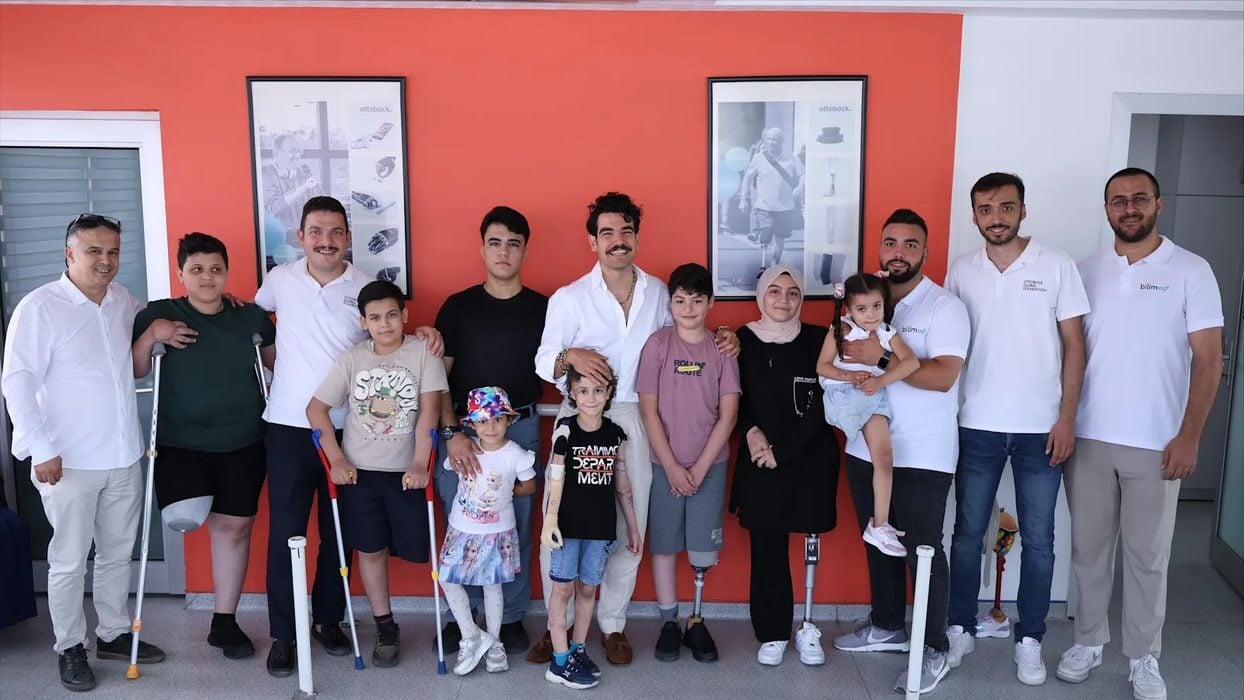
Amid these immense demands, NGOs such as Humanity & Inclusion have begun operating temporary prosthetic and rehabilitation centers (for example, in Khan Younis) to provide interim devices and therapy. UNICEF has also launched a pilot program to deliver 3D printed prosthetic limbs for war-injured children, based on digital scans and modular parts, costing a fraction of conventional prostheses. Meanwhile, Ottobock and its foundation have deployed mobile container workshops and relocated patients to clinics in Turkey for fitting and therapy.
Thus the scale is clear: tens of thousands of facilities and homes must be rebuilt, while thousands of injured—many children—await prosthetic care. The gap is vast.
3D Printing in Construction: From Novelty to Strategy
3D concrete printing has matured dramatically in recent years, transitioning from niche demonstrations to real, permitted buildings. In the context of Gaza, where rapid, low-cost, adaptable housing is essential, these advances merit serious attention.
The UAE as Regional Leader
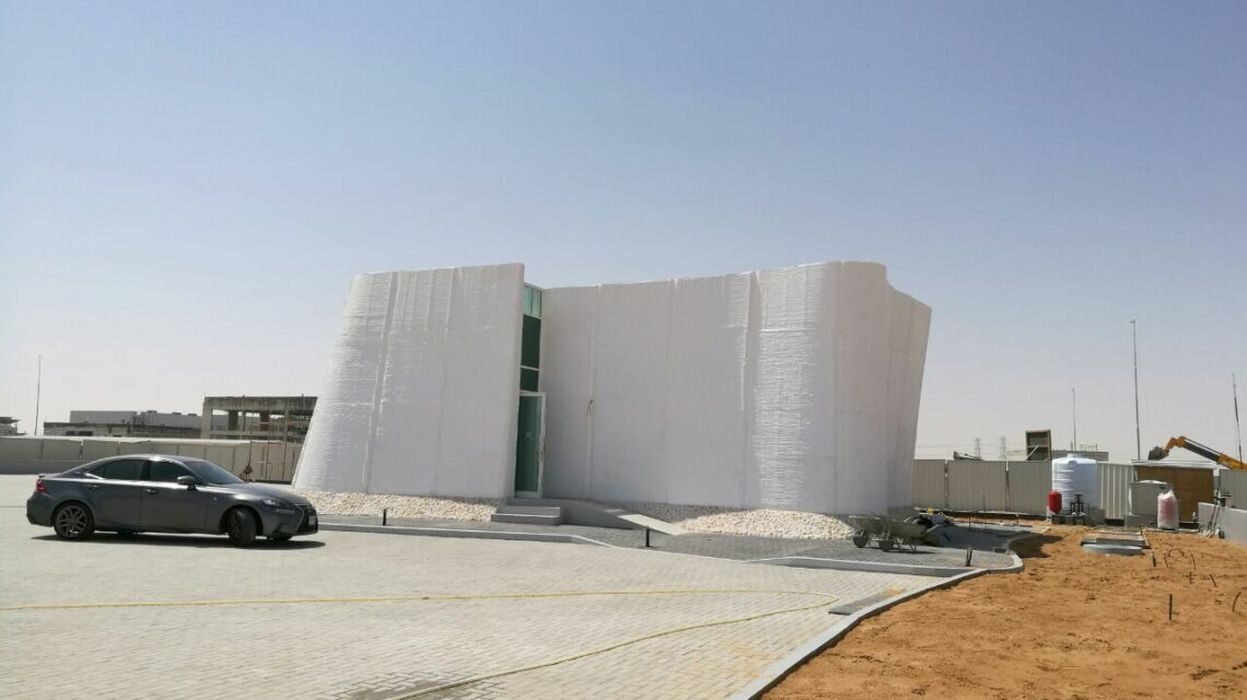
The United Arab Emirates, especially Dubai and Abu Dhabi, is emerging as a regional hub for 3D concrete construction. Dubai has adopted Decree No. 24 of 2021 to regulate the use of 3D printing in construction, embedding the technology into its municipal governance. CyBe Construction, a Netherlands and UAE–based firm, has actively deployed concrete 3D printing in the UAE, including the R&Drone Laboratory in Dubai (which achieved Guinness World Record status as the first 3D printed lab) on behalf of the Dubai Electricity & Water Authority. CyBe also aims to reach a target of 25 percent of buildings printed by 2030.
Other local firms, like 3DVinci Creations in Dubai, offer large-scale 3D concrete printing, design consulting, and project partnerships across the UAE and Saudi Arabia. 3DVinci Creations BESIX 3D (a branch of the BESIX Group) similarly promotes scalable, fast, low-cost 3D concrete solutions. Globally, COBOD is a leading supplier of construction-scale 3D printers and has supplied systems to Dubai, including for the first 3D printed villa in the city. COBOD Apis Cor also highlights its work on Dubai’s largest 3D printed office, presenting robotic construction methods that could translate into dense, scalable deployments.
The UAE’s institutional, regulatory, and development infrastructure places it in a unique position to serve as a technical collaborator or even reconstruction partner for Gaza. Its manpower, capital, and experience could be leveraged to spur pilot 3D printed housing blocks in Gaza or along the Gaza border towns.
Technical and Operational Considerations
To bring 3D construction to Gaza at scale, planners must confront multiple factors:
- Material supply and local adaptation: 3D concrete printing (printcrete) requires carefully tuned mixes, admixtures, and pumps. Local sourcing of aggregates and additives must be validated to perform under Gaza’s climatic and logistical constraints.
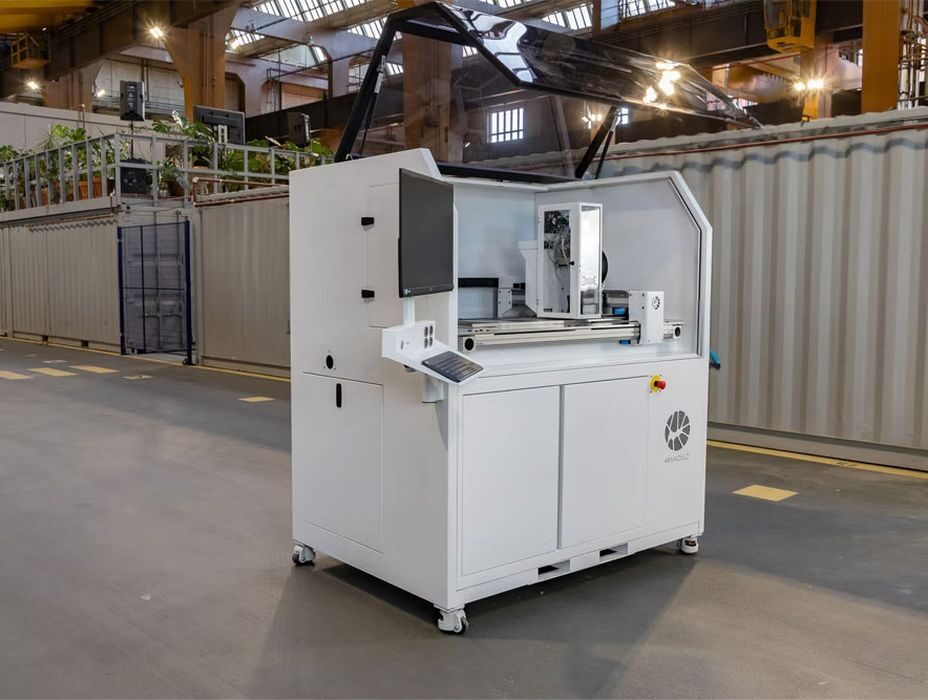
- Printer geometry and scale: Gantry, robotic-arm, or crawler platforms each bring tradeoffs. For example, the MaxiPrinter (by Constructions-3D) claims fast deployment (15–30 minutes) and modular vertical printing capacity. Multi-printer farms might be needed to scale to entire neighborhoods.
- Regulation and structural codes: Many jurisdictions lack specific codes for 3D printed concrete. Dubai’s regulatory decree is a model. Gaza should anticipate needing performance-based standards, load tests, seismic and wind certification, and retrofitting protocols.
- Infrastructure integration: 3D printing must integrate plumbing, electrical conduits, insulation, and façade interfaces. Some systems embed channels and conduits directly during printing. The housing “shell + fit-out” model should be optimized for speed and modularity.
- Labor and training: Reconstruction efforts should train local engineers, technicians, and operators in 3D construction methods, ideally co-located with UAE or international partners.
In short, 3D concrete printing is no longer an academic curiosity—it is a mature tool that, with proper planning, could accelerate reconstruction in Gaza with lower cost, greater flexibility, and shorter timeframes.
3D Printed Prosthetics: Modular Mobility for Amputees
In parallel with rebuilding physical infrastructure, Gaza must also rebuild lives. 3D printing in the medical sphere—particularly prosthetics—is advancing rapidly, offering scalable, customizable, and lower-cost limb components.
Advances and Field Deployments
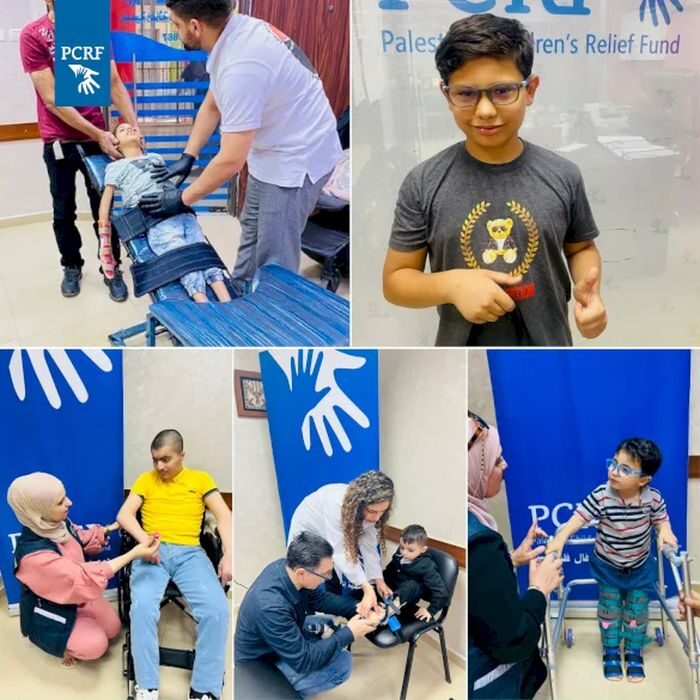
UNICEF’s initiative to launch 3D printed prosthetic limbs for war-injured children in Gaza is a clear example. Their pilot involves a production facility in Jordan that receives digital scans (e.g., via smartphone), then prints limb modules for fitting, replacing costly, slow traditional fabrication. They claim that 3D printed prosthetics cost about one-sixth of standard prostheses. Because children grow, these modular designs (with interchangeable parts) are especially valuable in contexts requiring frequent resizing.
Ottobock, one of the leading prosthetics firms globally, has contributed significantly. Its initiatives in Gaza include mobile container workshops deployed near crisis zones and treatment of children outside Gaza—e.g., 21 Gaza children fitted with prostheses in Türkiye via Ottobock’s Patient Care facility. Ottobock and its global foundation have thus acted as both direct implementers and demonstration partners.
Beyond Gaza, Ottobock is a recognized name in prosthetics, often working at the intersection of mechanical design, mechatronics, sensor integration, and digital fitting. Its experience in remote, high-volume, low-cost prosthesis offers lessons for Gaza reconstruction.
Other 3D medical efforts include academic and humanitarian prototypes allowing locally printed sockets, lightweight polymers, and low-cost actuators. The convergence of scanning technology, parametric design, and printable composite materials positions 3D prosthetics as a scalable backbone for rehabilitation in conflict zones.
Key Factors for Gaza Implementation
- Scan-to-print pipelines: Field teams (in Gaza or border clinics) need portable 3D scanners (or smartphone depth cameras) to capture limb/stump geometry, feed into digital design templates, and transmit to printing hubs.
- Distributed printing hubs: Instead of central fabrication, multiple regional hubs (Jordan, Egypt, in-country) can reduce transport constraints and delays—especially vital given Gaza’s restrictions.
- Material and component sourcing: Prosthetic devices often require a combination of plastics, carbon fiber, electronics (e.g., sensors), fasteners, and adjustable connectors. Ensuring supply lines for these parts will challenge blocks and border control.
- Training and knowledge transfer: Local orthotists and prosthetists must be trained in additive workflows, scanning, post-processing (finishing, smoothing, strength validation), and fitting protocols.
- Lifecycle and maintenance: Prosthetics need periodic upkeep, re-fitting, and replacement, especially for children. A sustainable system must ensure spare parts, consumables, and refurbishment capacity within or near Gaza.
- Regulatory and medical standards: Devices must meet safety, biomechanical, and medical certification standards to avoid injury, discomfort, or failure.
Our Fabbaloo Articles: Maps to the Terrain
In support of these ideas, our Fabbaloo series has addressed both construction-scale 3D printing and medical additive manufacturing. In the construction strand, we traced the trajectory from early gantry-style concrete printers to regional adoption in the UAE, identifying bottlenecks in code, materials, site integration, and scaling models. The prosthetics strand explored emerging modular 3D printed limb systems, humanitarian pilots, and design for growth in pediatric users.
Together, these articles act as handbooks: they combine case studies, technical challenges, deployment lessons, and open research questions. For planners in Gaza, our construction articles provide a roadmap for printer deployment, neighborhood phasing, and regulatory alignment. The prosthetic articles offer templates for designing modular limb programs, training clinics, and integrating scanning-to-printing pipelines.
Recommendations for Gaza Reconstruction Strategy
Moving from concept to action requires a coordinated, phased approach that integrates both 3D construction and prosthetic manufacturing into Gaza’s broader rebuilding plan. A logical first step would be to establish pilot reconstruction zones—targeted districts or border-adjacent refugee areas—where 3D printed housing and community structures can be tested and refined. Collaboration with UAE-based firms such as CyBe, 3DVinci Creations, BESIX 3D, and COBOD would provide both the technological expertise and regulatory experience necessary to ensure these pilots succeed. These companies have already demonstrated large-scale 3D concrete printing in the UAE under supportive municipal frameworks, making them ideal partners to guide Gaza’s initial deployments.
Alongside construction pilots, capacity building must be embedded from the start. Local engineers, architects, and technicians should be trained directly in 3D printing technologies through programs supported by UAE institutions or international NGOs. The goal is not just to import equipment but to cultivate long-term technical independence. These training centers can double as fabrication hubs, where modular components for housing and prosthetics are produced simultaneously, streamlining reconstruction logistics.
For infrastructure, a hybrid strategy would likely work best. 3D printed concrete shells can provide the structural backbone of new housing, while traditional infill systems handle plumbing, insulation, and electrical work. This approach balances speed and resilience, allowing flexible adaptation to local materials and construction conditions. At the same time, parallel investment in prosthetic production must address the humanitarian crisis among Gaza’s amputees. A distributed network of scanning and printing hubs—based in Gaza, Jordan, and Egypt—could minimize supply chain disruptions. These hubs would receive digital scans from field clinics and produce prosthetic parts locally, following the UNICEF and Ottobock models that are already proving effective in nearby regions.
A data-driven planning process is critical for success. Drone surveys, remote sensing, and GIS mapping should be used to quantify destruction, prioritize rebuilding zones, and plan resource allocation. Hospitals, schools, and dense residential areas should receive top priority. Financing mechanisms must evolve as well; donors should focus not only on funding materials and physical infrastructure, but also on acquiring 3D printers, materials, and training infrastructure. The real value of this effort lies in building systems that enable ongoing production, not one-time projects.
Equally important is establishing robust safety and certification standards. Gaza’s reconstruction will require clear performance criteria for printed concrete structures, as well as biomechanical and medical standards for prosthetics. These frameworks can draw from Dubai’s 3D construction regulations and existing international prosthetics certification systems. By codifying quality assurance early, Gaza can ensure that its new infrastructure is both durable and compliant with international norms.
Finally, every pilot should be treated as an experiment in continuous improvement. Data collected from early printed homes—such as durability, energy efficiency, and occupant satisfaction—should feed directly into the next generation of construction projects. Likewise, feedback from prosthetic recipients can help refine limb design, fit, and comfort. Over time, this feedback loop can transform Gaza’s reconstruction into a living laboratory of applied innovation. By linking technology transfer, humanitarian response, and education, Gaza has the opportunity not merely to rebuild, but to redefine how post-conflict societies recover—with speed, dignity, and self-reliance.
The Research and Development Tax Credit
The now permanent Research and Development (R&D) Tax Credit is available for companies developing new or improved products, processes, and/or software. 3D printing can help boost a company’s R&D Tax Credits. Wages for technical employees creating, testing, and revising 3D-printed prototypes can be included as a percentage of the eligible time spent on the R&D Tax Credit. Similarly, when used as a method of improving a process, time spent integrating 3D printing hardware and software counts as an eligible activity. Lastly, when used for modeling and preproduction, the costs of filaments consumed during the development process may also be recovered.
Whether it is used for creating and testing prototypes or for final production, 3D printing is a great indicator that R&D Credit-eligible activities are taking place. Companies implementing this technology at any point should consider taking advantage of R&D Tax Credits.
Conclusion
The scale of destruction in Gaza is overwhelming. But at the intersection of necessity and innovation lies opportunity. 3D concrete printing and 3D-printed prosthetics are no longer hypothetical technologies—they are proven, scalable, and adaptable methods with real-world deployments around the globe. In the UAE, leadership in regional infrastructure printing has laid out a blueprint; in the medical domain, NGOs and firms like Ottobock and UNICEF are already deploying additive prosthetic strategies in Gaza’s periphery. For reconstruction planners, the imperative is clear: do not re-build the past. Integrate 3D printing as a core pillar of strategy—from houses to limb implants. Use the distilled insights from our Fabbaloo work to guide pragmatic deployment. As Gaza rebuilds, it has the chance to leapfrog outdated methods, restore bodies and homes in tandem, and reassert dignity for a generation wounded by war.