
Charles R. Goulding and Jacob Nolan detail how Honda leverages 3D printing to accelerate prototyping, preserve legacy vehicles, and modernize global manufacturing operations.
Honda Motor Co., Ltd. operates at the intersection of engineering discipline, global manufacturing scale, and long-term technological investment. As the automotive and mobility sectors undergo rapid transformation driven by electrification, software integration, and supply-chain localization, manufacturers face increasing pressure to improve speed, flexibility, and cost efficiency across their production networks. Within this environment, advanced manufacturing tools have become essential to maintain competitiveness. Among these tools, additive manufacturing, commonly referred to as three-dimensional printing, has emerged as a practical enabler of engineering agility rather than a replacement for traditional mass production.
Honda’s global manufacturing model is built on high-volume, precision-based processes supported by continuous improvement in tooling, prototyping, and product development. While the company remains best known for its combustion engines, motorcycles, automobiles, and power equipment, its internal manufacturing ecosystem increasingly incorporates digital engineering methods and rapid fabrication technologies. Additive manufacturing now plays a growing role in supporting Honda’s research, development, and production infrastructure across multiple business lines.
Honda’s R&D Infrastructure and Commitment to Engineering Excellence
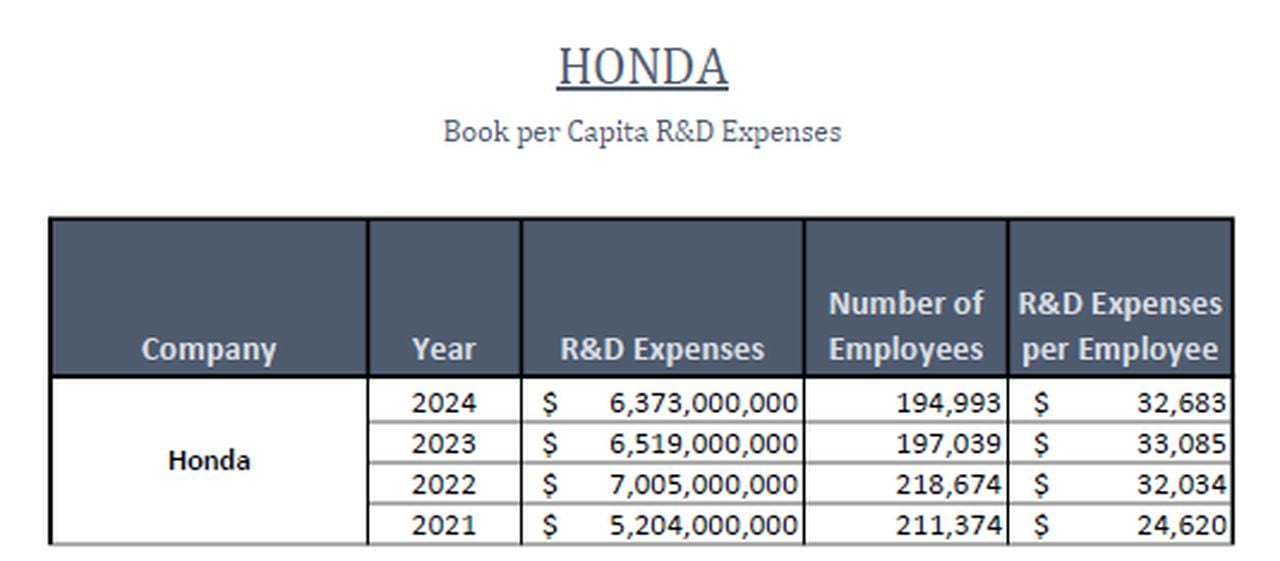
Honda has long positioned research and development as a central pillar of its corporate strategy. The company operates a network of advanced R&D facilities across Japan, North America, and Europe, where engineers develop new powertrain technologies, mobility systems, and manufacturing processes. These centers support both near-term product development and long-horizon innovation, including electrification, robotics, and sustainable manufacturing.
R&D investment at this scale requires tools that enable rapid iteration, validation, and cost-effective experimentation. Additive manufacturing supports this objective by allowing engineers to design, test, and refine components without the lead times associated with traditional tooling or external suppliers. Prototypes that once required weeks of machining can now be produced internally in days, accelerating development cycles and reducing bottlenecks between design and testing.
The Practical Role of 3D Printing in Honda’s Manufacturing Operations
Within Honda’s engineering and production environment, additive manufacturing functions primarily as an operational and developmental support technology. Typical applications include prototype components, custom tooling, fixtures, jigs, sensor mounts, brackets, housing, and replacement parts for testing equipment. These items are essential to production efficiency but are often low-volume, highly customized, and inefficient to source through conventional manufacturing channels.
By producing these components internally, Honda reduces dependency on external suppliers and shortens development timelines. Engineers can modify designs, print revised versions, and immediately test them on physical systems, enabling faster problem resolution and improved design accuracy. This capability is particularly valuable in powertrain development, vehicle assembly optimization, and robotics research, where precise fit and rapid iteration directly affect performance outcomes.
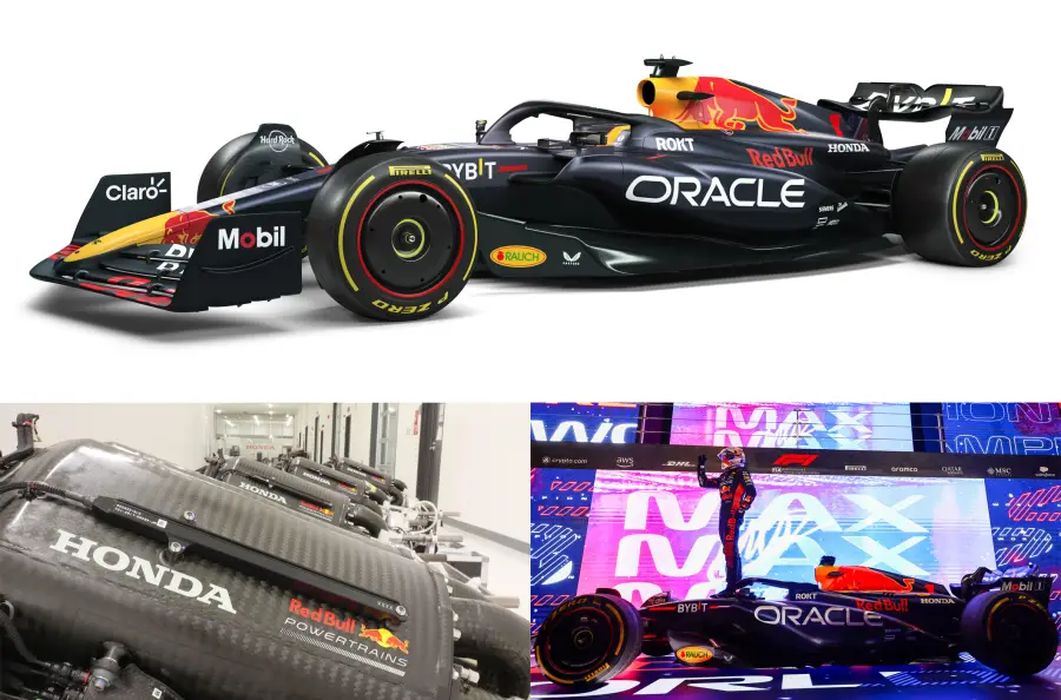
Beyond prototyping, additive manufacturing also supports limited-run production of specialized components, especially for experimental vehicles, motorsports applications, and restoration projects. In these contexts, traditional tooling investments are difficult to justify, making 3D printing an economically efficient alternative that preserves engineering fidelity without excessive cost.
This operational use of additive manufacturing is also examined in the article Nikon 3D Printing, published on Fabbaloo in July 2025, which analyzed how major manufacturers are integrating advanced 3D printing into real-world production environments. The Nikon article specifically identifies Honda’s use of 3D printing for jigs, fixtures, and end-use components that are lighter, more customizable, and faster to produce than traditionally manufactured alternatives. By situating Honda alongside other industrial adopters of metal additive manufacturing, the article demonstrates that Honda’s application of 3D printing is not experimental but embedded in practical manufacturing workflows that improve tooling efficiency, assembly flexibility, and specialized part production.
Preserving the Past Through Advanced Manufacturing
Honda’s adoption of additive manufacturing extends beyond new product development into historic vehicle restoration and long-term product support, an area that has recently become a strategic priority. As interest in classic Honda automobiles, motorcycles, and performance models continues to grow among collectors and enthusiasts, the availability of discontinued and low-volume replacement parts has emerged as a major constraint. Many original components are no longer produced, tooling has been retired, and traditional suppliers often lack the economic incentive to reproduce small-batch parts for aging platforms.
To address this challenge, Honda has begun leveraging 3D printing as a core technology within its heritage and restoration initiatives. Through high-resolution scanning, digital modeling, and additive manufacturing, engineers can recreate rare or obsolete components directly from original parts or archived design data. This process allows Honda to manufacture replacement components with exceptional dimensional accuracy while preserving the original geometry, fit, and functional performance of legacy designs. Unlike aftermarket reproductions, digitally reconstructed parts can be validated internally to meet Honda’s engineering and safety standards.
Additive manufacturing is particularly well-suited to historic parts restoration because it eliminates the need for costly tooling, molds, or long production runs. Components that would otherwise be prohibitively expensive to machine or cast in small volumes can be printed efficiently on demand. This capability enables Honda to support limited-production restoration projects, motorsports heritage programs, and enthusiast-focused initiatives without compromising economic viability. It also allows rapid iteration when refinements are required to improve durability, tolerance, or compatibility with modern materials. Beyond operational efficiency, Honda’s use of 3D printing in restoration strengthens brand continuity. By applying advanced manufacturing techniques to classic vehicles and motorcycles, Honda bridges historical craftsmanship with modern engineering practices. This approach reinforces the company’s long-standing identity as an engineering-driven organization while extending the service life of its iconic products. As heritage programs expand and consumer demand for authentic restorations increases, additive manufacturing is becoming a foundational tool in Honda’s ability to preserve its past while advancing its future.
Supply Chain Resilience and Manufacturing Flexibility
From a supply-chain perspective, additive manufacturing enhances Honda’s operational resilience. Automotive manufacturing is highly sensitive to part availability, and delays in tooling or specialized components can disrupt production schedules across entire assembly lines. By maintaining internal 3D printing capabilities, Honda reduces exposure to external supplier delays, transportation constraints, and geopolitical disruptions.
Localized fabrication allows engineering teams to respond quickly to equipment failures, design changes, or production adjustments. Components that once required expedited shipping or emergency outsourcing can now be manufactured on site, minimizing downtime and stabilizing workflow. This flexibility supports lean manufacturing objectives by reducing excess inventory, improving maintenance responsiveness, and enabling just-in-time engineering solutions.
As Honda expands its electric vehicle platforms and advanced mobility systems, the ability to iterate quickly and adapt manufacturing processes becomes increasingly critical. Additive manufacturing provides a scalable support mechanism that aligns with Honda’s emphasis on precision, reliability, and continuous improvement.
Strategic Modernization Across Honda’s Global Operations
Honda’s broader manufacturing strategy emphasizes automation, digital modeling, and process optimization. Investments in robotics, smart factories, and data-driven production reflect a long-term commitment to operational excellence rather than short-term cost reduction. Within this framework, additive manufacturing enhances engineering autonomy at both the laboratory and manufacturing levels.
Rather than centralizing all design and fabrication, 3D printing empowers localized teams to develop customized solutions for specific operational challenges. Tooling can be optimized for ergonomics, weight reduction, and durability, improving worker safety and production efficiency. Part consolidation and geometric optimization further reduce failure points and maintenance complexity, aligning with Honda’s disciplined manufacturing philosophy.
While additive manufacturing does not replace high-volume stamping, casting, or molding, it complements these processes by improving flexibility at the margins. In an industry where small inefficiencies compound at scale, these incremental gains translate into measurable performance improvements across Honda’s production network.
The Research & Development Tax Credit
The now permanent Research & Development Tax Credit (R&D) Tax Credit is available for companies developing new or improved products, processes and/or software.
3D printing can help boost a company’s R&D Tax Credits. Wages for technical employees creating, testing and revising 3D printed prototypes can be included as a percentage of eligible time spent on the R&D Tax Credit. Similarly, when used as a method of improving a process, time spent integrating 3D printing hardware and software counts as an eligible activity. Lastly, when used for modeling and preproduction, the costs of filaments consumed during the development process may also be recovered.
Whether it is used for creating and testing prototypes or for final production, 3D printing is a great indicator that R&D Credit eligible activities are taking place. Companies implementing this technology at any point should consider taking advantage of R&D Tax Credits.
Precision-Crafted Performance
For Honda, additive manufacturing is not a disruptive alternative to traditional automotive production but a complementary capability that strengthens engineering precision, manufacturing agility, and supply-chain resilience. By integrating 3D printing into research, development, tooling, restoration, and operational support, Honda enhances its ability to innovate efficiently while preserving the reliability and quality that define its brand.
As the automotive industry evolves toward electrification, digital integration, and advanced mobility systems, the importance of flexible manufacturing infrastructure will only grow. Honda’s disciplined adoption of additive manufacturing positions the company to respond rapidly to technological change, support legacy platforms, and sustain competitive advantage within a transforming global mobility landscape.