Charles R. Goulding and Preeti Sulibhavi reveal how a 130-year-old welding giant is quietly leading the future of large-scale metal 3D printing.
At the February 2026 AM Strategies Conference in New York City, Lincoln Electric stood out in a way that felt both understated and unmistakable. While many companies filled the exhibit hall with forward-looking messaging, Lincoln brought something different: proof.
With both a booth presence and a dedicated conference presentation, the company demonstrated what happens when additive manufacturing is not treated as a concept or pilot program, but as a fully integrated industrial capability.
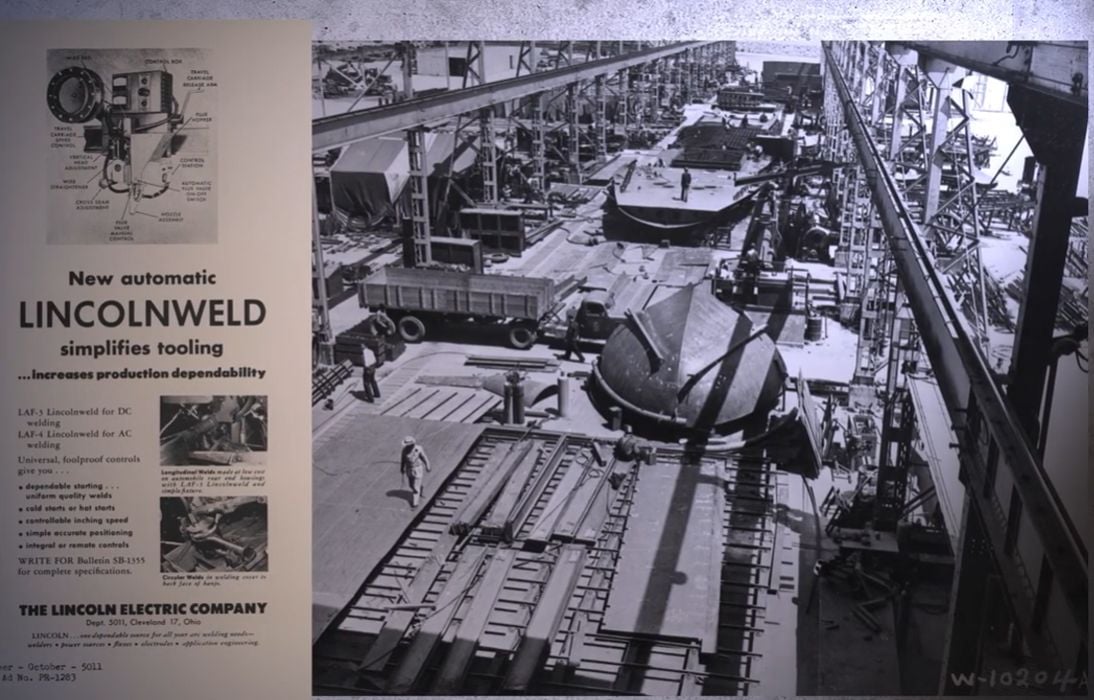
Founded in 1895, Lincoln Electric has spent more than 130 years building its reputation as the world’s largest comprehensive welding equipment company. What is less widely recognized, however, is how effectively the company has translated that legacy into a leadership position in large-scale metal 3D printing. In a space where many organizations are still experimenting, Lincoln has quietly moved into execution mode.
From Industry 4.0 Talk to Real Integration
The term “Industry 4.0” gets used frequently across manufacturing conferences, often accompanied by discussions of digital transformation, smart factories, and connected systems. Lincoln Electric’s approach stands apart because it has actually implemented these ideas across its operations.
Rather than treating additive manufacturing as a siloed capability, Lincoln has integrated it directly into its broader ecosystem of welding, robotics, and automation. This is not a conceptual framework. It is a working model.
A key turning point came in 2018, when Lincoln’s automation division acquired Baker Industries, a Cleveland-based firm specializing in advanced manufacturing and finishing. This move was not just about expanding capacity. It was about closing the loop between production and post-processing.
Finishing is often the bottleneck in additive manufacturing. Many companies can print parts, but struggle to efficiently machine, refine, and certify them. By bringing finishing capabilities in-house and aligning them with its additive processes, Lincoln addressed one of the most persistent challenges in scaling 3D printing for industrial use.
The result is a vertically integrated workflow that moves from design to deposition to finishing with far fewer friction points than typically seen in the industry.
A Focus on Large-Scale Metal Additive
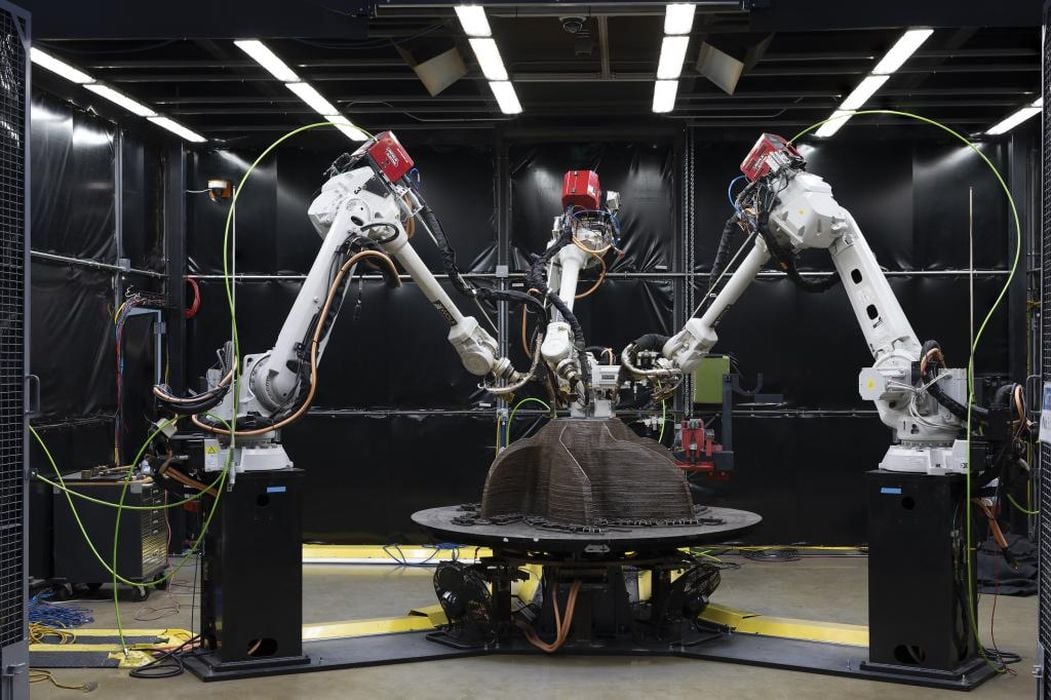
Lincoln Electric’s additive strategy centers on large-scale metal additive manufacturing, particularly wire arc additive manufacturing (WAAM). This approach leverages the company’s deep expertise in welding, using wire feedstock and arc-based energy to build parts layer by layer.
The advantages are significant. WAAM enables the production of large, durable metal components at a fraction of the cost and lead time associated with traditional methods like casting or forging. It also allows for material efficiency, reducing waste in high-value alloys.
At the AM Strategies Conference, Lincoln’s presentation emphasized that this is not just about making parts differently. It is about rethinking how and where parts are made.
Real-World Applications Across Industries
What made Lincoln Electric’s presentation particularly compelling was its focus on real-world applications. Rather than highlighting prototypes or conceptual designs, the company showcased deployed solutions across multiple industries.
Infrastructure: Rebuilding and Reinforcing Critical Systems
One of the most impactful examples involved infrastructure components, where Lincoln has used large-scale metal 3D printing to produce replacement parts for aging systems.
In traditional infrastructure projects, replacing large metal components can involve long lead times, complex logistics, and significant downtime. By using additive manufacturing, Lincoln has demonstrated the ability to produce these parts more quickly and often closer to the point of use.
In one case highlighted during the conference, the company produced a large structural component that would have otherwise required months of lead time through conventional manufacturing. Using additive processes, the part was fabricated in a fraction of that time, with material properties meeting or exceeding requirements.
This approach has major implications for sectors such as energy, transportation, and utilities, where downtime is costly and replacement parts are often difficult to source.
Heavy Industry: Repair and Remanufacturing
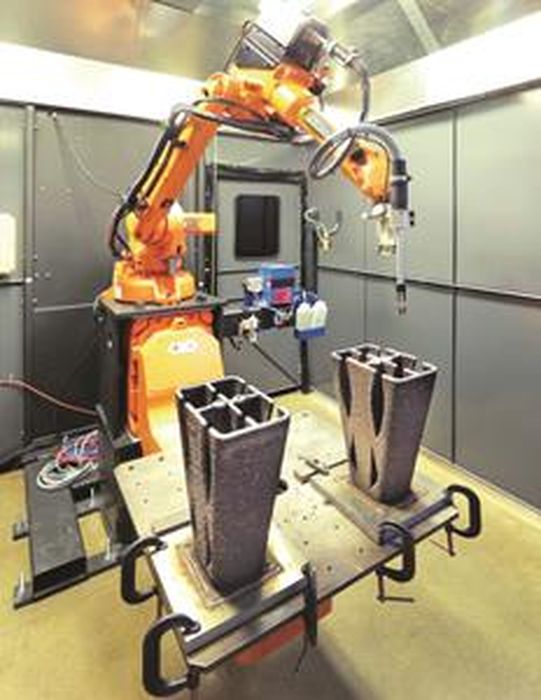
Another key area of focus is repair and remanufacturing. Instead of replacing entire components, Lincoln Electric is using additive manufacturing to restore worn or damaged parts.
This is particularly valuable in heavy industries such as mining, oil and gas, and power generation, where equipment operates under extreme conditions and components experience significant wear.
By depositing new material only where it is needed, Lincoln can extend the life of critical components while reducing material usage and cost. This also aligns with broader sustainability goals, as it minimizes waste and reduces the need for new raw materials.
Examples shared during the conference included rebuilt shafts, refurbished tooling, and reinforced components that returned to service with improved performance characteristics.
Aerospace and Advanced Manufacturing
Lincoln Electric is also making inroads into aerospace and advanced manufacturing applications, where precision and performance are paramount.
In these sectors, additive manufacturing is often used to produce complex geometries that would be difficult or impossible to achieve through traditional methods. Lincoln’s approach combines this design flexibility with the strength and scalability of its metal deposition processes.
The company highlighted projects involving structural components and tooling, where additive manufacturing reduced both production time and overall cost. In some cases, designs were optimized specifically for additive processes, resulting in lighter and more efficient parts.
The Importance of Process Integration
A recurring theme throughout Lincoln Electric’s presentation was integration. The company’s success is not based on a single technology, but on how multiple technologies work together.
Design, simulation, deposition, machining, and inspection are all part of a unified workflow. This reduces variability, improves repeatability, and enables the kind of quality control required for industrial applications.
For example, digital design tools are used to optimize parts before printing, ensuring that material is placed only where it is needed. Robotic systems then execute the deposition process with high precision, while integrated machining capabilities bring parts to final specifications.
This level of coordination is what allows Lincoln to move beyond prototyping and into true production.
Bridging the Gap Between Prototype and Production
One of the biggest challenges in additive manufacturing has been bridging the gap between prototype and production. Many organizations can demonstrate impressive prototypes, but struggle to scale those efforts into consistent, repeatable manufacturing processes.
Lincoln Electric has addressed this challenge by focusing on applications where additive manufacturing delivers clear economic and operational benefits.
Rather than trying to replace all traditional manufacturing methods, the company targets specific use cases where additive offers advantages in cost, speed, or performance. This pragmatic approach has allowed it to build a portfolio of successful implementations across multiple industries.
A Different Kind of Leadership
What sets Lincoln Electric apart is not just its technology, but its mindset. The company is not positioning itself as a disruptor in the traditional sense. Instead, it is extending its core competencies into new areas.
Welding has always been about joining and building metal structures. Additive manufacturing, in many ways, is a natural evolution of that capability.
By leveraging its existing expertise and combining it with new technologies, Lincoln has created a model that feels both innovative and grounded. It is not chasing trends. It is solving problems.
The Research & Development Tax Credit
The now permanent Research & Development Tax Credit (R&D) is available for companies developing new or improved products, processes, and/or software.
3D printing can help boost a company’s R&D Tax Credits. Wages for technical employees who create, test, and revise 3D printed prototypes can be included as a percentage of eligible time spent for the R&D Tax Credit. Similarly, when used as a method of improving a process, time spent integrating 3D printing hardware and software counts as an eligible activity. Lastly, when used for modeling and preproduction, the costs of filaments consumed during the development process may also be recovered.
Whether it is used for creating and testing prototypes or for final production, 3D printing is a strong indicator that R&D-eligible activities are taking place. Companies implementing this technology at any point should consider claiming R&D tax Credits.
Looking Ahead
As additive manufacturing continues to evolve, companies like Lincoln Electric provide a glimpse of what the future may look like when the technology is fully integrated into industrial workflows.
The examples presented at the AM Strategies Conference show that large-scale metal 3D printing is no longer confined to research labs or pilot programs. It is being used today to solve real problems in infrastructure, heavy industry, and advanced manufacturing.
There is still work to be done. Standards, certification processes, and workforce development will all play critical roles in the continued growth of additive manufacturing. However, the progress demonstrated by Lincoln suggests that many of the foundational challenges are already being addressed.
Conclusion
Lincoln Electric’s presence at the February 2026 AM Strategies Conference was a reminder that leadership in additive manufacturing is not always the loudest or most visible. Sometimes, it is the result of steady execution over time.
By integrating welding, robotics, automation, and additive manufacturing into a cohesive system, the company has moved beyond theory and into practice. Its success stories across infrastructure, repair, and advanced manufacturing highlight the real potential of 3D printing when it is applied with focus and discipline.
In an industry where many are still talking about what is possible, Lincoln Electric is showing what is already being done.