
A new Chinese patent application suggests standard multi nozzle FFF systems could produce richer sidewall colors without adding any new hardware.
CN121608391A describes “a 3D printing method and system for achieving side color mixing based on interlayer grating effect.” The assignee is listed as Golden Feather. The patent tries to solve a typical challenge in fused filament fabrication: vertical walls often show either a single flat color or a harsh transition when two materials meet. That can make multicolor parts look far less sophisticated on the outside than they do in CAD.
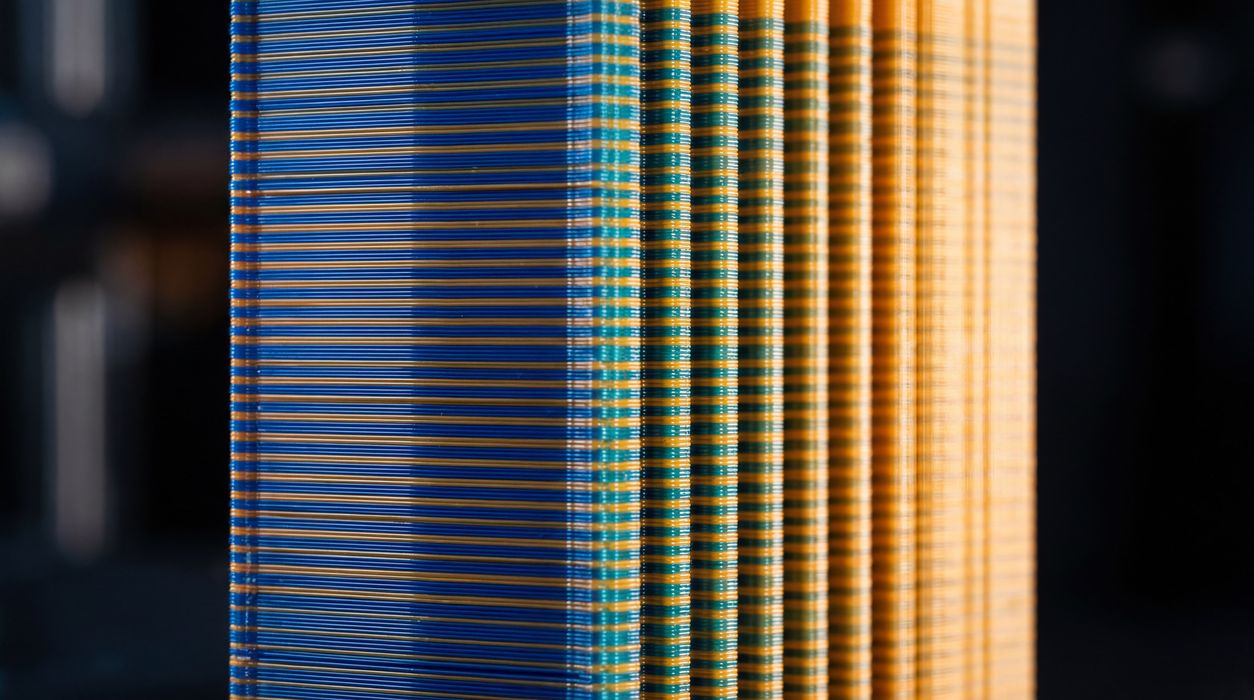
The proposed fix is not a new nozzle, mixer, or printhead. Instead, the patent shifts this work into slicing and path planning. It sets the sidewall layer height into a micro layer range of 0.08 mm to 0.1 mm, then alternates two or more colored materials up the Z axis in patterns like “ABAB” or more gradual proportional sequences. The idea is that these tiny stacked differences create a physical grating structure on the wall surface. When viewed by the human eye, the fine alternating textures visually blend into an apparent new color, much like halftone mixing in print graphics.
The patent treats the side of an FFF part as an optical surface whose color can be tuned by geometry and layering frequency. You might notice that the concept borrows from dithering and halftoning in 2D imaging, but here applies to the visible layer lines already present in extrusion printing. Rather than hiding those lines, the patent tries to make them a feature.
Turning Layer Lines Into A Color Engine
What is interesting here is how modest the hardware demand appears to be. The filing explicitly says the method can run on a standard multi nozzle FDM printer, which likely means that common multi material FFF systems might be able to use it. That could significantly lowers the barrier to experimentation. If the effect works well, a vendor could potentially add it through slicer software or firmware aware toolpath generation instead of developing a new machine platform.
There are, however, obvious constraints. First, the benefit seems concentrated on vertical or near vertical sidewalls. Top surfaces, bottom surfaces, and infill do not appear to be the real target. Second, print time will almost certainly rise if a user must run fine layer heights across visible shells to achieve the grating effect. Third, the patent summary does not say how sensitive the illusion is to nozzle diameter, filament translucency, gloss, pigment strength, or viewing distance. A likely issue is that some material pairs will blend beautifully while others will just look striped.
The method also depends on reliable material swaps and tight calibration. Any ooze, misregistration, inconsistent extrusion width, or Z banding could disrupt the intended optical blend. In that sense, this looks promising for well tuned machines and premium materials, but less certain for low cost desktop setups where color changes already add purge waste and failure risk. The filing also does not provide quantitative proof, such as color gamut expansion, Delta E measurements, or side by side comparisons against existing multicolor slicer strategies.
Software Opportunity More Than Hardware Breakthrough
If Golden Feather can show strong visual results, the competitive implication is clear: this could become a software differentiator for printer makers chasing more attractive consumer parts, branded models, toys, educational prints, and design prototypes. It is not a throughput story, and it probably does not transform industrial production economics. But it could make ordinary multicolor FFF outputs look more refined without the cost and complexity of active in nozzle color mixing.
The next question is whether the effect remains convincing across real geometries, real pigments, and real speeds, or whether it only shines in carefully chosen demos. If the answer is favorable, then the humble sidewall layer line may turn out to be less of a defect than a surprisingly useful optical pixel.
