
Charles R. Goulding and Preeti Sulibhavi argue that Booz Allen’s Andreessen Horowitz investment proves 3D printing and AI are no longer experimental—they are becoming core defense infrastructure.
In January 2026, Booz Allen Hamilton—one of the world’s largest government consulting and technology services firms—announced a US$300 million capital commitment to collaborate with Andreessen Horowitz (a16z), with an option to expand to US$400 million in targeted investments. This commitment reflects Booz Allen’s strategic decision to allocate its own balance sheet toward emerging technologies beyond traditional consulting services. With more than US$10 billion in annual revenue and over 30,000 employees, the firm is leveraging its scale and government relationships to support deep-tech innovation aligned with national security missions.
Andreessen Horowitz, a venture capital firm with over US$90 billion under management, is widely known for its bold backing of leading technologies across AI, software, cybersecurity, and defense sectors. The firm recently closed new multi-billion-dollar funds targeting AI infrastructure, American Dynamism, defense technologies, and supply-chain resiliency, underscoring a strategic pivot toward hard-tech that includes manufacturing, robotics, and high-performance hardware.
By forming this venture partnership, Booz Allen positions itself at the center of a growing trend: hybrid corporate-VC models where strategic acumen and capital deployment go hand in hand. This model is especially significant in 3D printing and additive manufacturing, where rapid prototyping and distributed production are reshaping defense logistics and manufacturing paradigms.
Firestorm Labs: 3D Printing the Factory of the Future
A key anchor in Booz Allen’s emerging tech portfolio is Firestorm Labs, a San Diego-based company redefining the way unmanned aerial systems (UAS) are produced and sustained. Firestorm’s flagship solution, xCell, is a self-contained, containerized additive manufacturing “factory-in-a-box” capable of producing complete drones, modular components, and mission-specific hardware at the point of need—whether that’s forward operating bases, disaster zones, or expeditionary theaters.
The xCell platform integrates HP’s Multi Jet Fusion (MJF) 3D printing technology, a high-throughput polymer additive process that enables rapid production of strong, functional components without the need for traditional tooling or supply chains. In practical terms, Firestorm’s xCell can fabricate modular frames, enclosures, and replacement parts in hours rather than weeks or months—a profound advantage when supply chains are disrupted by conflict or natural disaster.
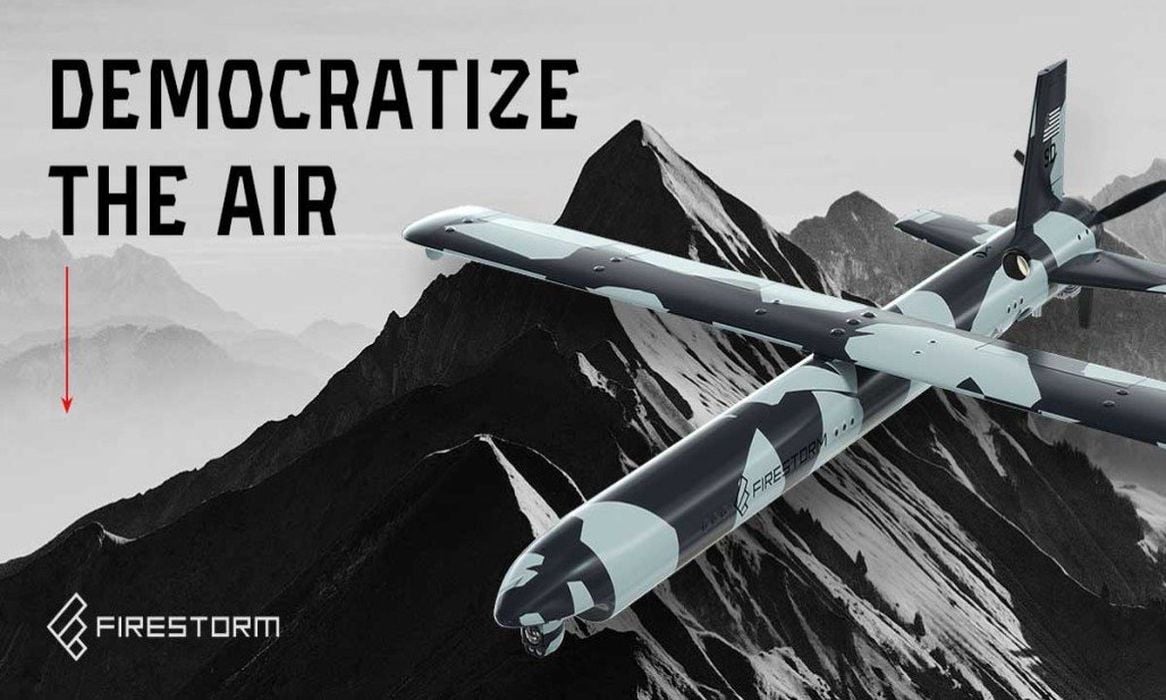
One visible example of this capability is the Tempest UAV, a modular drone designed for rapid assembly, mission flexibility, and field reparability. Drawing on additive manufacturing, Tempest platforms can be printed and adapted for reconnaissance, payload delivery, or electronic warfare without requiring a centralized factory. This stands in stark contrast to traditional manufacturing, where militaries often wait months for bespoke spares from overseas facilities.
Firestorm’s success has translated into significant venture funding: in mid-2025, the company raised US$47 million in Series A capital led by New Enterprise Associates, with Booz Allen Ventures and Lockheed Martin Ventures participating. The round supports expansion into larger facilities, broader partnerships, and enhanced manufacturing capabilities.
The strategic logic for Booz Allen’s investment is clear. As digital twin manufacturing and distributed additive production become integral to modern supply networks, the firm’s government contracting expertise can help scale these innovations in heavily regulated markets. Booz Allen’s ability to navigate federal procurement, compliance, and mission integration provides a crucial bridge for startups like Firestorm that must prove value in defense environments.
3D Printing’s Broader Role in Defense and Manufacturing
Firestorm’s innovations are part of a larger additive manufacturing transformation within U.S. defense and industrial strategies. HP’s Multi Jet Fusion technology and similar platforms are widely adopted in the aerospace and robotics sectors. Beyond drones, companies use MJF to produce structural components, watertight enclosures, and customized fittings that significantly reduce production time and costs compared to CNC machining or injection molding.
For instance, HP’s MJF systems have been showcased by companies like Blueflite, which uses 3D printing to produce structural components for last-mile delivery drones that require lightweight durability and adaptability. Across industrial markets, additive manufacturing accelerates design cycles, enables rapid iteration, and supports small-batch production for specialized applications.
U.S. Department of Defense initiatives have increasingly recognized the value of additive manufacturing. Distributed production reduces the vulnerability of traditional supply chains, particularly for critical components that are hard to source or have long lead times. Mobile manufacturing units like Firestorm’s xCell exemplify this shift toward contested logistics and production resilience—where logistics tails are shortened, and operators can refresh or adapt hardware without returning to central facilities.
Defense stakeholders are also focusing on broader material innovations. Research efforts, such as those exploring continuous fiber 3D printing for lightweight drone frames, point to a future where additive manufacturing not only speeds production but materially improves performance. (For example, lattice-structured printed frames can be significantly lighter yet maintain strength comparable to traditional composites or metals.)
Andreessen Horowitz: A Strategic Platform for Hard Tech
Although Andreessen Horowitz’s portfolio spans software, AI, and digital infrastructure, its American Dynamism and defense-oriented funds target companies building physical systems that enhance national capabilities. While a16z does not yet list specific 3D printing manufacturers in its public portfolio, its broader investments include precision automation companies such as Hadrian Automation, which aims to automate the production of precision aerospace and defense components.
Andreessen Horowitz’s expansion in defense and manufacturing is also evidenced through substantial fundraises targeting AI, robotics, and hardware platforms, which collectively drive innovation in fields adjacent to additive manufacturing. The firm’s long track record of backing major tech companies—ranging from Databricks to Coinbase and Anduril—positions it to attract and scale startups that integrate advanced manufacturing with AI and robotics.
The strategic collaboration with Booz Allen enables a16z to gain unique access to government pathways, compliance insights, and mission validation frameworks that typical Silicon Valley startups lack. In return, Booz Allen taps into cutting-edge VC deal flow and innovation ecosystems that transcend traditional defense contracting. This cross-pollination accelerates the adoption of disruptive technologies in real defense use cases.

Why This Matters Now
The geopolitical context is a major driver of this alliance. With current U.S. policy advocating for a US$1.5 trillion defense budget, there is a strong incentive to modernize industrial capacity and integrate advanced technologies more quickly. Additive manufacturing, AI, autonomous systems, and resilient supply chains are strategic priorities in this landscape. Investments that cut across these domains—backed by both private capital and government support—are likely to see accelerated deployment and adoption.
Against a backdrop of federal contracting uncertainty and slowdowns affecting traditional consulting firms, Booz Allen’s proactive strategy—deploying corporate venture capital into high-growth areas like AI and 3D printing—represents a smart hedge and a long-term bet on where innovation is heading. Instead of relying solely on historic contractor revenue streams, Booz is positioning itself as a strategic integrator of commercial tech and government missions.
The Firestorm example illustrates how additive manufacturing enables new operational paradigms: rapid, distributed production of mission-ready hardware that sidesteps the limitations of centralized factories. As more defense and industrial players adopt advanced 3D printing, the benefits will scale beyond drones into replacement parts, critical components, and custom tooling, transforming not just defense but aerospace, medical, and industrial supply networks.
It should be noted that, as of the writing of this article, The Treasury Department cut ties with Booz Allen Hamilton on January 26, 2026, and announced that it was canceling US$21 million in federal contracts with the consulting giant because one of its ex-employees previously leaked President Donald Trump’s and Elon Musk’s tax returns to the press. A Booz Allen spokesperson disputed some of Bessent’s claims
The Research & Development Tax Credit
The now permanent Research & Development Tax Credit (R&D) Tax Credit is available for companies developing new or improved products, processes and/or software.
3D printing can help boost a company’s R&D Tax Credits. Wages for technical employees creating, testing and revising 3D printed prototypes can be included as a percentage of eligible time spent for the R&D Tax Credit. Similarly, when used as a method of improving a process, time spent integrating 3D printing hardware and software counts as an eligible activity. Lastly, when used for modeling and preproduction, the costs of filaments consumed during the development process may also be recovered.
Whether it is used for creating and testing prototypes or for final production, 3D printing is a strong indicator that R&D-eligible activities are taking place. Companies implementing this technology at any point should consider taking advantage of R&D Tax Credits.
Conclusion
Booz Allen’s US$300 million commitment with Andreessen Horowitz is about more than capital—it’s about embracing a future where software, AI, digital manufacturing, and advanced hardware coalesce to solve real national challenges. From Firestorm Labs’ mobile 3D printed drone factories to the broader additive manufacturing ecosystem, this partnership signals a shift in how strategic technologies are funded, scaled, and integrated into government missions.
By investing its own capital into disruptive startups, Booz Allen is adapting to a rapidly changing technological and geopolitical landscape. In doing so, it not only hedges against traditional government contracting cycles but also champions innovation areas where 3D printing and allied technologies are not just relevant—they are essential to the future of national security and industrial competitiveness.