
A Czech patent application by Prusa Research proposes a more coordinated resin printing workflow built around shared process data.
Resin 3D printing has a pretty strange split personality. The actual printing step can be highly automated, especially on today’s MSLA and LCD resin systems, but the post processing work is almost always manual, messy, sometimes dangerous and oh-so easy to get wrong.
Fresh resin prints leave the machine wet with uncured (and sometimes toxic) photopolymer resin. These parts must be cleaned with isopropyl alcohol (IPA) (or water if using water washable resin), and then post cured with ultraviolet (UV) light. If any of those steps use the wrong timing, solvent, temperature or UV exposure, the part may end up tacky, warped, brittle, under cured or contaminated. And I’ve seen all of the above.
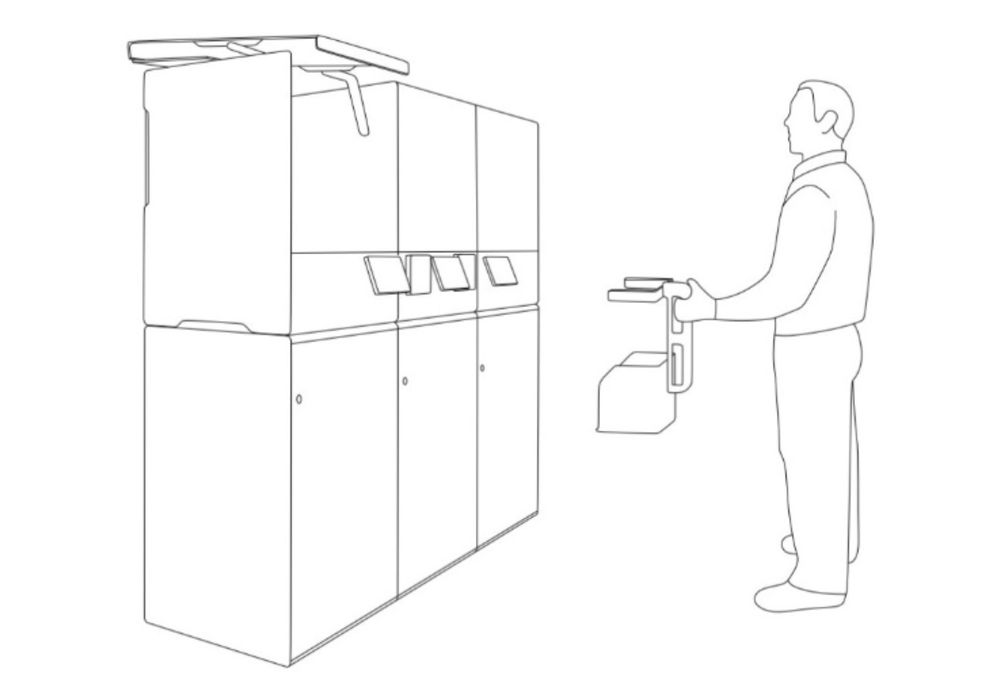
Patent application CZ2024445-A3 attempts to address the issue. The document describes a method and system for preparing stereolithographic 3D prints using a separate 3D printer, washer, curing unit and transfer manipulator. The interesting part is not just this set of machines, but that the process parameters can travel with the build platform.
Data On The Build Platform
The proposed system uses NFC tags and modules to pass information from one stage to the next. A rewritable NFC tag can be placed on the build platform, while NFC modules sit in the printer, washer and curing unit. Additional NFC tags may also identify the resin canister and resin vat.
That gives the system a functional memory. The printer can record the print material, part size, print location on the platform and process details. The washer can then read that information and choose a suitable wash medium, liquid volume and washing program. The curing unit can later read the accumulated data and select drying temperature, airflow, and exposure intensity.
This is a useful idea because resin post processing is rarely one size fits all, even though that’s what most operators assume. A small dental guide, a large engineering housing and a biocompatible medical part may all need different washing and curing conditions. The patent specifically points out that reporting process parameters could be important for biocompatible materials used in clinical medical practice: an audit trail for critical parts.
The system also tries to reduce waste and exposure. The printer can automatically fill the vat with the required resin quantity, monitor resin level, replenish material, then pump unused resin back into the canister through a filter. The vat can tilt in two directions to help recover resin. The washer uses a sealed cover, vapor extraction and a carbon filter, while the manipulator includes a drip tray and handle to keep users away from resin and wash media.
A Modular Alternative To Giant Resin Cells
The patent compares its approach with large fully automated resin systems where print, wash and cure stations are arranged around moving arms or integrated chambers. Those systems can consume room scale space and often suit industrial environments more than small workshops or labs.
Their proposed layout is much more modular. The printer, washer and curing station remain separate devices, so a production setup could theoretically use multiple printers with fewer washers or curing units. That’s important because printing usually takes much longer than washing or curing: one set of wash and cure machines can usually support several resin 3D printers.
An obvious question is interoperability. If the NFC data format remains proprietary, this becomes a closed workflow. Prusa Research has always supported open source solutions, so it is likely that if implemented, this would be open source. That would allow other manufacturers to adopt the standard, meaning you could theoretically mix and match printers with wash & cure systems, assuming the build plates physically fit.
This looks like a much more disciplined way to make resin post processing behave like part of the print job. Perhaps we will see it appear in a future Prusa Research resin system.
