
Shining 3D has filed a European patent application for a resin printing capsule system, and the interesting part is not just the packaging.
The application, EP4778700A2, was published by the European Patent Office on July 22, 2026. The applicant is Shining 3D Tech Co., Ltd. of Hangzhou, China, a company best known for its powerful 3D scanners and its growing dental 3D printing ecosystem.
So what is this about?
The patent describes a “container for printing capsule, printing capsule kit, and printing capsule.” That sounds like a box, but it is a lot more than that. The idea appears to be a cleaner, more controlled way to handle photopolymer resin for resin 3D printers.
Anyone who has operated resin machines knows the problem. A 3D printer operator pours liquid resin into an open vat, hopes the amount is right, and later deals with cleanup. Too much resin means waste and mess. Too little can stop the print. In dental and clinical settings, manual resin handling is really not welcome.
Shining 3D’s proposed approach is a printing capsule that can be installed directly into a 3D printer. The capsule may be pre-filled with resin, or filled at the time of use. It includes a receiving cavity and a light transmissive component, allowing light to enter the forming area where curing takes place.
In other words, this is not just a fancy resin bottle. The capsule can become part of the actual print mechanism itself.
One embodiment in the patent uses an outer cylinder and an inner cylinder fitted together. A build platform sits inside, facing the light transmissive component. As the inner cylinder moves, the forming cavity can expand or contract, letting resin flow into the active print zone. The patent also mentions using air pressure to help separate the cured layer and improve resin backflow.
That is the really interesting bit. Resin capsules sound easy, but here they have to print reliably. Storing resin is simple. Maintaining optical clarity, sealing, layer release, resin movement, and mechanical alignment is where the trouble starts.
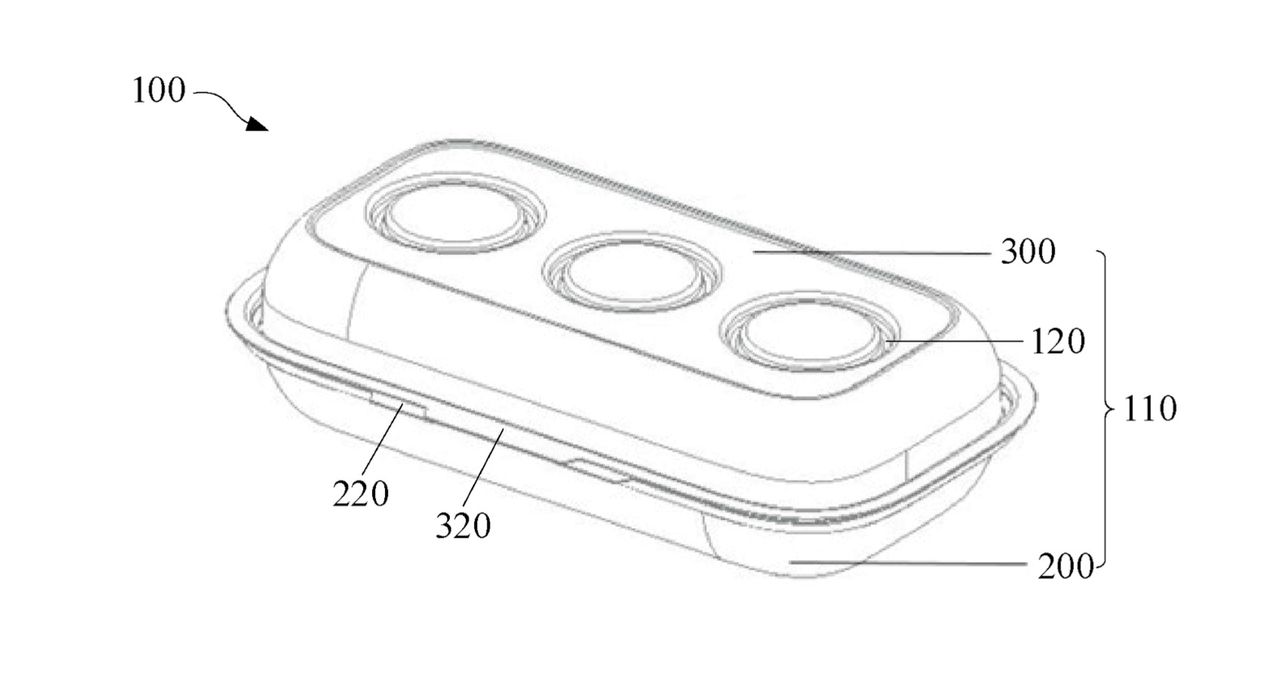
The patent also covers the container used to ship and protect the capsule. It describes a base and cover that hold the capsule in place, with internal limiting structures to prevent shaking during transport. The container may be made from non-transparent blister-formed material to block light, with snap-fit closures, opening-assist features, and a flat support area to keep the capsule stable.
This could fit very well into dental 3D printing. Labs and clinics often switch between materials, colors, and applications. A capsule workflow could reduce resin mistakes, manual labor, spills, and cleanup time. That is likely the real commercial appeal here. Also, dental applications tend to have very consistent amounts of resin required for each job, making it possible to preload a capsule with an amount of resin close to what would be required.
The document does not give pricing, resin volume, supported materials, printer compatibility, waste implications, or whether this is intended for a specific Shining 3D printer family. It also does not show whether the economics beat bottles and reusable resin tanks in daily production. However, the level of detail here strongly suggests that Shining 3D is likely developing a capsule system to use in their dental products.
The catch with cartridge-style systems is this: They can make printing easier and more controlled, but they can also push customers into proprietary consumables and extra packaging. In other words, more expensive.
If Shining 3D can make the capsule reliable, affordable, and practical for dental workflows, they could make resin 3D printing less messy, less error prone, and easier to run in a busy clinic.
