
Charles R. Goulding and Preeti Sulibhavi examine how 3D printed skin grafts are evolving from experimental research into practical tools for treating complex wounds.
The current television adaptation of Scarpetta arrives at an interesting moment for both crime fiction and medical technology. The series, featuring Nicole Kidman and Jamie Lee Curtis among its leading cast, is rooted in forensic pathology, a discipline that has always balanced hard science with narrative intrigue. What makes this adaptation particularly timely is its subtle nod to emerging technologies such as 3D printed skin grafts, a concept that sounds futuristic but is already moving from research labs toward real-world clinical use.
In the world of Scarpetta, science often functions as both a storytelling engine and a source of realism. Patricia Cornwell’s original novels built their reputation on technical accuracy, and the television series appears poised to follow that tradition. When viewers hear references to 3D-printed skin or advanced wound reconstruction, they are not just encountering speculative fiction. They are brushing up against one of the most active and promising areas in regenerative medicine today.
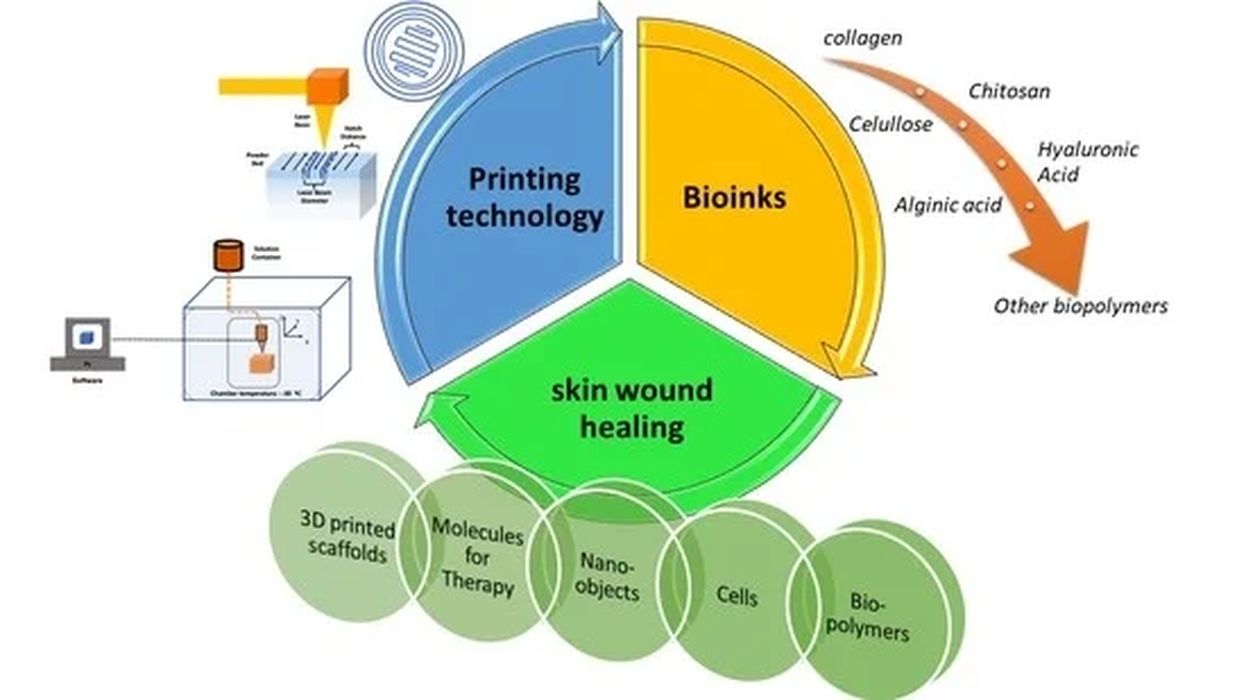
At its core, 3D bioprinting for skin grafts involves layering living cells, biomaterials, and growth factors to create structures that mimic natural skin. Traditional grafting techniques rely on harvesting skin from a donor site or using engineered flat sheets. These methods work, but they come with limitations, especially when treating complex injuries such as burns over joints or irregular surfaces. Researchers have increasingly turned to additive manufacturing to solve this problem, developing scaffolds that replicate the architecture of human tissue with remarkable precision.
One of the most compelling examples comes from Columbia University, where bioengineers have rethought the very geometry of skin grafts. Instead of producing flat patches, the team led by Hasan Erbil Abaci developed a method to grow skin in three-dimensional shapes tailored to specific body parts. The process begins with a scan of the injured area, followed by the creation of a matching scaffold using a 3D printer. Cells are then seeded onto this structure, and within weeks, a graft forms that can fit over a hand or limb “like a glove.”
This shift from flat to form-fitting grafts is more than a technical improvement. It has real implications for surgery and recovery. Custom-shaped grafts reduce the need for stitching, shorten operating times, and improve both functional and cosmetic outcomes. In a narrative context like Scarpetta, such advances could easily become plot devices, whether in identifying victims, reconstructing injuries, or exploring ethical questions around human enhancement.
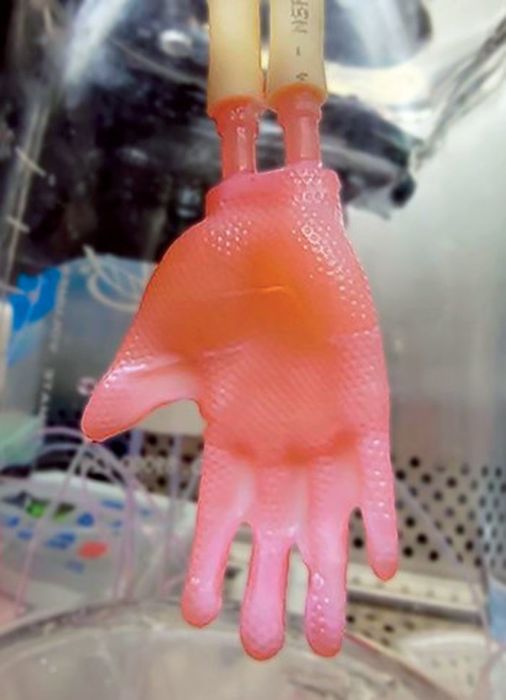
Beyond Columbia’s work, the broader field of 3D printed skin is advancing quickly. Scientists are experimenting with “bioinks” composed of human cells such as fibroblasts and keratinocytes, which are printed into layered structures that replicate the epidermis and dermis. These constructs are not just passive coverings. In some cases, they demonstrate the ability to support cell growth, integrate with surrounding tissue, and even begin forming vascular networks.
Recent developments have pushed the technology even further. Researchers have created bioprinted skin capable of supporting blood vessel formation, addressing one of the biggest challenges in tissue engineering. Without vascularization, artificial skin struggles to survive after transplantation. By incorporating microchannels and specialized bioinks, scientists are now producing grafts that can sustain circulation and promote deeper healing.
These innovations are not confined to academic curiosity. They are already being explored for practical applications in wound care. Severe burns, diabetic ulcers, and chronic wounds represent major global health challenges, affecting millions of patients each year. Traditional treatments often fall short, leading to prolonged healing times and significant complications. 3D bioprinting offers a way to create patient-specific solutions that match the size, shape, and biological characteristics of the wound.
There is also growing interest in printing skin directly onto the body. Experimental devices have been developed that function almost like handheld printers, depositing layers of cells and biomaterials onto a wound in real time. While still in early stages, this approach could eventually eliminate the need for separate graft fabrication altogether, allowing surgeons to “print” healing tissue during procedures.
Those who have been covering the industry have highlighted how additive manufacturing is reshaping healthcare economics as well as clinical practice. Their discussions often emphasize the intersection of innovation incentives, regulatory frameworks, and emerging medical applications. In the context of wound care, 3D printing stands out because it combines customization with scalability, a rare combination in medical technology.
What makes this especially relevant to a series like Scarpetta is the way technology blurs the line between investigation and intervention. Forensic pathology traditionally focuses on determining cause of death, but as tools become more advanced, they also enable reconstruction and simulation. Imagine a scenario where a 3D printed skin model is used to recreate a wound pattern, helping investigators understand how an injury occurred. This is no longer purely speculative. The same technologies used for healing can also be used for analysis.
Looking ahead, the future of 3D printed skin grafts is likely to involve greater complexity and integration. Researchers are working on incorporating sensory functions, immune compatibility, and even appendages like hair follicles and sweat glands. There is also interest in combining bioprinting with stem cell technology to create grafts that can adapt and regenerate over time.
Another emerging direction is the use of artificial intelligence in design and optimization. By analyzing patient data, AI systems could help determine the ideal structure and composition of a graft before it is printed. This would further personalize treatment and improve outcomes, particularly for patients with unique or severe injuries.
Despite the promise, challenges remain. Regulatory approval processes are still evolving, and ensuring long-term safety and effectiveness is critical. There are also ethical considerations around access, cost, and the potential for misuse. As with many advanced technologies, the question is not just what can be done, but how it should be done.
This tension between possibility and responsibility is something Scarpetta has always explored in its own way. The series thrives on the idea that science can reveal truth, but also complicate it. By weaving in references to technologies like 3D printed skin grafts, the show taps into a deeper cultural moment where medicine, engineering, and storytelling intersect.
The Research & Development Tax Credit
The now permanent Research & Development Tax Credit (R&D) is available for companies developing new or improved products, processes, and/or software.
3D printing can help boost a company’s R&D Tax Credits. Wages for technical employees who create, test, and revise 3D printed prototypes can be included as a percentage of eligible time spent for the R&D Tax Credit. Similarly, when used as a method of improving a process, time spent integrating 3D printing hardware and software counts as an eligible activity. Lastly, when used for modeling and preproduction, the costs of filaments consumed during the development process may also be recovered.
Whether it is used for creating and testing prototypes or for final production, 3D printing is a strong indicator that R&D-eligible activities are taking place. Companies implementing this technology at any point should consider claiming R&D tax Credits.
Growing Thick Skin…
In the end, what makes 3D printed skin so compelling is not just its technical sophistication, but its human impact. For patients recovering from devastating injuries, it offers the possibility of faster healing, reduced pain, and a return to normal life. For researchers, it represents a frontier where biology and manufacturing converge. And for viewers of Scarpetta, it provides a glimpse into a world where the tools of science fiction are steadily becoming part of everyday reality.
As the series unfolds, it will be interesting to see how these themes are developed. Whether as background detail or central plot element, the inclusion of advanced medical technologies adds a layer of authenticity and relevance. It reminds us that the line between fiction and reality is often thinner than we think. We need to grow thicker skin, especially when science is moving as quickly as it is today.